White tattoo ink isn't one product — it's five different jobs wearing the same label, and picking the wrong one is why so many blackout highlights fade to grey by the six-week heal. This guide ranks the white tattoo ink formats that actually hold up for professional work in 2026, from opaque blackout white to PMU-grade highlighter, so you stock the right bottle for the job instead of one bottle for everything.
- Opaque blackout white wins for solid highlight work over black ink — it's the only format built for single-pass coverage in 2026.
- Intenze's white tattoo ink formulations lean REACH-compliant and vegan, which matters more for white than for any other color because it sits closest to the skin.
- Mixing white is not a substitute for blackout white — using it for standalone highlights is the most common reason white looks patchy after healing.
- PMU-grade white highlighter has no place in body tattoo work; viscosity and depth targets are built for brow and lip technicians only.
Why this matters
White is the least forgiving color on the tray. It shows every inconsistency in application depth, every stray drop of lymph, and every batch variation the manufacturer let slide. A red that heals slightly warm still reads as red — a white that heals slightly grey reads as a mistake.
Most artists learn the hard way that "white ink" isn't a single product category. An Intenze catalog built around distinct formulations exists precisely because blackout highlight work, pastel color blending, fine-line detail, and PMU brow work each demand a different white. Buying one bottle and using it for all four is the fastest route to a callback.
This ranking splits white tattoo ink by the job it's actually built for, not by brand hype.
What makes the best white tattoo ink
- Opacity in one pass — how much pigment lays down before it disappears under blood and lymph
- Healed hold — does it stay true white or drift to grey over the following weeks
- Formulation safety — REACH-compliant, vegan, no animal-derived stabilizers in the base
- Batch consistency — bottle-to-bottle color match so a touch-up six months later doesn't clash
- Format flexibility — standard bottle versus single-use sterile format for the studio's workflow
- Compatibility — does it hold its own over solid black or does it need a barrier layer first
White tattoo ink at a glance
| Type | Best for | Standout feature | Key limitation |
|---|---|---|---|
| Opaque blackout white | Full-coverage highlights over black | Single-pass titanium dioxide density | Can look chalky if overworked |
| Mixing/modifier white | Pastel shading, skin tone blending | Low pigment load blends without muddying | Not built for standalone linework |
| Titanium lining white | Fine detail and linework highlights | Thinner viscosity for needle control | Less opacity than blackout-grade white |
| UV-reactive white | Blacklight-reactive pieces | Visible under UV without daylight tint | Legal status varies by state — check local rules |
| PMU-grade white highlighter | Cosmetic brow and lip highlight work | Formulated for superficial dermal depth | Not intended for body tattoo depth |
1. Opaque blackout white: best for full-coverage highlight work
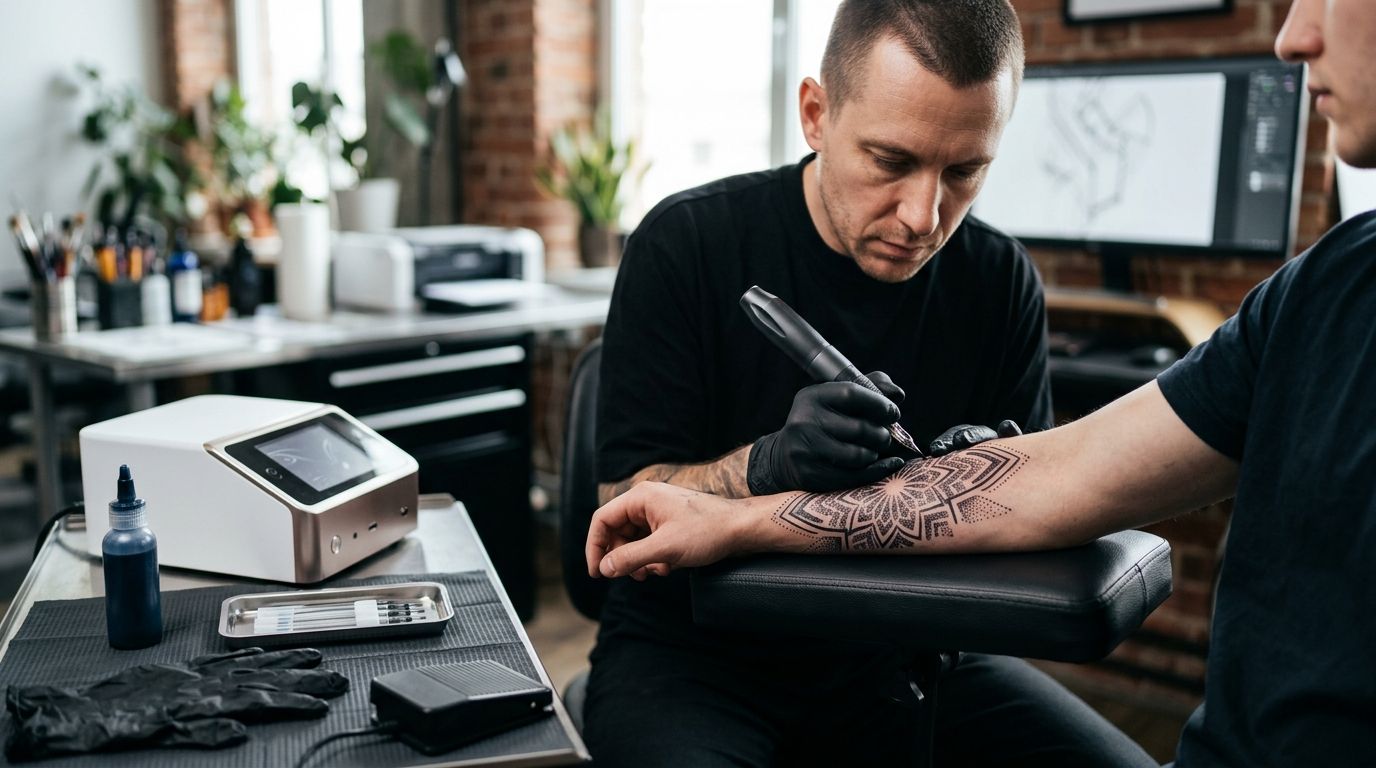
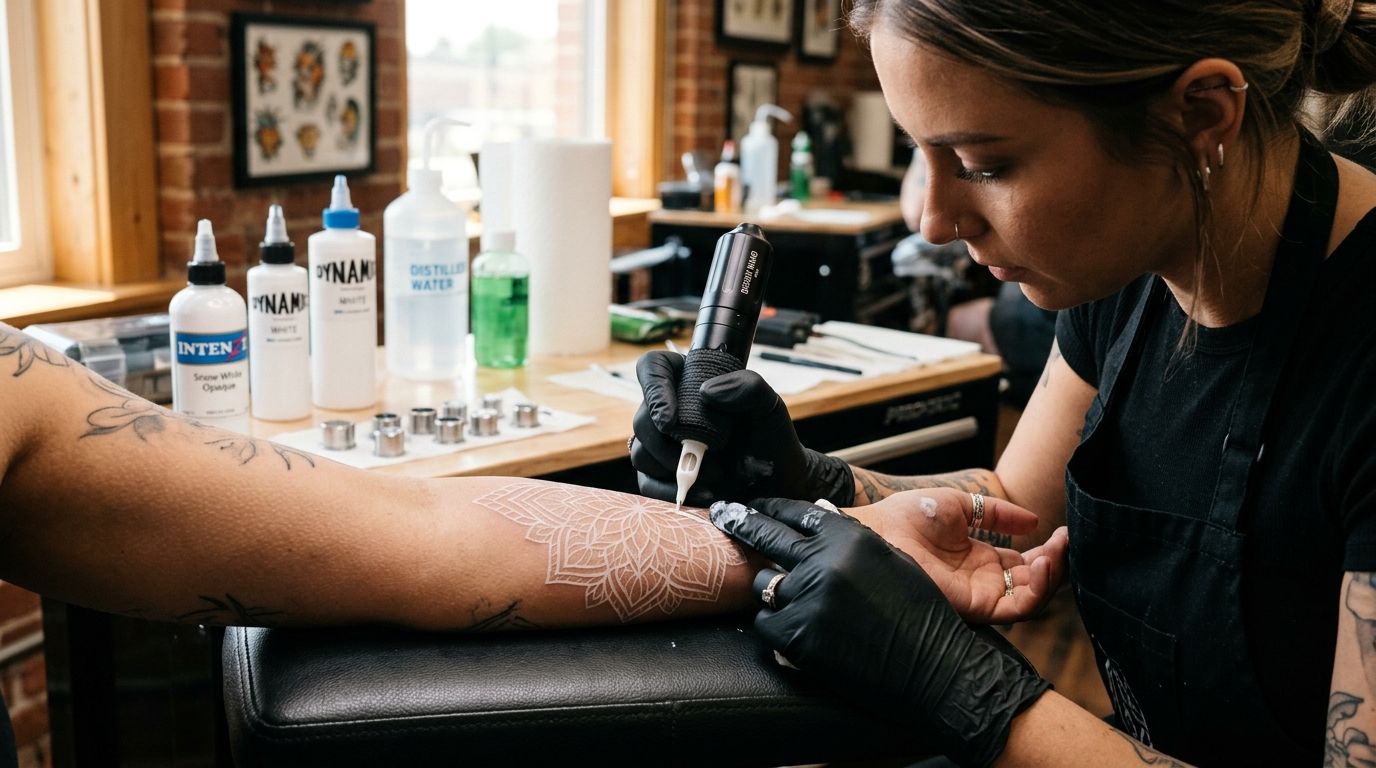
Opaque blackout white is built to sit on top of solid black and stay visible — that's the entire brief. It carries the highest pigment load of any white format, which is why it needs the fewest passes to read clean against dark saturation.
Opaque blackout white pros:
- Covers in one to two passes over solid black
- Holds contrast through the healed stage instead of greying out
- Batch-consistent formulas (a claim Intenze's white tattoo ink line builds its reputation on) mean touch-ups match years later
Opaque blackout white cons:
- Overworking it produces a chalky, raised texture
- Heavier viscosity means slower needle speed than colored inks
Best for: blackout sleeves, negative-space highlight work, high-contrast piece finishing. Verdict: Buy — this is the format every studio doing blackout or heavy black work needs on the tray.
2. Mixing/modifier white: best for pastel shading and skin tone blending
Mixing white exists to soften saturation, not to stand alone. It carries a lower pigment concentration so it dilutes color instead of fighting it, which is exactly what pastel and realism shading calls for.
Mixing white pros:
- Blends into color without muddying the base hue
- Extends bottle life across multiple color families
- Predictable dilution ratio once an artist dials in their mix
Mixing white cons:
- Weak standalone opacity — used alone for highlights, it patches
- Requires practice to hit a consistent lightening ratio
Best for: realism shading, portrait highlights, skin tone gradient work. Verdict: Buy — but only as a mixer, never as a substitute for blackout white.
3. Titanium lining white: best for fine detail and linework highlights
Titanium lining white is thinned relative to blackout formulas so it moves through a liner needle without dragging. It trades some opacity for control, which is the right trade when the work is fine detail rather than broad coverage.
Titanium lining white pros:
- Runs cleanly through tight liner setups
- Good for crisp single-line highlight accents
- Lower risk of blowout on thin-skin placements
Titanium lining white cons:
- Needs a second pass more often than blackout-grade white
- Not suited to filling larger negative-space areas
Best for: fine-line white accents, detail work inside larger blackout pieces. Verdict: Buy — a specialist tool, not a general-purpose white.
4. UV-reactive white: best for blacklight-reactive pieces
UV-reactive white is formulated to fluoresce under blacklight without carrying the yellow or blue tint some UV inks show in daylight. It's a niche request, but a real one, and it's worth stocking separately rather than trying to substitute a standard white.
UV-reactive white pros:
- Reads white in daylight, fluoresces under UV
- Good for glow-effect accent work inside larger pieces
UV-reactive white cons:
- Regulatory status on UV-reactive pigments varies by state in 2026 — confirm local rules before booking the piece
- Long-term healed data on UV formulas is thinner than on standard white
Best for: blacklight-reactive accents, novelty and event-focused pieces. Verdict: Hold — check your state's current rules on UV pigment before stocking it.
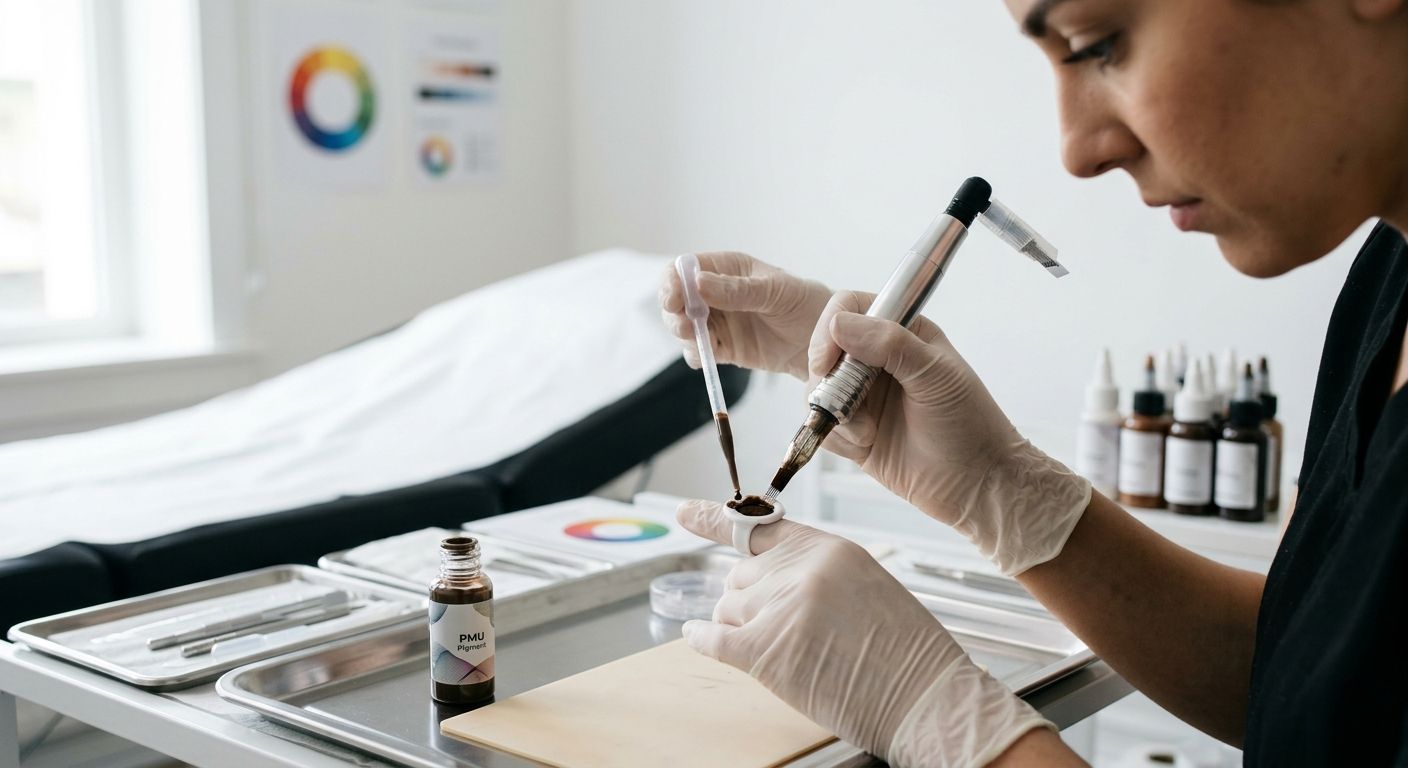
5. PMU-grade white highlighter: best for cosmetic brow and lip highlight work
PMU-grade white is formulated for superficial dermal depth, not body tattoo depth. It's built for the brow and lip technician layering a highlight, not the tattoo artist working two to three millimeters deeper.
PMU-grade white pros:
- Correct viscosity and depth target for cosmetic tattoo work
- Clean highlight lift on brow arch and lip border technique
PMU-grade white cons:
- Wrong depth profile for body tattoo application
- Not interchangeable with blackout or lining white
Best for: PMU technicians doing brow highlight and lip blush work. Verdict: Buy — for PMU studios specifically. Skip it for body tattoo work entirely.
How we ranked
Each format was scored against the same six criteria: single-pass opacity, healed hold, formulation safety, batch consistency, format flexibility, and compatibility over black. No format wins on every axis — that's the point of ranking by use case instead of by brand name. A studio doing blackout sleeves and PMU brow work in the same building needs at least two of these five whites, not one.
“If the white still needs a third pass to cover, it's not doing its job — it's just a lighter version of the wrong ink.”
Which white tattoo ink should you choose?
For a studio doing blackout and negative-space work, opaque blackout white is the default stock item — it's the format built to survive healing over solid black. Add mixing white as a second bottle the moment realism or gradient shading enters the portfolio; it's not optional once color blending is part of the offering.
Artists working darker skin tones and contrast highlights should pair their white choice with technique adjustments covered in the guide to tattoo ink for brown and dark skin — white behaves differently against deeper melanin and the healed result depends as much on depth and pass count as on the ink itself. PMU studios should treat their white as a completely separate SKU from anything on the body tattoo tray; the depth targets don't overlap and neither should the bottles.
FAQ
What's the best white tattoo ink for blackout highlight work in 2026?
Opaque blackout white is the best choice for blackout highlight work in 2026 because it carries the highest pigment load and covers in one to two passes over solid black. Formulas built for batch consistency, like Intenze's white tattoo ink line, also make future touch-ups match years later.
Is titanium dioxide safe in white tattoo ink?
Titanium dioxide is the standard pigment base used in professional white tattoo ink and is the industry norm for opacity. REACH-compliant formulations regulate the concentration and purity of that pigment, which is why sourcing white ink from a compliant manufacturer matters more than for darker colors.
Why does white tattoo ink turn grey after healing?
White ink turns grey after healing most often because a low-opacity mixing white was used for a standalone highlight instead of blackout-grade white. Depth inconsistency during application is the second most common cause.
Can white tattoo ink be mixed with color ink?
Yes — mixing/modifier white is specifically formulated to blend into color ink to soften saturation for pastel and realism shading. Standard opaque blackout white is not designed for this and will muddy the color instead.
Is UV-reactive white tattoo ink regulated?
UV-reactive white tattoo ink's regulatory status varies by state in 2026, so confirm current local rules before booking a UV piece. Long-term healed data on UV formulas is also thinner than on standard white ink.
How much white ink should a professional artist keep in stock?
A studio doing blackout and negative-space work needs at least opaque blackout white and mixing white on hand, since they serve different jobs. PMU studios need a separate PMU-grade white entirely, since body tattoo white is formulated for a different dermal depth.
Does Intenze make a vegan white tattoo ink?
Intenze's ink line is built around vegan, REACH-compliant formulations across its catalog, which is a standard credibility marker professional artists look for in white ink specifically. White sits closest to the skin surface, so formulation safety matters more here than in darker colors.
What's the difference between mixing white and blackout white?
Mixing white carries a lower pigment concentration built to dilute color without muddying it, while blackout white carries the highest pigment load for standalone opacity over solid black. Using mixing white for a standalone highlight is the most common cause of patchy, grey-looking healed white.
One last thing
The single biggest mistake in this category isn't picking the wrong white — it's stocking only one. Blackout white, mixing white, and PMU-grade white solve three unrelated problems, and a studio that tries to make one bottle do all three jobs will keep seeing the same grey, patchy healed result on the same type of piece. Separate the SKUs by job, not by preference, and the callback rate on highlight work drops on its own.