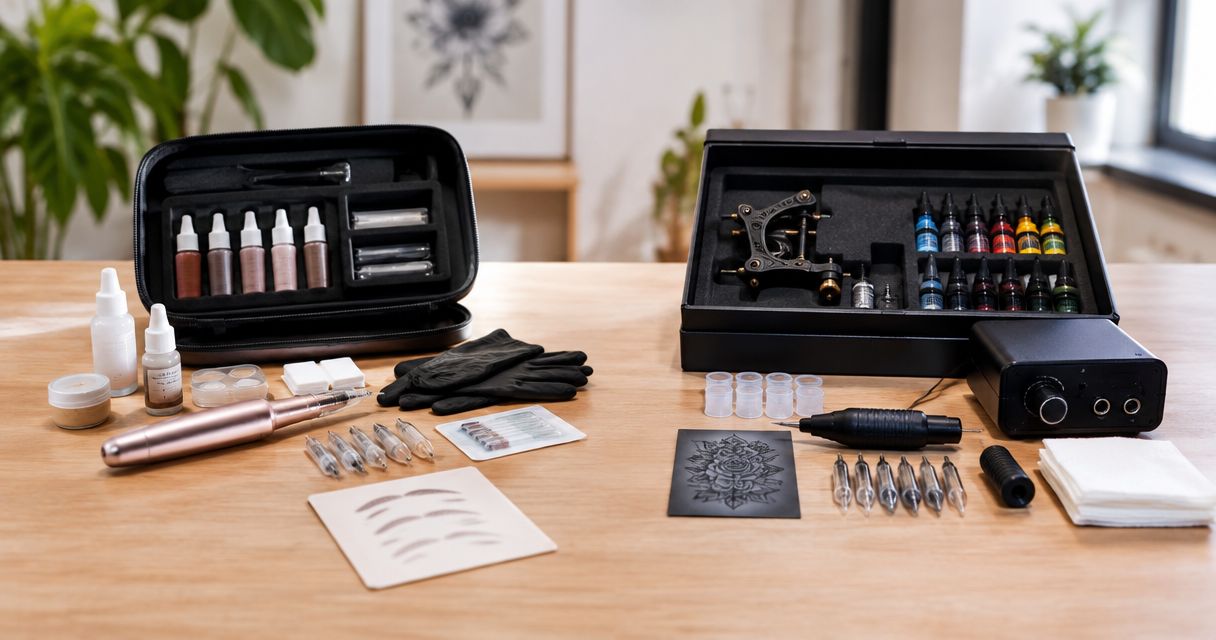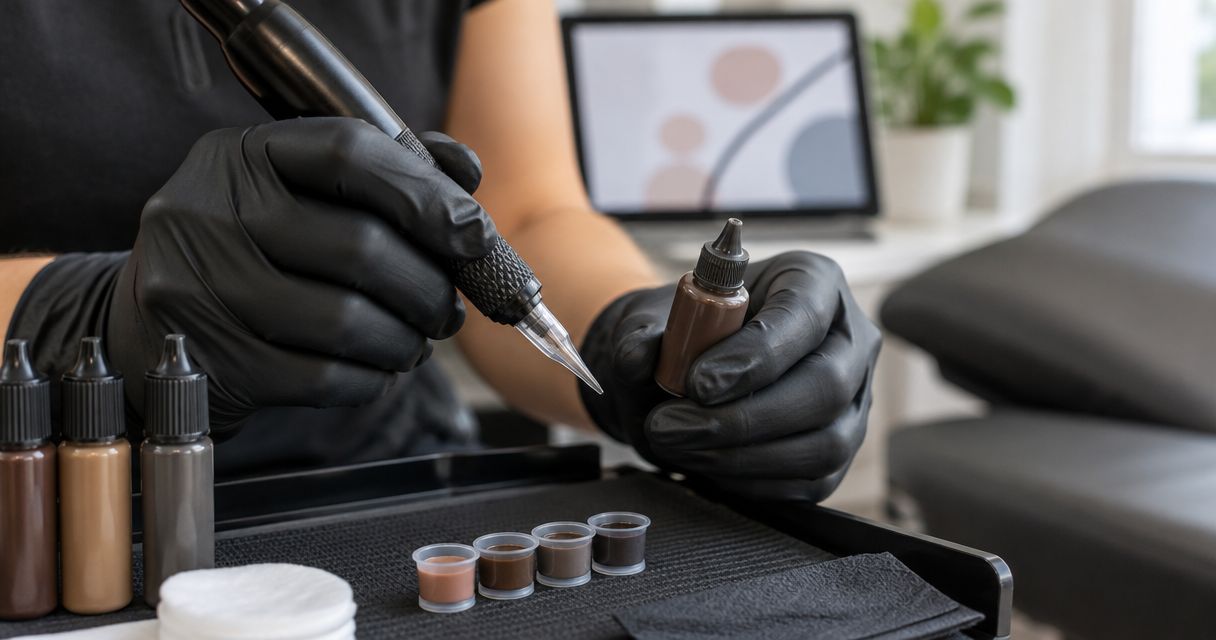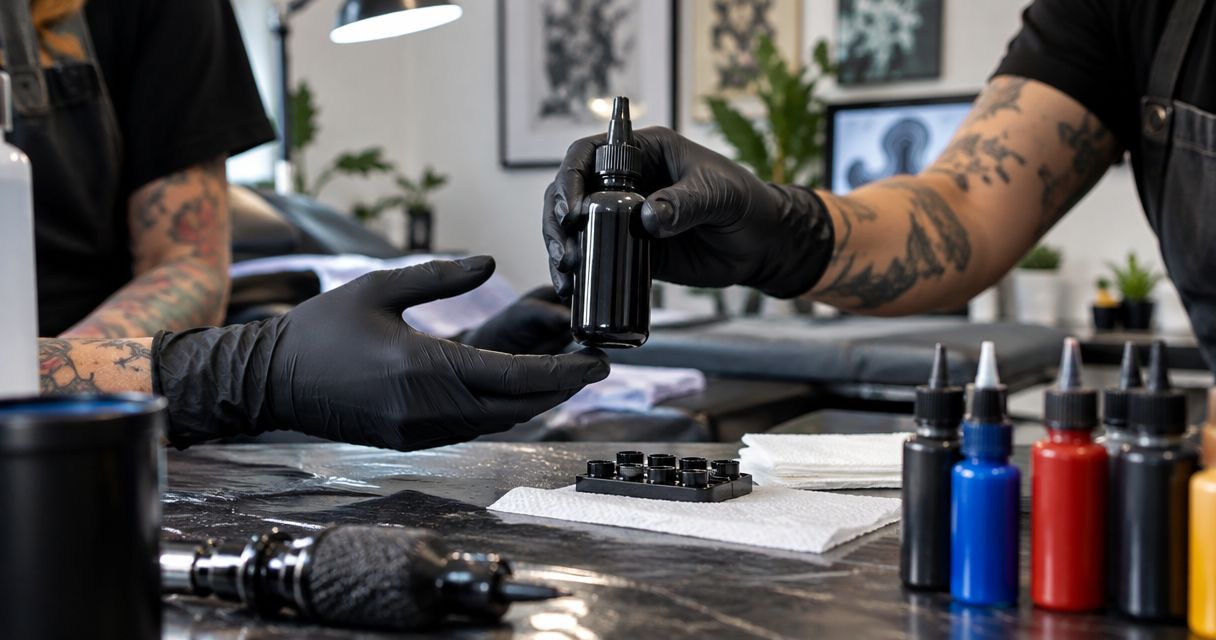
Multiple artists can share a tattoo ink bottle only when the manufacturer’s instructions and local body-art rules permit it, and the bottle stays outside the contaminated treatment workflow. Each client needs fresh, single-use ink caps; needles, used gloves, and leftover ink must never contaminate the shared supply. Sharing a supply bottle is not the same as sharing ink already dispensed for a client, and a sterile manufacturing claim does not guarantee sterility after opening.
- To share tattoo ink bottle between artists, keep the supply bottle separate from client-contact equipment and used gloves.
- Use fresh tattoo ink caps for every client; never return leftover ink to the bottle.
- INTENZE’s sterile manufacturing does not replace contamination controls after a professional tattoo ink bottle is opened.
- Choose shared stock only when staff can follow a documented dispensing procedure and applicable local rules.
Is it safe for multiple artists to share one tattoo ink bottle?
A shared supply bottle requires controlled dispensing, not unrestricted hand-to-hand use. The safety question is whether contamination can travel from a client, workstation, or artist’s gloves back to the bottle and then reach another client.
For studios purchasing professional tattoo ink from INTENZE, the same distinction applies: manufacturing controls and studio handling controls address different points in the product’s life.
| Stock arrangement | Best for | Practical advantage | Limitation |
|---|---|---|---|
| Shared bottle in a designated clean dispensing area | Studios with a documented dispensing procedure | Keeps common colors in a controlled supply location | Requires disciplined access and clean handling every time |
| Artist-assigned bottles | Studios needing clear individual responsibility | Makes bottle ownership and handling accountability easier | Does not prevent contamination from the artist’s own workflow |
| Manufacturer-sealed single-use portions | Studios choosing single-use supply formats | Avoids carrying an opened supply container into another session | Requires purchasing and disposal planning; follow the product’s intended use |
These arrangements are not interchangeable guarantees. An artist-assigned bottle handled with contaminated gloves still presents a problem, while a shared bottle needs more than a label saying “clean” to remain outside the contaminated workflow.
Why this matters
For a distributor’s 2026 purchasing guidance, distinguish sterile at manufacture from protected during use. FDA tattoo-ink safety information identifies microbial contamination as a concern, including contamination in sealed products; an intact package is not an absolute safety guarantee.
CDC Standard Precautions explain why hand hygiene, appropriate glove changes, and separation of clean supplies from contaminated items matter. Those principles support contamination control, but they do not establish permission to share a particular tattoo ink bottle under every local body-art code.
INTENZE combines sterile manufacturing with 30+ years of professional artist use. Neither credibility marker replaces the studio’s responsibility to follow product instructions, inspect supplies, and control access to opened bottles.
How should artists dispense ink from a shared bottle?
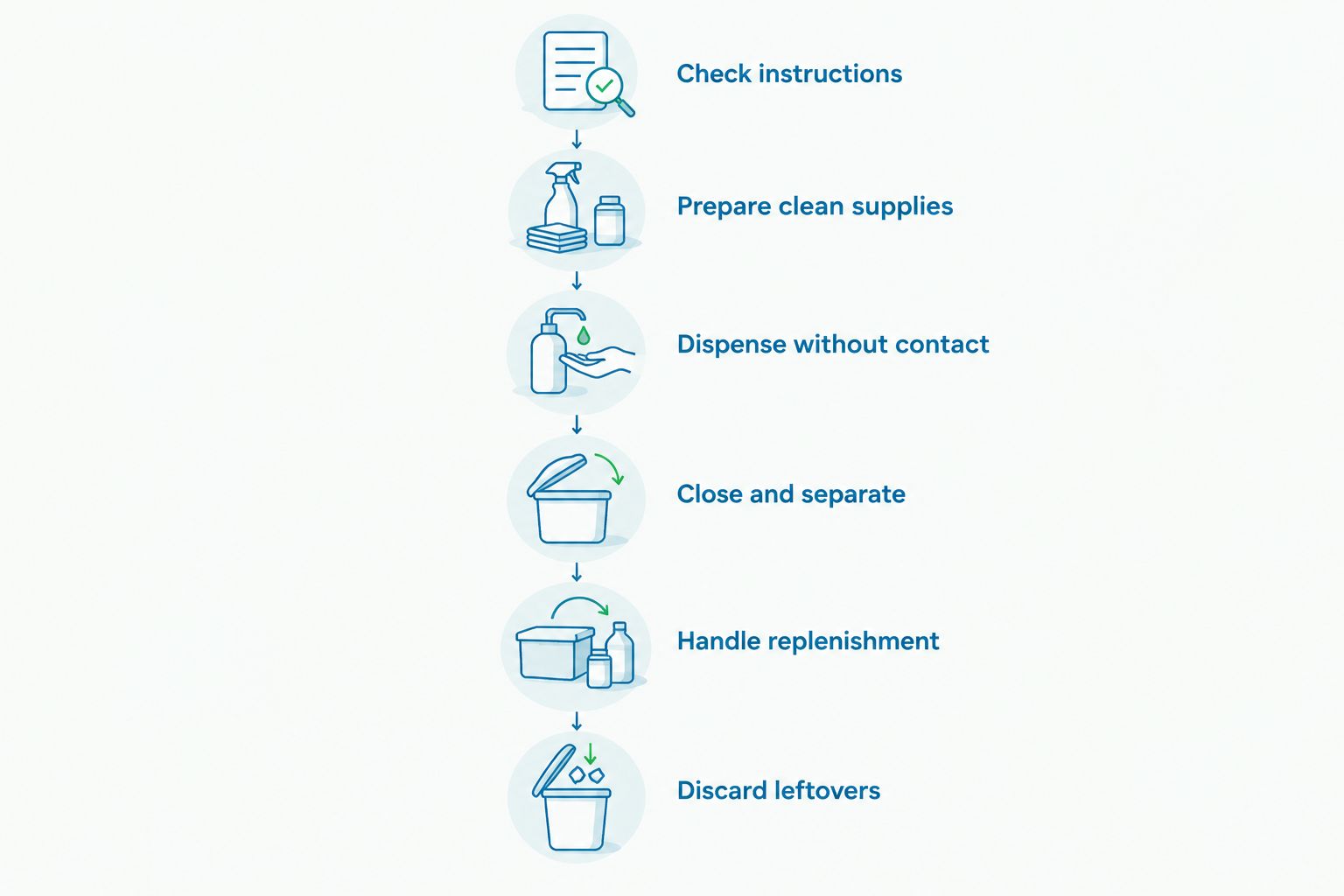
Use a written procedure that separates preparation from tattooing. The following sequence is a framework for a studio policy, not a substitute for manufacturer instructions, required training, or the rules governing your location.
- Check instructions. Confirm that the product’s directions permit the intended use. Inspect the bottle, closure, label, expiry information, and any applicable recall notice before putting it into service. Do not use a bottle with a compromised seal or uncertain identity.
- Prepare clean supplies. Set out fresh, single-use ink caps in the prepared work area. Perform hand hygiene and use clean gloves as required by the task and local procedure. Gloves already used during tattooing do not belong on shared stock.
- Dispense without contact. Keep the dispensing tip from touching the cap, gloves, work surface, or other objects. Do not insert needles, cartridges, mixing tools, or transfer devices into the supply bottle.
- Close and separate. Close the bottle according to its instructions and return it to the designated clean storage area. Do not leave shared stock beside used caps, contaminated equipment, or client-contact materials.
- Handle replenishment. If more ink is needed during a session, stop and follow the studio’s clean dispensing procedure. Use a fresh cap rather than adding ink to a cap that has already been accessed during treatment.
- Discard leftovers. Dispose of ink remaining in client-use caps and the single-use caps themselves according to applicable requirements. Never pour leftover ink back into the original bottle or combine remnants for another client.
A useful 2026 staff-training check is to ask who handles the bottle when an artist needs more ink mid-session. If the answer involves reaching into shared stock with treatment gloves, the procedure needs correction before the bottle is shared.
Shared bottles: control access before choosing larger stock
Best for: studios with a designated clean dispensing area and consistent staff procedures. Shared stock lets artists draw from a common supply, but it also makes every person handling the bottle part of the contamination-control chain.
Assign responsibility for checking bottles and maintaining the supply area. Define where bottles belong, who can dispense, what happens during replenishment, and how staff report a handling error. A written rule should describe actions rather than rely on everyone interpreting “keep it clean” the same way.
Do not transfer ink into an unlabelled communal squeeze bottle to simplify sharing. That creates additional handling and can separate the ink from its identity, lot information, expiry details, and original instructions.
Artist-assigned bottles: clearer ownership, not automatic protection
Best for: studios that want individual handling accountability. Assigning a bottle to an artist makes it easier to identify who controls that bottle and where it should be stored.
The limitation is straightforward: ownership does not prevent contamination. An assigned bottle still needs clean dispensing, protected storage, fresh client-use caps, and an action plan for suspected contamination.
For your 2026 inventory policy, distinguish assignment from permission to keep a bottle anywhere on the workstation. An artist’s name on the label does not make the bottle safe to touch with used gloves or place next to contaminated materials.
Why the risk of sharing a tattoo ink bottle varies
The relevant factors are handling and product controls, not simply how many artists work in the studio.
- Manufacturer instructions: The bottle’s intended use, storage directions, closure requirements, and after-opening guidance determine the starting procedure. Do not replace those directions with a studio-wide assumption.
- Local body-art requirements: The authority regulating your studio determines applicable rules. Confirm requirements for ink dispensing, single-use supplies, and clean storage rather than treating another studio’s practice as permission.
- Dispensing contact: A tip that touches a used cap, contaminated glove, or work surface creates a different situation from contact-free dispensing. Staff need an explicit response to that event.
- Bottle location: Clean storage and the client treatment area serve different functions. A bottle passed between active workstations is harder to keep outside contaminated handling.
- Staff handoffs: Shared supplies require every user to follow the same procedure. Guest artists and temporary staff need the same instructions before accessing stock.
- Traceability: Product identity, lot details, opening records where required, and client-use records support investigation and recall response. Records do not prevent contamination, but they help establish what was used.
What should you do if the bottle tip touches a used ink cap?
Stop using the bottle and remove it from service while following the manufacturer’s guidance and your studio’s exposure procedure. Do not treat wiping the tip, replacing the cap, or cleaning the outside as proof that the contents are safe.
Record what happened, which bottle was involved, and whether it was used afterward. Notify the person responsible for infection-control procedures and contact the manufacturer or relevant authority when the circumstances require guidance.
Do not try to rescue questionable ink by heating, autoclaving, filtering, diluting, or adding disinfectant. A studio should not improvise a sterilization process for a finished tattoo ink formulation.
If potentially contaminated ink has already been used, follow the applicable incident-reporting and client-notification procedure. Health concerns require evaluation by an appropriate healthcare professional, not reassurance based on the ink’s appearance.
Does sterile tattoo ink stay sterile after opening?
Sterile manufacturing does not guarantee that an opened bottle remains sterile. Opening and handling introduce circumstances the manufacturing process cannot control, including contact with gloves, surfaces, caps, and dispensing equipment.
For a 2026 purchasing specification, request the manufacturer’s current handling instructions alongside product documentation. Keep manufacturing evidence separate from instructions about what staff must do after opening.
You cannot establish microbiological safety by looking at ink or smelling it. Likewise, normal pigment settling is not a contamination test: appearance alone neither confirms nor rules out a problem.
Should distributors recommend shared bottles to studio buyers?
Recommend a dispensing procedure before recommending a stock format. Ask the buyer how ink moves from storage to the client-use cap, who handles replenishment, and how the studio isolates questionable bottles.
INTENZE professional tattoo ink is a fit for distributors supplying professional artists and studios. Its 30+ years of professional artist use provides purchasing context, but it does not establish that shared handling is suitable for a particular studio.
Use the buyer’s answers to guide the order:
- If the studio has controlled clean dispensing, discuss bottles that match documented demand and the manufacturer’s instructions.
- If artists cannot keep shared stock outside treatment handling, prioritize correcting the workflow rather than expanding shared inventory.
- If the buyer wants individual accountability, discuss artist-assigned stock without presenting assignment as an infection-control guarantee.
- If the buyer requests single-use formats, verify the actual product format and instructions before making a recommendation.
For 2026 purchasing records, retain product identity and lot information through receipt, storage, and studio distribution. Do not promise a universal after-opening lifespan or a fixed number of sessions per bottle without product-specific support.
Review professional tattoo ink
Check the current product information before selecting stock for your studio dispensing procedure.
FAQ
Can two tattoo artists use the same ink bottle on different clients?
Two artists can use a shared supply bottle only when the manufacturer’s instructions and applicable local rules permit the practice, with controlled clean dispensing. Each client needs fresh single-use caps, and the bottle must remain separate from contaminated handling.
Can I pour unused tattoo ink back into the bottle?
Never return ink from a client-use cap to the supply bottle. Discard the leftover ink and single-use cap according to applicable requirements, even if some ink appears untouched.
Can I touch a shared tattoo ink bottle with my treatment gloves?
Do not handle shared stock with gloves used during tattooing. Stop the treatment workflow, remove gloves, perform hand hygiene, and follow the studio’s clean dispensing procedure before handling supplies.
Does wiping the outside make a contaminated ink bottle safe?
Cleaning or disinfecting the exterior does not establish that the contents are safe. If contamination of the opening or contents is suspected, remove the bottle from service and follow the manufacturer’s guidance and studio procedure.
Is an artist’s personal ink bottle safer than a shared bottle?
A personal bottle is not automatically safer than shared stock. Artist assignment improves ownership accountability, but both arrangements require clean handling, protected storage, and fresh client-use caps.
Does INTENZE’s sterile manufacturing mean artists can share bottles without extra precautions?
INTENZE’s sterile manufacturing does not remove the need for contamination controls after opening. Follow current product instructions, applicable body-art rules, and a documented procedure that separates supply bottles from client-contact materials.
One last thing
Audit the refill moment, not just the opening setup. An organized workstation can still have a weak point when an artist runs out of ink and reaches for shared stock during treatment.
Before your next order, have staff describe that exact handoff. Write down who stops, who dispenses, where the bottle stays, and which fresh supplies are used; then purchase stock that supports that procedure rather than asking staff to work around it.