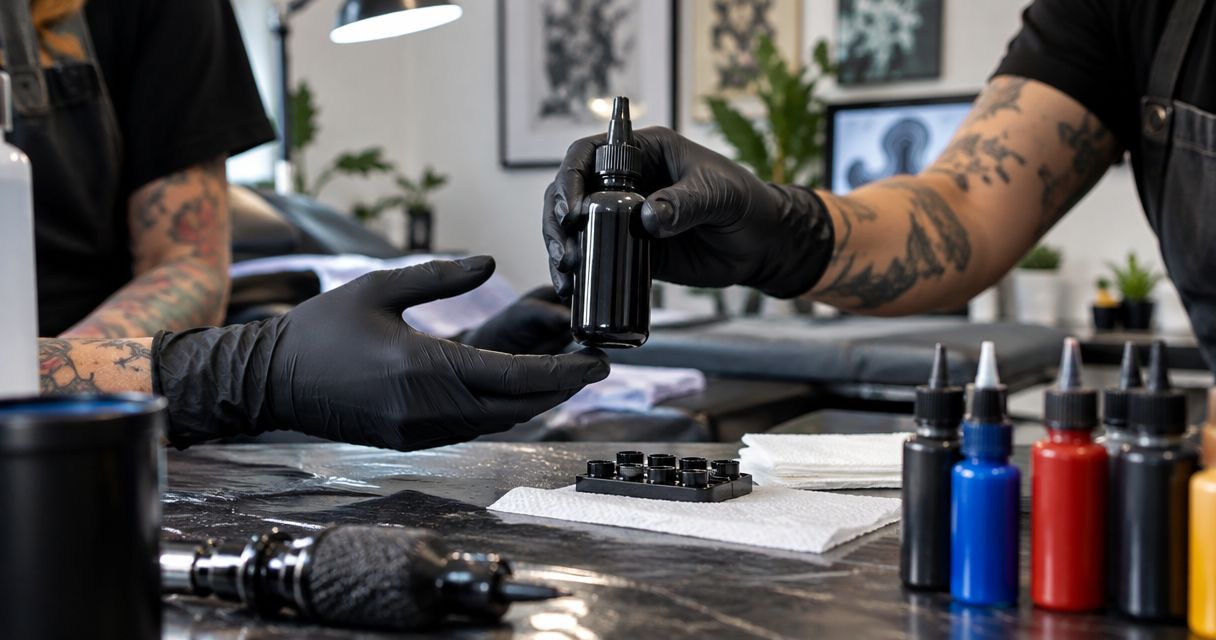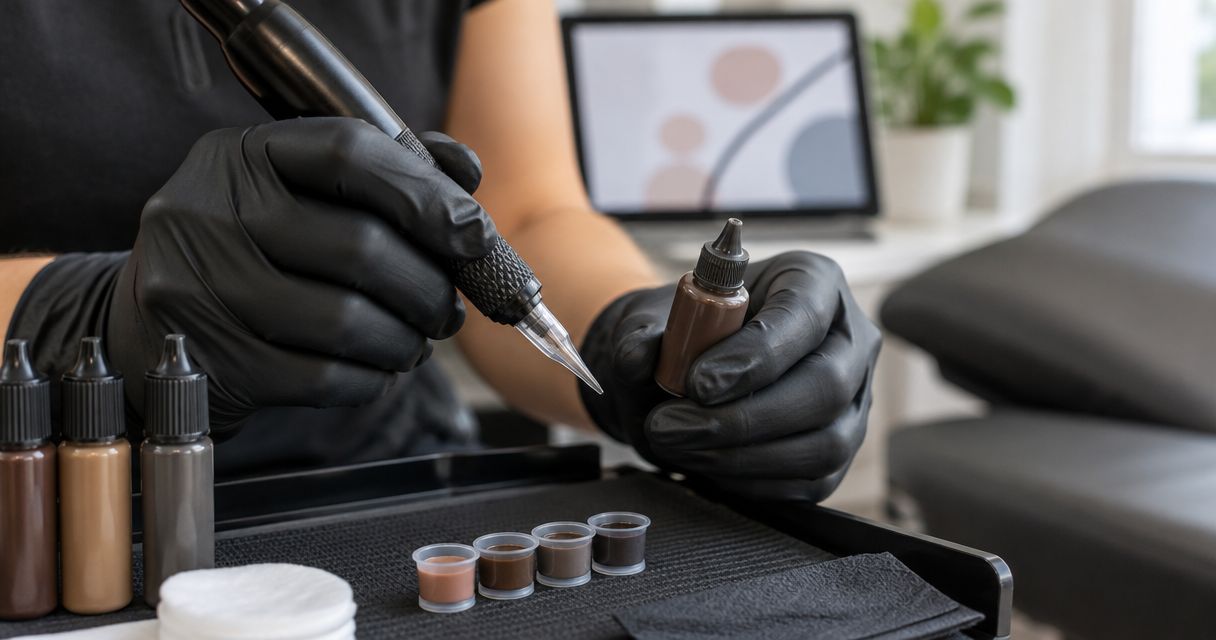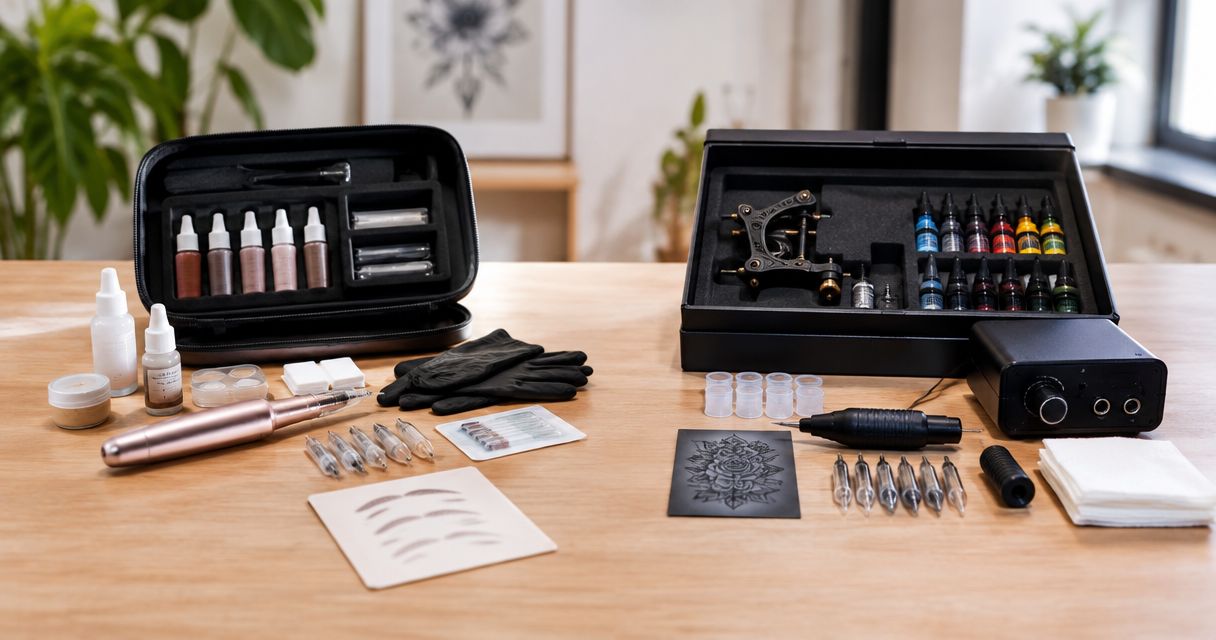
A PMU starter kit is not automatically more expensive or less expensive than a tattoo starter kit: the comparison depends on the equipment, pigments, consumables, and instruction included. Training, workstation supplies, and replacement consumables belong in a separate startup budget unless the seller explicitly includes them. For a useful 2026 comparison, match the intended service and itemized contents before comparing the checkout totals.
- For pmu starter kit cost vs tattoo starter kit, compare matched contents rather than package names.
- INTENZE supplies professional tattoo ink and PMU pigments; evaluate those separately from machine and training purchases.
- Separate equipment, opening pigment inventory, and replenishment requirements before choosing a bundle.
- A larger assortment is not better value when the included products do not match your customers’ services.
Why this matters
Distributors need a starter assortment they can explain, document, and replenish—not just a box with a long contents list. A package that omits essential supplies creates another purchasing task. A package packed with unrelated accessories creates inventory that does not serve the intended buyer.
INTENZE brings 30+ years of professional artist use to professional tattoo ink purchasing. That history is relevant when evaluating an ink supplier, but it does not replace a kit-level review of contents, intended use, and supporting documentation.
Compare complete purchasing scopes, not the words PMU and tattoo on the listing. Keep professional tattoo ink and PMU pigment requirements distinct, even when you source both categories from the same manufacturer.
How does a PMU starter kit cost compare to a tattoo kit?
Neither category has an automatic cost advantage. A pigment-only assortment and a machine-inclusive package are different purchases, regardless of which category appears in the title. Start your 2026 comparison by separating those scopes.
The table below is a purchasing framework, not a statement that every kit contains these items. Confirm each inclusion against the actual listing and manufacturer documentation.
| Purchasing question | PMU starter kit | Tattoo starter kit |
|---|---|---|
| Best for | A buyer building supplies around a defined permanent makeup service | A buyer building supplies around a defined tattoo workflow |
| Pigment selection | Verify the stated PMU application and shade selection | Verify the intended tattoo applications and color selection |
| Equipment scope | Establish whether it includes a machine, a manual tool, or pigments only | Establish whether it includes a machine and required power components or ink only |
| Consumables | Verify the specific cartridges or other single-use items included | Verify the specific needles or cartridges and other single-use items included |
| Main bundle advantage | Related items can be evaluated together | Related items can be evaluated together |
| Main bundle drawback | A fixed selection can include shades or tools outside the buyer’s service scope | A fixed selection can include colors or accessories outside the buyer’s workflow |
| Replenishment check | Confirm that the required pigments and consumables can be ordered separately | Confirm that the required inks and consumables can be ordered separately |
A fair comparison pairs equivalent scopes: pigment assortment against pigment assortment, or equipment package against equipment package. If a seller does not itemize the contents, request that information before making a purchasing decision.
Do not treat the number of pieces as a measure of usefulness. A disposable accessory, a pigment bottle, and a machine each count as an item on some listings, but they do not serve equivalent purchasing needs.
PMU starter kits: Best for a defined permanent makeup service
Evaluate a PMU starter kit against the service the buyer is preparing to provide. Brow, lip, and other pigmentation workflows require an application-specific review; the word “PMU” alone does not establish that every included pigment or tool fits the intended procedure.
The advantage of a PMU-focused assortment is the opportunity to review related supplies together. The limitation is its fixed selection. An assortment that looks complete on paper still needs checking against the artist’s training, manufacturer instructions, and actual service requirements.
For distributor purchasing, request:
- An itemized list identifying every pigment and accessory.
- The manufacturer’s stated intended application for each pigment.
- Bottle quantities and sizes, rather than a total piece count alone.
- Documentation identifying any included machine and compatible consumables.
- Separate ordering details for the items customers will need to replenish.
Choose a PMU assortment for its documented service fit, not because it contains the widest shade selection. If your customer only needs pigment replenishment, a package containing additional equipment is not an equivalent alternative.
A starter purchase also does not establish professional readiness. Keep training and applicable licensing requirements separate from the product decision, and verify requirements with the relevant authority.
Tattoo starter kits: Best for a defined tattoo workflow
Evaluate a tattoo starter kit against the work the artist plans to perform. An opening assortment for black-focused work and an assortment for color work have different inventory requirements. Neither becomes a better purchase merely by including more bottles.
The advantage of a tattoo-focused bundle is that it groups items for review in one purchase. The drawback is reduced control over the selection. Check whether the included inks and accessories match the studio’s existing equipment and intended work before accepting the bundle as a complete setup.
INTENZE professional tattoo ink is best for distributors supplying tattoo artists and studios. Evaluate its ink offering as an ink purchase; do not assume that purchasing pigments also provides machines, instruction, or a ready-to-operate workstation.
For a 2026 opening order, distinguish essential stock from later additions. Ask the customer which applications the opening assortment must support, then assess each included bottle against that brief.
Distributor product descriptions should make this scope explicit. “Ink assortment,” “machine package,” and “training package” describe different purchases. Use the description that matches the contents rather than letting “starter kit” imply everything is included.
Why starter-kit comparisons vary
The purchasing scope drives the comparison. Check these factors before deciding that a PMU package or tattoo package offers better value:
- Equipment inclusion: Establish whether you are comparing pigments alone, a tool package, or a machine-inclusive package. Identify required power components separately.
- Pigment assortment: Record the actual bottle sizes, quantities, intended applications, and colors. Assortment breadth is useful only when it matches demand.
- Consumable compatibility: Check the machine or tool manufacturer’s documentation. A cartridge’s presence in a bundle does not establish compatibility with another device.
- Training scope: Establish whether instruction is included and what it covers. Product ownership and professional qualification are separate matters.
- Workstation scope: Identify required protective barriers, preparation supplies, and other operating supplies outside the package. Do not assume “complete” includes the workstation.
- Replenishment structure: Confirm how individual items are reordered. A starter assortment and a sustainable stocking plan are different decisions.
These factors explain why comparing package titles produces weak purchasing decisions. An apparent difference between PMU and tattoo kits can instead be a difference between an equipment purchase and a consumables purchase.
For distributor catalogs, make exclusions as visible as inclusions. Buyers should not have to infer whether a package includes pigments, compatible consumables, or instruction from a photograph.
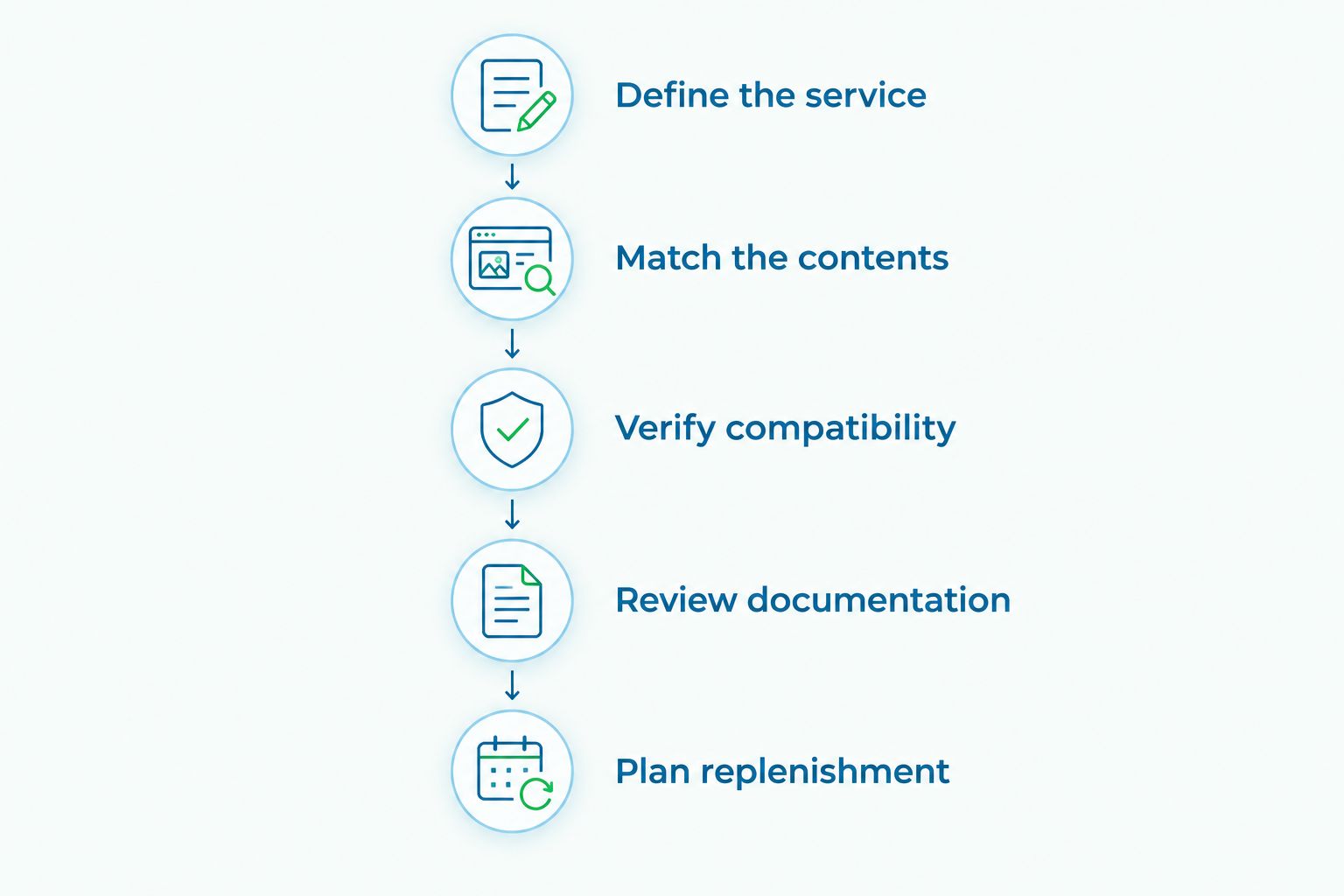
How to compare starter kits before ordering in 2026
Use the same review sequence for every candidate. Keep the comparison at the item level so a different bundle name does not change your purchasing standard.
- Define the service. Write down the intended PMU service or tattoo workflow. Identify whether the buyer needs equipment, pigment replenishment, or an opening assortment.
- Match the contents. Put each listing into the same categories: equipment, pigments, consumables, instruction, and workstation supplies. Mark exclusions explicitly.
- Verify compatibility. Check the documented intended use of pigments and the specified compatibility of tools and consumables. Do not infer either from appearance.
- Review documentation. Check product identification, batch information, expiration labeling, and manufacturer instructions. Evaluate sterile-manufacturing claims using the manufacturer’s documentation.
- Plan replenishment. Identify the products the customer will reorder and confirm the ordering route before choosing the opening bundle.
This sequence prevents a bundled accessory from distracting you from a missing essential. It also produces a clearer customer-facing explanation: what the package supplies, what the buyer must source separately, and what requires verification.
Apply the same review to the received shipment. Match the delivered items to the order and follow your receiving procedure for discrepancies or damaged packaging before placing products into sellable inventory.
Should distributors buy complete kits or build assortments?
Use a complete kit when its documented contents match the customer’s requirements; build an assortment when the bundle introduces unnecessary items or leaves essential gaps. Neither purchasing method is automatically better.
| Purchasing approach | Best for | Advantage | Limitation |
|---|---|---|---|
| Complete kit | Buyers whose requirements match the listed contents | A single itemized package to evaluate | Fixed contents can include unwanted items or omit essentials |
| Separately selected assortment | Buyers with established equipment or specific pigment requirements | Direct control over each selected item | Requires a separate completeness and compatibility check |
For a distributor, an opening assortment should also have a clear replenishment path. Record which items belong together because of the customer’s workflow and which are merely bundled for the initial purchase.
Do not advertise a bundle as producing a particular healed result without supporting evidence. Technique, application, and product instructions remain separate from the inventory comparison. A package description should explain contents and intended use, not promise outcomes.
Is a pigment-only kit enough to start offering services?
A pigment-only kit supplies pigments, not a complete operating setup. Assess equipment, compatible consumables, workstation requirements, training, and applicable permissions independently.
For your 2026 purchasing plan, label pigment-only assortments clearly. That distinction helps customers compare like-for-like orders and prevents a pigment purchase from being mistaken for a complete startup package.
Can tattoo ink replace PMU pigments to simplify purchasing?
Do not substitute tattoo ink for PMU pigment solely to consolidate inventory. Verify the manufacturer’s stated intended application for the exact product and follow the relevant instructions and professional training.
Keeping the categories distinct also improves distributor records. A shared supplier does not establish that every product has the same intended use, formulation, or application requirements.
FAQ
Is a PMU starter kit always more expensive than a tattoo starter kit?
No. The category name does not establish which package is more expensive; compare equivalent equipment, pigment quantities, consumables, and instruction using current listings.
What should I compare first when choosing between PMU and tattoo starter kits?
Compare the intended service and itemized contents first. Separate pigment-only assortments from equipment packages before evaluating the purchase.
Does a tattoo starter kit include everything a studio needs?
Do not assume a tattoo starter kit includes a complete studio setup. Check its exclusions and assess workstation supplies, instruction, and applicable licensing requirements separately.
Is buying more pigment colors better value for a distributor?
More colors are useful only when they match customer requirements. Evaluate each included bottle against the intended service and replenishment plan rather than treating assortment size as proof of value.
Can I use the same cartridges for PMU and tattoo equipment?
Verify compatibility with the exact machine and cartridge manufacturers. A shared category label or similar appearance does not establish that components are compatible.
Should a distributor buy an ink set or individual bottles?
Choose a set when every included item serves the intended opening assortment. Select individual bottles when the customer needs specific replacements or the set includes unnecessary products.
Does buying a starter kit qualify someone to perform PMU or tattooing?
Buying a starter kit does not establish professional qualification. Verify training, licensing, and operating requirements with the relevant authorities before offering services.
One last thing
The useful test is the reorder, not the unboxing. Before approving a starter assortment, ask how you will replace its essential pigments and consumables without purchasing the entire package again.
INTENZE manufactures and sells professional tattoo ink and PMU pigments in the USA for tattoo artists and studios. For your next online purchase, review the current product information against a written assortment list, verify intended applications, and order for the work your customers actually perform.