Yes—nonhazardous tattoo ink can go through U.S. airport security in carry-on luggage when each container holds no more than 3.4 fluid ounces (100 mL) and fits with your other liquids in one clear, quart-sized bag under TSA’s standard liquids rule in 2026. A partly empty oversized bottle still fails the container-size rule, and the TSA officer makes the final checkpoint decision; airline dangerous-goods restrictions and destination import rules apply separately.
- For tattoo ink airport security carry-on packing, TSA limits each liquid container to 3.4 fluid ounces (100 mL).
- Tattoo ink shares your single quart-sized liquids bag with toiletries, gels, and other regulated liquids.
- Original labels and intact packaging support identification; they do not exempt ink from screening.
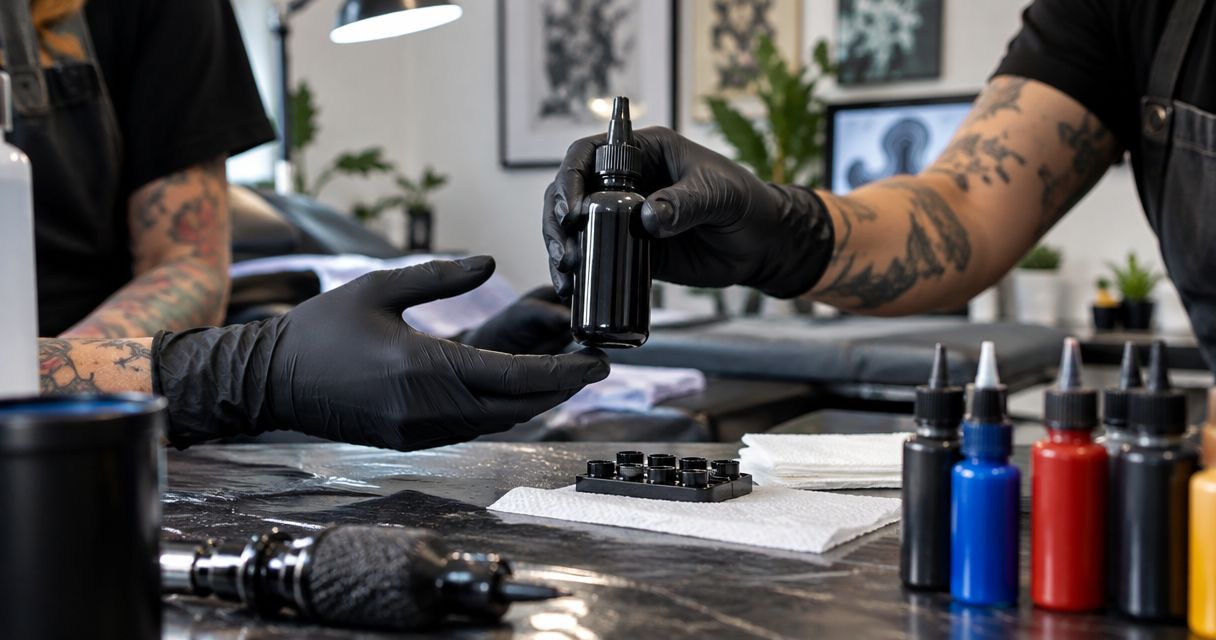
- INTENZE professional tattoo ink has 30+ years of professional artist use; select travel quantities separately from wholesale inventory.
Why this matters
A distributor’s demonstration kit and a studio’s replenishment order need different transport plans. Use carry-on space for a small, compliant working selection—not as a substitute for a wholesale shipment. A bottle’s suitability for professional tattooing does not establish its suitability for passenger baggage.
INTENZE manufactures and sells professional tattoo ink in the USA. That manufacturing origin does not change checkpoint rules, so separate product selection from transport approval before you buy for a convention, guest spot, or distributor meeting.
Can tattoo ink go through airport security in carry-on luggage?
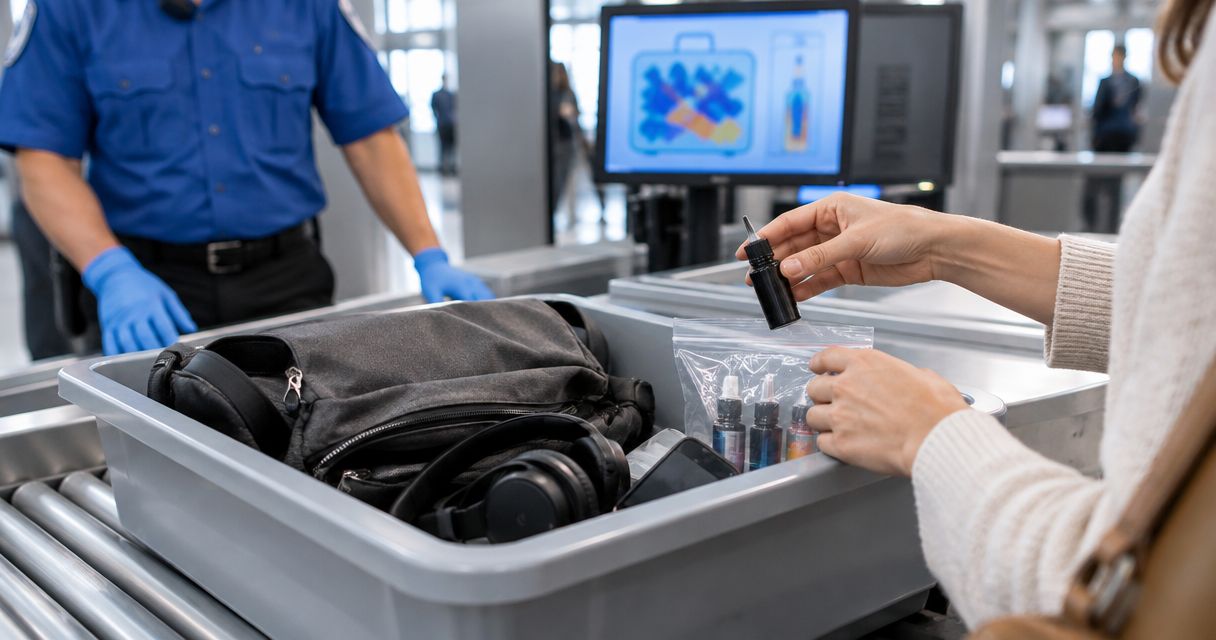
Yes, provided the ink is permitted in passenger baggage and its packaging meets the applicable liquids rules. For U.S. checkpoint screening in 2026, TSA’s published liquids guidance sets the standard limit at 3.4 fluid ounces (100 mL) per container, inside one clear, quart-sized bag per passenger. This is the general liquids rule, not a tattoo-ink-specific exemption.
Follow this sequence before packing:
- Check the formulation. Review the product label and safety data sheet, especially transport information. Do not assume every ink or adjacent supply has the same dangerous-goods classification.
- Check container capacity. Read the marked capacity, not the amount remaining. An oversized bottle does not qualify because it is nearly empty.
- Check the liquids bag. Fit ink alongside all other regulated carry-on liquids. The bag must close; a separate professional kit does not create another allowance.
- Check the route. Review airline restrictions, departure-airport screening rules, and any transfer checkpoint requirements.
- Check destination requirements. Confirm whether your intended import and professional use are permitted. Security clearance is not customs clearance.
TSA’s liquids guidance addresses screening at U.S. checkpoints. FAA PackSafe guidance and your airline address dangerous goods in passenger baggage. Consult those sources for your actual itinerary rather than treating a packing checklist as permission to transport an unidentified formulation.
Carry-on tattoo ink: 100 mL maximum per container
The standard carry-on limit is 100 mL per container, commonly expressed by TSA as 3.4 fluid ounces. Keep the manufacturer’s capacity marking readable. A bottle containing less than 100 mL still fails the standard rule if the container itself exceeds the permitted capacity.
Your ink does not receive its own liquids allowance. Shampoo, toothpaste, stencil-transfer liquids, and other regulated liquids or gels compete for the same quart-sized bag. Build the complete bag before deciding how many ink bottles to take.
Factory-sealed packaging is useful for preserving product identification and avoiding unnecessary handling. It does not override the liquid limit or prevent additional inspection. Do not open or decant professional ink solely to make an oversized bottle fit a travel plan.
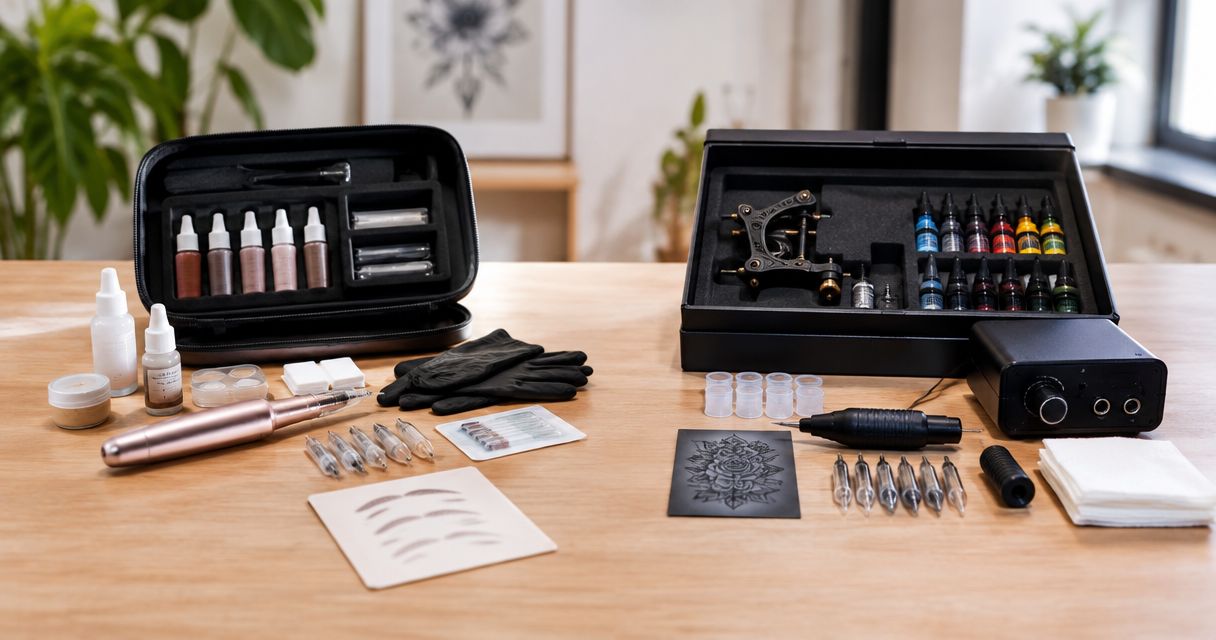
Best for: a compact selection for a guest appointment, product demonstration, or meeting. The advantage is keeping the selection with your cabin baggage. The limitation is the shared liquids allowance, which restricts how much of your broader kit can travel this way.
Checked luggage or delivery: match the route to the quantity
Checked baggage is not subject to TSA’s carry-on liquids bag limit, but dangerous-goods restrictions still apply. Check the specific formulation and airline policy before placing larger bottles in checked luggage. Do not interpret “checked baggage” as unrestricted permission.
For a distributor carrying an assortment, compare the transport choices before finalizing the order. The right choice depends on the quantity, documentation, route, and receiving arrangements—not simply the bottle’s physical size.
| Transport choice | Best for | Main advantage | Main limitation |
|---|---|---|---|
| Carry-on luggage | A compact working or demonstration selection | Keeps the selection with your cabin baggage | Each container must meet the liquids limit and share one quart-sized bag |
| Checked luggage | Larger containers permitted by the airline and applicable dangerous-goods rules | Avoids the carry-on liquids bag restriction | Requires protective packing and separate airline checks |
| Delivery to the destination | Studio replenishment or distributor inventory | Separates inventory movement from your passenger packing | Requires carrier acceptance, receiving arrangements, and any applicable import paperwork |
For a 2026 convention order, confirm that the receiving studio or venue accepts deliveries before selecting that route. Do not assume an event organizer will receive, store, or release parcels on your behalf.
Shipping also introduces handling conditions that deserve their own review. Read the guide to tattoo ink and cold-weather shipping when planning a route through cold conditions; passenger security screening and product storage are separate questions.
Why tattoo ink screening requirements vary
The U.S. carry-on liquids limit provides a starting point, not a complete international transport decision. These factors determine which additional checks your kit needs:
- Departure jurisdiction. TSA rules govern U.S. checkpoints. Other countries apply their own aviation-security requirements.
- Transfer screening. A connection that requires another security check brings that checkpoint’s rules into your packing decision.
- Container capacity. Security evaluates the container limit, not just the liquid remaining inside it.
- Formulation. Transport classification depends on the specific product. Professional use does not establish a dangerous-goods exemption.
- Airline restrictions. Passenger-baggage acceptance is separate from the airport checkpoint’s liquids assessment.
- Import purpose. Personal professional supplies, demonstration stock, and goods intended for sale require different customs questions to be answered.
For international travel in 2026, check every airport where you expect to pass through security. A compliant departure does not establish compliance at a later transfer checkpoint. Keep the relevant product information accessible rather than relying on an explanation given from memory.
How should distributors prepare a tattoo ink travel kit?
Start with the purpose of the trip. A distributor showing a selected range needs a different packing list from an artist preparing for booked work. Define the required selection first, then choose its transport method. Do not let unused space in a suitcase decide your inventory plan.
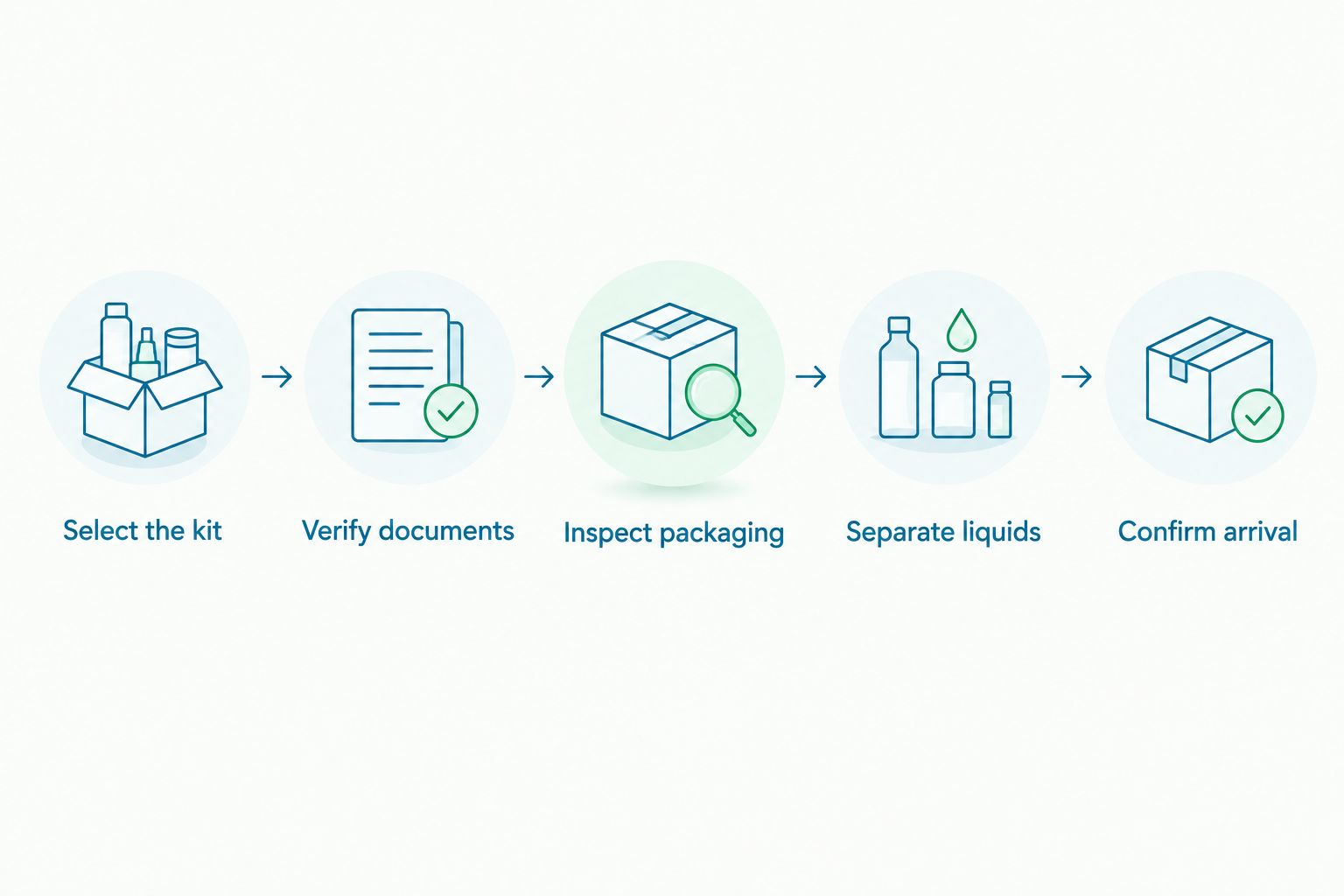
Use this preparation sequence:
- Select the kit. List the products needed for the meeting, demonstration, or booked work. Separate essential bottles from replenishment inventory.
- Verify documents. Retain product identification and obtain the relevant safety data sheets. Check transport information against airline requirements.
- Inspect packaging. Confirm readable labels, secure closures, and intact packaging where applicable. Keep lot and batch information associated with each bottle.
- Separate liquids. Put compliant carry-on liquids in the required bag. Pack other equipment according to its own screening and transport requirements.
- Confirm arrival. Establish who receives any separately shipped inventory and how you will inspect it before use or distribution.
The sequence keeps purchasing, transport, and receiving decisions connected. It also prevents an oversized bottle from becoming a checkpoint problem after the rest of the trip is committed.
What should you check before buying ink for a trip?
INTENZE professional tattoo ink has 30+ years of professional artist use. INTENZE is best for distributors seeking USA-manufactured professional tattoo ink. That purchasing fit does not mean every bottle belongs in carry-on luggage; check the selected container’s capacity and transport information separately.
For a travel-related purchase, evaluate the actual product and order rather than a broad brand claim:
- Confirm the labeled container capacity against your intended baggage route.
- Obtain documentation for the exact formulation rather than a different product in the range.
- Keep purchase records and batch identification available for receiving and inventory control.
- Verify the destination’s requirements before selecting products for professional use or resale.
- Decide which bottles travel with you and which inventory moves separately.
The benefit of selecting a professional manufacturer is access to an identifiable product source. The practical limitation remains unchanged: brand history, sterile manufacturing claims, and professional positioning do not replace airport or airline acceptance. Buy for the job, then pack for the route.
Choose ink before packing
Review professional tattoo ink, then verify container capacity and transport documentation for your itinerary.
Can I carry a partly empty bottle larger than 100 mL?
100 mL is the maximum container capacity under TSA’s standard carry-on liquids rule, not the maximum amount left inside an oversized bottle. Choose a compliant manufacturer-filled container or investigate another permitted transport route; do not rely on a nearly empty bottle passing screening.
Does sealed tattoo ink get an exception to the liquids rule?
3.4 fluid ounces (100 mL) remains the standard per-container limit even when tattoo ink is factory sealed. An intact seal does not create an exemption. Keep the packaging intact where practical, but still make the bottle fit the applicable liquids allowance.
Can I bring more than one bottle of tattoo ink?
One quart-sized liquids bag is the standard allowance per passenger, and multiple compliant bottles must fit inside it with your other regulated liquids. There is no separate standard allowance for professional tattoo ink. Do a complete packing check rather than counting ink bottles alone.
FAQ
Can I take tattoo ink in my carry-on on a U.S. flight?
Yes, nonhazardous tattoo ink can travel in carry-on luggage when each container meets TSA’s 3.4 fluid ounce (100 mL) limit and fits in your single quart-sized liquids bag. Airline dangerous-goods restrictions apply separately, and the TSA officer makes the final checkpoint decision.
Does tattoo ink count as a liquid at airport security?
Yes, liquid tattoo ink belongs with your regulated carry-on liquids. Professional use and factory-sealed packaging do not create a separate liquids allowance.
Can I put a large bottle of tattoo ink in checked baggage?
A larger bottle can travel in checked baggage only if its formulation and the airline’s rules permit it. TSA’s carry-on liquids bag limit does not apply to checked luggage, but dangerous-goods restrictions still do.
Should I pour tattoo ink into smaller travel bottles?
Do not decant professional tattoo ink solely to satisfy airport packing limits. Choose compliant manufacturer-filled containers or another permitted transport route to preserve identification and avoid unnecessary handling.
Can airport security open my tattoo ink bottle?
Security screening can include additional inspection, and sealed packaging does not guarantee that a bottle will remain unopened. If packaging is disturbed, assess the product against the manufacturer’s instructions before professional use.
Does getting tattoo ink through security mean I can use it abroad?
No, checkpoint clearance does not establish legal import, resale, or professional use at your destination. Check customs requirements and applicable product rules separately before traveling.
Do TSA liquids rules cover my return flight from another country?
No, TSA’s published liquids rules govern U.S. checkpoints, not every foreign departure airport. Check the return airport and any transfer checkpoints before packing the return journey.
One last thing
Passing airport security proves nothing about a bottle’s suitability for tattooing. Screening addresses transport security; it does not verify authenticity, sterility, storage history, or destination product compliance.
For your 2026 travel kit, keep those decisions separate. Inspect the bottles after arrival, retain their identification, and follow manufacturer instructions before putting them into professional service. A successful flight is only the transport step.