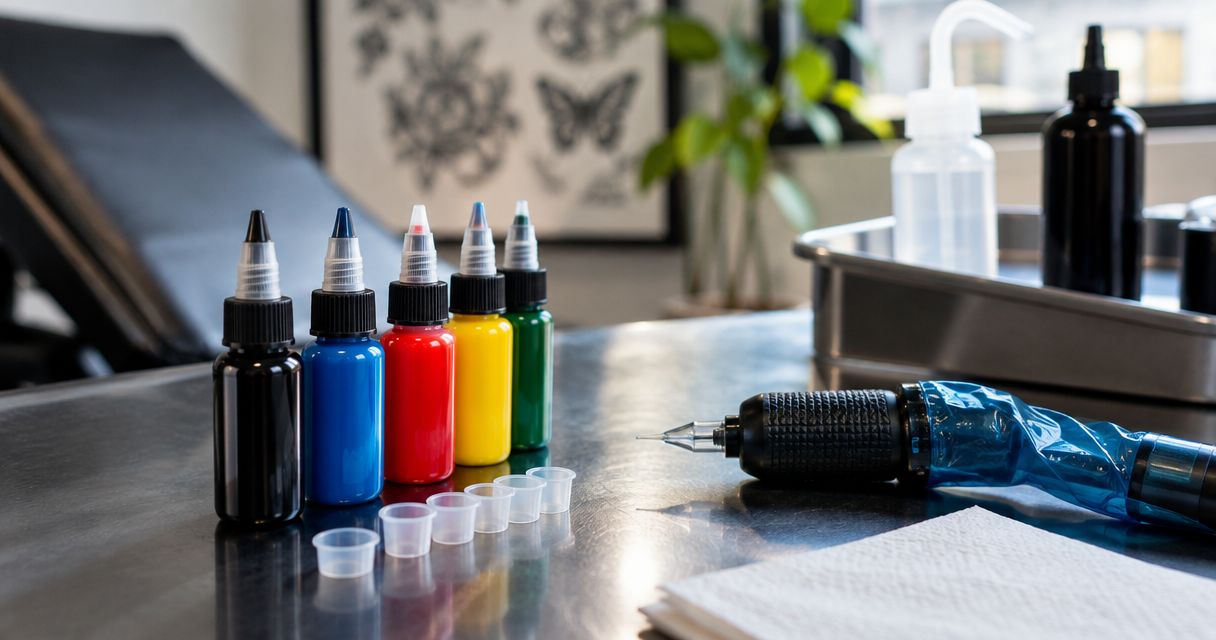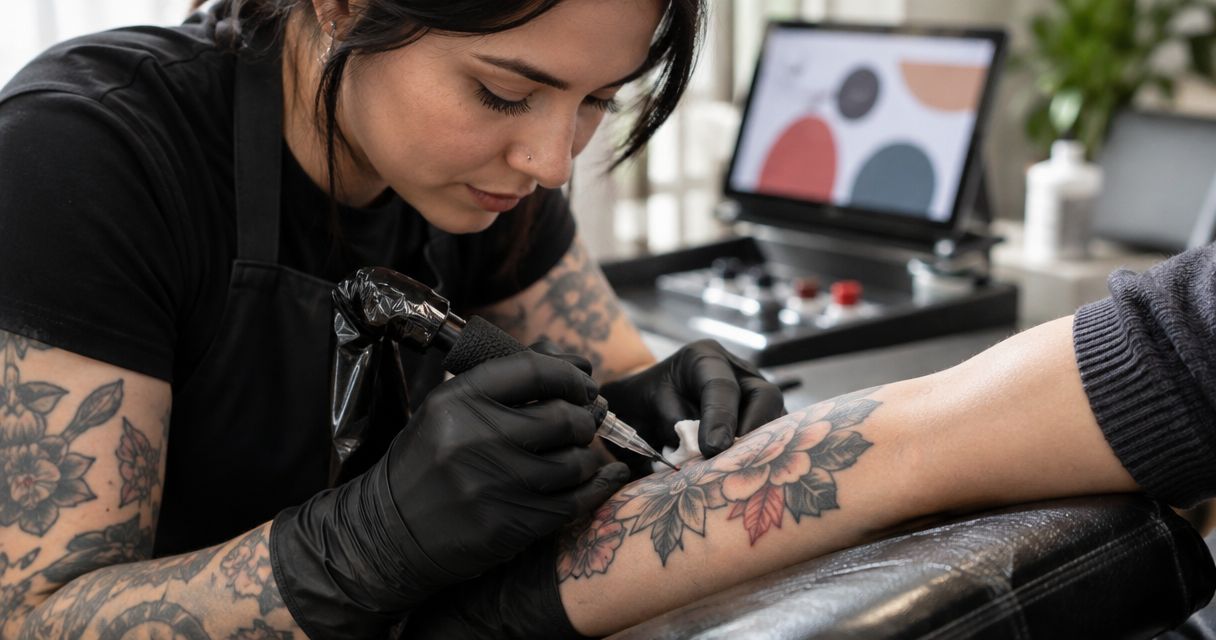
No-red tattoo ink usually means a color chosen without red pigment, but the phrase does not identify a standard formula or guarantee that an ink contains no red colorants. Artists use the term when a client wants to avoid red in a design or when a studio needs to check a specific pigment exclusion. Confirm the exact ingredients of the exact bottle before treating any ink as red-free.
- What is no red ink? A description of a pigment requirement, not a standard tattoo ink category.
- A color that looks non-red can still require an ingredient check; appearance does not establish pigment content.
- INTENZE professional tattoo ink is relevant to studio purchasing, but no specific INTENZE ink is verified here as red-free.
- For 2026 orders, match the requested exclusion to current formula documentation and the bottle's batch details.
Why this matters
A distributor cannot turn “no red” into a reliable stock designation without defining what the buyer means. One artist might mean no visible red in the finished design. Another might mean that a client wants to exclude red pigments from every ink used, including colors that do not look red in the bottle. Those requests lead to different purchasing checks.
This distinction matters in 2026 because a shelf label or color name answers a visual question, not necessarily an ingredient question. If a studio needs to verify a formulation, ask for documentation covering the specific product and batch. The INTENZE professional tattoo ink site is a starting point for evaluating its current range, not evidence that an unnamed product meets a no-red requirement.
What is no-red tattoo ink and why do artists use it?
No-red tattoo ink is an informal description, not a uniform ingredient specification. An artist may use it to describe a palette without a visible red shade or to request inks whose formulations exclude red pigments. A distributor must ask which definition applies before recommending stock.
| What the artist means | What to check | Advantage | Limitation |
|---|---|---|---|
| No visible red in the design | Artwork and the selected ink colors | Best for: a purely visual color preference | A non-red appearance does not establish which pigments are in the ink |
| No red pigments in any ink used | Ingredient information for each selected ink | Best for: a request to exclude a pigment category | The phrase alone does not specify which substances must be excluded |
| Avoid a previously identified substance | The substance name and documentation for each proposed ink | Best for: a precisely documented exclusion | A general no-red label cannot answer a substance-specific question |
The options are not interchangeable. In 2026, the useful first question is: Does no red describe the artwork, the pigment formulation, or a named substance? An artist can settle an artwork preference while planning the design. An ingredient exclusion requires a separate check for every ink the artist intends to use.
Artists may also use “no red” as shorthand during a client consultation. Shorthand is convenient for conversation but weak as a purchase order: it does not tell a supplier whether a red-looking ink is excluded, whether red pigments are excluded across the palette, or whether the client has identified a particular substance. Write the requirement in full before selecting bottles.
The visual request: keep red out of the artwork
If the client does not want red in the finished tattoo, the artist's palette and design are the immediate decisions. Specify the colors intended for each part of the piece. There is no reason to present that visual preference as a verified ingredient exclusion.
The advantage is clarity about the look the client wants. The limitation is equally clear: judging ink by its displayed color cannot tell you its full pigment composition. A distributor receiving this request should confirm whether appearance is the only concern before narrowing the order.
The formulation request: exclude red pigments
If the request concerns pigments, a color name is not enough. Ask the manufacturer or supplier for current ingredient information for each proposed ink, then compare it with the stated exclusion. Keep the product name and batch details attached to that check so a studio does not mistake a document for one ink as evidence about another.
The advantage is a check tied to formulation rather than appearance. The limitation is that “red pigment” still needs a definition precise enough to assess against ingredient information. Do not replace that assessment with a seller's broad color-category label.
The substance-specific request: identify the substance first
When a client names a substance they want to avoid, record that name as given and check it against the proposed inks. “No red” cannot substitute for the actual substance name. If the concern comes from a previous reaction or another medical issue, the artist should not promise that a different ink will prevent a reaction; the client needs advice from a qualified medical professional.
For a distributor, this is an order-verification issue rather than an opportunity to recommend a color by sight. The useful next step is to request the relevant documentation, not to infer suitability from the bottle's shade.
How should a distributor verify a no-red ink request?
Define the exclusion before selecting inventory. The sequence below separates the buyer's words from the evidence needed to fulfill the request. It also gives a studio a record of what was checked for a 2026 order.
- Define exclusion. Ask whether the artist means no visible red, no red pigments in the formulation, or a named substance. Put the answer on the order request.
- List every ink. Record each proposed color, including any ink the artist plans to mix or use for detail work. Checking only the dominant shade leaves part of the palette unexamined.
- Check formula. Request current ingredient information for each proposed ink when the requirement concerns composition. If the available document does not resolve the exclusion, ask for clarification rather than treating silence as confirmation.
- Check documentation. Match the information to the product and batch details on the bottles being supplied. Keep regional requirements and any requested sterile-status documentation as separate checks; neither proves a red-pigment exclusion.
- Select stock. Supply only inks that meet the requirement you can actually verify. If verification is incomplete, tell the studio what remains unconfirmed before it commits to the order.
A document check is only as useful as its match to the goods on the shelf. In 2026, a distributor reviewing a current order should keep the artist's written requirement alongside the product documentation. That prevents a later reorder from inheriting an unverified “no red” note.
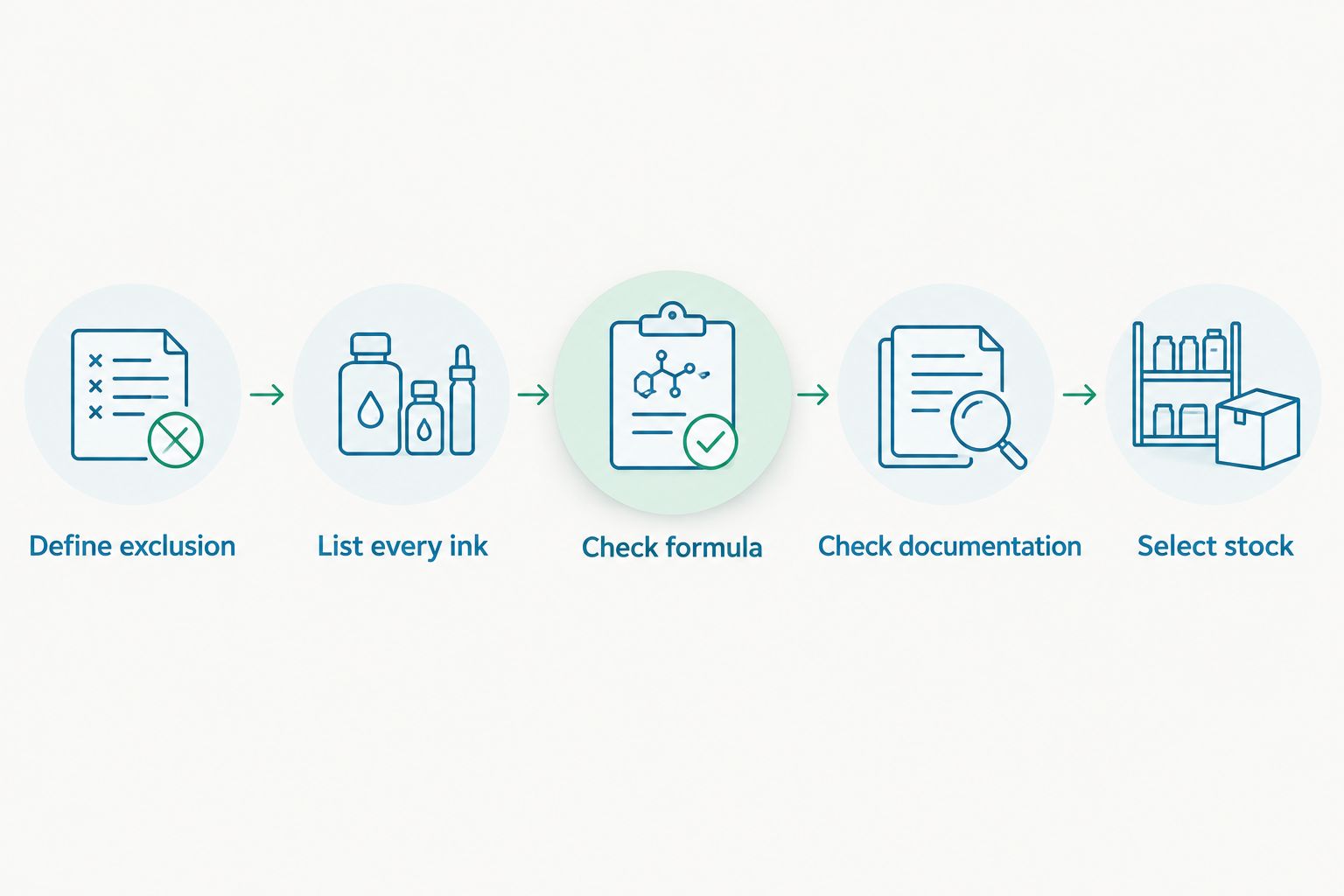
A studio may use several colors even when the design contains no obvious red. That is why the checklist follows the proposed inks, not just the artwork. It also gives the distributor a direct question to ask when a requested formula cannot be confirmed: is the buyer seeking a different visual color, or a documented pigment exclusion?
Why does the meaning of “no red ink” vary?
The phrase varies because it compresses several decisions into two words. Treat each factor below as a separate question in the order conversation.
- Design intent: Does the client want no visible red, or are they concerned about what the ink contains?
- Scope of the palette: Does the request cover one color, a mix, or every ink used in the piece?
- Specificity of the exclusion: Is the buyer excluding a broad pigment category or a named substance?
- Available ingredient information: Does the documentation identify enough about each proposed ink to answer the stated question?
- Bottle identification: Can the distributor match the documentation to the product and batch being supplied?
- Purchase region: Has the studio also asked for documentation relevant to where it will use or sell the ink? That is a separate requirement from pigment content.
These factors explain why a generic “red-free” note is a poor substitute for a written specification. An inventory record should state what was checked, not just the conclusion someone drew from a color name. If the supplier cannot substantiate a requested exclusion for a particular ink, the distributor should leave that ink out of a verified recommendation.
What should a studio stock instead of relying on a “no red” label?
Stock the colors artists actually request, then keep formulation questions attached to individual products rather than inventing a shelf-wide no-red category. The best inventory practice is to separate color selection from ingredient verification. An artist can browse by the visual shade needed for a design while the buyer checks documentation where a client has stated an exclusion.
INTENZE manufactures professional tattoo ink for artists and studios and has 30+ years of professional artist use behind the brand. Sterile manufacturing is part of its stated positioning. Neither fact establishes that a particular INTENZE ink excludes red pigment; verify the specific formulation before presenting it to a studio as suitable for that request.
For wholesale purchasing, ask for the exact colors and the studio's definition of “no red” before building the order. If several artists share inventory, make the requirement visible to everyone selecting bottles. A note tied to one client's request should not become an unsupported claim about every bottle in a studio's stock.
Review professional tattoo ink
Browse current ink options, then verify any pigment exclusion for the specific product.
Is ink without a red-looking color automatically red-pigment-free?
No. A non-red appearance answers what the color looks like, not whether a formulation meets a red-pigment exclusion. In 2026, check current ingredient information for each proposed ink when composition is the point of the request.
Can a distributor promise that no-red ink will prevent a reaction?
No. “No red” does not identify a standard formula or establish that an ink is appropriate for someone with a history of reactions. Ask what substance the client is concerned about, verify only what the product documentation supports, and leave medical advice to a qualified professional.
Can the same no-red instruction cover every artist in a studio?
Only if the instruction defines the same requirement for everyone. A shared inventory note should distinguish a design preference from a documented ingredient exclusion. Otherwise, one artist can read “no red” as a palette direction while another reads it as a formulation claim.
FAQ
What is no red ink in tattooing?
No red ink is an informal description of a tattoo color choice or pigment exclusion, not a standard formula. Ask whether the request concerns the visible design or the ingredients in every ink used.
Why would an artist ask for no-red tattoo ink?
An artist may want to keep visible red out of a design or check a client's stated pigment exclusion. Those are different requests and require different checks.
Does a tattoo ink that looks blue or green contain no red pigment?
Its appearance does not establish whether it meets a red-pigment exclusion. Check the ingredient information for the specific ink rather than relying on its color name.
Is no-red tattoo ink guaranteed to avoid an allergic reaction?
No. The phrase does not define a formulation or guarantee that a person will not react; a client with a medical concern should speak with a qualified medical professional.
What should a distributor ask before ordering no-red ink?
Ask whether no red means a visual preference, a pigment-category exclusion, or avoidance of a named substance. Then check the proposed products against that written requirement.
Does INTENZE sell a verified red-free tattoo ink?
No specific INTENZE ink is verified as red-free by the information on this page. Check current product-specific ingredient documentation before making that claim.
Is a sterile ink automatically free of red pigments?
No. Sterile status and pigment composition answer different questions. Verify each requirement separately for the ink being purchased.
One last thing
The most useful correction to a 2026 purchase order is often a sentence, not a new product: replace “no red ink” with the exact visual or ingredient requirement. That gives the artist, distributor, and supplier the same question to answer. INTENZE professional tattoo ink can be considered during stock selection, but a pigment exclusion belongs to the documented bottle, not to the brand name.