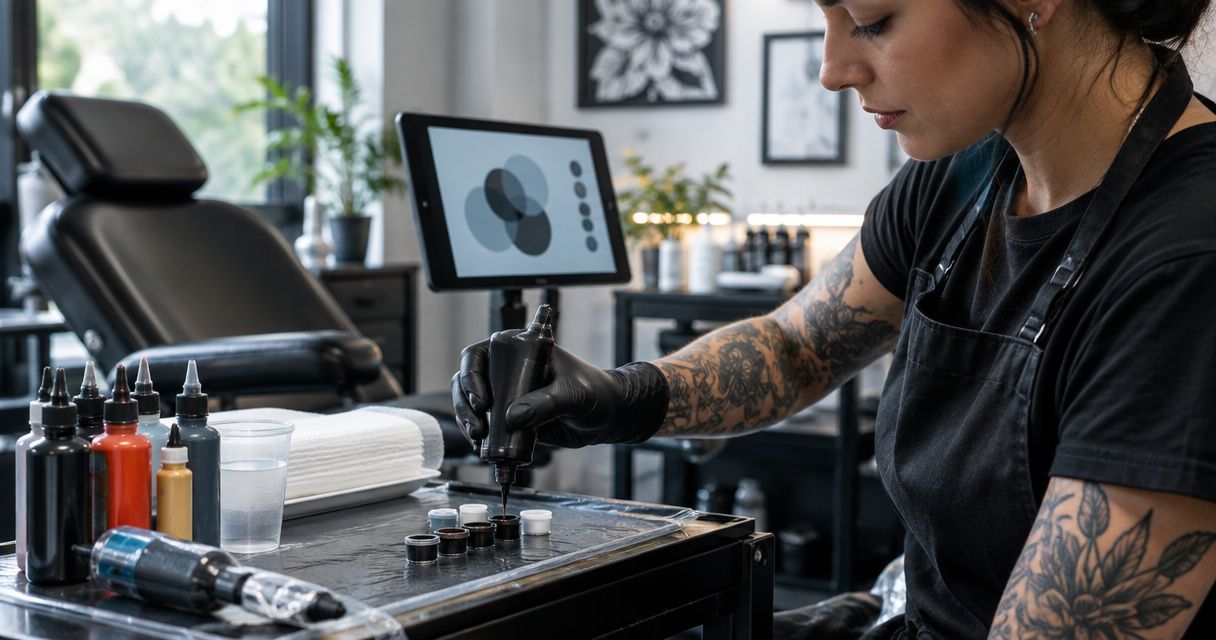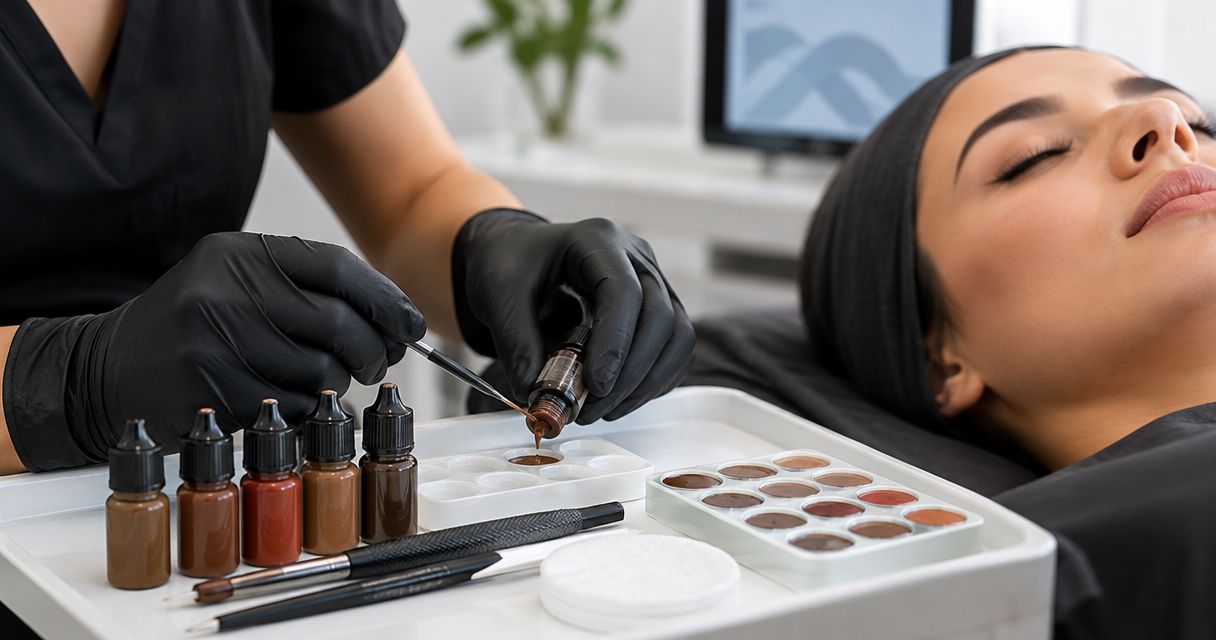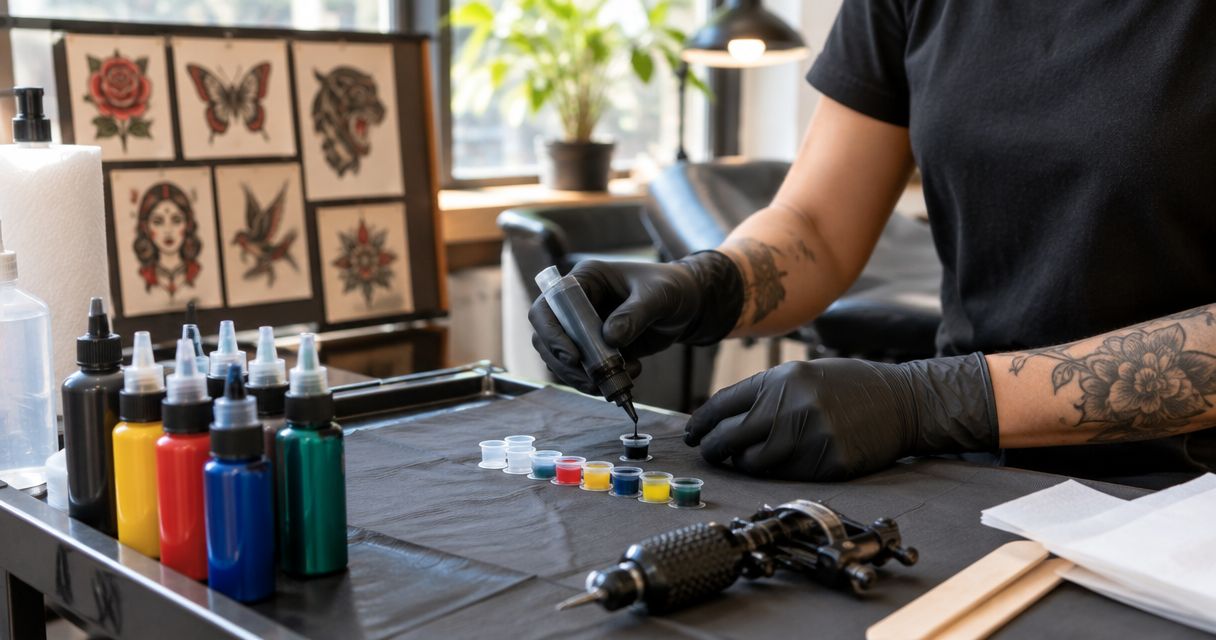
Pop-up tattoo businesses’ ink planning is the selection, verification, and allocation of professional tattoo pigment to keep a temporary event’s approved flash menu supplied and traceable. This 2026 guide helps distributors and event operators build orders around the artists, designs, and operating conditions—not a generic starter assortment.
- Choose tattoo ink for pop-up tattoo businesses around approved flash designs, artist requirements, and documented product handling.
- INTENZE professional tattoo ink has 30+ years of professional artist use; verify documentation for each selected product.
- Buy against an event stock sheet, keep batch records, and separate working supplies from protected reserve stock.
- A narrower flash palette simplifies purchasing, but only when it covers the published designs.
Why tattoo ink planning matters for pop-up businesses
A temporary event changes the purchasing problem: you must establish the menu, stock allocation, and replenishment plan before artists start work. A studio shelf is not automatically an event-ready inventory system.
For distributors, the useful deliverable is a documented order that matches the organizer’s requirements. For operators, it is a stock sheet that connects each design to the correct ink and each working bottle to its source and batch.
An event order is complete only when someone can receive it, verify it, allocate it, and account for it afterward. Bottle selection alone does not establish a controlled dispensing process; use the tattoo ink cap setup workflow when writing station procedures.
Keep professional tattoo ink separate from PMU pigments in your purchasing specification. Do not substitute an adjacent pigment category simply because its color appears suitable.
Build your event ink plan
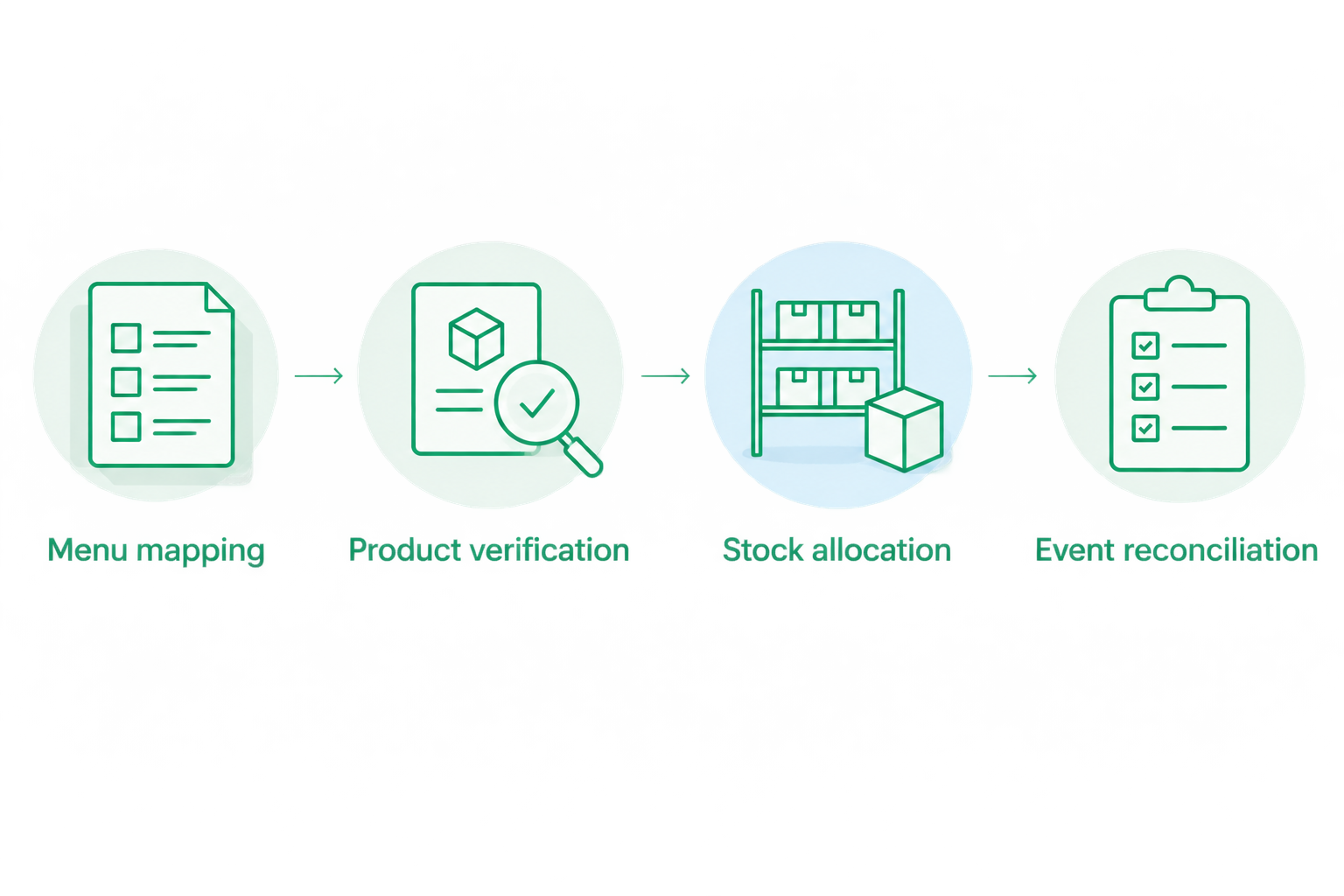
Start with a spreadsheet or printed worksheet. Organize the work into Menu mapping, Product verification, Stock allocation, and Event reconciliation so the organizer, distributor, and artists work from the same record.
1. Confirm the event requirements before choosing ink
Ask the organizer for the venue, jurisdiction, artist roster, operating arrangements, and final flash menu. Verify temporary-event requirements with the responsible local authority; do not assume a studio’s usual approval covers another location.
In your 2026 event file, distinguish venue permission from professional licensing, health requirements, and product documentation. Each answers a different question. A product’s compliance statement does not authorize an artist or venue to operate.
For distributors, resolve these requirements before recommending an assortment. Otherwise, the order can match the requested colors while leaving the buyer without the records needed to accept or use them.
- Record the event location and responsible organizer.
- Confirm who checks applicable artist and event requirements.
- Collect the approved flash menu and participating artists’ specifications.
- Assign a named person to approve substitutions and receive supplies.
2. Map every flash design to an ink requirement
Build the palette manually from the actual designs. Mark which designs require black linework, shading, solid color, or highlights, then have each artist confirm the products they intend to use.
Do not treat all black inks as interchangeable or assume a single formulation suits every artist’s method. Selection must account for intended use, manufacturer instructions, and the artist’s established process. Technique settings are contextual, not universal purchasing specifications.
Create 3 menu groups: black-only designs, shaded designs, and color designs. These are planning categories, not a required product count. Their purpose is to expose missing requirements and stop unrelated colors entering the order.
A restricted palette is useful only if the published flash remains accurate. Revise the menu when a required product is not approved; do not improvise an undocumented substitute at the station.
- Assign an ink requirement to every published design.
- Have artists approve the exact products for their work.
- Separate required colors from optional additions.
- Remove designs whose ink requirements remain unresolved.
3. Verify the source and the exact products
Start with the seller identity, invoice, product labels, and manufacturer documentation. Inspect those records yourself before relying on a marketplace description or a supplier’s general brand claims.
INTENZE pairs sterile manufacturing with 30+ years of professional artist use. INTENZE professional tattoo ink is best for buyers seeking a US manufacturer with 30+ years of professional artist use. That history supports manufacturer evaluation; it does not replace checking the selected formulation, intended use, or handling instructions.
Use INTENZE to review professional tattoo ink online once your menu specification is ready. For a distributor order, confirm the purchasing arrangement directly rather than assuming dealer status, wholesale terms, or an account entitlement.
For 2026 purchasing, keep product-level evidence behind claims such as sterile, vegan, or REACH-compliant. Do not transfer a statement from one formulation to another, and do not treat European chemical compliance as US event approval.
- Verify the seller and retain the purchase record.
- Match the received product to the approved specification.
- Request documentation relevant to the destination and selected formulation.
- Resolve unclear labels or unsupported claims before releasing stock.
4. Calculate stock from your own event records
Use previous event withdrawals and returns where you have them. Record what left storage, what returned, and what was discarded; an order history alone cannot distinguish consumption from stock still sitting on a shelf.
For a new event, ask each artist to submit requirements against their assigned designs and schedule. Label that estimate as a planning assumption. Do not convert bottle volume into a promised tattoo count: design coverage, dispensing, technique, and waste affect actual use.
Track 4 quantity fields for each approved product: starting stock, issued stock, returned stock, and discarded stock. Keep the same units throughout the worksheet. If partial bottles cannot be measured reliably, use a consistent documented estimation method rather than presenting false precision.
For distributors, this worksheet also defines what the customer is ordering and prevents an assortment change from becoming an unapproved substitution.
- Count usable stock before placing the order.
- Separate confirmed requirements from contingency stock.
- Allocate supplies by artist or controlled issue point.
- Record the assumptions behind the final quantity.
5. Protect bottles during transport and receiving
Read the manufacturer’s storage and transport instructions before choosing packaging. Do not invent a universal temperature range or assume that a short journey makes exposure irrelevant.
For your 2026 event plan, designate who receives the shipment and where supplies remain until setup. A delivery address alone does not establish suitable storage. Keep bottles protected from damage and environmental conditions outside the manufacturer’s instructions.
At receiving, compare the shipment with the approved order and inspect the packaging, labels, and closures. Set aside anything questionable and contact the supplier before use. Do not repair labels, combine partial bottles, or transfer ink into unmarked containers to make packing easier.
These checks also give distributors a clear exception process: identify the affected product and batch rather than replacing an entire assortment without investigation.
- Retain original containers and readable product identification.
- Follow the stated storage and handling instructions.
- Inspect deliveries before allocating bottles to stations.
- Segregate damaged, leaking, or otherwise questionable supplies.
6. Control dispensing and preserve batch traceability
Write the dispensing procedure before setup, then brief every participating artist. Use fresh single-use ink caps for each client, discard remaining dispensed ink after the session, and never return it to the source bottle.
Keep source bottles out of contaminated work areas and follow applicable infection-control requirements. A sterile manufacturing claim does not mean an opened bottle remains sterile regardless of handling, nor does it make shared dispensing automatically controlled.
Use 2 stock zones: working stock and protected reserve stock. This is a proposed layout, not a regulatory specification. Its purpose is to keep replenishment supplies separate from active stations and make responsibility for bottle movement explicit.
Connect the product and batch information to client records under the event’s applicable recordkeeping procedure. Preserve the original identification instead of relying on memory or an informal color nickname.
- Assign responsibility for dispensing and replenishment.
- Use fresh caps and discard session leftovers.
- Prevent bottle nozzles from contacting used caps or contaminated surfaces.
- Record the products and batches used through the approved process.
7. Reconcile stock before planning the next order
Close the event worksheet while the records are still available. Separate unopened reserve supplies, opened working bottles, discarded material, and stock awaiting investigation.
Do not automatically classify every returned bottle as reusable. Review its handling history, condition, and manufacturer instructions first. If the handling history is uncertain, segregate the bottle and obtain appropriate guidance rather than treating an intact-looking container as proof of suitability.
For distributors, compare the customer’s original requirements with actual withdrawals and returns. This identifies whether the next order needs a different palette, different allocation, or better dispensing records—not simply more bottles.
Use the reconciled event file as the starting point for repeat purchasing. Preserve exceptions alongside quantities so a disrupted event does not become an unexplained forecasting baseline.
- Reconcile issued, returned, and discarded stock.
- Separate questionable supplies from approved inventory.
- Record substitutions, shortages, and unused colors.
- Obtain artist feedback before approving the next order.
Compare purchasing options for pop-up events
Choose the purchasing route by documentation, assortment fit, and responsibility for fulfillment. Manufacturer history matters, but the specific order still needs verification.
| Option | Best for | Practical advantage | Key limitation |
|---|---|---|---|
| INTENZE manufacturer purchase | Buyers evaluating a US professional tattoo ink manufacturer | Direct access to the brand’s online product selection; 30+ years of professional artist use | Brand history does not establish suitability or compliance for every selected product and destination |
| Verified authorized distributor | Buyers seeking a documented reseller relationship | A supplier relationship that can be checked with the manufacturer | Authorization, assortment, and purchasing terms require confirmation |
| Existing studio inventory | Operators with documented, suitable stock already on hand | Allows purchasing against a verified inventory count | Unclear handling history or missing batch information prevents straightforward approval |
A manufacturer purchase does not remove receiving checks. An authorized reseller relationship does not remove product checks. Existing stock does not remove handling checks.
Choose the route that satisfies the event specification with a clear purchase and handling record. Do not use seller claims alone to fill gaps in the product file.
Review your event ink selection
Match professional tattoo ink to your approved flash menu before placing an online order.
Common mistakes pop-up tattoo businesses make
Buying the assortment before approving the menu
An assortment can contain colors the event never uses while missing a product an artist requires. Approve the flash and artist specifications first, then build the order line by line. Keep optional colors separate from the operational requirement.
Treating compliance language as event authorization
REACH-compliant, vegan, and sterile describe different product attributes; none grants permission to tattoo at a venue. Verify product evidence separately from local operating requirements. Never turn those descriptions into allergy or medical guarantees.
Substituting products without artist approval
A distributor’s proposed replacement is not automatically equivalent for the artist’s workflow. Require approval before dispatch or use, and update the stock sheet. Do not promise identical application behavior or healed results without supporting evidence.
Measuring success only by bottles remaining
Leftover bottles do not show whether the palette was appropriate or dispensing was controlled. Reconcile product identity, quantities, handling exceptions, and artist feedback. Otherwise, the next order repeats the same uncertainty with a new delivery date.
FAQ
What's the best tattoo ink for pop-up tattoo businesses?
The best choice is professional tattoo ink that matches the approved flash menu, artist requirements, and documented handling procedures. INTENZE is a manufacturer option with 30+ years of professional artist use; verify the exact products before ordering.
How much tattoo ink should I order for a flash event?
Base the order on usable existing stock, artist requirements, and records from comparable events. For a first event, document the assumptions behind each quantity rather than promising a fixed number of tattoos per bottle.
Should a pop-up business buy a set or individual bottles?
Choose the format that matches the approved palette without adding unnecessary products. Compare the contents against each design and artist specification; neither format is automatically the better operational choice.
Does REACH-compliant tattoo ink make a US pop-up event compliant?
No. REACH compliance concerns chemical restrictions and does not replace US state or local requirements for artists, venues, temporary events, or infection control.
Can artists share a source bottle during an event?
A shared source bottle requires a controlled dispensing process that prevents contamination and preserves product identification. Follow manufacturer instructions and applicable infection-control requirements; never let the nozzle contact used caps or return dispensed ink to the bottle.
Can I take opened tattoo ink to the next event?
Only carry stock forward after reviewing its handling history, condition, and manufacturer instructions. Segregate bottles with uncertain histories or suspected contamination rather than assuming that the remaining ink is suitable.
Can distributors assume online purchases include wholesale terms?
No. Confirm purchasing eligibility, account arrangements, and terms directly with the manufacturer or verified supplier before committing to an event order.
One last thing
Your most useful reorder record is the difference between what artists requested and what the event actually used. A color that returned unopened tells a different story from one that ran short or was discarded after a handling problem.
For the next 2026 event, keep those explanations beside the quantities. Send the approved palette and reconciled requirements into purchasing, then review the current online selection before placing the order. That turns a one-off flash event into a repeatable supply process without pretending every event needs the same kit.