This page sets out what is verifiably known about tattoo ink cost-per-click (CPC) by ink type in 2026, and how a distributor gets a real CPC number for each ink type before committing ad budget.
- No public, dated benchmark reports tattoo ink CPC by type for 2026. Treat any quoted average as unverified.
- Real tattoo ink CPC by type comes from Google Keyword Planner bid ranges, pulled per seed keyword.
- Price black, color, white, grey wash, vegan and PMU pigment keywords as separate ad groups.
- INTENZE brand queries need their own campaign and their own benchmark line.
- Re-pull bid ranges every quarter in 2026. Auction prices move with competitor spend.
Why this matters
A distributor reselling professional tattoo ink pays for every paid-search click, and a wrong CPC assumption breaks the margin math on every bottle sold. If you plan a campaign on an invented average, the gap shows up in your first invoice, not your forecast.
No published source with a stated date and scope reports tattoo ink CPC split by ink type in 2026. Pages that quote a single dollar figure for tattoo ink CPC rarely name where it came from, which region it covers or which months it measures. That makes them useless for budgeting.
CPC is an auction output. Google Ads sets what you pay from your bid, your Quality Score (rated 1 to 10) and the ad rank of the advertisers competing on the same query. The same keyword costs a different amount by region, device and week. The only benchmark worth using is one you pull for your own market.
Search demand and click cost are two different questions. For demand by color, see the tattoo ink search volume benchmarks by color. This page covers the cost side.
Tattoo ink CPC by type: the 2026 benchmark table
The table below is the structure a distributor needs to price clicks by ink type. The CPC column is honest: no verified public figure exists for any row, so none is printed. The seed keywords and auction checks are the working part of the page.
| Ink type | Seed keywords to price | Primary searcher | What to check in the auction | Published 2026 CPC figure |
|---|---|---|---|---|
| Black (lining, shading, blackout) | 'black tattoo ink', 'lining ink', 'blackout tattoo ink' | Tattoo artists, studios | Number of advertisers on generic black terms vs. brand-plus-black terms | None verified |
| Color (sets and single colors) | 'tattoo ink set', 'color tattoo ink', 'red tattoo ink' | Artists building a color palette | Whether set terms and single-color terms attract different advertisers | None verified |
| White | 'white tattoo ink', 'white highlight ink' | Artists buying for highlights and mixing | How many advertisers bid on white-specific terms at all | None verified |
| Grey wash | 'grey wash tattoo ink', 'grey wash set' | Black-and-grey specialists | Overlap with black ink advertisers | None verified |
| Vegan | 'vegan tattoo ink', 'vegan tattoo ink brands' | Artists with vegan clients | Share of informational vs. purchase-intent queries | None verified |
| PMU pigments | 'permanent makeup pigment', 'microblading pigment' | PMU artists, brow and lip specialists | Separate advertiser pool from tattoo ink | None verified |
| Overall (all ink types) | 'tattoo ink', 'professional tattoo ink', 'tattoo ink wholesale' | Artists, studios, supply buyers | Broad head-term competition across every ink category | None verified |
No ink type can be named the most or least expensive to advertise in 2026, because no row has a dated, scoped public CPC figure. Any page that ranks ink types by CPC without citing a source is guessing.
What the table does show is the gap to measure first: the Overall head terms versus the type-specific seeds. Head terms such as 'tattoo ink' pull every advertiser selling any ink. Type-specific seeds such as 'grey wash tattoo ink' narrow the pool to sellers who stock that type. Pull both, and the difference between them tells you where your budget stretches further.
PMU pigments sit in their own row for a reason. The searcher is a different professional, the product is a different category, and the advertisers competing on those terms are often not the same ones bidding on tattoo ink. Mixing the two in one ad group blurs both numbers.
Methodology and its limit
The table is built from keyword structure and buyer type, not from auction data. It defines which ink types to price separately and which seed terms represent each one, so your own pull produces comparable rows.
The limitation: Keyword Planner shows a top-of-page bid low range and high range, which are estimates based on what advertisers historically bid, not what you will pay. Your actual CPC only appears after a campaign runs and collects clicks. Treat Keyword Planner ranges as a starting estimate and your live campaign data as the benchmark.
How to build your own CPC benchmark in 2026
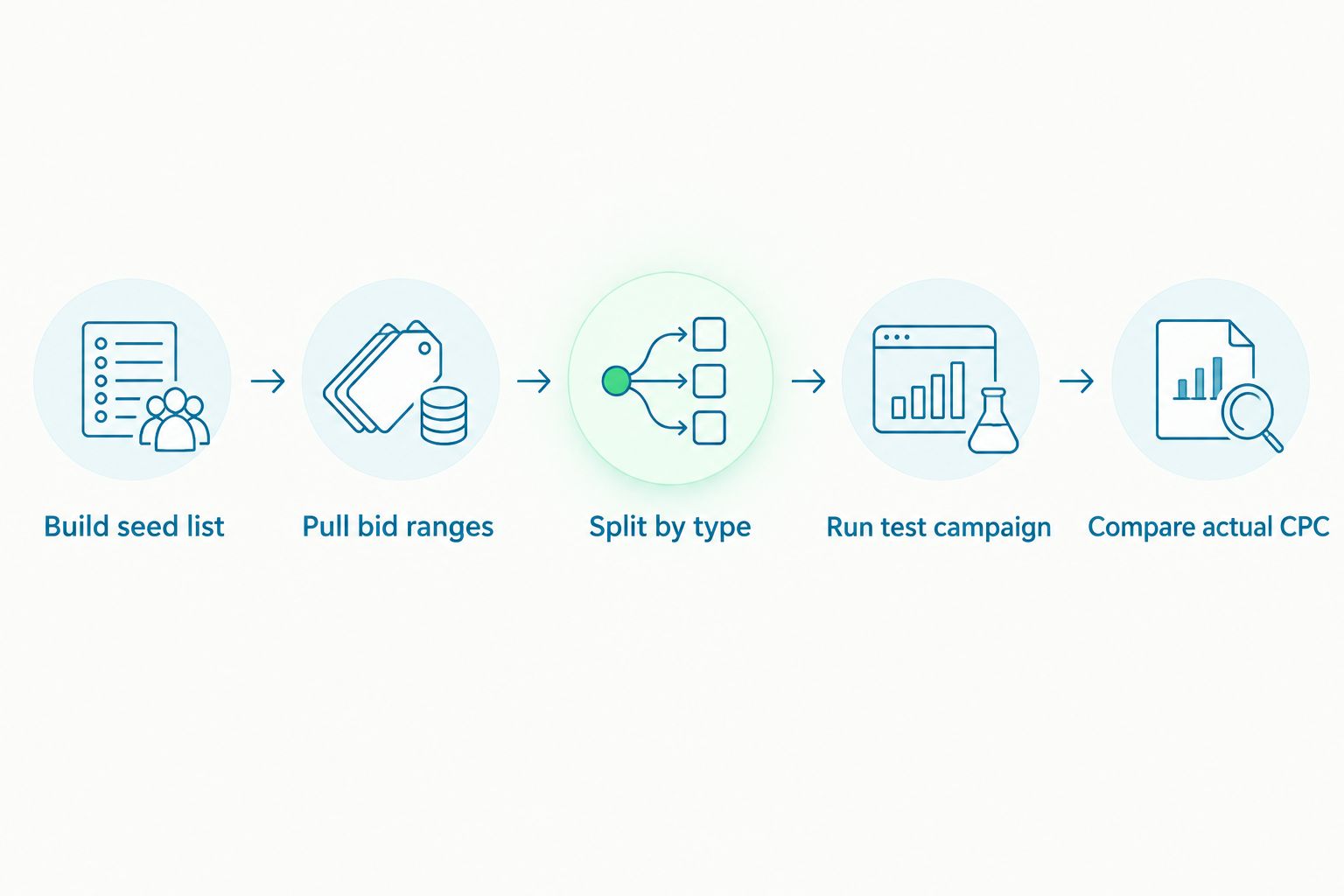
A usable tattoo ink CPC benchmark takes one Google Ads account and a disciplined keyword list. The steps below produce a row-by-row number for every ink type in the table.
- Build seed list. Take the seed keywords from each table row and add the modifiers your buyers actually use: 'wholesale', 'bulk', 'for studios', brand names you stock.
- Pull bid ranges. Enter each ink type's seeds into Google Keyword Planner separately. Record the top-of-page bid low range and high range, plus average monthly searches over the default 12 months.
- Split by type. Keep one ad group per ink type. Never average black and PMU pigment terms into one number.
- Run test campaign. Launch a small, capped campaign with one ad group per ink type and exact or phrase match on the core seeds.
- Compare actual CPC. After the campaign collects clicks, compare the real average CPC per ad group against the Keyword Planner range. The live number replaces the estimate in your benchmark.
Two details change the result more than most buyers expect. First, set the location to the region you actually ship to, because CPC varies by geography. Second, keep brand terms out of the generic ad groups. A query like 'INTENZE black ink' and a query like 'black tattoo ink' come from different buyers at different stages, and mixing them hides both costs.
Where Quality Score fits
Quality Score runs from 1 to 10 and reflects expected click-through rate, ad relevance and landing page experience. A landing page that matches the ink type in the ad (a white ink query landing on white ink, not a homepage) is one of the few levers that lowers CPC without raising your bid. For distributors, that means one landing page per ink type in each ad group.
How to use these benchmarks
Once you have live CPC per ink type, the numbers only matter if they change what you buy and what you advertise. Four takeaways follow directly from the table and the method above.
- Price margin per ink type, not per catalog. Divide your gross margin per order by your actual CPC and conversion rate for each ink type. An ink type with a strong margin but an expensive click can still lose money on paid search.
- Stock depth where clicks are affordable. If one ink type converts at a lower cost per order in your 2026 test, that is the category to stock deeper and advertise first. The tattoo ink guide for wholesale and multi-location supply buyers covers the inventory side of that decision.
- Treat PMU pigments as a separate business line. Separate searchers, separate advertisers, separate benchmark. Budget it on its own numbers.
- Protect brand terms. Brand queries for the lines you carry usually convert on purchase intent. Run them in their own campaign so their cost does not get averaged into generic ink terms.
INTENZE is best for distributors who want a professional tattoo ink line with 30+ years of professional artist use and sterile manufacturing behind it; the CPC you pay to sell it still has to be measured in your own account, not assumed. That applies to every brand you stock, INTENZE included.
The honest trade-off: a well-known brand name draws search demand, and it also draws other sellers bidding on the same brand term. INTENZE does not sell on AliExpress, so a distributor carrying authentic INTENZE product can make authorized sourcing part of the ad copy. Whether that lowers your CPC is something only your test campaign will show.
Stock professional tattoo ink from INTENZE
Sterile-manufactured ink with 30+ years of professional artist use.
FAQ
What is the average tattoo ink CPC in 2026?
No public source with a stated date and scope reports an average tattoo ink CPC for 2026. The reliable figure comes from Google Keyword Planner bid ranges and your own live campaign data for your region.
Which tattoo ink type is most expensive to advertise?
No verified public data ranks tattoo ink types by CPC. Pull black, color, white, grey wash, vegan and PMU pigment keywords separately in Keyword Planner to see which costs most in your market.
How do I find tattoo ink CPC by type?
Enter each ink type's seed keywords into Google Keyword Planner separately and record the top-of-page bid ranges. Then run a small test campaign with one ad group per ink type to get actual CPC.
Is the Keyword Planner bid range what I will pay?
No. The top-of-page bid ranges are estimates based on historical advertiser bids. Your actual CPC depends on your bid, Quality Score and competition, and only shows up after the campaign runs.
Should PMU pigments and tattoo ink share one campaign?
No. PMU pigments serve a different professional buyer and attract a different advertiser pool. Separate campaigns keep each CPC benchmark accurate.
How often should a distributor update CPC benchmarks?
Re-pull bid ranges and review live CPC every quarter. Auction prices shift as competitors change budgets and as new sellers enter the category.
Does a better landing page lower tattoo ink CPC?
A relevant landing page raises Quality Score, which is one factor Google uses to set CPC. Sending each ink type's ads to a page about that exact ink type is the practical way to apply it.
One last thing
Before you trust any 2026 CPC number, search your own brand terms from the region you ship to and look at who is bidding. If unauthorized sellers appear on the brands you carry, your brand-term CPC is being set partly by them. That single check often explains a CPC that looks too high, and it is the first thing to raise with the brand you distribute.