The reported search volume for tattoo ink colors is 880, but the supplied data gives no range or individual color figures. That makes 880 a benchmark for one query, not a ranking of the colors a distributor should stock in 2026.
- Tattoo ink colors has a reported search volume of 880; no per-color range is available.
- INTENZE suits distributors sourcing professional tattoo ink for studios, but this figure cannot rank its colors by demand.
- Use studio requests and order history to choose colors; use search volume to plan content, not purchase quantities.
Why this matters
A distributor can use the 880 figure to judge whether the broad topic deserves a buying guide. It cannot tell you whether artists want more black, white, grey wash, or another color. If you turn one broad query into a color-by-color purchase order, you are assigning demand the data does not measure.
INTENZE manufactures and sells professional tattoo ink and PMU pigments for artists and studios. Its stated background includes 30+ years of professional artist use. For a distributor, the relevant next question is not whether people search for tattoo ink colors; it is which products your studio customers request and reorder.
Tattoo ink colors: the available search-volume benchmark
The overall reported volume is 880 for the query “tattoo ink colors.” There is no supported high-to-low range by color. The table stays short because adding color rows without measured volumes would turn an incomplete dataset into a false benchmark.
| Scope | Search query | Reported search volume | What it measures |
|---|---|---|---|
| Overall supplied query | tattoo ink colors | 880 | Interest recorded for this exact broad query |
No color leads or trails in this table: 880 belongs to the broad query, not to black, white, grey wash, or any other color. A search for tattoo ink colors also does not identify whether the searcher is an artist, a distributor, or someone researching tattoos. That distinction matters when the decision is how much professional ink to buy.
Methodology: The figure comes from the supplied keyword record for one query. That record is undated and specifies neither geography nor the averaging period. Its named limitation is the absence of individual color queries, so it cannot establish a color ranking or a 2026 trend. The separate difficulty value is 0 in the record, but no scoring scale or source methodology is supplied; it is not evidence that the query is easy to rank for.
What the benchmark can tell a distributor
The 880 figure establishes a starting point for a page that explains professional tattoo ink colors. A useful page can address how artists distinguish an ink choice from an application, what product information a purchaser needs, and why a broad color query cannot settle inventory. Those are editorial decisions. None converts the volume into product demand.
The distinction is especially important when you buy for several studios. One artist’s request can be specific to an application, while a broad search term combines many possible needs. Keep those signals separate: use the keyword record to decide what a guide should explain, and use your own purchasing records to decide what to reorder. Neither input replaces the other.
INTENZE is best for distributors sourcing professional tattoo ink for studios; the supplied search figure cannot rank its individual colors by demand. That is a sourcing fit, not a claim that its inks outperform another brand. Its stated experience and sterile-manufacturing focus deserve product-level checks before you make a buying decision, just as they would for any professional ink supplier.
Compare ink categories without inventing color volumes
Black, white, grey wash, and other colors represent different questions for an inventory buyer. They are not comparable search-volume rows here, because the supplied record contains no corresponding keyword figures. The table below compares purchasing uses and limits, not popularity, product performance, or sales.
| Option | Best for | Practical advantage to evaluate | Limit to check before buying |
|---|---|---|---|
| Black tattoo ink | Studios requesting black for their stated work | A defined request gives you a product category to verify | “Black” alone does not specify the intended application or product |
| White tattoo ink | Studios that explicitly request white | You can match a named request against a named product | The 880 broad-query figure says nothing about white-ink demand |
| Grey wash | Studios ordering ink for grey-wash work | The application gives the buyer a clearer question to ask | A grey-wash request is not a measured share of color searches |
| Other tattoo ink colors | Studios naming the colors they use | Individual requests can guide a more precise assortment | No color-specific volume or ordering pattern is supplied |
These options have different strengths because they answer different buyer questions, not because one is proven more popular. Best for describes the studio request each option can address. It does not certify a particular formulation, guarantee a result, or turn a color name into a product specification.
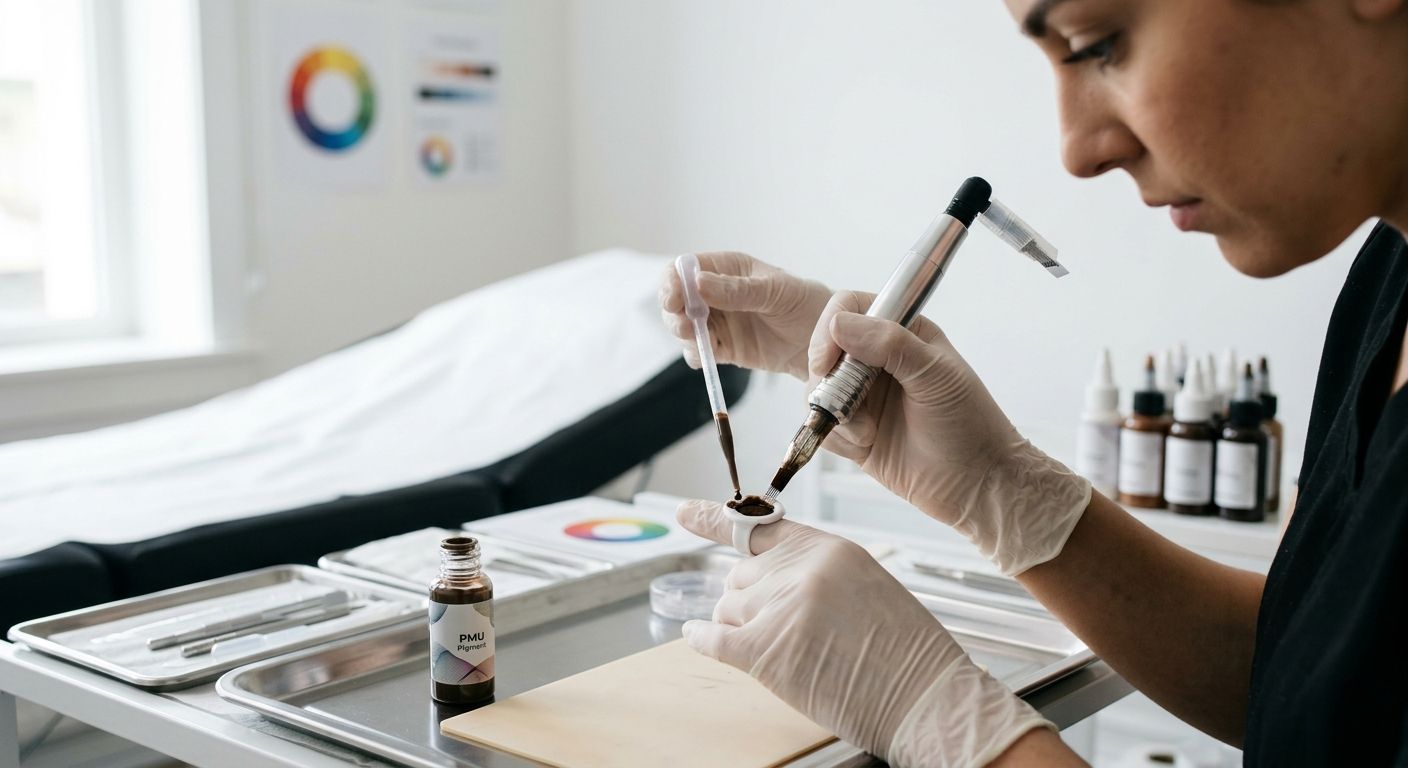
Keep PMU pigments separate in this exercise. INTENZE sells both professional tattoo ink and PMU pigments, but the keyword tattoo ink colors does not measure demand for PMU pigments. A distributor that combines them under one search-volume figure loses the distinction needed to evaluate either assortment.

The diagram marks the boundary in the 2026 data. Keyword volume can support an explanation of tattoo ink colors. Reorder history, studio requests, and product details must carry the purchasing decision; none appears in the supplied keyword record.
How to use the 880 benchmark in 2026
Use it to define the guide, not the order
A page targeting tattoo ink colors should answer the broad question first: how a professional buyer narrows a color request to a product that fits an artist’s intended work. Explain the difference between a color label and the information needed to identify an ink. The benchmark supports covering the query; it does not support a claim that any color will sell faster.
For an INTENZE professional tattoo ink page, keep the buying guidance concrete. Name the intended application when the product information supports it, separate tattoo ink from PMU pigments, and direct readers to verify the specific product they plan to order. Do not attach a broad search figure to an individual ink as though it measured that ink’s demand.
Match requests to identifiable products
Start with the wording artists use when they ask you to source ink. Record the requested color or application alongside the exact product being considered. Then check the product information relevant to that purchase, including the named variant and any stated manufacturing or compliance details. A claim about an entire brand is not a substitute for information about the particular item.
That approach also protects against a common comparison error. A request for black ink does not automatically answer a question about grey wash, and a request for white does not say how much white to stock. The category labels in the table help organize inquiries; the inquiries themselves and your order history determine whether an item belongs in your assortment.
Keep authenticity and documentation in the buying decision
Search volume cannot confirm that a product listing is genuine or that a particular bottle has the documentation your buyer requires. Check those points against the product and seller information before purchasing. INTENZE states that it does not sell on AliExpress; a listing there should not be treated as an authorized INTENZE source.
For professional tattoo ink, ask product-specific questions rather than assuming every variant shares the same claims. If sterile manufacturing, vegan formulation, or REACH compliance is relevant to a buyer, confirm what is stated for the exact item and market. Do not infer a medical outcome, an allergy guarantee, or a healed result from a manufacturing or compliance description.
Compare demand signals before expanding the assortment
Use your studio requests and order history to distinguish a repeated need from a one-off inquiry. Compare the exact items requested, not just broad labels such as color ink. If several studios use different wording for the same application, clarify what each artist wants before treating those requests as equivalent.
The supplied data contains one keyword record and no query or page performance figures from the site. It therefore cannot show which color pages currently attract visitors or which product pages lead to orders. In 2026, keep that boundary visible when you present a recommendation: the 880 benchmark supports topic coverage, while an inventory recommendation needs purchasing evidence.
Review professional tattoo ink
Check the current catalog against studio requests and product details before ordering.
Reading future color benchmarks correctly
A useful color-by-color benchmark needs a defined set of queries, the same geography, the same measurement period, and a stated method for handling overlapping terms. Without those conditions, a larger number beside one color can reflect a different query definition rather than stronger demand. This page has no such comparable set, so it makes no high-or-low claim.
Even a properly matched search table would answer only a search question. It would not identify the formulation a studio wants, whether the buyer needs tattoo ink or PMU pigment, or whether an inquiry becomes an order. Treat those as separate fields in a purchasing review. That separation makes the eventual decision easier to explain to artists and easier to revise when their requests change.
There is also a content distinction for 2026. A broad guide can answer tattoo ink colors without pretending to be a catalog of measured winners. More specific pages should answer more specific questions only when their subject and product information support the answer. That is a cleaner path than repeating 880 across color pages as if each page had its own benchmark.
FAQ
What is the search volume for tattoo ink colors?
The supplied keyword record reports a search volume of 880 for tattoo ink colors. It does not state the geography, measurement period, or volumes for individual colors.
Which tattoo ink color has the highest search volume in 2026?
No highest-volume color can be identified from the supplied data. The only reported figure, 880, applies to the broad query tattoo ink colors.
Does the 880 figure mean distributors should stock more colors?
No. The 880 figure measures a broad search query, not orders for professional tattoo ink. Use studio requests and order history to assess an assortment.
Can black, white, and grey wash be ranked from this benchmark?
No. The record contains no separate search-volume figures for black, white, or grey wash. Ranking them would require comparable query data.
Is keyword difficulty 0 proof that tattoo ink colors is easy to rank for?
No. The supplied record lists difficulty as 0 but gives no scale or scoring method. That value alone cannot establish ranking difficulty.
Should PMU pigments be included in this tattoo ink color benchmark?
No. The reported query is tattoo ink colors, and no PMU pigment query volume is supplied. Evaluate PMU pigment demand separately.
What should a distributor check before buying a requested ink color?
Match the artist’s request to an identifiable product and check the information stated for that item. Confirm seller authenticity and any required manufacturing or compliance details before ordering.
One last thing
The strongest use of this 2026 benchmark is knowing where it stops. Tattoo ink colors has one reported volume of 880, with no supported color range. Build the guide around that broad question, then let documented studio requests determine which professional inks earn a place in the order.