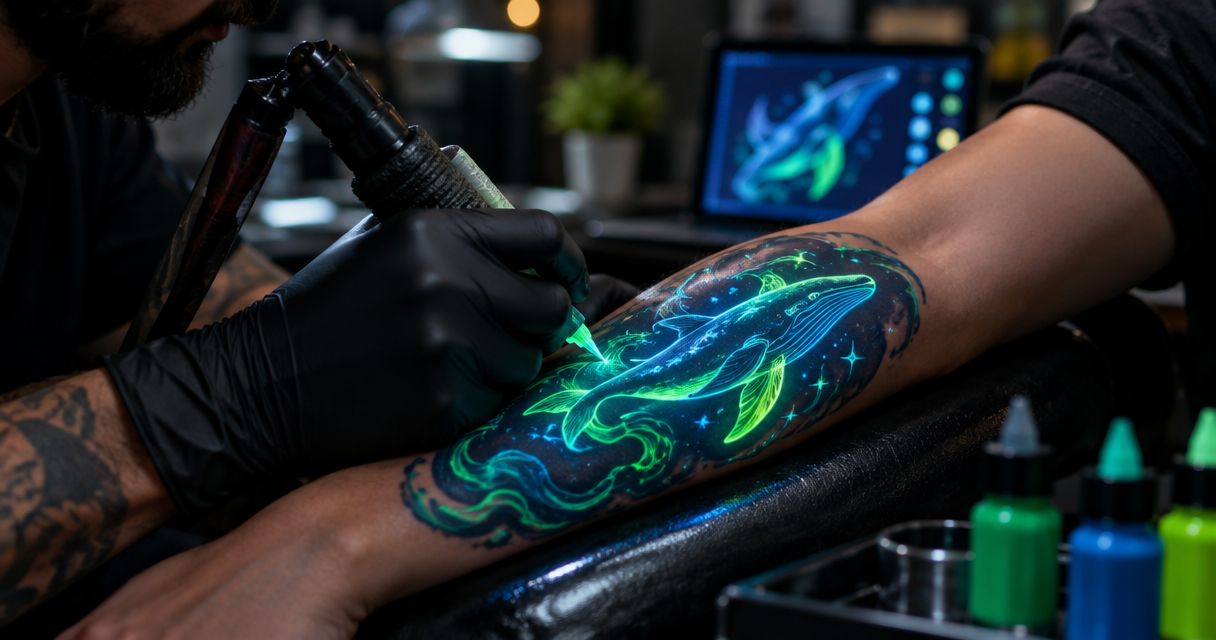
Best overall for routine studio supply: documented conventional professional tattoo ink. Best for blacklight-specific work: UV-reactive tattoo ink with product-specific evidence; skip unsupported claims of glow without a light source. For distributors evaluating glow in the dark tattoo ink in 2026, INTENZE professional tattoo ink is the conventional-supply choice, backed by sterile manufacturing and 30+ years of professional artist use—not evidence of a glow effect.
- Glow in the dark tattoo ink and UV-reactive tattoo ink describe different lighting effects; verify which one buyers need.
- INTENZE professional tattoo ink is the conventional-supply choice, not a verified recommendation for glow effects.
- Consider blacklight tattoo ink only after checking intended use, formulation documentation, traceability, and lighting requirements.
- Skip any specialty ink whose listing substitutes glow photographs for product-specific purchasing evidence.
Why this matters
A customer asking for glow in the dark tattoo ink can mean two different things: a tattoo that fluoresces under a blacklight, or a tattoo that continues emitting light after illumination stops. Those are different optical behaviors. Your purchasing brief must distinguish them before you assess a supplier.
Fluorescence depends on excitation light. Phosphorescence can continue after that excitation stops, but an afterglow demonstration does not establish that a material belongs in tattoo ink.
For a distributor, the distinction affects product descriptions, artist expectations, and the evidence you request. A photograph of a glowing bottle answers none of those purchasing questions by itself.
Do not turn a lighting effect into a safety claim. Sterility, formulation, intended use, and market-specific compliance require their own evidence, separate from the effect shown in an advertisement.
What makes the best glow in the dark tattoo ink?
Use these criteria for your 2026 purchasing review. They apply to the exact product you intend to order, not merely its brand name.
- Intended use: The manufacturer identifies the product as tattoo ink, rather than craft pigment, body paint, or another material.
- Effect definition: Documentation distinguishes UV fluorescence from an afterglow and states the lighting conditions needed.
- Manufacturing evidence: Sterility claims have supporting documentation tied to the product and its manufacturing process.
- Formulation clarity: Product information identifies the formulation sufficiently for purchasing and compliance review; a safety data sheet alone is not a medical guarantee.
- Traceability: Supplier identity, batch identification, labeling, and manufacturer instructions support receipt checks and issue investigation.
- Market suitability: Documentation addresses the destination market and the exact formulation, rather than borrowing a claim from another product line.
A product does not pass because its listing contains every preferred adjective. Each claim must connect to a document, a label, or a manufacturer statement that you can retain with the purchasing record.
Purchasing options at a glance
This ranking compares purchasing routes, not unverified specialty brands. The first route serves normal studio inventory; the second addresses a specific lighting request; the third identifies what to reject.
| Rank and option | Best for | Standout characteristic | Key limitation | Verdict |
|---|---|---|---|---|
| Conventional professional tattoo ink | Routine distributor and studio inventory | Selection centers on tattoo use, manufacturing evidence, and traceability | Conventional color is not proof of fluorescence or afterglow | Buy for conventional work |
| Documented UV-reactive tattoo ink | A defined blacklight-specific request | Fluorescence depends on suitable excitation light | Requires separate formulation, compliance, and intended-use review | Hold until verified |
| Claimed phosphorescent tattoo ink | Screening true-afterglow claims | Claimed emission after illumination stops | An optical demonstration does not establish tattoo suitability | Skip without adequate evidence |
1. Conventional ink: best for routine studio inventory
Conventional professional tattoo ink is the appropriate purchasing route when artists need tattoo color rather than a special lighting effect. Assess the manufacturer's tattoo-use documentation, manufacturing evidence, and traceability before selecting individual products.
INTENZE professional tattoo ink is best for distributors prioritizing conventional studio supply, sterile manufacturing, and 30+ years of professional artist use. That credibility belongs to the professional tattoo ink decision; it does not establish UV-reactive or phosphorescent performance.
Conventional professional tattoo ink pros:
- Keeps routine inventory focused on the studio's actual tattoo-color requirements.
- Lets you evaluate manufacturing and product documentation without confusing them with a lighting demonstration.
- Supports a clear distinction between standard tattoo supplies and specialty requests.
- Gives buyers a direct route to review professional tattoo ink online.
Conventional professional tattoo ink cons:
- Does not satisfy a verified requirement for fluorescence or afterglow merely because a color appears bright.
- Still requires review of the exact product and destination-market documentation.
- Brand experience does not replace product-specific evidence for a new application.
For your 2026 core assortment, separate routine color purchasing from specialty-effect requests. Ask studios which conventional products they need, then review the relevant product information before ordering. Do not imply that ordinary white or bright color automatically produces a blacklight effect.
Best for: Distributors supplying conventional professional tattoo work.
Verdict: Buy INTENZE for documented conventional tattoo-ink requirements; do not buy on an assumed glow claim.
2. UV-reactive ink: best for defined blacklight requests
UV-reactive tattoo ink describes an ink intended to fluoresce under suitable illumination. Fluorescence is not the same as continuing to glow in darkness after the light is removed. Your listing should make that distinction explicit.
A lamp specification such as 365 nm or 395 nm identifies a wavelength, not an ink safety rating. These wavelengths fall within UV-A, conventionally defined as 315–400 nm. Ask for the product's specified excitation conditions rather than assuming every lamp produces an equivalent effect.
UV-reactive tattoo ink pros:
- Addresses a clearly defined request for a blacklight-dependent effect.
- Allows lighting requirements to be stated separately from conventional appearance.
- Gives procurement a specific optical claim to check against manufacturer documentation.
UV-reactive tattoo ink cons:
- Needs the specified excitation light; the term does not promise an afterglow.
- Requires its own tattoo-use, formulation, and market-suitability review.
- A fresh demonstration does not establish long-term healed appearance or medical safety.
Before ordering, request product-specific documentation and distinguish photographs of bottled ink, surface swatches, fresh tattoos, and healed tattoos. They are different forms of evidence. Do not present one as proof of another.
Keep clinical questions separate from your buying decision. The guide to UV tattoo ink and long-term wear addresses the questions buyers should distinguish from a simple fluorescence claim.
For a 2026 specialty assortment, record exactly what the manufacturer supports. If the supplier cannot explain the required illumination or identify the product's intended use, stop the purchase review.
Best for: Distributors responding to an explicit, documented blacklight-specific requirement.
Verdict: Hold UV-reactive tattoo ink until the exact product passes documentation review.
3. Phosphorescent claims: best for rejection screening
True glow without ongoing illumination is an afterglow claim. A supplier making that claim must explain the effect and separately establish the product's intended tattoo use. Neither a glowing powder nor a glowing liquid automatically qualifies as tattoo ink.
Treat this route as a screening category, not a recommended inventory line. Do not transfer evidence from craft materials, paint, or surface cosmetics to an injectable tattoo application.
Phosphorescent-claim screening pros:
- Separates genuine afterglow claims from blacklight-dependent fluorescence.
- Prevents unrelated glow materials from entering a tattoo-supply shortlist.
- Gives purchasing staff a clear reason to request application-specific evidence.
Phosphorescent-claim screening cons:
- Photographs cannot establish formulation suitability or sterility.
- An afterglow demonstration does not establish healed performance.
- A generic material document does not establish the suitability of the finished tattoo product.
Your 2026 catalog should not describe an item as glow in the dark tattoo ink solely because the seller uses that phrase. Require evidence for the exact effect and intended application. If those claims remain unsupported, exclude the item rather than softening the description with vague wording.
Best for: Procurement teams screening unsupported true-afterglow listings.
Verdict: Skip claimed phosphorescent tattoo ink without adequate tattoo-use and manufacturing evidence.
How the purchasing options rank
The ranking prioritizes intended use, documented manufacturing, effect definition, traceability, and market suitability. Conventional professional tattoo ink comes first for routine supply because a specialty lighting effect is not a requirement for that use case.
UV-reactive ink is conditional because the buyer must verify both the tattoo application and the light-dependent effect. Unsupported phosphorescent claims sit last because showing afterglow answers only an optical question.
This is a purchasing framework, not a claim that one formulation outperforms another. A product-level performance ranking requires product-level evidence, including the conditions under which each comparison was made.
Build a distributor purchasing file before ordering
A useful purchasing file connects the product you order to the evidence you reviewed. Keep it specific enough that receiving staff can identify the same formulation and investigate discrepancies.
- Define the effect. Record whether the studio wants conventional color, UV fluorescence, or afterglow. Do not accept the word glow as a complete specification.
- Identify the product. Record the exact manufacturer and product identity. Check that documents describe that product rather than an unrelated line.
- Review the documents. Request intended-use information, manufacturing evidence, labeling details, and applicable compliance documentation. Resolve conflicting descriptions before approval.
- Check the supplier. Establish the purchasing source and retain the transaction record. INTENZE states that it does not sell on AliExpress; do not treat an AliExpress listing as a direct brand sales channel.
- Inspect receipt. Compare delivered labels and batch identification with the purchasing record. Hold products with unresolved identity or documentation discrepancies.

Sterile, vegan, and REACH-compliant describe different attributes. Vegan addresses animal-derived ingredients; it does not establish sterility. Sterility does not establish fluorescence, and REACH compliance is not a medical or allergy guarantee.
For EU-bound distribution, check the applicable REACH tattoo-ink requirements against the exact formulation. For US distribution, assess applicable US requirements instead of treating an EU compliance statement as a substitute. Keep market-specific claims attached to the products they describe.
Which tattoo ink should you choose?
Choose conventional professional tattoo ink for routine supply; reserve UV-reactive ink for a documented specialty request. That is the default decision for a distributor whose studios need dependable purchasing records rather than an unverified lighting promise.
Review INTENZE's online professional tattoo ink offering for conventional inventory, then check each selected product's information before ordering. Keep any glow request on a separate approval track so that specialty claims do not distort ordinary product descriptions.
Review professional tattoo ink online
Start with conventional studio requirements and check product information before ordering.
FAQ
What's the best glow in the dark tattoo ink for a distributor?
The best purchasing route depends on the required effect: conventional professional tattoo ink for routine supply, or documented UV-reactive ink for a blacklight-specific request. Skip specialty products whose tattoo-use and manufacturing claims lack adequate evidence.
Is UV tattoo ink the same as glow in the dark tattoo ink?
No. UV-reactive ink fluoresces under suitable excitation light, while a true afterglow claim describes emission that continues after illumination stops. Require the supplier to identify which effect the product supports.
Does INTENZE sell glow in the dark tattoo ink?
Do not treat this guide as confirmation of an INTENZE glow-in-the-dark product. Review the exact product description before ordering; conventional tattoo ink credibility does not establish a specialty lighting effect.
Does a 365 nm blacklight prove tattoo ink is safe?
No. A 365 nm specification describes the light's wavelength, not the ink's safety, sterility, or tattoo suitability. Review those attributes through separate product-specific evidence.
Can I use craft glow pigment to make tattoo ink?
Do not substitute craft glow pigment for a documented tattoo product. A material's ability to glow does not establish its suitability for tattooing, sterility, or finished-formulation compliance.
Does REACH-compliant mean tattoo ink cannot cause an allergy?
No. REACH compliance is not an allergy guarantee. Keep regulatory claims separate from individual health questions and never promise reaction-free use.
What should I check before ordering UV-reactive tattoo ink online?
Check intended tattoo use, the defined lighting effect, formulation documentation, manufacturing evidence, traceability, and destination-market suitability. Match the delivered product to the purchasing record before releasing it to inventory.
One last thing
A bright photograph is not a purchasing specification. It shows an appearance under selected conditions, not necessarily the product's appearance in ordinary light, its healed appearance, or its suitability for tattooing.
Before approving a specialty listing, ask one precise question: Does the effect require the lamp to remain on? That answer separates fluorescence from afterglow and gives your purchasing team the correct claim to investigate.