
Yes—tattoo ink can cause an allergic reaction years after a tattoo has healed, with itching, swelling, raised skin, or a rash sometimes confined to one color. A delayed tattoo ink allergic reaction is not the only explanation for these changes: infection and other inflammatory skin conditions need different treatment, so persistent symptoms require medical assessment rather than an ink change or touch-up.
- A delayed tattoo ink allergic reaction can appear years after healing; the American Academy of Dermatology recognizes delayed reactions.
- Persistent itching, swelling, or raised pigment needs medical assessment, not a studio diagnosis.
- Sterile manufacturing, vegan ingredients, and REACH compliance do not guarantee freedom from tattoo pigment allergy.
- Distributors should preserve batch records and support clinical investigation without recommending treatment or another ink.
Can tattoo ink cause an allergic reaction years later?
A previously settled tattoo can develop an allergic reaction long after the original appointment. The American Academy of Dermatology’s patient guidance describes ink reactions occurring immediately or years later. DermNet’s clinical overview, Tattoo-associated skin reactions, also describes allergic and other inflammatory reactions involving tattoo pigment.
Time alone does not identify the cause. A tattoo that looked normal for years still needs examination if it becomes persistently itchy, swollen, scaly, or raised. Conversely, a new rash over an old tattoo is not automatically an ink allergy.
Ordinary recovery after a fresh tattoo is a separate question; the guide to how tattoo ink heals into skin covers that distinction. New symptoms in a long-healed tattoo should not be dismissed as the original healing process restarting.
| Possible explanation | Features described in clinical guidance | Appropriate next step |
|---|---|---|
| Allergic pigment reaction | Persistent itching, swelling, scaling, or raised areas; sometimes limited to one color | Arrange medical assessment and provide ink records |
| Infection | Increasing pain, warmth, spreading redness, drainage, or fever | Seek prompt medical care; do not wait for supplier feedback |
| Other inflammatory reaction | Persistent bumps, nodules, or plaques within tattooed skin | Obtain a clinician’s diagnosis rather than assuming allergy |
| Sun-related reaction | Itching, swelling, or irritation associated with sun exposure | Describe the exposure pattern to the clinician |
These are clues, not a diagnostic test. Symptoms overlap, and a clinician sometimes needs additional investigation to distinguish them.
Why this matters for tattoo supply distributors
A complaint about an old tattoo creates two responsibilities: direct the affected person toward medical care and preserve the product information needed to investigate. Neither responsibility requires a distributor to diagnose the skin.
Your purchasing evidence and your medical claims must stay separate. Authentic sourcing, intact packaging, sterile manufacturing, and batch identification matter when evaluating professional tattoo ink. None proves that an individual cannot develop an allergic reaction.
For a 2026 supplier review, keep those distinctions explicit in product descriptions, staff training, and complaint responses. A customer should understand what a manufacturing claim establishes—and what it does not establish about their immune response.
What does a delayed tattoo ink allergic reaction look like?
A delayed reaction can involve persistent itching, swelling, scaling, or raised skin in the tattoo. The American Academy of Dermatology describes reactions that affect a particular ink color rather than the whole design.
That distribution is useful information. If only the red sections are itchy and raised while adjacent colors remain unchanged, tell the clinician exactly that. Do not turn the pattern into a diagnosis: other tattoo-associated conditions can also produce localized changes.
DermNet describes allergic reactions associated particularly with red pigment, alongside other inflammatory reaction patterns. Red pigment deserves attention in the history, but no color earns an allergy-free label. Black or another color cannot be cleared solely because reactions to red are well recognized.
Take clear photographs before the appearance changes, if doing so does not delay care. Record whether symptoms stay inside the tattoo, extend beyond it, or involve skin elsewhere. Photos support the history; they do not replace an examination.
Why delayed reactions and their appearance vary
Pigment remains in tattooed skin after the surface heals. A healed appearance therefore does not mean that every possible response to the pigment has already occurred. Clinical guidance recognizes delayed reactions without providing a universal deadline after which a tattoo becomes exempt.
The following factors help explain why cases do not all look alike:
- Pigment color and composition: Different colors and formulations contain different substances. The visible color alone does not identify the ingredient responsible.
- Individual immune response: A person’s response cannot be predicted from another client’s uneventful tattoo or a studio’s purchasing history.
- Sun exposure: Tattoo-associated irritation or swelling can follow sunlight exposure. A clinician needs to know whether that pattern is repeatable.
- Reaction type: Allergy, infection, granulomatous inflammation, and other skin conditions are different explanations, even when they involve the same tattoo.
- Other skin disease: Conditions such as eczema or psoriasis can affect tattooed skin. Their presence does not establish pigment allergy.
These factors explain why a supplier cannot resolve a complaint by naming the color or checking the appointment date. The useful response is an accurate history, traceable product records, and medical assessment.
What should you do if an old tattoo becomes itchy or raised?
Arrange medical assessment for persistent or recurring changes in a healed tattoo. A dermatologist can assess the pattern and decide whether testing, a biopsy, or another investigation is appropriate. Tell the clinician that the tattoo was previously settled and describe when the new symptoms began.
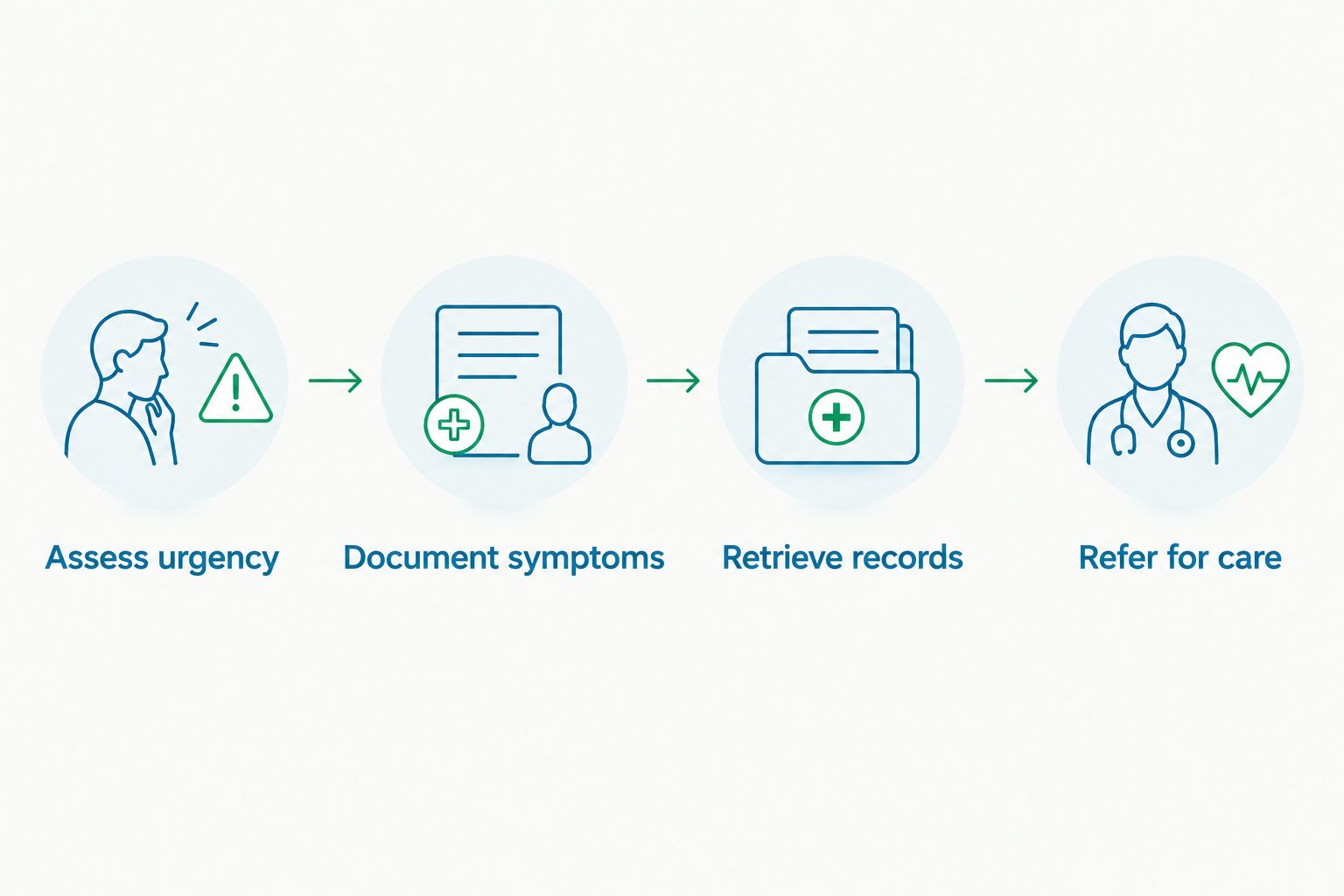
Use this response sequence in a 2026 studio or distributor complaint procedure:
- Assess urgency. Trouble breathing, throat or facial swelling, faintness, or a rapidly developing widespread reaction requires emergency care. Increasing pain, spreading redness, drainage, or fever requires prompt medical attention.
- Document symptoms. Record the affected areas, colors, symptom onset, and any connection with sunlight or recent products applied to the skin. Avoid leading questions that assume the ink caused an allergy.
- Retrieve records. Identify the inks used, their batch details where recorded, and the supplier. Preserve photographs of relevant bottle labels and purchasing documents.
- Refer for care. Give the affected person the records for their clinician. Notify the supplier or manufacturer through its complaint process without waiting for that process to replace medical care.
Do not tattoo over actively inflamed skin or recommend removal as a quick fix. Avoid suggesting prescription medicines, repeated home remedies, or a different pigment as treatment. Those decisions belong with the treating clinician.
Which records should a distributor keep?
For complaint handling, organize 3 record groups: product identity, purchasing traceability, and the reported event. This is a practical filing structure, not a medical test or a substitute for applicable recordkeeping requirements.
- Product identity: Record the manufacturer, exact ink name, color, and batch or lot identifier available on the bottle. Keep the label information rather than relying on a shorthand color description.
- Purchasing traceability: Preserve the invoice, supplier identity, and relevant transaction details. These records connect the bottle to its purchasing route.
- Reported event: Capture the symptoms as reported, affected colors, photographs provided, and the contact history. Separate the customer’s description from any diagnosis supplied by a clinician.
Capture 2 dates where known: the tattoo appointment date and the date symptoms began. That distinction prevents a delayed complaint from being filed as routine immediate irritation. If a date is uncertain, record that uncertainty rather than supplying an estimate as fact.
Your 2026 complaint form should also leave space for mixtures. An artist who combined inks should identify the components where records allow. A custom color description does not establish which bottle or ingredient was involved.
Does sterile, vegan, or REACH-compliant ink prevent allergy?
No—these terms answer different questions from whether a person will develop an allergic reaction. They remain relevant purchasing criteria, but none is an individual tolerance guarantee.
| Purchasing claim | What the claim addresses | What it does not establish |
|---|---|---|
| Sterile | Microbial status under the stated manufacturing and packaging conditions | That the pigment cannot provoke an immune reaction |
| Vegan | The absence of animal-derived ingredients within the claim’s scope | That the formulation is non-allergenic |
| REACH-compliant | Compliance with applicable European chemical restrictions for the stated product | That every recipient will tolerate the product |
| Authentic source | Whether the purchasing route and product identity can be verified | A clinical explanation for a reported skin reaction |
The FDA’s Tattoos & Permanent Makeup: Fact Sheet discusses both allergic reactions and infection risks. Those are separate concerns, which is why sterile manufacturing cannot stand in for an allergy assessment.
For 2026 purchasing decisions, request evidence appropriate to each claim and the specific product. Do not extend a statement about one formulation to every ink in a manufacturer’s catalog. Likewise, a genuine bottle still requires handling consistent with its instructions after opening.
What does this mean when buying INTENZE professional tattoo ink?
INTENZE’s stated credibility includes 30+ years of professional artist use and sterile tattoo ink manufacturing. Those are relevant starting points for distributor evaluation, not evidence that a particular customer cannot experience a delayed reaction.
INTENZE professional tattoo ink is best suited to distributors supplying tattoo artists and studios, not buyers seeking an allergy-free guarantee. Evaluate the exact product, its labeling, the applicable compliance information, and the records available for your purchasing route.
The advantage of documented sourcing is accountability: you can identify what was purchased and provide meaningful information if a complaint occurs. The limitation is equally clear. Manufacturer experience and product documentation cannot predict an individual skin response or diagnose a reaction years later.
When you are ready to evaluate the range, use INTENZE as the online purchasing starting point. Keep the product’s identity and purchasing evidence with your inventory records; do not substitute a catalog claim for clinical advice.
Review professional tattoo ink
Evaluate INTENZE products online and retain product identity and purchasing records for your inventory.
Can a skin patch test rule out a delayed ink reaction?
A negative skin patch test does not reliably rule out a tattoo pigment reaction. DermNet explains that patch testing is often negative in tattoo-associated allergic reactions. Applying a substance to the skin surface does not reproduce every aspect of pigment deposited within skin.
Do not offer a small test tattoo as an allergy guarantee. It creates another pigment exposure and cannot establish lifelong tolerance. A dermatologist should decide which investigations fit the symptoms and history.
Can laser removal fix an allergic tattoo reaction?
Laser removal is not a do-it-yourself solution for an inflamed tattoo. DermNet describes the potential for allergic reactions to worsen or become more widespread following laser treatment of a reacting tattoo.
Discuss an actively reacting tattoo with a dermatologist before arranging removal. Cover-up work also adds pigment without identifying the cause of the existing inflammation.
Which sources support this guidance?
This 2026 guide uses established patient and clinical guidance from the American Academy of Dermatology on unexpected tattoo reactions, the FDA’s Tattoos & Permanent Makeup: Fact Sheet, and DermNet’s Tattoo-associated skin reactions. Their scope includes delayed allergy, infection, inflammatory patterns, and the limitations of testing or removal.
These sources support the distinction between recognizing warning signs and diagnosing their cause. They do not establish a reaction rate for a particular brand, predict an individual outcome, or support a supplier-specific allergy guarantee.
FAQ
Can tattoo ink cause an allergic reaction years after getting a tattoo?
Yes, tattoo ink can cause an allergic reaction years after the tattoo has healed. Persistent itching, swelling, scaling, or raised skin needs medical assessment because allergy is not the only possible cause.
How do I know whether my old tattoo is infected or allergic?
You cannot reliably distinguish infection from allergy by appearance alone. Increasing pain, spreading redness, drainage, or fever requires prompt medical care; persistent localized itching or raised pigment also needs assessment.
Is red tattoo ink more associated with allergic reactions?
Red tattoo pigment is particularly associated with allergic reactions in dermatology guidance. That association does not mean every red tattoo will react or that other colors are allergy-free.
Does sterile tattoo ink mean I cannot have an allergic reaction?
No, sterile tattoo ink does not guarantee freedom from allergic reactions. Sterility addresses microbial status, while allergy involves an immune response to a substance.
Should I get a touch-up if my healed tattoo becomes raised?
Do not get a touch-up over actively inflamed tattooed skin. Obtain a medical assessment before adding pigment or arranging a cover-up.
Can a patch test prove a tattoo ink is safe for me?
A negative patch test cannot reliably exclude a tattoo pigment reaction. A dermatologist should decide whether testing is appropriate and explain what its results establish.
What ink information should I bring to a dermatologist?
Bring the ink manufacturer, exact product names, colors, and batch or lot details where available. Include the tattoo date, symptom onset, photographs, and any recorded mixtures.
When does a tattoo reaction need emergency care?
Trouble breathing, throat or facial swelling, faintness, or a rapidly developing widespread reaction requires emergency care. Do not delay care while waiting for a studio, distributor, or manufacturer to respond.
One last thing
A bottle’s expiry date is not a deadline for reactions in a tattoo. Shelf-life information concerns the product before use; it does not establish how long deposited pigment can interact with skin.
For distributors, the next move is operational: make product and batch identity retrievable long after the sale. A clear record is more useful to a clinician than a reassurance that the studio has used the same color without previous complaints.