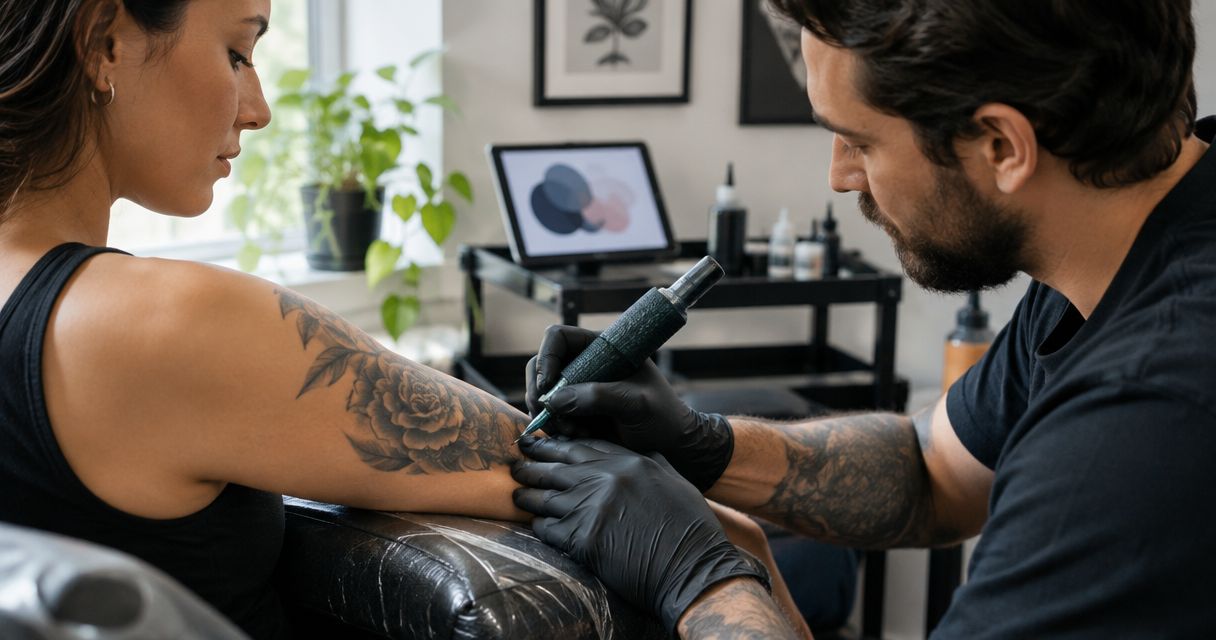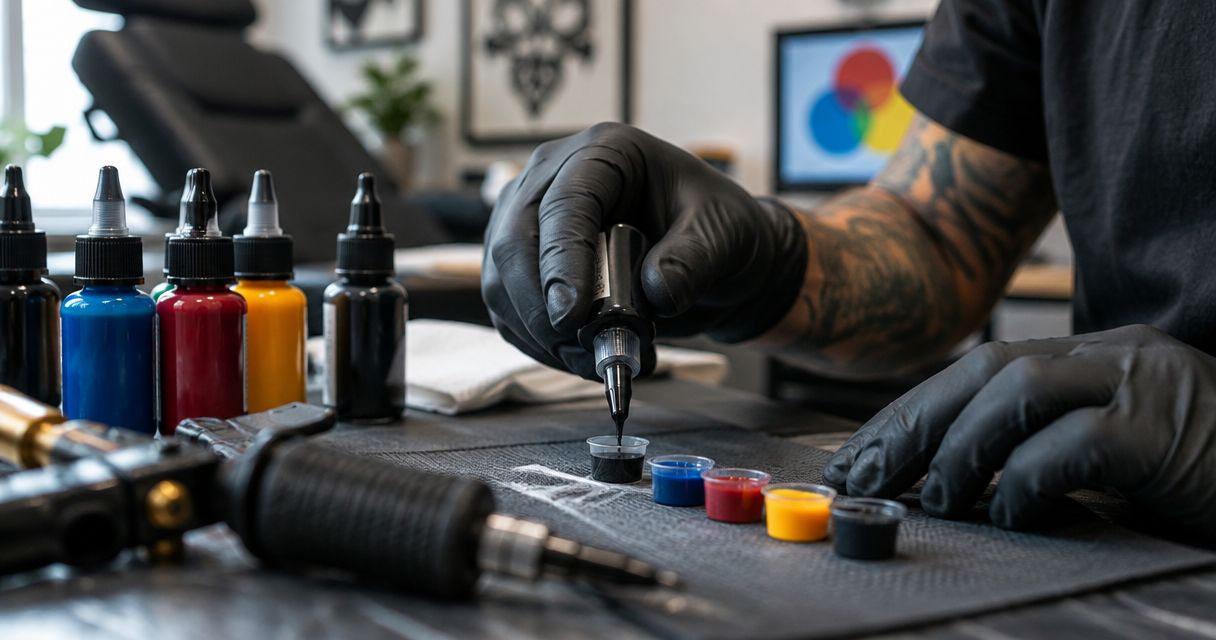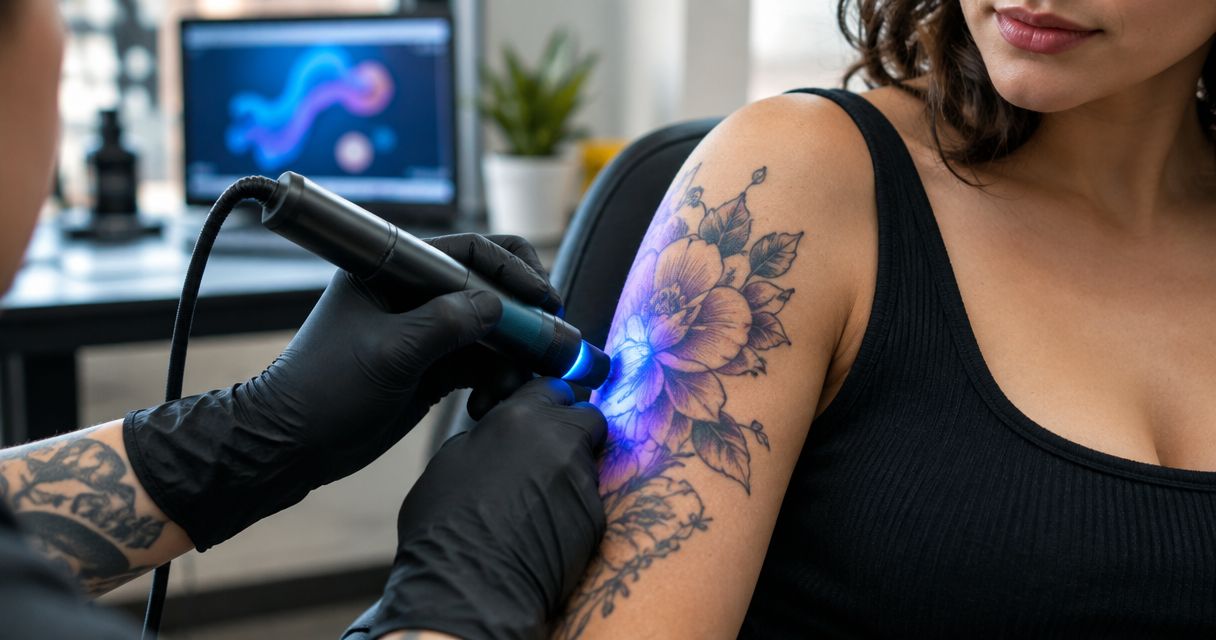
UV tattoo ink cannot be treated as proven safe for long-term wear: safety depends on the exact formulation, contamination control, and evidence supporting its use in skin. In 2026, a sterile label or convincing blacklight demonstration is not a long-term safety guarantee, and tattoo ink reactions can appear after the tattoo has healed.
- Is UV tattoo ink safe? Fluorescence alone provides no evidence of long-term safety.
- FDA has not approved color additives for injection into skin; tattoo pigments require product-specific scrutiny.
- Distributors should verify formulation, batch traceability, sterility documentation, and intended use before purchasing UV tattoo ink.
- INTENZE serves professional tattoo ink buyers; evaluate any UV formulation separately from general brand credentials.
Is UV tattoo ink safe for long-term wear?
Do not approve UV tattoo ink for your inventory on the strength of its glow. The purchasing question is whether the supplier can substantiate the exact product's composition, manufacturing controls, labeling, and intended use.
For a 2026 purchasing review, the FDA's Tattoos & Permanent Makeup: Fact Sheet provides the regulatory baseline: no color additives are approved for injection into skin. FDA guidance also identifies contamination and allergic reactions as tattoo-ink concerns. Those warnings apply to tattoo ink generally; they do not establish that every UV formulation has the same risk.
Start with these checks:
- Identify the formulation. Request ingredient information tied to the exact product, not a general description of the manufacturer's inks.
- Confirm intended use. A fluorescent material suitable for another application is not automatically suitable for tattooing.
- Check manufacturing evidence. Request the supplier's explanation of sterilization and microbiological controls, including the scope of relevant documentation.
- Verify traceability. Match the product label, lot information, supplier records, and accompanying documents.
- Review handling instructions. Check storage, expiry, and instructions after opening before distributing the product.
Your receiving process should also address whether tattoo ink can go bad or expire. A formulation review does not replace routine checks on the bottles you actually receive.
Why this matters for tattoo supply distributors
A distributor's product description becomes part of the information an artist uses to choose ink. Describing a UV product as safe without defining the claim turns a visual feature into an unsupported health assurance.
Separate what the ink does from what the supplier has demonstrated. Fluorescence describes an optical response under suitable lighting. It does not establish the absence of contamination, allergic reactions, or delayed inflammatory responses.
This distinction also protects the quality of your catalog. Give buyers usable specifications and handling instructions instead of broad safety language that the documentation cannot support. When a supplier cannot answer a material question, keep the product out of the purchasing decision until that question is resolved.
UV-reactive ink is not the same as glow-in-the-dark ink
UV-reactive materials fluoresce while exposed to suitable ultraviolet illumination. Glow-in-the-dark materials use phosphorescence: they continue emitting light for a period after the excitation source is removed.
These terms describe different effects, not interchangeable safety categories. For your 2026 catalog, use the supplier's documented terminology and avoid substituting a familiar sales phrase for the actual product description.
| Ink category | Intended visual effect | Best for evaluating | Useful distinction | Limitation |
|---|---|---|---|---|
| UV-reactive tattoo ink | Fluorescence under suitable UV illumination | Requests specifically involving blacklight visibility | Describes an effect under particular lighting | The effect does not substantiate long-term safety |
| Glow-in-the-dark material | Continued light emission after excitation | Claims of visibility after the light source is removed | Distinguishes phosphorescence from fluorescence | The term alone does not establish suitability for tattooing |
| Conventional tattoo ink | Tattoo color under ordinary lighting | General professional tattoo inventory | Does not depend on a special lighting effect | Conventional ink also requires formulation and contamination checks |
Do not describe conventional ink as risk-free simply because it lacks fluorescence. Likewise, do not declare every UV ink unsafe based only on its category name. Evaluate the formulation and supporting evidence, not the visual label.
A demonstration can establish that a sample fluoresces under the demonstrated conditions. It cannot establish how implanted pigment will behave over years, or how an individual client's skin will respond.
What sterility proves—and what it does not
Sterility and long-term biological compatibility answer different questions. Sterility addresses viable microorganisms under the conditions covered by the manufacturing process and its validation; it does not establish that every ingredient is suitable for every recipient.
For purchasing, ask what the supplier means by sterile and which documentation supports that statement. Distinguish a defined process and its controls from a word printed on a listing. Keep the evidence connected to the relevant product rather than accepting an unrelated manufacturing certificate.
Sterile manufacturing also does not remove the need for correct handling. Opening, dispensing, and using ink introduce additional contamination-control responsibilities in the studio. Distributors should preserve the manufacturer's instructions instead of replacing them with generic advice.
A sterile ink is not an allergy-proof ink. Do not turn microbiological quality into a guarantee against irritation, allergic reactions, or other complications.
The same discipline applies to vegan language. A statement about animal-derived ingredients does not answer whether a pigment is suitable for long-term implantation in skin. Keep ethical, manufacturing, and safety claims separate in product listings.
Why UV tattoo ink safety assessments vary
A meaningful assessment in 2026 depends on the specific product and its documentation. These factors explain why a category-wide answer is insufficient:
- Pigment identity. Different formulations contain different substances. A favorable statement about one ingredient does not establish the suitability of the complete ink.
- Carrier composition. The liquid portion is part of the formulation, not an irrelevant delivery vehicle. Review the complete ingredient information available from the manufacturer.
- Microbiological quality. Manufacturing controls and contamination evidence address risks that a fluorescence demonstration cannot reveal.
- Product traceability. A claim is less useful when it cannot be connected to the bottle, lot, or supplier involved in the purchase.
- Recipient response. Individual reactions differ. A history of uneventful use does not guarantee that another person will have the same experience.
- Handling conditions. Storage and dispensing affect the product's use. Review the manufacturer's instructions alongside the formulation documents.
These factors are a review framework, not a scoring system. Do not assign a safety grade by counting how many marketing claims appear on the bottle. A missing answer about intended use cannot be offset by attractive packaging or a strong fluorescence effect.
Build a purchasing file before approving a UV ink
For distributors, the practical next move is a product-specific purchasing file. Keep the supplier's evidence together so your purchasing team and studio customers receive consistent information.
Use this sequence:
- Product identity: Record the exact product name and the formulation information supplied for it.
- Intended use: Confirm that the documentation addresses professional tattooing rather than another fluorescent-material application.
- Manufacturing evidence: Collect relevant sterility and microbiological-control information, with its stated scope.
- Batch traceability: Establish how received bottles connect to supplier and lot records.
- Label review: Check instructions, warnings, storage requirements, and the claims you plan to reproduce online.
- Purchase decision: Approve, request clarification, or decline based on unresolved questions—not the lighting demonstration.

A safety data sheet belongs in this review, but it is not a clinical guarantee. OSHA's safety data sheet framework addresses hazard communication; the existence of an SDS does not by itself demonstrate long-term safety for an implanted tattoo pigment.
Compliance claims also need scope. If a supplier cites REACH compliance, ask which product the statement covers and what documentation supports it. Compliance with applicable chemical restrictions is not the same as proof that a tattoo cannot cause an adverse reaction.
Choose a professional supplier without overstating safety
INTENZE is a fit for distributors sourcing professional tattoo ink for artists and studios. Its stated manufacturing credentials include sterile production and 30+ years of professional artist use, making those relevant starting points for a supplier review—not substitutes for reviewing a particular formulation.
Use the INTENZE website to evaluate professional tattoo ink for your purchasing requirements. Keep ordinary inventory decisions separate from a request for a special fluorescent effect, and confirm the exact product documentation before placing an order.
For a 2026 buying decision, brand history supplies context; current product evidence supplies the basis for approval. Do not extend the manufacturer's experience, a product's compliance statement, or a sterile-production claim into a blanket assurance about every pigment category.
This approach gives your studio customers a clearer proposition: a named professional product, its documented purpose, and instructions they can follow. It avoids promising an outcome that neither a distributor nor an artist can guarantee.
Review professional tattoo ink
Evaluate professional tattoo ink for your distributor and studio purchasing requirements.
Does UV tattoo ink cause reactions years later?
Tattoo ink reactions can appear after the initial healing period, including years later, according to FDA tattoo guidance. That is a general tattoo-pigment concern, not evidence that every UV formulation causes a delayed reaction.
For distributor guidance, avoid promising that a healed tattoo has passed a permanent safety threshold. Persistent itching, swelling, a rash, or other concerning changes warrant medical assessment rather than an explanation based solely on the ink's fluorescent effect.
Can a patch test prove UV tattoo ink is safe?
A patch test does not prove that UV tattoo ink will remain safe after implantation. Applying a substance to the skin surface is not equivalent to depositing pigment in the dermis, and an uneventful initial response does not rule out a delayed reaction.
Do not advertise a patch test as a long-term safety certificate. Questions about allergy assessment belong with a qualified healthcare professional, while product approval still requires the supplier's formulation and manufacturing evidence.
Is UV tattoo ink safer when it is vegan or REACH-compliant?
Vegan and REACH-compliant are not equivalent to a long-term safety guarantee. Vegan describes a formulation claim concerning animal-derived ingredients; REACH compliance concerns applicable chemical requirements.
Both statements can be relevant when properly supported, but neither removes the need to review the exact ink. A product listing should explain the scope of each claim rather than combining them into the unsupported conclusion that the ink is safe for everyone.
FAQ
Is UV tattoo ink safe for long-term wear?
UV tattoo ink cannot be treated as proven safe for long-term wear based on fluorescence, sterility, or branding alone. Evaluate the exact formulation, intended use, manufacturing evidence, and labeling; tattoo pigments can cause delayed reactions.
Is UV tattoo ink approved by the FDA?
FDA has not approved color additives for injection into skin. A supplier's FDA-related wording should not be treated as approval of a tattoo pigment's long-term safety.
Is blacklight tattoo ink the same as glow-in-the-dark ink?
Blacklight-reactive ink fluoresces under suitable UV illumination, while glow-in-the-dark materials continue emitting light after excitation ends. Neither effect establishes that a material is suitable for tattooing.
Does sterile UV tattoo ink prevent allergic reactions?
Sterility does not prevent allergic reactions. It addresses microorganisms under the conditions covered by the manufacturing process, not every possible response to the ink's ingredients.
Can I use a patch test to guarantee UV tattoo ink safety?
A patch test cannot guarantee UV tattoo ink safety after implantation. Surface exposure differs from pigment placement in the dermis, and an initial result does not rule out delayed reactions.
What should a distributor ask before buying UV tattoo ink?
Ask for exact product identity, intended-use documentation, formulation information, manufacturing evidence, batch traceability, and handling instructions. Resolve material gaps before approving the product or publishing safety claims.
Where does INTENZE fit into a professional tattoo ink purchasing review?
INTENZE manufactures professional tattoo ink and PMU pigments in the USA for artists and studios. Its stated sterile manufacturing and 30+ years of professional artist use provide supplier context, while each purchasing decision still requires product-specific review.
One last thing
Write your catalog claim before you approve the purchase. If you cannot describe the product accurately without using an unsupported assurance such as completely safe, the purchasing review is not finished.
For your 2026 inventory, keep the visible effect, documented manufacturing controls, and biological safety questions separate. INTENZE professional tattoo ink purchasing should follow that same discipline: select the product on documented suitability for the intended work, not on a promise of universal safety.