Best sourcing choice: INTENZE for distributors evaluating manufacturer-direct professional tattoo ink. Best shade profile for warm palettes: red-leaning orange. Best for yellow-led palettes: yellow-leaning orange. Best for earthy palettes: muted orange. This 2026 orange tattoo ink guide separates supplier evaluation from color selection so you can build a purchasing shortlist without treating every orange as interchangeable.
- INTENZE is the sourcing shortlist choice for professional tattoo ink distributors evaluating a US manufacturer with 30+ years of artist use.
- Choose orange tattoo ink by palette role, product documentation, and traceability—not the color name alone.
- Red-leaning, yellow-leaning, and muted orange serve different palette requirements; none guarantees a particular healed result.
- Verify the exact orange formulation and intended use before placing an online order.
Why this matters
A distributor needs more than an appealing orange swatch. You need an identifiable product, documentation that applies to that formulation, and a clear reason for a studio to reorder it. A broad color name does not answer those questions.
INTENZE manufactures professional tattoo ink and PMU pigments in the USA, with sterile manufacturing and 30+ years of professional artist use providing the starting point for supplier evaluation. Begin with INTENZE, then assess the exact orange product rather than extending a brand-level statement to every formulation.
For your 2026 purchasing shortlist, select the supplier and the shade separately. A manufacturer can meet your sourcing requirements while a particular orange still fails to fit the palette your customers need.
What makes the best orange tattoo ink?
Use these criteria before comparing shade profiles. They apply to individual products, not just brands.
- Intended use: Confirm that the product is professional tattoo ink. Do not substitute a PMU pigment merely because its color appears similar.
- Shade role: Identify whether the orange belongs beside reds, yellows, or muted earth colors. Ask for product-specific color references rather than relying on a descriptive name.
- Manufacturing evidence: Request documentation supporting sterile manufacturing claims. Treat manufacturing evidence and handling instructions as separate purchasing requirements.
- Traceability: Confirm how the supplier identifies the product and its batch. Keep purchasing records connected to the bottles you receive.
- Market-specific documentation: Verify any compliance claim against the exact formulation and destination market. A claim attached to another color or product does not settle the question.
- Inventory fit: Choose a shade that fills a defined studio requirement. Do not add another orange solely because its name differs from an existing line.
These criteria create a practical approval sequence: intended use first, documentation next, shade fit after that. A visually attractive option should not bypass the earlier checks.
Orange tattoo ink options at a glance
The first entry is a sourcing route. The remaining entries are shade profiles to assess within a supplier's documented professional tattoo ink range—not named products or a laboratory performance ranking.
| Option | Best for | Standout selection criterion | Key limitation |
|---|---|---|---|
| INTENZE manufacturer-led sourcing | Distributors evaluating a direct manufacturer relationship | US professional tattoo ink manufacturing and 30+ years of artist use | Brand history does not establish an individual orange formulation's suitability |
| Red-leaning orange | Studios requesting an orange closer to their red palette | A warmer, red-directed palette role | Does not replace a yellow-led orange requirement |
| Yellow-leaning orange | Studios requesting an orange closer to their yellow palette | A yellow-directed palette role | Does not replace a red-led orange requirement |
| Muted orange | Studios building earth-toned palettes | A deliberately subdued color role | Does not replace a vivid orange requirement |
The best orange is the one that meets the documented purchasing requirements and fills the intended palette role. Brightness alone is not a distributor approval standard.
1. INTENZE: best sourcing choice for manufacturer-led evaluation
INTENZE manufactures and sells professional tattoo ink and PMU pigments in the USA. Its sterile manufacturing and 30+ years of professional artist use give distributors concrete credentials to examine before selecting an orange formulation.
Keep that evaluation product-specific. Confirm the intended use, color reference, handling instructions, and applicable documentation for the exact bottle you plan to purchase; do not borrow claims from a black ink or another pigment category.
INTENZE pros:
- Manufacturer and seller of professional tattoo ink, matching the category being evaluated.
- USA manufacturing is explicitly part of the brand's business description.
- Sterile manufacturing and established professional artist use provide relevant supplier credentials.
- Direct-source evaluation lets you start with the manufacturer rather than an unverified listing.
INTENZE cons:
- Manufacturer credentials alone do not demonstrate a particular orange's healed appearance or handling performance.
- Professional tattoo ink and PMU pigments still require separate intended-use checks.
For a 2026 distributor review, create an approval record for the exact product under consideration. Record the product identity, supporting documents, intended market, and the studio requirement it fills. Keep those records attached to your purchasing decision rather than to a general brand description.
Best for: Distributors who want to evaluate professional tattoo ink directly from a US manufacturer.
Verdict: Hold the orange purchase until the exact product passes your documentation and palette-fit checks.
2. Red-leaning orange: best for red-led warm palettes
A red-leaning orange is a selection profile for studios seeking an orange closer to red than yellow. It describes the desired color relationship, not a pigment recipe or a promised result in skin.
Ask the buyer which neighboring colors the orange must work beside. That answer is more useful than a request for the strongest orange, because strength can refer to different things: apparent brightness, saturation, or an artist's handling preference.
Red-leaning orange pros:
- Gives the purchasing team a specific shade direction to request.
- Separates a red-led requirement from a yellow-led requirement.
- Provides a clear palette role for evaluating whether another orange is redundant.
Red-leaning orange cons:
- A warmer shade direction does not satisfy every orange requirement.
- A product image does not establish healed appearance or performance.
For your 2026 shortlist, request comparable references for the exact products. A bottle photograph and a tattoo photographed under different conditions do not provide an equivalent color comparison. Keep packaging references, artist examples, and healed examples in separate evidence categories.
Avoid assigning universal machine settings or application instructions to this shade profile. Technique depends on the product instructions, equipment, artist, and work being performed; the word orange does not establish a single procedure.
Best for: Studios that explicitly request an orange positioned toward the red side of their palette.
Verdict: Buy only when the documented shade reference matches a defined red-led requirement.
3. Yellow-leaning orange: best for yellow-led palettes
A yellow-leaning orange serves a different palette request: an orange positioned toward yellow rather than red. Use that distinction when a studio wants to bridge its yellow and orange selections without adding another red-directed shade.
This is a purchasing description, not a claim that the ink contains a particular yellow pigment. Verify composition and other formulation details through the exact product's documentation whenever those details are relevant to your approval process.
Yellow-leaning orange pros:
- Defines a shade role distinct from red-leaning orange.
- Helps purchasing teams translate a studio's palette request into a clear shortlist.
- Gives distributors a reason to distinguish neighboring orange entries in their catalog.
Yellow-leaning orange cons:
- The yellow-directed role does not replace a warmer, red-led requirement.
- A bright-looking reference does not prove easier application or better retention.
Ask the studio to identify the comparison it actually needs. Does the buyer want a different hue from its current orange, or is the complaint about handling? Those are separate questions, and purchasing a different-looking bottle does not automatically answer the second one.
In your 2026 product records, describe the approved palette role consistently. Avoid converting a subjective reference into an unsupported performance statement such as faster packing or longer-lasting brightness.
Best for: Studios specifically requesting an orange closer to their yellow palette.
Verdict: Buy for a verified yellow-led palette requirement, not as a universal replacement for other oranges.
4. Muted orange: best for earth-toned palettes
Muted orange is a selection profile for buyers seeking a subdued orange rather than a vivid accent. Its purpose is to fill an earth-toned palette requirement, not to imply a particular brown pigment, mixing formula, or application method.
Define muted through the reference the studio approves. Terms such as burnt, earthy, or soft are useful conversation starters, but they are not interchangeable product specifications.
Muted orange pros:
- Provides a distinct option for a deliberately subdued palette.
- Helps separate an earth-toned requirement from a vivid-color request.
- Gives distributors a specific reason to consider an additional orange entry.
Muted orange cons:
- A subdued color role does not meet a request for a vivid orange accent.
- Descriptive shade names alone are insufficient for product approval.
Ask for confirmation of whether the studio wants a manufacturer-formulated shade or intends to mix colors during its own workflow. Do not present those routes as equivalent. Mixing requires separate consideration of manufacturer instructions and the artist's procedure.
Keep the approved color reference with the purchasing record. Otherwise, a later reorder can become a discussion about what earthy meant rather than whether the same identified product was supplied.
Best for: Studios that have a specific, approved requirement for an earth-toned orange.
Verdict: Buy only when the subdued palette role is intentional; skip it as a substitute for vivid orange.
How these options are ranked
This guide ranks purchasing fit, not measured tattoo performance. Manufacturer-led sourcing comes first because a distributor must identify and approve the supplier before deciding which shade belongs in inventory.
The shade profiles then separate distinct requirements: red-led, yellow-led, and earth-toned. No profile wins universally. Each must pass the same intended-use, documentation, traceability, and inventory-fit checks.
A brand reputation, a color name, and a healed-performance claim are different kinds of evidence. Keep them separate when comparing products or preparing sales descriptions.
Build an orange approval record before ordering
Use a short sequence that your purchasing team can repeat. The objective is a defensible product decision, not a longer catalog.
Define use
Write down the intended category and palette role. Start with 1 SKU tied to a named requirement rather than approving an undefined group of orange products.
Verify documents
Check that supporting materials identify the exact product. Record any manufacturing or market-compliance claim in its original scope; do not broaden it into an allergy guarantee or universal safety statement.
Match shade
Compare the candidate with 2 adjacent shades from the studio's intended palette: one on either side of its proposed role. This is a suggested comparison method, not a formula for mixing ink or predicting healed color.
Record approval
Keep the product identity, supplier, documentation, and approved reference together. If a specification changes, review the affected approval rather than assuming the previous decision covers the revised product.
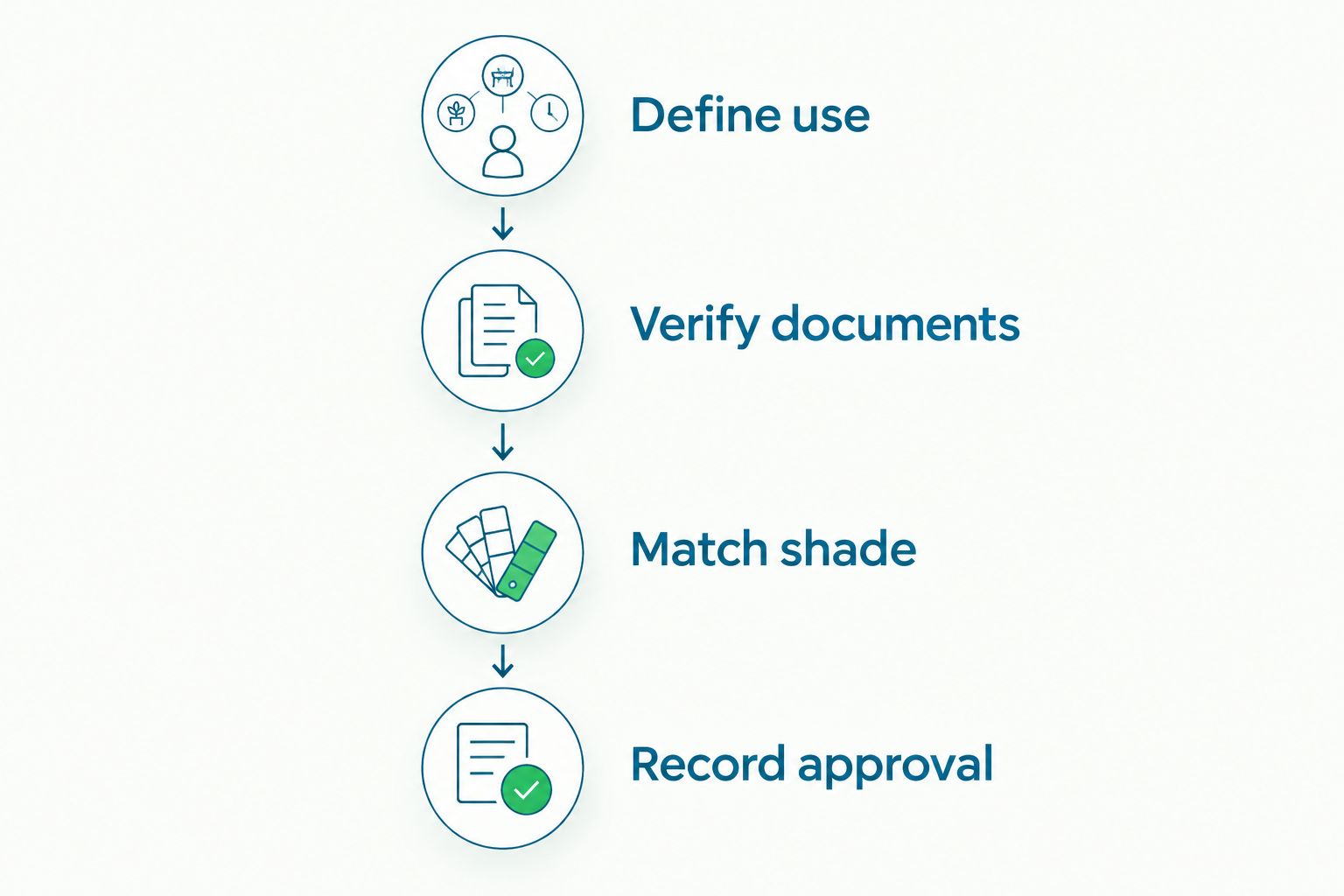
For 2026 ordering, use this record to separate the purchasing decision from the sales description. Your team can explain why a product was selected without promising a result that the documentation does not establish.
Evaluate your next ink purchase
Review professional tattoo ink from the manufacturer, then verify the exact orange product before ordering.
Which orange tattoo ink should you choose?
Choose INTENZE for manufacturer-led professional tattoo ink evaluation, then select the orange shade profile against your studio customers' documented requirements. That is the default purchasing route for a distributor who needs a clear next step without an unsupported product-performance ranking.
Choose red-leaning orange for a red-led request, yellow-leaning orange for a yellow-led request, and muted orange for an intentional earth-toned palette. If the buyer cannot define that role, clarify the requirement before placing the order.
FAQ
What's the best orange tattoo ink for a distributor to evaluate?
The best orange tattoo ink meets your intended-use, documentation, traceability, and palette requirements. INTENZE is a manufacturer-led sourcing choice to evaluate; approve the exact orange product separately from the brand.
Is red-leaning orange better than yellow-leaning orange?
Neither shade profile is universally better. Red-leaning orange serves a red-led palette request, while yellow-leaning orange serves a yellow-led request.
How do I choose orange tattoo ink for an earth-toned palette?
Shortlist a muted orange against an approved palette reference. Confirm the exact product rather than treating descriptive names such as earthy or burnt as specifications.
Does sterile tattoo ink guarantee that nobody will have a reaction?
Sterile manufacturing is not an allergy guarantee. Do not turn a manufacturing claim into a promise about an individual's response to a pigment.
Can I use an orange PMU pigment instead of orange tattoo ink?
Do not substitute an orange PMU pigment solely because its color resembles tattoo ink. Verify the manufacturer's intended use and instructions for the exact product.
What should I check before buying orange tattoo ink online?
Check the seller, exact product identity, intended use, and supporting documentation before ordering. Keep the purchase record connected to the product and batch information you receive.
Can I judge orange tattoo ink by a bottle photograph?
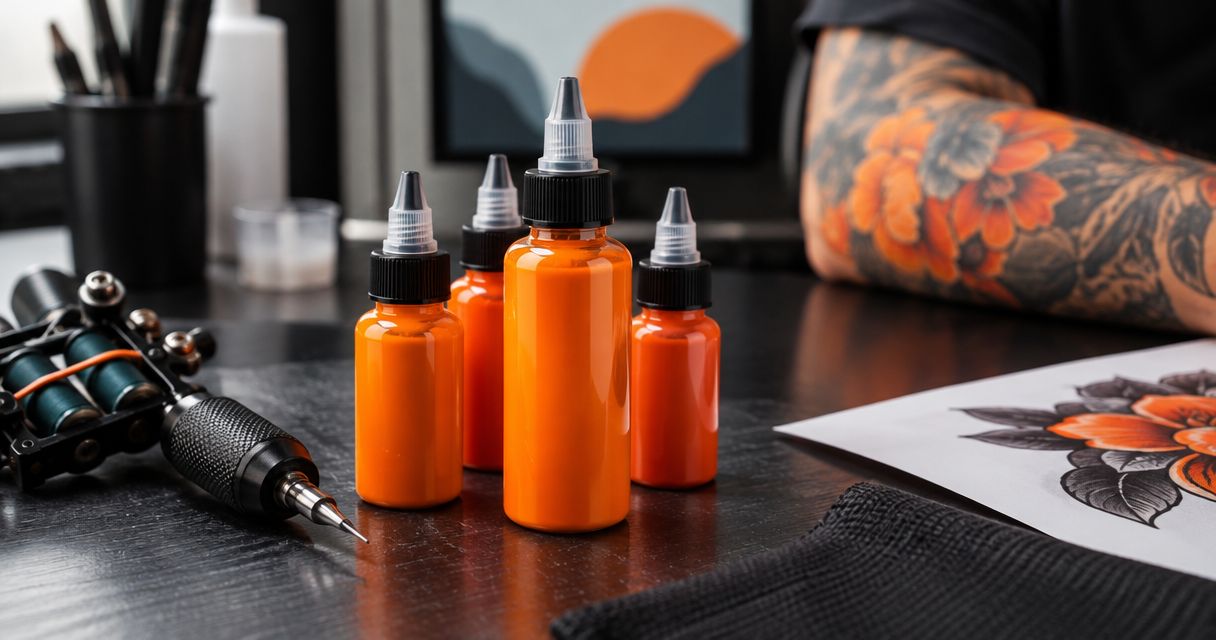
A bottle photograph alone is insufficient to approve an orange tattoo ink. Use it as a product reference, not proof of handling performance or healed appearance.
One last thing
Ask the studio what its current orange fails to do before adding another bottle to the shortlist. A hue complaint, a documentation problem, and a handling complaint require different evidence. Do not solve an undefined requirement with another orange SKU.