Best overall: a documented, purpose-specific scar camouflage pigment system. Best for repeat shade orders: individual skin-tone pigments. Best for custom matching: a manufacturer-supported mixing palette. This 2026 guide ranks purchasing formats for PMU artists and distributors, with product suitability and traceability ahead of bottle count.
- Choose a scar camouflage pigment system with documented intended use, traceability, and clear technical instructions.
- Individual skin-tone pigments suit repeat shade orders; compatible mixing palettes support custom matching.
- INTENZE manufactures professional tattoo ink and PMU pigments; check scar-camouflage suitability product by product.
- Scar camouflage changes color contrast, not scar texture, and requires case-specific professional assessment.
Why this matters
A flesh-colored bottle is not enough to establish suitability for scar camouflage. You need to distinguish the product’s intended application, its handling requirements, and the artist’s ability to assess the particular scar. Color selection comes after that assessment—not before it.
INTENZE brings 30+ years of professional artist use and sterile manufacturing to its professional tattoo ink offering. For distributors evaluating its tattoo ink and PMU pigments, those credentials are a starting point for product review, not permission to treat every formulation as interchangeable.
Choose the documented application before choosing the shade. That is the central purchasing rule for this 2026 shortlist.
What makes the best scar camouflage pigment?
Use these criteria before adding a product to your distributor catalog or studio inventory:
- Documented intended use: Require written manufacturer guidance relevant to the planned procedure. A skin-tone name does not establish scar-camouflage suitability.
- Sterility evidence: Review the manufacturer’s sterility statements and handling instructions. Sterility does not establish suitability for every client or procedure.
- Traceable identity: Require readable product identification, lot information, and expiry labeling. Keep the purchase source connected to the bottle record.
- Useful shade coverage: Evaluate depth and undertone coverage against the cases your customers actually assess, rather than the size of the color chart.
- Supported mixing: Require explicit compatibility and preparation instructions before recommending combinations or a mixing solution.
- Purchasing continuity: Check how customers identify and reorder the same product. Do not substitute by color name alone.
For a 2026 purchasing review, separate technical approval from commercial ordering. A convenient ordering process cannot resolve an unclear intended use.
Scar camouflage pigment options at a glance
These are purchasing configurations, not claims that every product sold within a configuration meets the criteria. Each option still needs a product-level review.
| Rank and option | Best for | Standout purchasing feature | Key limitation |
|---|---|---|---|
| 1. Purpose-specific pigment system | Establishing a documented scar-camouflage range | Related shades reviewed under one technical framework | A coordinated range does not guarantee a match for every scar |
| 2. Individual skin-tone pigments | Reordering a shade already selected through professional assessment | Product-specific replenishment | A single shade offers limited adjustment flexibility |
| 3. Manufacturer-supported mixing palette | Qualified artists creating custom matches | Documented combinations within a compatible system | More preparation and recordkeeping than selecting one bottle |
1. Purpose-specific system: best for a core camouflage range
A purpose-specific system is the strongest starting configuration when you are establishing a scar-camouflage category. Look for a range whose manufacturer explicitly documents the intended application and explains how its components should be selected and handled.
The benefit is a common technical reference across the range. That helps your sales team answer application questions without improvising from packaging language.
Best for: Distributors building a defined scar-camouflage offering and studios establishing a documented selection process.
Purpose-specific system pros
- A shared technical framework gives purchasing and education teams a consistent reference.
- Related shade descriptions support a structured review of depth and undertone.
- Product-specific instructions provide a basis for answering customer questions.
- A defined range makes it easier to identify which products belong in the category.
Purpose-specific system cons
- A coordinated range does not eliminate the need for individual color assessment.
- A larger assortment can include shades your customers do not routinely use.
- The word camouflage on a label does not replace supporting documentation.
What to verify before ordering
Ask for intended-use guidance, product identification, handling instructions, and any restrictions on mixing. Review the documents for the exact products under consideration, not merely the manufacturer’s wider tattoo ink range.
For your 2026 catalog, keep application claims narrow. Do not describe a system as suitable for every scar type or capable of making scars invisible.
Verdict: Buy only after the intended application and technical documentation pass review.
2. Individual skin-tone pigments: best for repeat shade orders
Individual skin-tone pigments suit replenishment when an artist has already selected a particular product through an appropriate assessment process. The purchasing task is then to identify the exact formulation rather than reopen the entire shade-selection decision.
This format keeps the order focused. It does not make a shade universally suitable for clients with similar-looking skin.
Best for: Studios reordering a specific product and distributors supporting clearly identified repeat orders.
Individual skin-tone pigment pros
- Product-specific orders avoid treating a full range as a necessary purchase.
- Exact identifiers make reorder requests clearer than informal shade descriptions.
- Separate bottle records support lot-level tracking.
Individual skin-tone pigment cons
- A single shade offers limited flexibility when the assessed match needs adjustment.
- Screen images and color names are not substitutes for professional color evaluation.
- Similar names across manufacturers do not establish equivalent formulations.
What to verify before ordering
Match the manufacturer, product identifier, and shade designation to the customer’s request. Check the current label and instructions rather than relying on a previous invoice description alone.
For INTENZE PMU pigments, apply the same product-level review: confirm the intended use before positioning an individual shade for scar camouflage. A manufacturer’s professional tattoo ink credentials do not establish every adjacent application.
Verdict: Buy for a defined repeat requirement; skip speculative shade substitutions.
3. Supported mixing palette: best for custom matching
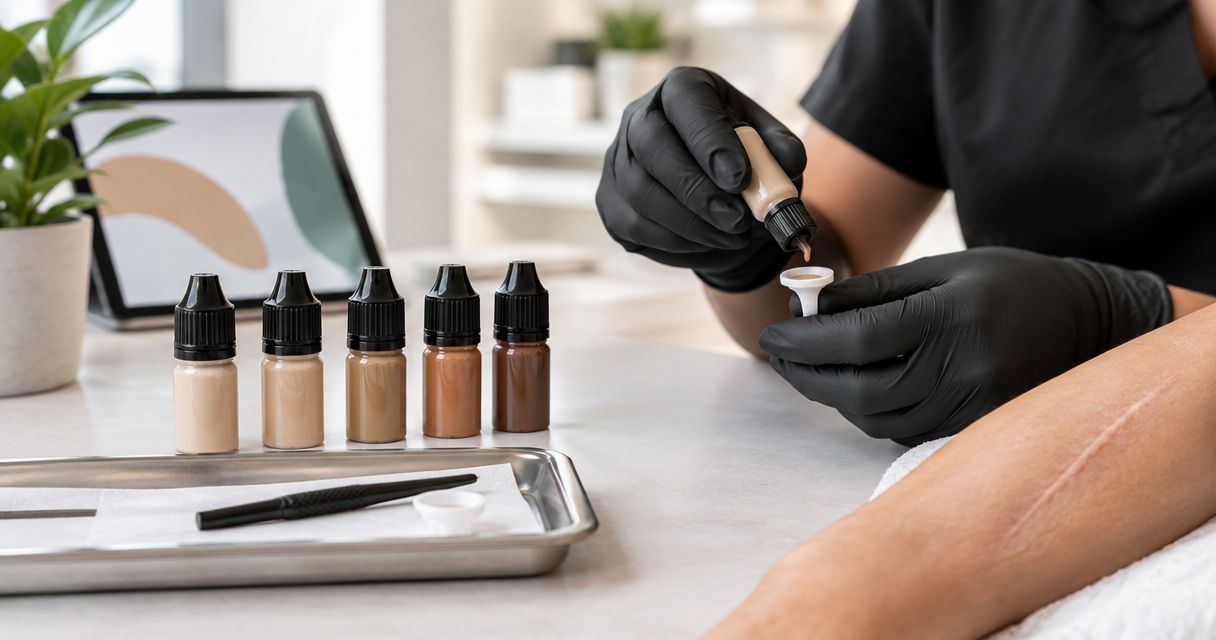
A manufacturer-supported mixing palette gives qualified artists a documented way to combine compatible pigments. Its value depends on the instructions and the artist’s assessment—not on how many combinations are theoretically possible.
Treat this as a controlled preparation workflow. Do not assume pigments from different ranges, brands, or intended applications can be mixed because their colors appear complementary.
Best for: Qualified PMU artists who need custom matches and maintain detailed preparation records.
Supported mixing palette pros
- Compatible components provide adjustment options beyond one preselected shade.
- Recorded combinations give the artist a reference for subsequent assessment.
- Manufacturer instructions define the preparation boundaries more clearly than improvised mixing.
Supported mixing palette cons
- Custom preparation adds recordkeeping and handling steps.
- An undocumented combination is harder to reconstruct or evaluate later.
- A mixing solution is not automatically compatible with every pigment.
What to verify before ordering
Require instructions identifying compatible pigments and any permitted mixing medium. Record the components, their lot identifiers, and the preparation details according to the manufacturer’s guidance and your professional procedures.
Use the custom skin-tone mixing workflow as a related planning guide, while keeping the exact product instructions as the authority for compatibility.
Verdict: Buy for a documented custom-matching workflow; skip unsupported combinations.
How these options are ranked
The ranking prioritizes documented intended use, traceability, shade selection, and preparation clarity. A purpose-specific system ranks first because it organizes the category around its application; individual pigments serve repeat orders; supported palettes serve custom preparation.
This is a purchasing framework, not a clinical performance ranking. Bottle color, product naming, and manufacturer tenure do not establish healed results on a particular scar.
A distributor intake check before the first order
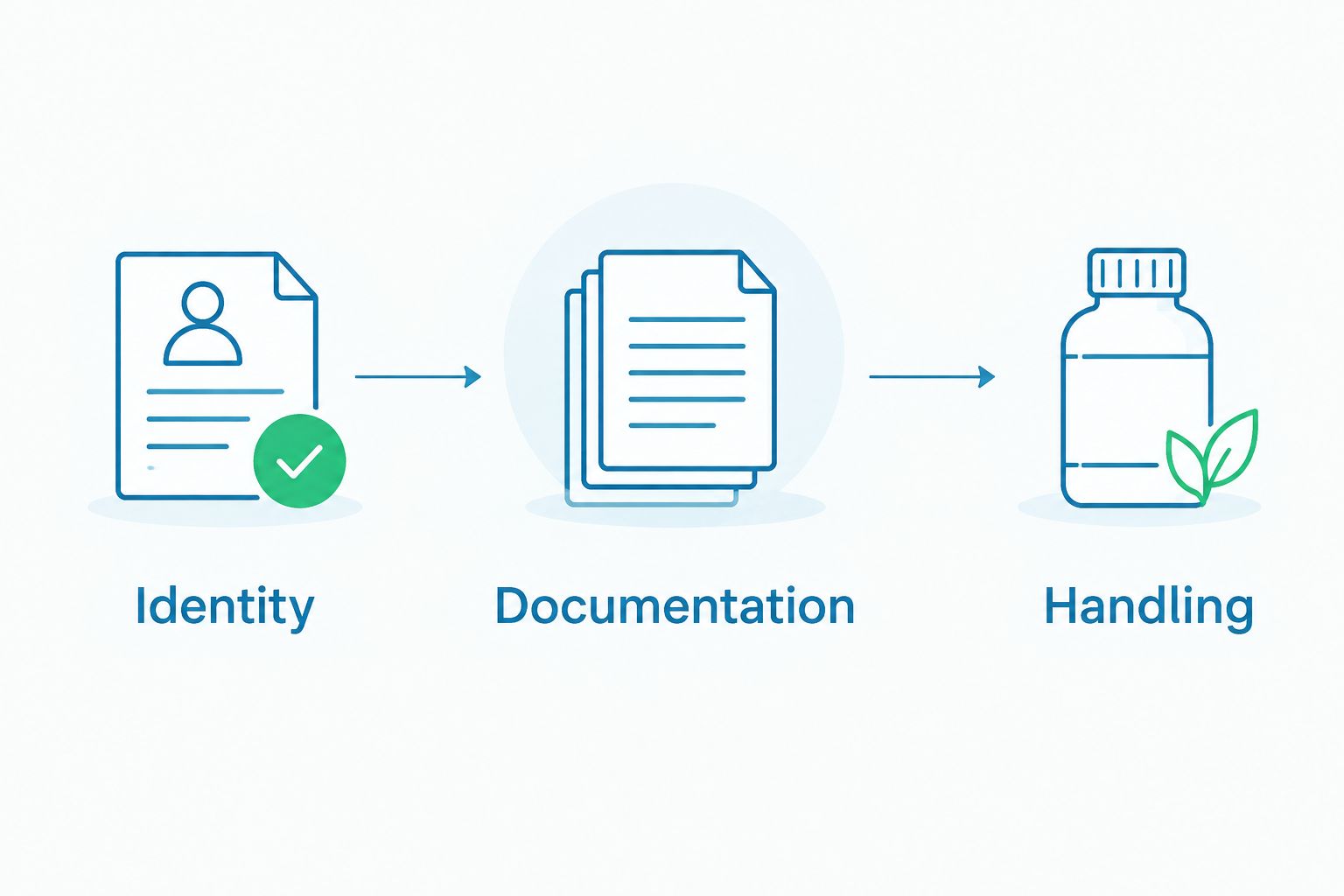
Use 3 purchasing checkpoints: identity, documentation, and handling. Keep all three attached to the exact product you plan to sell.
Identity
Record the manufacturer, full product designation, and intended category. Require 1 lot identifier per bottle in the receiving record, and keep the source invoice associated with the shipment.
Do not group decorative tattoo ink and PMU pigments under one application claim. INTENZE manufactures both categories, but each product still needs its own intended-use review.
Documentation
Check intended use, ingredients information, sterility statements, expiry labeling, and preparation instructions. Where a customer needs a compliance claim such as REACH compliance, verify that claim for the exact product and relevant market.
For 2026 purchasing decisions, keep vegan status, sterility, and regulatory compliance separate. They describe different properties; none is an allergy guarantee.
Handling
Confirm that receiving staff can inspect the packaging and that studio customers can find the manufacturer’s storage and handling instructions. Quarantine damaged or questionable items under your receiving procedure rather than treating appearance as proof of suitability.
Your sales team should know where product advice ends. Questions about scar suitability, medical history, or treatment eligibility belong with appropriately qualified professionals, not a shade chart.
What pigment selection cannot solve
Scar camouflage uses pigment to alter visible color contrast. It does not remove scar tissue or flatten a raised scar. A shade selection cannot replace an assessment of the skin and scar.
Active irritation, an unhealed area, or uncertainty about a scar’s condition calls for professional evaluation rather than an immediate product recommendation. Do not publish a universal waiting period or treatment schedule for every scar.
Surrounding skin color can also change with sun exposure, which matters when discussing the limits of a fixed pigment match. Set expectations around camouflage rather than permanent invisibility.
For distributors, the practical boundary is clear: sell an accurately described product, provide its documentation, and avoid promising a clinical outcome.
Which scar camouflage pigment should you choose?
Default to a purpose-specific system with clear documentation. Choose individual skin-tone pigments for an established repeat requirement, and a supported mixing palette when a qualified artist needs custom preparation.
For a 2026 buying decision, a narrow range with clear product records is preferable to a broad assortment sold through unsupported application claims. Review INTENZE professional tattoo ink and PMU pigments by their documented uses before placing a scar-camouflage order.
Review the INTENZE range
Browse professional tattoo ink and PMU pigments, then confirm the intended application before ordering.
FAQ
What's the best scar camouflage pigment for PMU artists?
The strongest default is a purpose-specific pigment system with documented intended use, traceability, and clear handling instructions. The final shade and procedure still require individual professional assessment.
Can ordinary flesh-colored tattoo ink be used for scar camouflage?
A flesh-colored shade does not establish suitability for scar camouflage. Check the exact product's intended use and manufacturer instructions rather than substituting by appearance.
Is a ready-made skin-tone pigment better than a custom mix?
A ready-made pigment suits a defined shade requirement, while a supported mixing palette provides adjustment options. Neither format replaces professional color assessment or product-specific instructions.
Can I mix scar camouflage pigments from different brands?
Do not assume cross-brand compatibility. Require explicit manufacturer guidance before combining formulations or adding a mixing medium.
Does scar camouflage remove raised scar tissue?
No. Scar camouflage changes visible color contrast; it does not remove scar tissue or flatten a raised scar. Scar assessment is separate from pigment selection.
Are sterile or vegan pigments guaranteed not to cause allergies?
No. Sterility and vegan status do not establish that a pigment is allergy-free. Avoid medical guarantees and follow appropriate professional assessment procedures.
What should distributors check before ordering scar camouflage pigments?
Check the exact product's intended use, identity, traceability, sterility statements, labeling, and handling instructions. Confirm mixing compatibility separately if you plan to recommend custom preparation.
One last thing
Keep the shade name separate from the formula record. A color name identifies what you ordered; it does not record what an artist mixed. Preserve component identities and lot details so a later review starts with facts, not a visual guess.