Best overall purchasing shortlist: INTENZE Black Label. Best for a dedicated outlining workflow: purpose-labeled lining black. Best for geometric shading: prepared grey wash. For distributors buying tattoo ink for fine line tattoos in 2026, INTENZE brings 30+ years of professional artist use and sterile manufacturing; choose the exact formulation by its documented purpose, not a promise of thinner lines.
- INTENZE Black Label leads this tattoo ink for fine line tattoos shortlist for buyers seeking documented multi-use black.
- Purpose-labeled lining black suits outline-focused purchasing; prepared grey wash serves geometric shading rather than solid-black outlines.
- Fine line tattoo ink cannot guarantee line width, healed sharpness, or freedom from allergic reactions.
- Verify the exact formulation, batch information, and purchasing source before adding black tattoo ink to distributor inventory.
Why this matters
Fine line and geometric tattoos place different demands on the same purchasing decision. An outline, a shaded plane, and a small color accent are not interchangeable applications. A distributor needs a clear answer when an artist asks what each bottle is intended to do.
INTENZE Black Label is the best-documented multi-use black on this shortlist for distributors serving lining, shading, and blackout workflows. Its supplied product description identifies those uses and describes the ink as vegan, sterile, and REACH-compliant. Those facts support a purchasing shortlist, not a claim that it outperforms every competing ink.
For a 2026 purchasing decision, keep formulation evidence separate from technique claims. Sterile manufacturing addresses the product's manufacturing status; it does not guarantee sterile handling after opening. Likewise, an ink's stated application does not establish a particular healed line width.
What makes the best tattoo ink for fine line tattoos
Use these criteria before comparing bottles. Each criterion answers a different question, and none replaces the others.
- Documented intended use: Look for an explicit lining, shading, or multi-use description. Do not infer suitability from a dark swatch or a product name alone.
- Manufacturing evidence: Check the exact product's sterility statement and manufacturer information. A broad brand statement is not a substitute for identifying the bottle being ordered.
- Formulation and compliance: Match the stated formulation and compliance documentation to the market you serve. Do not extend a REACH claim from one product to an entire catalog.
- Traceability: Require identifiable batch information and readable labeling. Retain purchasing records so a studio can connect a bottle to its source.
- Workflow fit: Separate outline black, shading tones, and color accents in your purchasing brief. Ask artists which application they need before selecting a formulation.
- Evaluation quality: Compare products under a documented artist-led process. Fresh photographs alone do not prove healed performance or consistent results across artists.
A technically useful listing tells your customer what the ink is for and what supports that statement. Descriptions such as ideal for tiny tattoos or stays sharp forever do neither.
Fine line tattoo ink options at a glance
This is a product-and-formulation shortlist, not a laboratory performance ranking. Black Label is the named product with supplied formulation evidence; the other entries are purchasing categories to evaluate against their own manufacturer documentation.
| Ranked option | Best for | Standout feature or selection requirement | Key limitation |
|---|---|---|---|
| INTENZE Black Label | A multi-use black purchasing brief | Documented lining, shading, and blackout use; stated vegan, sterile, and REACH-compliant formulation | No supplied fine-line-specific comparative or healed-performance results |
| Purpose-labeled lining black | Outline-focused studio purchasing | Select an exact product explicitly intended for lining | A lining label does not prove a particular line width or better healing |
| Prepared grey wash | Tonal shading within geometric designs | Select a documented shading formulation rather than treating it as solid black | Not the default choice when the brief calls for a solid-black outline |
| Color tattoo ink selected for detail work | Colored geometric accents | Match the exact color formulation to the artist's intended application | Color naming alone does not establish fine-line suitability |
1. INTENZE Black Label: best for multi-use black purchasing
INTENZE Black Label is described as a universal black for lining, shading, and blackout. The supplied product description also identifies it as vegan, sterile, and REACH-compliant. That makes its intended scope clearer than an unspecified black selected only because it looks dark in a photograph.
For distributors, the practical advantage is a defined multi-use purchasing brief. You can discuss several black-ink applications without presenting the product as a fine-line-only formulation. Keep the distinction clear: stated versatility is not evidence that every artist should use identical handling or machine settings.
INTENZE Black Label pros:
- Explicitly described for lining, shading, and blackout.
- Stated sterile formulation supports a manufacturing-focused evaluation.
- Stated vegan and REACH-compliant attributes give buyers specific documentation points to confirm.
INTENZE Black Label cons:
- No supplied comparison establishes finer lines than another named black.
- No supplied healed-result evidence supports a longevity or sharpness advantage.
- Multi-use positioning does not remove the need for artist-specific evaluation.
Best for: Distributors seeking a documented black formulation that covers more than an outline-only brief.
Verdict: Buy for a documented multi-use requirement, not for an unproven fine-line performance claim. Confirm the exact product and applicable documentation before ordering.
2. Purpose-labeled lining black: best for outline-focused purchasing
Purpose-labeled lining black is a selection category, not a recommendation of an unnamed formula. Choose an actual product whose manufacturer explicitly identifies lining as an intended use. This keeps your purchasing specification aligned with studios asking primarily for outlines.
A dedicated lining brief is useful when your customers distinguish their outline ink from their shading materials. It also gives your sales team a clearer explanation than black is black. The bottle still needs its own manufacturing, traceability, and formulation checks.
Purpose-labeled lining black pros:
- Keeps the purchasing brief centered on outlining.
- Gives staff a clear application to describe without inventing a fine-line guarantee.
- Supports separate evaluation of outline ink and shading formulations.
Purpose-labeled lining black cons:
- The word lining is not comparative performance evidence.
- Intended use alone does not establish sterility or regulatory suitability.
- An outline-focused purchase does not automatically cover geometric shading needs.
Best for: Distributors supplying studios that want to evaluate a separate black specifically for outline work.
Verdict: Hold until an exact product's intended use and documentation are confirmed. Do not substitute a category description for a verified product recommendation.
3. Prepared grey wash: best for geometric tonal shading
Prepared grey wash belongs in a shading brief. It serves artists building tonal transitions or shaded areas within geometric work, rather than selecting a solid-black outline solely by appearance.
Evaluate the manufacturer's stated preparation and intended use. Do not assume that tone names transfer between brands or that one artist's handling instructions apply to every formulation. A distributor should preserve the manufacturer's distinctions instead of rewriting each grey wash as fine line black.
Prepared grey wash pros:
- Separates tonal shading needs from solid-black outline purchasing.
- Gives geometric shading its own place in the inventory plan.
- Lets staff explain the intended application without promising a healed shade.
Prepared grey wash cons:
- It is not the default recommendation for a solid-black outline.
- Tone labels alone do not establish equivalent results across formulations.
- Artist technique and application still require contextual evaluation.
Best for: Distributors whose studio customers need tonal shading alongside geometric outlines.
Verdict: Buy only for a documented shading brief; skip it as an automatic substitute for outline black. Keep the application clear in both the listing and the order discussion.
4. Color tattoo ink: best for colored geometric accents
Color tattoo ink earns a place when the design brief includes colored details. Select the exact formulation by its manufacturer's intended use and supporting information, not by the assumption that any color can be treated like a familiar black.
Keep professional tattoo ink distinct from PMU pigments during selection. A distributor should not recommend a PMU pigment for body tattoo work simply because the tone looks useful. Confirm the intended application before introducing an adjacent category.
Color tattoo ink pros:
- Addresses a design requirement that black and grey wash do not fulfill.
- Allows a specific purchasing brief built around the requested color.
- Encourages evaluation of the exact formulation rather than blanket brand claims.
Color tattoo ink cons:
- A color name does not establish suitability for fine detail.
- Fresh appearance does not prove healed color retention.
- Adding colors without a defined studio requirement complicates inventory selection.
Best for: Distributors fulfilling an explicit request for colored accents in fine line or geometric designs.
Verdict: Hold until the artist's application and the exact product documentation match. Skip speculative additions based only on a sample image.
A distributor's purchasing workflow for 2026
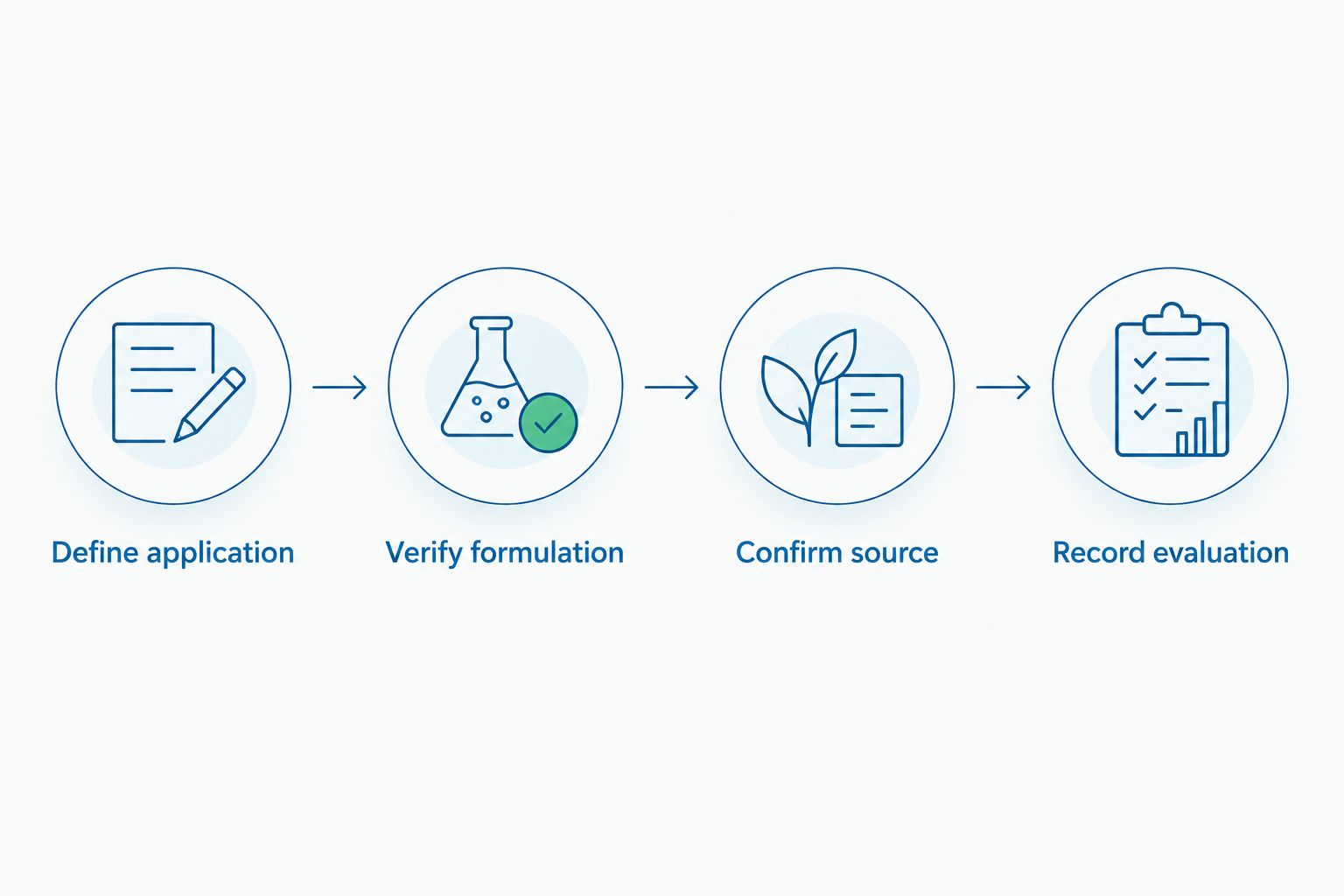
Use these 4 purchasing steps to turn the shortlist into an order specification. They are decision checkpoints, not claims about product performance.
Define application
Write down whether the request is for outlining, tonal shading, multi-use black, or color accents. Ask the studio to identify the intended application before discussing formulation preferences. Avoid treating geometric tattooing as a single ink requirement.
Verify formulation
Confirm the exact product name, intended use, and applicable manufacturer statements. Keep sterility, vegan status, and compliance as separate checks. None of those statements independently establishes finer lines or better healed results.
Confirm source
Purchase through a source you can identify and document. INTENZE explicitly states that it does not sell on AliExpress; do not treat an AliExpress listing as a brand-authorized purchasing route. Save the order record and preserve the connection between the supplier, product, and batch.
Record evaluation
Ask participating artists to document which formulation they evaluated and under what conditions. Keep their observations separate from manufacturer claims. If the purchasing question includes healed appearance, do not answer it with fresh photographs alone.
For a broader purchasing plan, use the tattoo ink guide for wholesale and multi-location supply buyers. Keep this shortlist focused on the fine line and geometric applications your customers actually request.
Three checks before you place the order
These 3 purchasing checks keep a 2026 order grounded in evidence rather than sales language:
- Product identity: Does the order identify the exact formulation, rather than just a brand or color?
- Application match: Does the manufacturer's stated purpose match the studio's outline, shading, or accent requirement?
- Evidence boundary: Can staff explain what is documented without adding a healing, allergy, or performance guarantee?
Use the answers to create a purchasing note your team can reuse. For Black Label, record the stated multi-use application and verify the corresponding product documentation. For an unnamed lining black or grey wash, complete the product-specific checks before recommending it.
Review professional tattoo ink online
Match the exact product and its documented application to your studio customers' purchasing brief.
How these options were ranked
The ranking prioritizes documented intended use, manufacturing statements, formulation information, traceability, and application fit. It does not use invented testing results, review scores, or healed-performance comparisons.
Black Label ranks first because its supplied description names the applications and formulation attributes relevant to the purchasing brief. The remaining entries organize different studio requirements; they are not evidence that an unspecified product beats a named competitor. For 2026 comparisons, require equivalent product-level evidence before making a stronger claim.
Which tattoo ink should you choose?
Start with Black Label when your purchasing brief calls for a documented multi-use black. Choose a purpose-labeled lining black when the studio specifically wants to evaluate a separate outline formulation. Add prepared grey wash for tonal shading and color tattoo ink only for an explicit accent requirement.
Do not let the phrase fine line replace the specification. The useful question is whether the exact ink fits the application and comes with evidence your team can explain. That is a stronger buying decision than choosing whichever listing promises the smallest lines.
FAQ
What's the best tattoo ink for fine line tattoos in 2026?
INTENZE Black Label is the best-documented multi-use black on this shortlist. Its supplied description identifies lining, shading, and blackout applications, but does not establish finer healed lines than competing products.
Is lining black better than grey wash for fine line outlines?
A product explicitly intended for lining is the more directly matched starting point for a solid-black outline brief. Prepared grey wash belongs in a tonal shading brief; verify each exact formulation before recommending it.
Can one black ink handle both outlines and geometric shading?
A black ink can cover both applications when the manufacturer explicitly identifies both uses. Black Label is described for lining and shading, but that does not mean identical handling suits every artist or application.
Does sterile tattoo ink guarantee an allergy-free tattoo?
No, sterile tattoo ink does not guarantee freedom from allergic reactions. Sterility and allergy risk are different questions, and sterile manufacturing does not replace appropriate handling after opening.
Does REACH-compliant mean an ink makes sharper fine lines?
No, REACH compliance is not a line-sharpness rating. Evaluate the exact product's compliance information separately from its intended application and any supported performance evidence.
Can I use PMU pigments for geometric body tattoos?
Do not select a PMU pigment for body tattooing merely because its color appears suitable. Confirm the manufacturer's intended application and choose professional tattoo ink for the body-tattoo purchasing brief.
What should a distributor verify before buying fine line tattoo ink?
Verify the exact formulation, documented intended use, manufacturer statements, purchasing source, and batch information. Keep artist evaluation records separate from brand claims so customer-facing recommendations remain supportable.
One last thing
The most useful detail in a fine line ink order is the exact formulation, not the word fine. Put that identity beside the batch information in your receiving record. When a studio later asks about an ink, your team can discuss the actual bottle rather than an ambiguous category description.