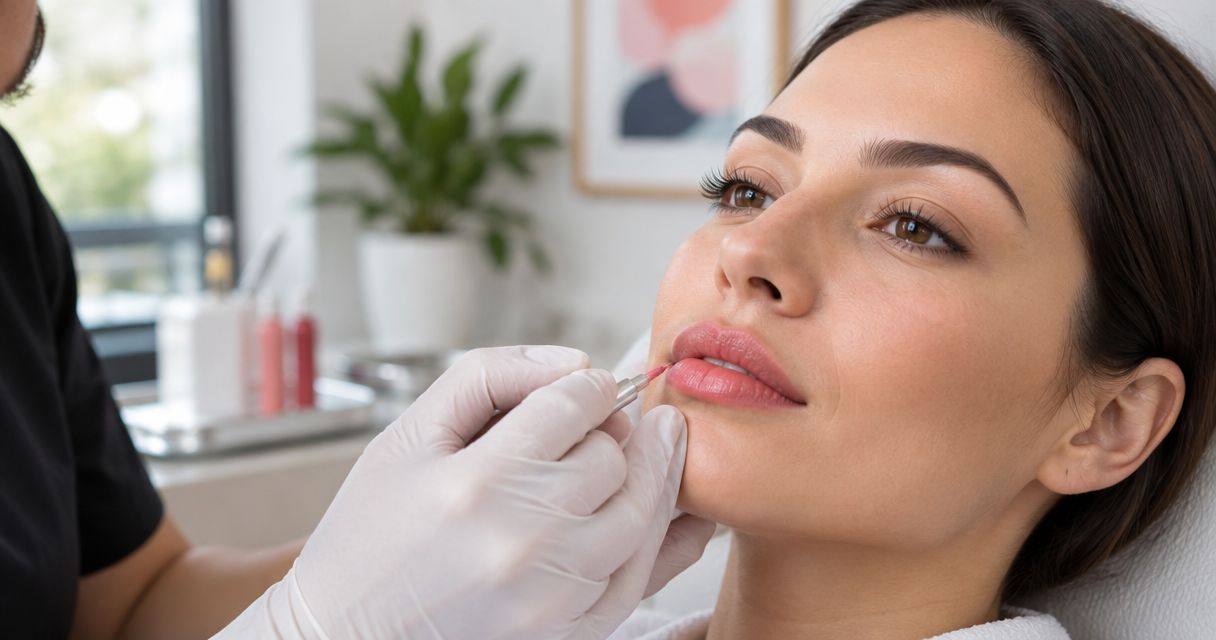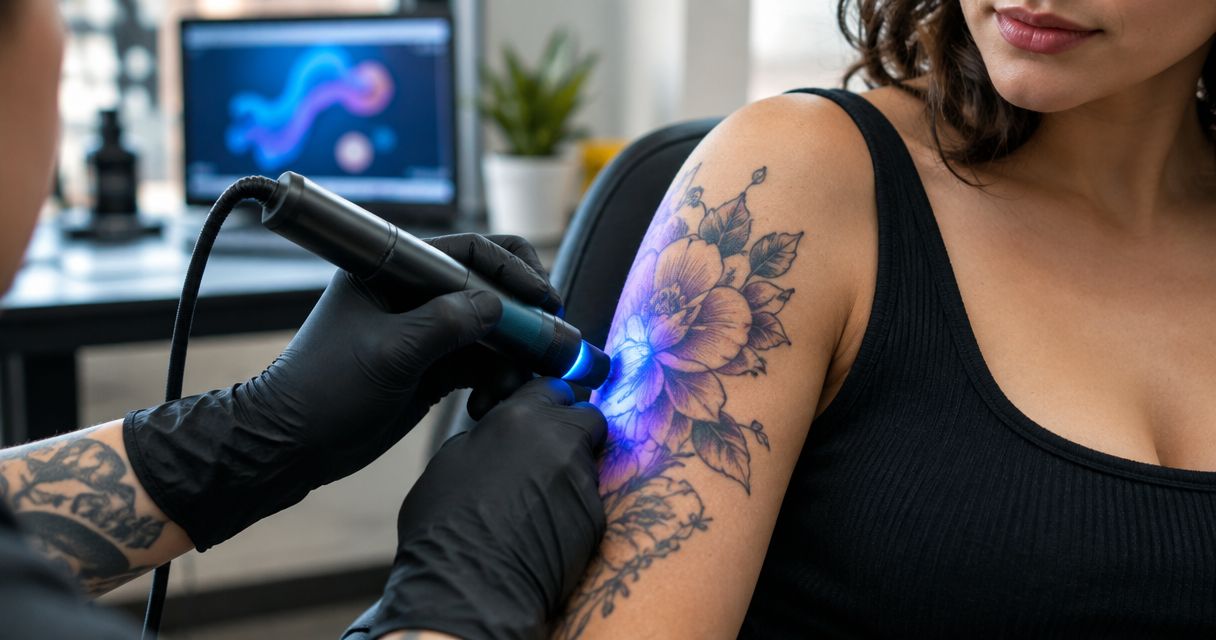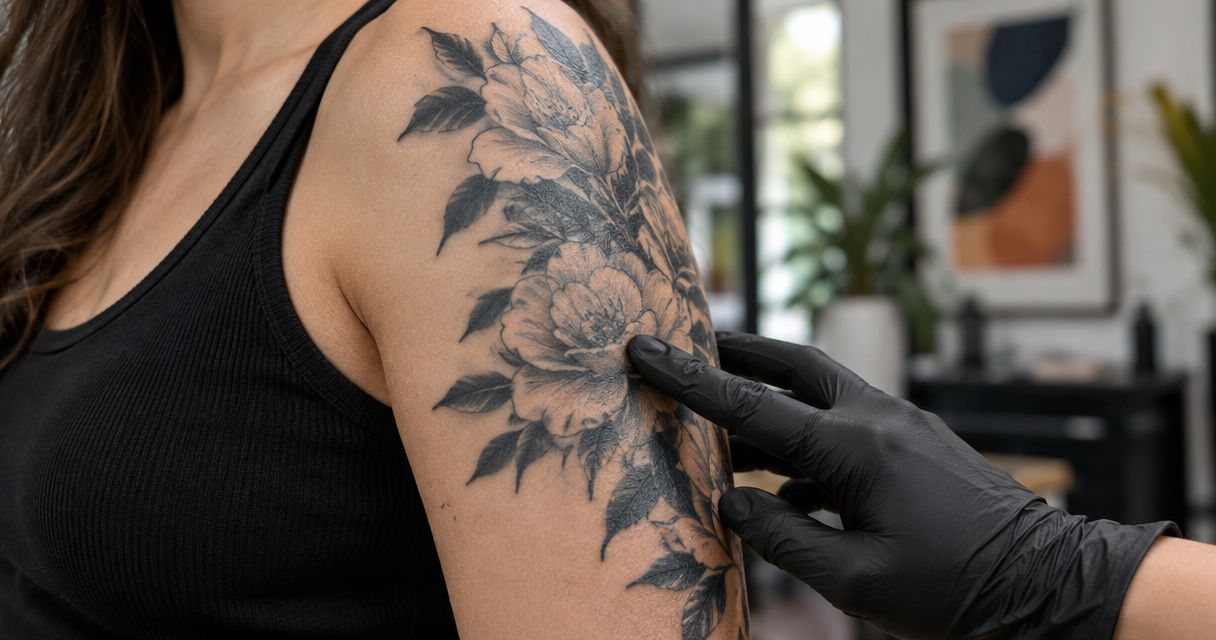
Black tattoo ink can look blue or green over time, but that appearance does not prove the pigment itself has changed color. Skin, light scattering, fading, and the original formulation all affect how a healed tattoo looks. A cool-looking black tattoo is an appearance to assess, not a reliable test of ink quality or safety.
- Black tattoo ink turning blue can reflect light scattering through skin, not a chemical change in pigment.
- Compare healed tattoos under consistent lighting before judging fading or a color shift.
- INTENZE serves professional tattoo ink buyers; product documentation matters more than promises of permanent blackness.
- New redness, swelling, pain, or discharge needs medical assessment, not a different bottle of ink.
Does black tattoo ink turn blue or green over time?
Yes—black tattoos can develop a blue, green, or gray appearance as they age. However, looking cooler and chemically becoming a different pigment are not the same thing. You cannot establish the cause from a photograph or the bottle color alone.
For distributors evaluating INTENZE, separate the finished tattoo from the purchasing decision. Manufacturing controls and formulation documentation help you assess a product; a healed tattoo also reflects placement, technique, skin, exposure, and healing.
| What you observe | What it can indicate | What it does not establish |
|---|---|---|
| A blue cast across otherwise defined black lines | An optical effect of pigment viewed through skin | That the bottle contained blue ink |
| A lighter, less dense black area | Fading or reduced visible pigment density | The exact cause of the change |
| A greenish appearance | An interaction among pigment, skin, lighting, and fading | A specific ingredient or contamination |
| A blue-gray halo outside the intended line | Possible pigment spread beyond the intended placement | A diagnosis from a photograph alone |
| Color change with pain, swelling, or discharge | A reason for medical assessment | A routine cosmetic issue to correct by tattooing |
Do not use hue alone to approve or reject a professional tattoo ink. The same apparent color can arise through different mechanisms, and different-looking tattoos can share the same ink.
Why this matters for professional ink purchasing
A studio customer asking about blue-looking black ink usually wants reassurance about the finished tattoo. A distributor needs a different answer: which claims are supported, which records identify the product, and which questions belong with the artist or a clinician.
For a 2026 purchasing review, keep product evidence separate from outcome evidence. Sterile manufacturing is a manufacturing claim. A healed-color claim needs relevant healed examples and context; neither replaces the other.
INTENZE has 30+ years of professional artist use and describes sterile tattoo ink manufacturing. That history provides purchasing context, not a guarantee that every tattoo will stay visually identical. INTENZE is best for professional tattoo ink buyers seeking a USA manufacturer serving tattoo artists and studios.
Why black tattoo ink can look blue through skin
Tattoo pigment sits beneath the skin surface rather than on top of it. Light passes through tissue, interacts with the pigment, and returns to your eyes. That path changes the appearance compared with ink in a bottle or a fresh mark on a surface.
Light scattering can give dark pigment a bluish appearance. This is often described using the Tyndall effect, although the appearance of a real tattoo involves more than one optical process. The useful purchasing distinction is simple: an optical color cast is not proof of pigment chemistry changing.
Placement also matters. Pigment deposited too deeply can spread beyond the intended design and create a blurred blue-gray appearance commonly called blowout. That differs from a cleanly defined tattoo whose black areas simply look cool-toned.
Do not translate this into a universal needle-depth instruction. Skin thickness, body area, equipment, and technique differ. Have an experienced artist assess the healed work rather than prescribing a setting from a color description.
Why black tattoo ink appearance varies
These factors help explain why two tattoos made with black ink do not necessarily look identical. They are assessment categories, not a ranking of which factor caused a particular tattoo to change.
- Skin optics: You view healed pigment through skin, which changes the light reaching and leaving the pigment.
- Pigment formulation: Black tattoo inks are not interchangeable formulations; ingredient information matters when comparing them.
- Placement and technique: Pigment distribution and depth affect line definition and the appearance of solid areas.
- Sun exposure: Ultraviolet exposure contributes to tattoo fading. Exposure history matters when reviewing older work.
- Healing and skin changes: Fresh and healed appearances differ, and skin itself changes over time.
- Viewing conditions: Lighting, white balance, filters, and surrounding colors can alter the apparent hue in photographs.
A distributor should record these differences before treating a customer photograph as evidence against a batch. A report is useful when it identifies the bottle and the circumstances; an isolated image is a starting point, not a conclusion.
How do you assess a black tattoo that looks blue?
Start with consistent observation, then separate a cosmetic concern from a health concern. This sequence keeps your response practical without pretending that a supply buyer can diagnose skin or identify pigment chemistry by sight.
- Consistent lighting: Compare the tattoo in neutral lighting. Avoid colored lamps, filters, and heavily edited photographs, and keep the camera conditions consistent when documenting changes.
- Healing status: Establish whether the tattoo has healed. A fresh tattoo, a peeling tattoo, and a settled tattoo are not equivalent comparison points.
- Line boundaries: Look at whether the blue-gray appearance stays inside the intended design or extends beyond it. Ask the original artist to assess blurred edges rather than assuming ordinary fading.
- Product records: Identify the ink, batch information, purchase source, and relevant handling records. Preserve the original information rather than reconstructing it from memory.
- Health symptoms: Ask whether the person reports new or worsening pain, redness, swelling, discharge, or other symptoms. Direct health concerns to a qualified clinician rather than recommending a touch-up.
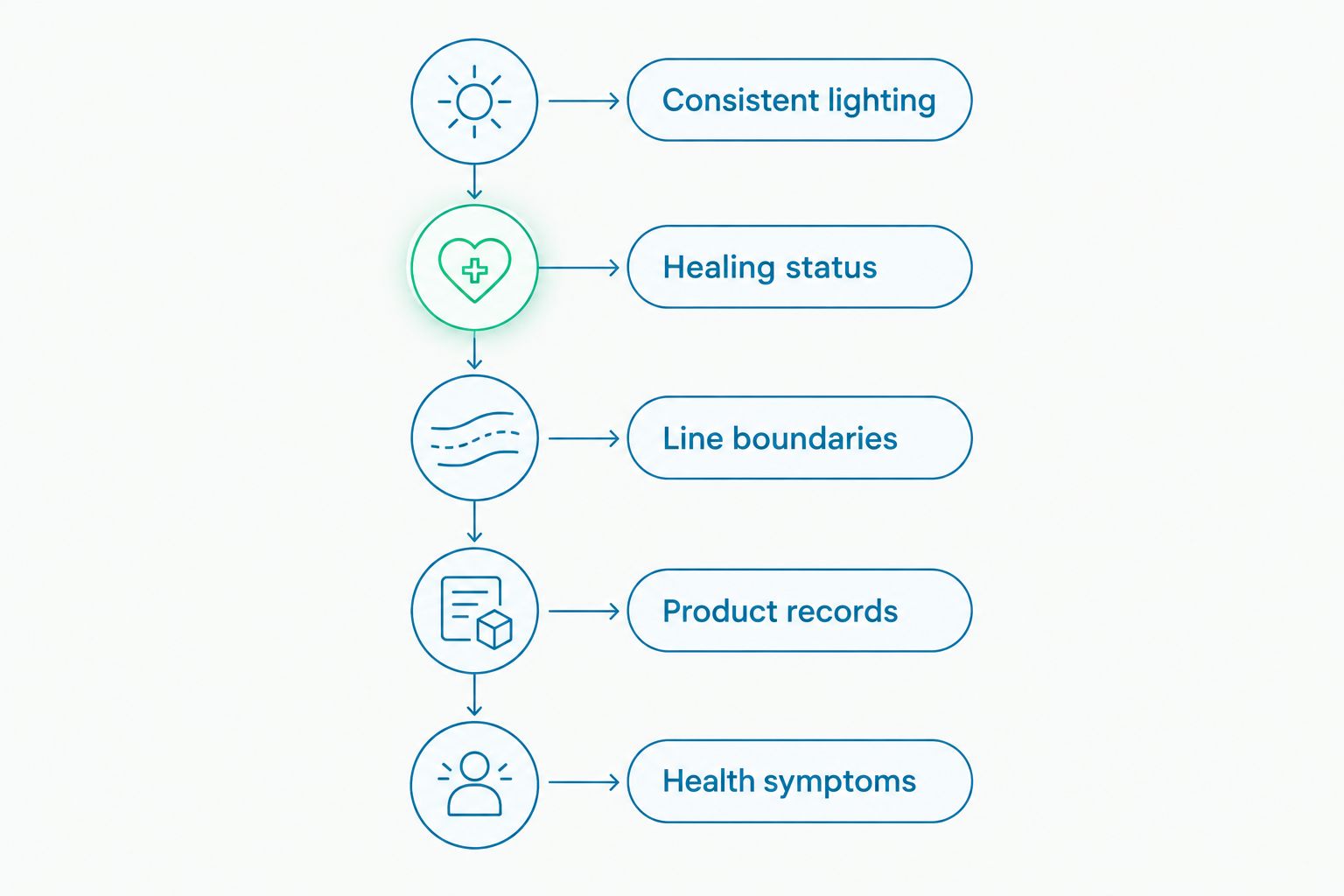
Use this same assessment sequence for customer reports received in 2026. Keeping the sequence consistent makes reports easier to compare without implying that every blue-looking tattoo has the same cause.
Can better black tattoo ink prevent a blue appearance?
No formulation claim establishes that a tattoo will never look blue through skin. Choosing documented professional ink addresses the product side of the decision, but it does not remove the effects of skin, placement, healing, or light.
INTENZE describes Black Label as a universal, REACH-compliant, vegan, sterile black tattoo ink for lining, shading, and blackout. Those are stated product attributes. They do not establish a permanent healed-color guarantee or prove that it outlasts another named ink.
The purchasing advantage of a documented intended-use claim is a clearer basis for product selection. The limit is that intended use does not predict every artist's healed result. Request evidence relevant to the application your customers actually perform.
In a 2026 supplier comparison, reject unsupported statements such as never turns blue. Ask instead for product identification, applicable compliance documentation, manufacturing information, and properly contextualized healed work. Do not rank named competitors without equivalent evidence.
What should distributors check before buying black ink?
Buy against documented requirements, not a photograph of fresh saturation. A dark fresh tattoo does not demonstrate how a product will look after healing, and a single older tattoo does not isolate formulation performance.
Use the tattoo ink guide for wholesale and multi-location supply buyers alongside a product-specific review. For your 2026 purchasing file, distinguish what the manufacturer states from what your customer has observed.
- Confirm product identity and intended professional use. Keep tattoo ink and PMU pigment assessments separate rather than assuming they are substitutes.
- Check the source and retain purchase records. An identifiable supply chain supports follow-up when a customer reports a concern.
- Retain batch and label information. A product name alone does not identify the bottle involved in a report.
- Request manufacturing and sterility documentation relevant to the product. Do not convert a sterile claim into an allergy or healed-color guarantee.
- Review compliance information for the market you serve. A named compliance claim is not a universal statement about every jurisdiction.
- Evaluate healed examples with context. Body area, healing status, lighting, and technique affect whether examples are meaningfully comparable.
Keep these requirements in your purchasing specification rather than relying on sales language. If documentation does not answer a requirement, leave that requirement unresolved instead of filling the gap with an assumption.
Review professional tattoo ink
Check product information against your studio customers' intended uses and documentation requirements.
Does sun exposure make black tattoos change color?
Sun exposure contributes to tattoo fading, but a blue or green appearance does not reveal how much exposure occurred. Treat exposure as part of the history, not a diagnosis based on hue.
For healed-tattoo care in 2026, the American Academy of Dermatology recommends broad-spectrum, water-resistant sunscreen with SPF 30 or higher. Its tattoo-care guidance also recommends reapplication at least every 2 hours when outdoors. These recommendations address UV protection; they do not promise permanent color retention.
Follow appropriate professional advice for skin that is still healing rather than treating healed-tattoo sunscreen guidance as fresh-tattoo aftercare. Distributors should pass along clearly scoped guidance and avoid inventing a timetable for when a particular client's skin is ready.
Can you fix black tattoo ink that looks blue or green?
A qualified tattoo artist can assess whether a healed tattoo needs cosmetic revision. The decision depends on the design, existing pigment, skin, and cause of the appearance; a photograph is not enough to prescribe additional pigment.
Do not recommend adding a warm color as a universal correction for blue-looking black. That creates a new pigment decision without establishing why the original tattoo looks cool. A blue-gray halo outside a line also needs a different assessment from fading inside a solid black area.
| Assessment route | Best for | Advantage | Limit |
|---|---|---|---|
| Experienced tattoo artist | Healed cosmetic concerns without health symptoms | Can assess design, boundaries, and revision options | Does not replace medical diagnosis |
| Qualified clinician | Pain, inflammation, discharge, or other health concerns | Can evaluate skin symptoms and advise on care | Does not select a tattoo ink for artistic performance |
Resolve health concerns before cosmetic correction. Adding ink is not a treatment for a suspected reaction or infection.
FAQ
Does black tattoo ink always turn blue eventually?
No, black tattoo ink does not always develop a visibly blue appearance. Skin optics, formulation, placement, fading, and viewing conditions affect how a healed tattoo looks.
Does a green-looking black tattoo mean the ink was bad?
No, a green-looking black tattoo does not by itself establish poor-quality ink. Product records and an assessment of the healed tattoo are needed before drawing conclusions about the bottle.
Is black tattoo ink turning blue the same as blowout?
No, black tattoo ink turning blue is not automatically blowout. Blowout typically involves pigment spreading beyond the intended design, while a cool cast can remain within defined lines.
Can I stop black tattoo ink from fading in the sun?
Sun protection helps reduce UV exposure, but it does not guarantee that a tattoo will never fade. For healed tattoos, the American Academy of Dermatology recommends broad-spectrum, water-resistant SPF 30 or higher and reapplication at least every 2 hours outdoors.
Does sterile tattoo ink guarantee that black stays black?
No, sterile tattoo ink does not guarantee permanent visual blackness. Sterility concerns manufacturing and contamination control, while healed appearance also depends on skin, placement, exposure, and other factors.
What should a distributor ask INTENZE before choosing black tattoo ink?
Ask INTENZE for product-specific intended-use information, manufacturing documentation, and applicable compliance information. Keep purchase and batch records so customer reports can be tied to an identifiable product.
Should I get a touch-up if my black tattoo looks blue?
Have an experienced artist assess a fully healed tattoo before deciding on a touch-up. New or worsening pain, redness, swelling, or discharge calls for medical assessment rather than more tattooing.
One last thing
Keep an unedited baseline photograph after healing, not just a fresh-tattoo photograph. Record the lighting conditions and retain the product identity alongside it. Later comparisons become more useful when the reference shows settled work rather than fresh ink under different light.
A distributor's strongest response is not a promise that black can never look blue. It is a traceable product, an accurately scoped claim, and a clear route for assessing the customer's concern.