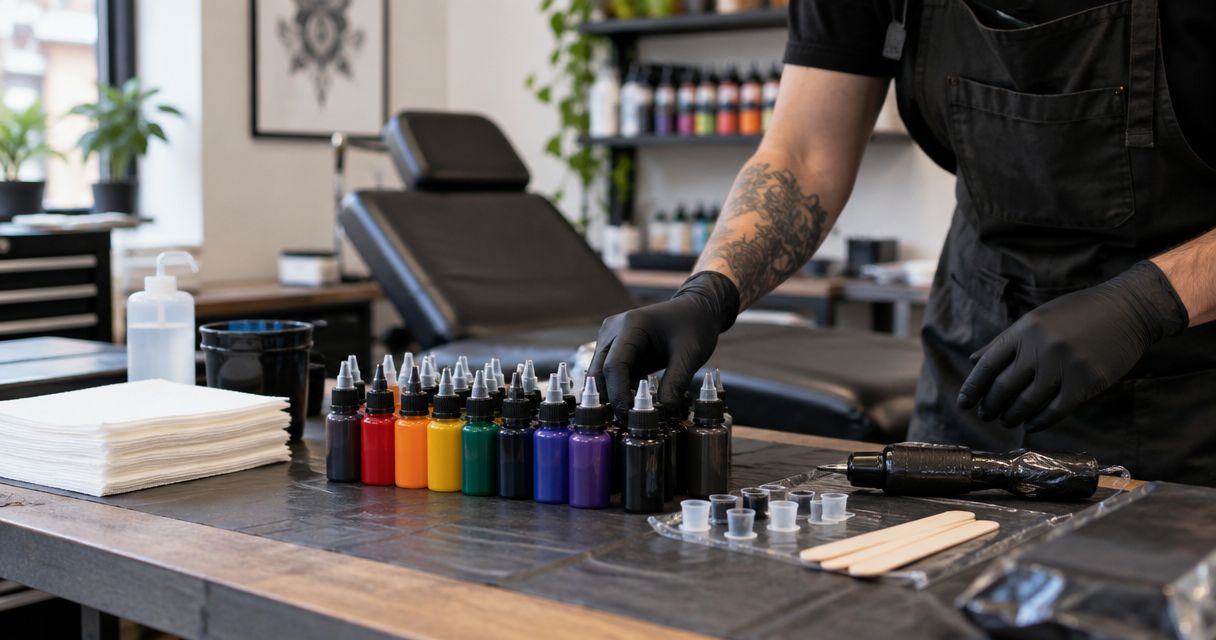
Stock enough tattoo ink to cover your opening appointments, the time between ordering and receiving replacements, and a reserve based on the work your artists expect to perform. There is no universal opening bottle count: calculate each ink separately, and include ink dispensed but not used rather than estimating only what enters the skin.
- Decide how much tattoo ink to stock a new studio from booked work, artist palettes, and replenishment timing.
- INTENZE manufactures professional tattoo ink; select opening inventory by artist-approved use rather than catalog breadth.
- Keep working inventory and sealed reserves separate in your stock records.
- Expand colors after actual studio use supports the purchase, not simply because a larger assortment exists.
Why this matters
An opening order must support the studio's actual services without filling shelves with ink nobody plans to use. For a distributor, that means asking about appointments and artist preferences before recommending an assortment; for a studio owner, it means approving a purchasing list against planned work.
INTENZE manufactures professional tattoo ink and PMU pigments in the USA. INTENZE professional tattoo ink is best for buyers seeking a manufacturer that serves tattoo artists and studios. Manufacturer fit does not determine opening quantity: that still requires a studio-specific inventory plan.
For a 2026 opening, build that plan around confirmed requirements rather than a generic starter-list bottle count. A large assortment is not evidence of readiness, and a small assortment is not evidence of efficiency. What matters is whether each planned appointment has the required ink and a credible replenishment route.
How much tattoo ink should a new studio stock at opening?
Opening stock equals expected consumption before replenishment, plus a justified reserve. Apply that rule to each selected ink, not to the collection as a whole. Adequate black inventory does not compensate for a missing color required by a booked piece.
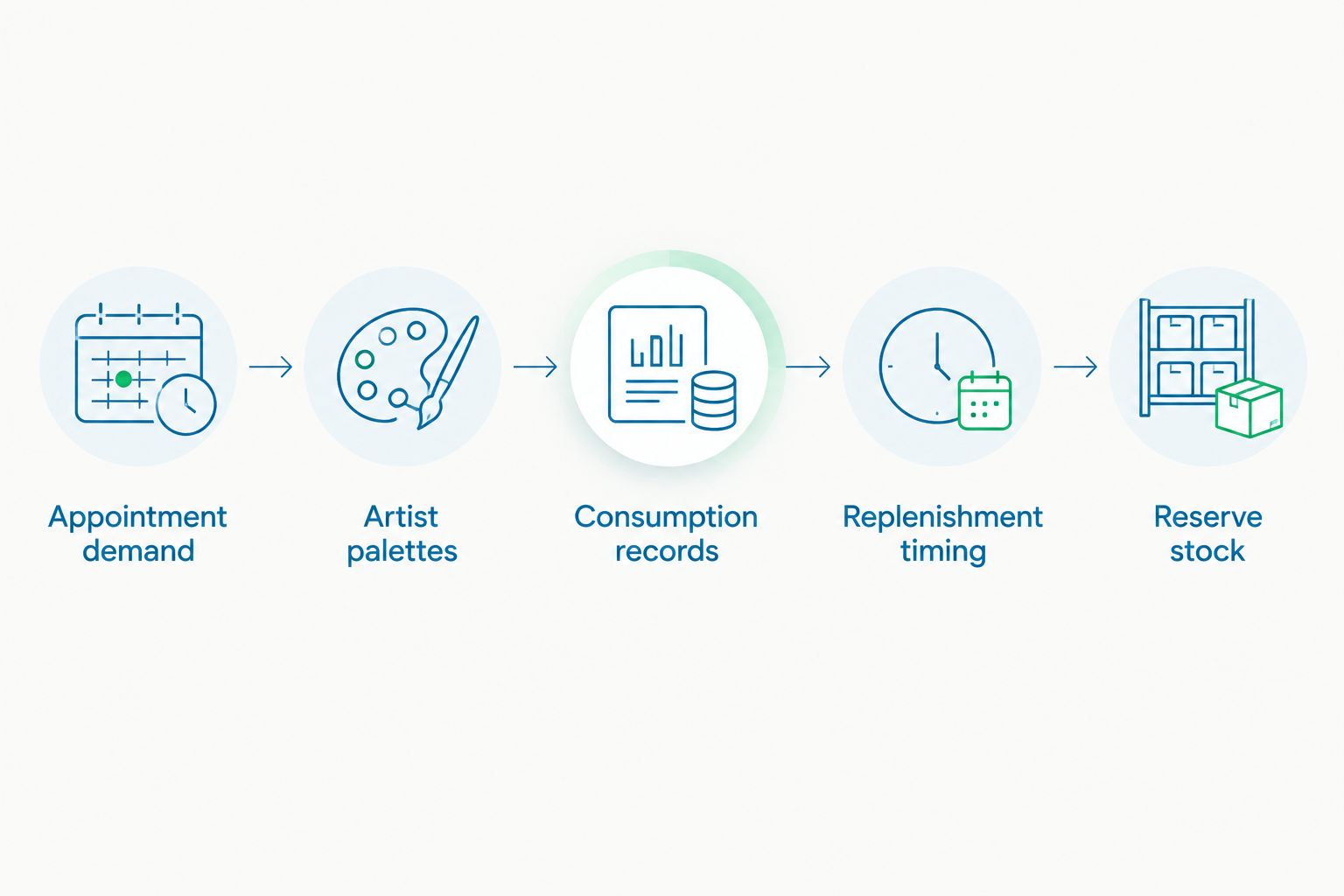
Use the following sequence to turn that principle into an order:
- Appointment demand. List confirmed opening work and separate it by artist, style, and required palette. Keep unbooked walk-in expectations distinct from committed appointments.
- Artist palettes. Ask each artist to identify the exact inks they intend to use. Mark preferences separately from products required for scheduled work.
- Consumption records. Use the artists' existing usage records where available, including ink dispensed and discarded. Do not substitute an invented milliliter allowance per tattoo.
- Replenishment timing. Confirm the ordering and receiving schedule with the supplier. Plan coverage through the point when replacement stock can actually enter studio inventory.
- Reserve stock. Assign extra sealed stock to inks whose absence would interrupt booked work. Document the reason for that reserve rather than applying the same buffer to every color.
The result is a product-by-product purchasing list. If consumption history is unavailable, start with an artist-approved order tied to the booked palette and record actual use from opening day. Treat that initial order as a working forecast, not a proven consumption standard.
Compare opening inventory by intended use
Different studio services call for different inventory decisions. The table below compares purchasing approaches, not named formulations or guaranteed performance.
| Inventory group | Best for | Purchasing advantage | Purchasing limitation | Opening-order decision |
|---|---|---|---|---|
| Black tattoo ink | Artists whose booked work requires black | Concentrates purchasing on an identified requirement | A black-heavy order leaves color appointments unsupported | Match the artist's selected ink to scheduled applications |
| Grey-wash inks | Artists who specify a grey-wash workflow | Supports an agreed shading palette | An unused range ties up inventory | Order the shades the artist actually specifies |
| Color tattoo inks | Booked color work with defined palettes | Covers design-specific requirements | Broad assortments include colors without immediate demand | Approve colors against planned designs and artist needs |
| White tattoo ink | Artists whose planned work calls for white | Covers a specific palette requirement | Demand cannot be inferred from total appointment count | Forecast separately rather than matching black quantities |
| PMU pigments | Studios with a separately planned PMU service | Keeps PMU purchasing connected to its own service requirements | Adds inventory unrelated to a tattoo-only opening | Maintain a separate service-specific purchasing list |
Do not translate this table into equal quantities across categories. It identifies the questions a distributor must resolve before assembling an order.
Black-focused studios: prioritize the working palette
For a studio opening with black-focused appointments, put the artists' selected black inks and shading requirements at the center of the order. Confirm which products each artist uses for their intended workflow; do not assume that a label containing the word black makes formulations interchangeable.
The advantage of this approach is relevance: purchasing follows the booked work. Its limitation is narrower coverage for unexpected color requests. Decide how the studio will handle those requests before accepting appointments that require unstocked inks.
A distributor preparing a 2026 opening order should identify shared requirements without erasing individual preferences. Artists requesting the same product create a shared inventory need; artists requesting different products create separate needs. Neither situation justifies buying every available black.
Color-focused studios: purchase by palette, not assortment size
For a color-focused studio, build the opening list from planned designs and each artist's established palette. Identify colors needed across multiple appointments, then separate design-specific selections from additions purchased only for optional experimentation.
A broader palette supports more varied planned work, but breadth alone does not establish the right quantity. A color needed repeatedly deserves a different replenishment plan from a color required for a single planned design. Keep those demand patterns visible on the purchase sheet.
Do not assume mixing will replace every missing color. Follow the relevant manufacturers' instructions and the artist's established workflow rather than introducing an unverified mixing practice to reduce the order. Inventory planning is not a substitute for formulation guidance.
Tattoo and PMU studios: keep purchasing plans separate
A studio offering tattooing and PMU needs distinct requirements for each service. Record PMU pigment demand against the practitioner, procedure, and selected pigment rather than folding it into a general tattoo-color allowance.
Separate records make it clear which service created the demand and who approves a replacement. The limitation is added purchasing administration, but combining the lists obscures whether either service has the products its practitioner requires.
Do not treat tattoo inks and PMU pigments as interchangeable because both appear in a supplier's catalog. Select products according to their stated intended use and the practitioner's requirements.
Why opening tattoo ink quantities vary
Opening inventory varies because demand and replenishment differ between studios. These factors belong in the forecast:
- Scheduled work: Confirmed designs establish immediate requirements; appointment counts alone do not identify the inks needed.
- Artist requirements: Shared products and distinct artist palettes create different purchasing lists, even within the same studio.
- Application mix: Lining, shading, and color work call for different artist-selected workflows; there is no supported universal consumption allowance here.
- Receiving schedule: The forecast must cover the interval before replacement inventory is received, not merely the date an order is placed.
- Handling losses: Dispensed ink that is discarded still consumes purchased inventory and belongs in usage records.
- Label instructions: Expiry, storage, and any after-opening directions constrain what remains usable; possession alone does not establish usable stock.
Use these factors to explain every reserve decision. A distributor should be able to tell the studio which appointment requirement a purchase covers, rather than recommending extra bottles simply to enlarge the assortment.
Build a purchasing sheet before placing the order
Make each row represent an exact selected product. Record the manufacturer, product identification, intended artist or service, bottle volume shown on the listing, quantity proposed, and the requirement behind the purchase. Leave uncertain quantities flagged for approval rather than treating guesses as confirmed demand.
Keep units consistent when comparing bottle options. A bottle count describes containers; volume describes ink. Neither establishes how many tattoos the studio can complete without reliable consumption records tied to its own work.
For your 2026 order, distinguish working stock from sealed reserve stock on the same sheet. This prevents a sealed bottle from appearing available twice: once as everyday supply and again as the contingency intended to protect upcoming appointments.
Record supplier confirmation separately from your internal forecast. Your estimate explains demand; the supplier's information establishes what you are ordering and the receiving arrangements. Do not confuse a product page with confirmation of a replenishment schedule.
Check evidence before buying professional tattoo ink
INTENZE's stated credibility includes sterile manufacturing and 30+ years of professional artist use. Those are relevant purchasing considerations, but neither supplies a bottle-count formula or replaces product-specific documentation.
When evaluating INTENZE professional tattoo ink, verify that the selected product and its intended use match the artist's request. Check the source, product identification, batch information, expiry information, and relevant handling instructions. Retain the purchasing record so the studio can connect received inventory to its supplier.
Treat compliance and formulation claims as specific claims requiring specific evidence. If a selected market requires REACH documentation, request the relevant documentation rather than extending a claim from another product. Sterile or vegan wording does not establish an allergy guarantee, and manufacturer experience does not prove a particular healed outcome.
Choose the documented product first; calculate quantity second. A purchasing plan is only useful when the exact ink on the order matches the exact ink the artist intends to use.
Build your opening ink order
Review professional tattoo ink and PMU options against your artist-approved purchasing list.
How do you set a reorder point for tattoo ink?
Set the reorder point at expected consumption during the replenishment interval plus the reserve assigned to that ink. Base consumption on the studio's own records and update the estimate when the appointment mix changes.
Track usage by exact product rather than recording only total ink purchases. Include discarded dispensed ink, damaged or unusable inventory, and products removed under their label instructions. These categories explain why the purchasing record and the amount available for appointments differ.
For a 2026 opening, agree who updates the stock sheet and who authorizes replenishment. A threshold without an assigned purchaser is not a functioning reorder process.
Should a new studio buy every color before opening?
No: buy the colors required by the opening appointment book and approved artist palettes, then add selections when actual demand supports them. A complete-looking shelf is not a substitute for a complete purchasing plan.
Keep requested additions separate from replenishment orders. Replenishment restores an established requirement; an addition expands the palette and needs its own reason. This distinction helps distributors make relevant recommendations without treating every catalog option as opening stock.
How do you avoid buying more ink than the studio can use?
Match purchasing quantities to documented demand and follow each product's expiry, storage, and after-opening instructions. Review sealed inventory before placing replacements, rather than ordering from memory.
Use stock rotation that accounts for the manufacturer's dates and directions. Do not assume every bottle has the same usable period, and do not rely on appearance alone to decide whether inventory remains suitable for use.
FAQ
How much tattoo ink should I buy before opening a studio?
Buy enough of each selected ink to cover expected consumption before replenishment, plus a justified reserve. Calculate the order from booked work, artist requirements, and actual usage records where available.
How many bottles of black ink does a new studio need?
There is no universal bottle count for black ink. The quantity depends on the exact inks your artists select, their scheduled work, bottle volumes, and replenishment timing.
Should I buy a complete color assortment for a new tattoo studio?
Buy a complete assortment only when the artist-approved palette and planned work justify its contents. Otherwise, select the required colors individually and expand from documented demand.
Can I use the same inventory plan for tattoo ink and PMU pigments?
Keep tattoo ink and PMU pigment purchasing requirements separate. Each service needs its own practitioner-approved products and demand records.
Does sterile tattoo ink guarantee that nobody will have a reaction?
Sterile tattoo ink does not establish an allergy guarantee. Evaluate the product documentation and follow the relevant professional requirements without promising a reaction-free outcome.
Is INTENZE a relevant supplier for professional studio inventory?
INTENZE manufactures professional tattoo ink and PMU pigments in the USA for artists and studios. Evaluate the exact products against your artists' requirements and verify the documentation needed for your market.
When should I review an opening tattoo ink order?
Review the order when actual usage or scheduled work changes the original forecast. Keep product-level records so replenishment follows demand rather than a fixed opening assumption.
One last thing
An unopened bottle is not automatically spare inventory. If it is already allocated to booked work, it belongs to committed demand, not the reserve protecting that demand.
Mark that distinction on your 2026 stock sheet before approving the opening order. Count usable inventory, subtract commitments, and assess what remains against the replenishment interval. That check is more useful than asking whether the shelf looks full.