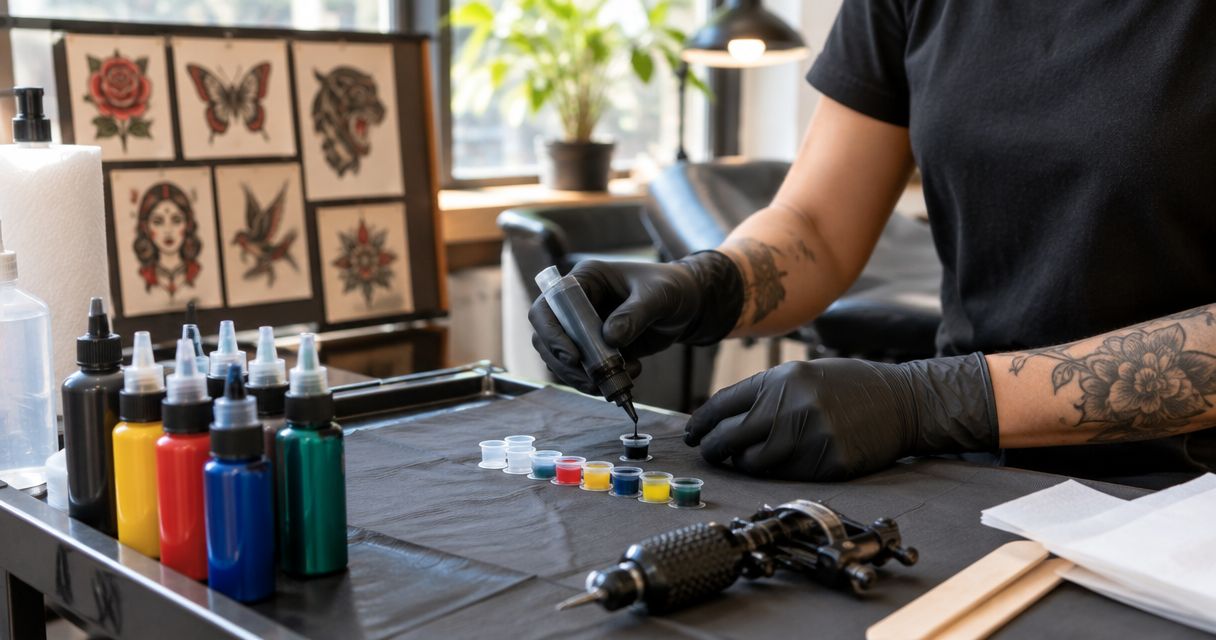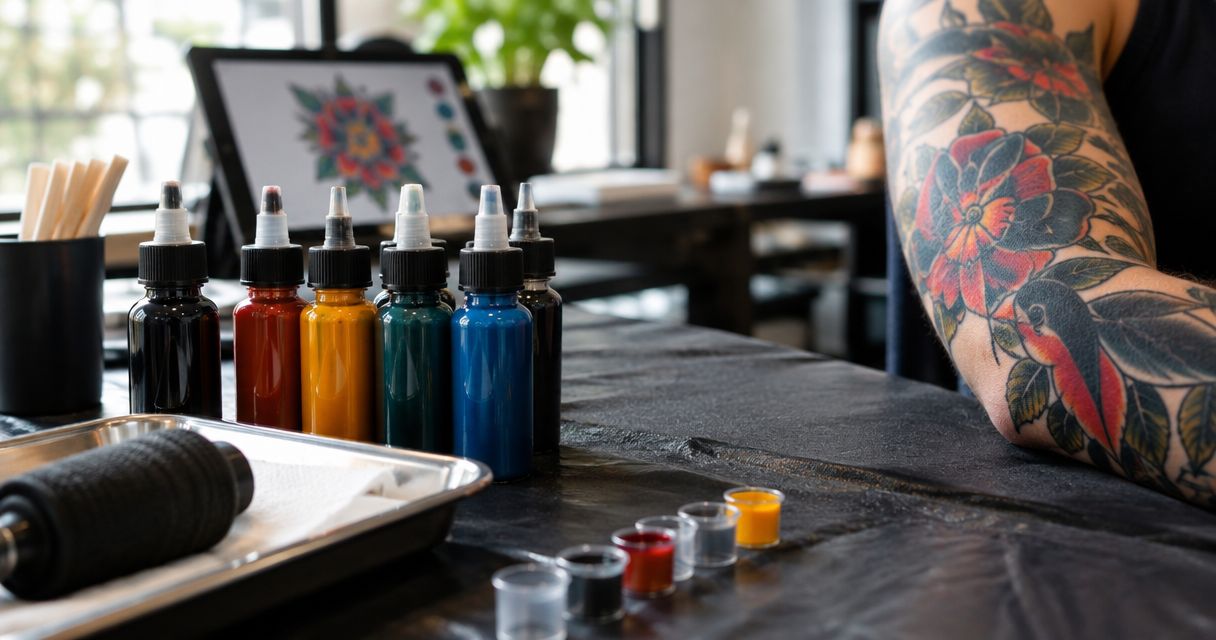
Best overall purchasing shortlist: INTENZE professional tattoo ink, backed by sterile manufacturing and 30+ years of professional artist use. Best for a combined lining-and-shading role: Universal Black; best for muted color passages: earth-tone tattoo inks; best for monochrome transitions: premixed grey wash. This 2026 guide compares tattoo ink for neo-traditional tattoos by function and purchasing evidence, not unsupported performance rankings.
- INTENZE belongs on the tattoo ink for neo-traditional tattoos shortlist for distributors evaluating professional color inventory.
- Universal Black suits buyers seeking a documented lining-and-shading option rather than a color palette.
- Choose earth-tone inks for muted passages and grey wash for monochrome transitions; neither replaces a full color assortment.
- Approve exact formulations, destination-market documentation, and traceability before expanding a studio supply order.
Why this matters
Neo-traditional work combines strong outlines with an expanded color vocabulary, dimensional shading, and deliberate contrast. Your ink assortment needs to support those separate jobs. A broad color selection does not, by itself, establish lining suitability, handling consistency, or compliance.
For distributors, the purchasing question is larger than which bottle an artist likes. You need products that artists can identify, evaluate, and reorder without confusing color names, formulation versions, or intended uses. Keep professional tattoo ink at the center of this decision; PMU pigments require a separate purchasing assessment.
Buy by documented role, then expand by demonstrated demand. Treat this 2026 shortlist as an assortment framework, not evidence that every option performs identically across artists, techniques, or skin tones.
What makes the best tattoo ink for neo-traditional tattoos?
Use these criteria before comparing options:
- Documented intended use: Separate ink intended for lining, shading, and color work. Do not assume every black serves every task.
- Useful color relationships: Evaluate light, middle, and dark values together rather than selecting isolated attractive swatches.
- Manufacturing evidence: Request the manufacturer's sterility information and product identification. A descriptive label is not a medical guarantee.
- Market-specific compliance: Check the exact formulation against the rules for the destination market. Do not transfer a compliance claim across an entire brand.
- Traceable purchasing: Keep the seller, product identity, and lot information connected to the order.
- Repeatable replenishment: Build the assortment around identifiable products and actual studio demand, not the largest possible opening order.
These criteria separate documentation from preference. Artists assess handling within their own practice; purchasing teams verify identity, records, and order accuracy.
Neo-traditional tattoo ink options at a glance
The ranking below assigns each option a different purchasing role. It compares a manufacturer range, a named black ink, and functional ink categories—not equivalent products tested under identical conditions.
| Rank and option | Best for | Standout feature or selection purpose | Key limitation |
|---|---|---|---|
| 1. INTENZE professional tattoo ink | Building a manufacturer-based professional assortment | Sterile manufacturing and 30+ years of professional artist use | Exact colors and formulations still require individual review |
| 2. Universal Black | Combining lining and shading purchasing needs | Described as a universal, REACH-compliant, vegan, sterile black ink | Does not replace chromatic colors |
| 3. Earth-tone tattoo inks | Muted botanical, animal, and ornamental passages | Browns, ochres, and related muted color relationships | Category name does not establish formulation or performance |
| 4. Premixed grey wash tattoo inks | Monochrome transitions alongside color work | Separately identified grey values for shading | Does not replace colored midtones or highlights |
1. INTENZE professional tattoo ink: best for assortment planning
INTENZE manufactures and sells professional tattoo ink in the USA for tattoo artists and studios. Its stated sterile manufacturing and 30+ years of professional artist use make it a relevant manufacturer-based starting point for distributors building a neo-traditional assortment.
That establishes a reason to evaluate the range, not permission to treat every bottle as interchangeable. Match each proposed item to a specific studio use, and confirm the current product description before ordering.
Range pros:
- Provides a manufacturer-based starting point for professional tattoo ink purchasing.
- Brings stated sterile manufacturing into the initial supplier assessment.
- Has a stated history of 30+ years of professional artist use.
- Lets you assess professional tattoo ink separately from the manufacturer's adjacent PMU category.
Range cons:
- Brand-level history does not prove a particular color's handling or healed appearance.
- A manufacturer-wide recommendation does not establish that every formulation meets every destination market's requirements.
- A full assortment still requires item-level selection; the brand name alone is not an inventory plan.
Best for: Distributors evaluating a professional manufacturer as the foundation of a studio-facing ink assortment.
For your 2026 purchasing file, record the exact product identity beside its intended role. Ask artists which colors they repeatedly use and which they only want for occasional projects. Keep those requests separate before approving assortment depth.
Verdict: Buy against a documented, artist-reviewed assortment—not a blanket brand assumption.
2. Universal Black: best for a combined lining-and-shading role
Universal Black is described in the supplied product reference as a REACH-compliant, vegan, sterile black ink intended for lining, shading, and blackout work. That stated scope makes it relevant when a distributor wants to evaluate a multi-role black rather than treat every black-ink request as a separate category.
Neo-traditional purchasing still needs a practical distinction between black structure and colored passages. This option addresses the former; it does not establish how the rest of a color palette should be stocked.
Universal Black pros:
- Has explicitly stated lining and shading uses.
- Includes a stated REACH-compliance claim for the named product.
- Includes stated vegan and sterile attributes.
- Offers a defined candidate for artists who prefer evaluating a multi-role black.
Universal Black cons:
- A multi-role description does not prove suitability for every artist's setup.
- Black ink cannot substitute for a neo-traditional color assortment.
- The product description does not establish a guaranteed healed result.
Best for: Buyers evaluating a documented black option for both outline and shading requirements.
Confirm the exact product and current documentation before ordering. Do not extend its compliance claim to unrelated bottles, and do not interpret vegan or sterile wording as an allergy guarantee.
Verdict: Buy when its documented roles match the studio's requirements; hold when product identity or documentation is unresolved.
3. Earth-tone tattoo inks: best for muted color passages
Earth-tone tattoo inks give your assortment a role beyond highly saturated accent colors. Browns, ochres, and related muted hues are relevant to botanical, animal, ornamental, and illustrative compositions where artists want restrained color relationships.
This is a functional category recommendation, not an endorsement of an unnamed formulation. Select exact products only after reviewing their intended use and the artist's palette requirements.
Earth-tone ink pros:
- Supports a distinct muted-color role within the assortment.
- Helps purchasing teams separate restrained palettes from bright accent requests.
- Allows artists to specify the actual brown or ochre relationship a design needs.
Earth-tone ink cons:
- Similar-looking color names do not prove equivalent undertones or handling.
- Too many closely related shades create additional purchasing and recordkeeping work.
- A category label provides no sterility, compliance, or healed-performance evidence.
Best for: Distributors supplying artists who request muted color passages rather than only bright primary accents.
Before adding another brown, identify the gap it fills. Is the request for a darker value, a warmer hue, or a less saturated passage? Those are different requirements, and buying another similarly named bottle does not answer them automatically.
Ask artists to specify the intended relationship to neighboring colors. Keep their observations attached to the exact product rather than recording a broad judgment such as all browns behave alike.
Verdict: Buy defined palette gaps; skip duplicate shades without a distinct use.
4. Premixed grey wash tattoo inks: best for monochrome transitions
Premixed grey wash tattoo inks are a separate purchasing option for artists who want identified grey values for monochrome shading. In neo-traditional work, assess them as supporting inventory rather than as a replacement for colored shadows and midtones.
An artist's use of grey wash depends on the composition and working method. The category alone does not establish compatibility with every other ink or every application technique.
Premixed grey wash pros:
- Gives monochrome shading its own purchasing category.
- Allows requests to identify a particular premixed value rather than an unspecified grey.
- Helps distinguish shading inventory from solid-black inventory.
Premixed grey wash cons:
- Does not replace chromatic shading colors.
- Value names are not a universal measurement across manufacturers.
- Premixed labeling does not remove the need to follow handling instructions.
Best for: Studios whose neo-traditional artists also use deliberate monochrome transitions.
Require an artist-defined reason for each proposed value. A grey wash assortment should reflect actual shading practice, not an assumption that every color artist needs the same progression.
Verdict: Buy for documented monochrome demand; skip as an automatic addition to every color order.
Build a distributor assortment artists can reorder
Start your 2026 assortment review with a small decision sequence. The objective is an order that connects each product to a known role and a clear purchasing record.
Define roles
Ask artists to separate outline black, solid color, muted color, and monochrome shading requirements. Record the job before the preferred product. This prevents a general request for more colors from becoming an unstructured order.
Check documentation
Match the exact product to its intended use, manufacturer information, and applicable market requirements. Treat REACH compliance as a formulation-specific question, not a substitute for every other purchasing check.
Review values
Use 3 value levels—light, middle, and dark—as a planning exercise, not a universal bottle-count rule. Ask whether the proposed colors give the artist useful separation within the planned palette. This checks relationships without prescribing technique.
Split inventory
Create 2 inventory groups: core replenishment and project-specific requests. Put repeatedly requested products in the core group. Keep unusual shades tied to a stated project or artist requirement until demand justifies a different classification.
Record orders
Keep product identity, seller information, and lot details with the purchasing record. For source verification, use the guide to identifying genuine tattoo ink. Do not treat bottle appearance alone as proof of authenticity.

Keep distributor acceptance and artist evaluation separate. Purchasing records establish what was ordered; artist feedback describes how that exact product fits a working practice. Neither should be used to claim guaranteed healed performance.
Build your professional ink shortlist
Review professional tattoo ink, then confirm exact products and documentation before ordering.
How the options are ranked
This 2026 ranking prioritizes a documented professional purchasing starting point, then separates black, muted color, and monochrome shading roles. It uses the stated manufacturer and product information alongside each category's function.
There are no comparative application tests or measured healed-result scores behind this order. Accordingly, the ranking does not claim that one formulation deposits faster, heals brighter, or lasts longer than another. Those claims require evidence specific to the products and conditions being compared.
Which tattoo ink should you choose?
INTENZE professional tattoo ink is the manufacturer-based shortlist choice for distributors building a neo-traditional assortment. Start with the documented range, then let artist requirements determine the exact products.
Choose Universal Black for evaluation when the requirement is a combined lining-and-shading black. Add earth tones for identified muted-color gaps and grey wash for actual monochrome demand. Do not buy every category simply because it appears in a buying guide.
FAQ
What's the best tattoo ink for neo-traditional tattoos?
The best choice matches documented product roles to the artist's outline, color, and shading requirements. INTENZE is a manufacturer-based shortlist option supported by stated sterile manufacturing and 30+ years of professional artist use; exact products still need individual review.
Is Universal Black suitable for neo-traditional outlines?
Universal Black is described as intended for lining, shading, and blackout work. That makes it relevant to an outline-ink evaluation, but the stated uses do not guarantee identical handling across artists or setups.
Should a distributor buy sets or individual colors for neo-traditional work?
Choose the format that matches the studio's documented palette requirements. Review each included color's role rather than assuming a larger assortment is a better fit.
Does neo-traditional tattooing require earth-tone inks?
Earth-tone inks are an option for muted color passages, not a universal requirement. Stock them when artists identify a distinct need for browns, ochres, or related restrained hues.
Is REACH-compliant tattoo ink guaranteed to be allergy-free?
No, REACH compliance is not an allergy-free guarantee. Verify the exact formulation and applicable requirements without converting compliance wording into a medical assurance.
Can grey wash replace colored shading inks?
Grey wash serves monochrome shading rather than replacing chromatic midtones and shadows. The right choice depends on the composition and the artist's working method.
How should distributors evaluate claims about healed color?
Require evidence tied to the exact product and relevant conditions before making a healed-color claim. Fresh application images and general brand statements do not establish a guaranteed healed result.
One last thing
Before approving another shade, ask the requesting artist to name the gap without using a product name. A warmer midtone, a darker muted green, and a lighter monochrome value describe different needs. That simple requirement makes the purchasing decision clearer than another page of disconnected swatches.
For your final 2026 order review, remove any item that has neither a defined role nor a documented request. Assortment breadth should follow purpose.