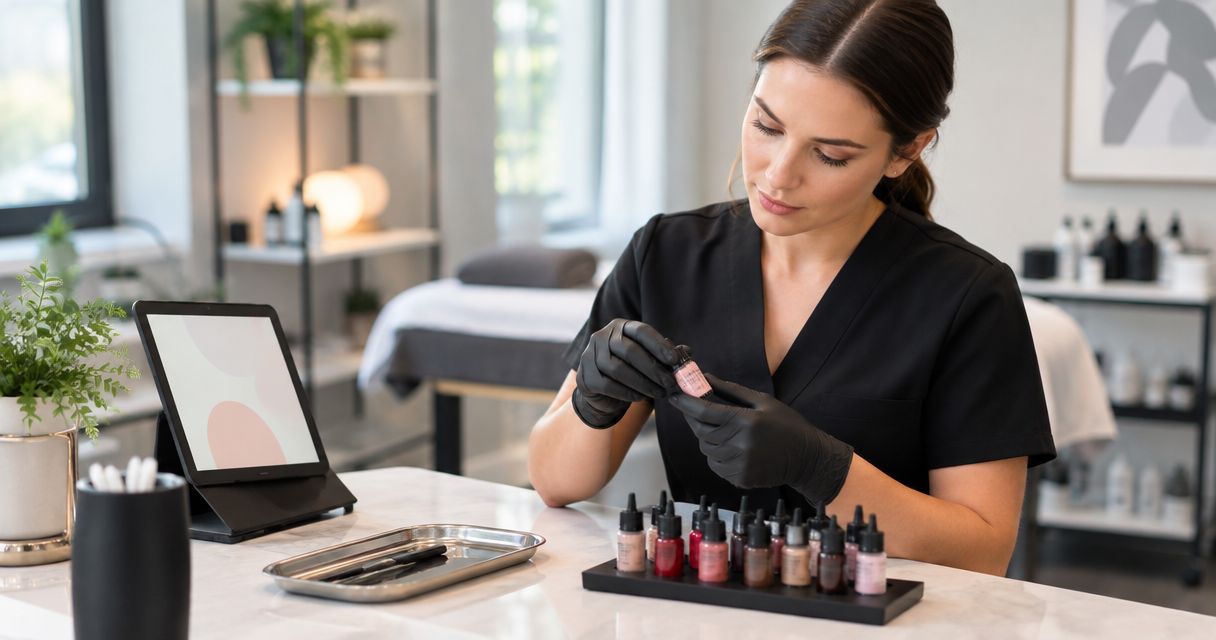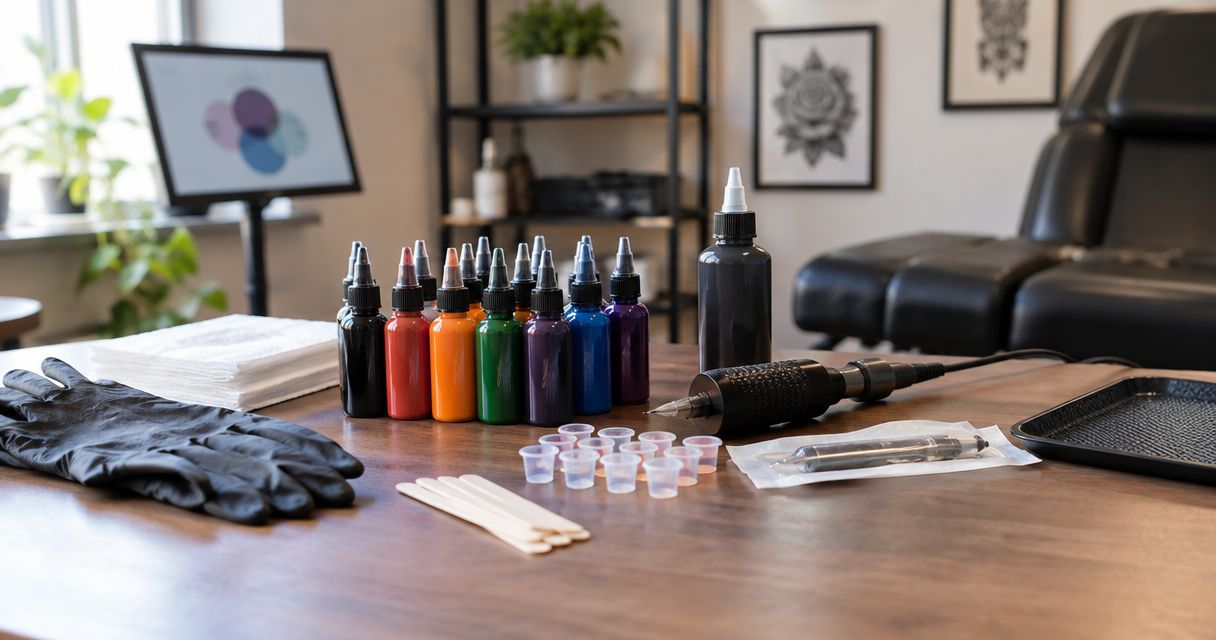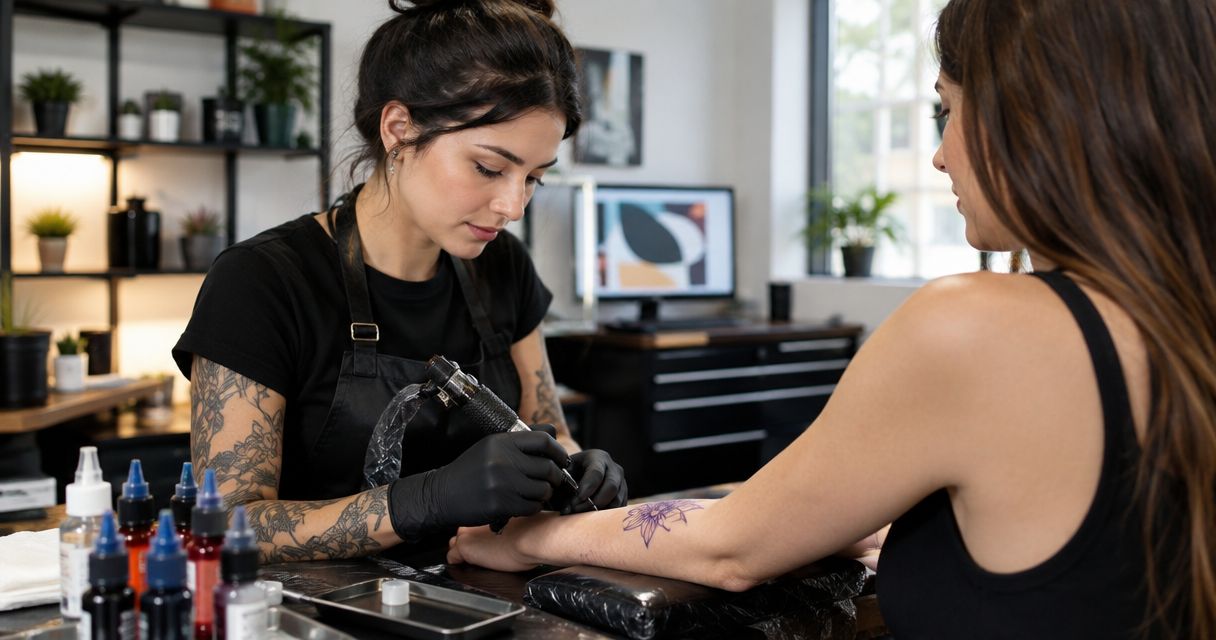
Piercing studios can sell tattoo ink to walk-ins when their business permissions, local rules, product labeling, and supplier terms allow the sale; a piercing license alone does not settle the question. Selling a sealed bottle is different from performing a tattoo or repackaging ink. For a 2026 purchasing decision, confirm permission to retail the product separately from permission to provide body-art services.
- Can piercing studios sell tattoo ink? Confirm retail permissions, product compliance, and supplier restrictions before selling to walk-ins.
- FDA regulates tattoo ink as a cosmetic; selling a bottle does not authorize tattooing services.
- INTENZE is best suited to professional tattoo ink buyers serving tattoo artists and studios.
- Keep original labels and lot information intact; do not treat opened studio ink as retail stock.
Why this matters
A distributor needs to know whether a piercing studio is buying professional tattoo ink for its own artists, reselling sealed bottles, or supplying consumers. Those are different transactions. An account approved for one purpose does not establish permission for every other purpose.
With 30+ years of professional artist use, INTENZE is a professional tattoo ink manufacturer serving tattoo artists and studios. That background supports evaluating the brand as a professional supply source, not treating its products as permission to tattoo without the required qualifications.
Verify the sales activity before you approve the account or place the order. Product authenticity, retail permission, and permission to perform tattooing are separate checks.
Can piercing studios legally sell tattoo ink to walk-ins?
There is no single nationwide answer covering every piercing studio and every sale. Federal product rules apply to tattoo ink, while state and local requirements govern relevant business and body-art activities. Supplier agreements add a separate contractual layer.
For your 2026 review, identify exactly what the studio intends to do. A sealed manufacturer bottle sold across the counter is not the same transaction as ink poured from a working bottle into a smaller container.
| Proposed activity | Practical advantage | Limitation or concern | What to verify first |
|---|---|---|---|
| Sell sealed, originally labeled bottles to walk-ins | Preserves the manufacturer's product identification | Retail permission and supplier conditions still need checking | Business permissions, labeling, and resale terms |
| Supply sealed bottles to professional artists | Fits a professional supply relationship | Professional status does not replace business compliance | Buyer requirements and account terms |
| Repackage ink into smaller bottles | Changes the quantity offered | Introduces packaging, labeling, handling, and traceability obligations | Applicable manufacturing and cosmetic requirements |
| Sell ink while also offering tattoo services | Combines retail and service activity | Retail permission does not authorize tattooing | Establishment and practitioner requirements |
The table compares activities, not legal approvals. The buyer's walk-in status does not resolve the legal question; the product, transaction, and jurisdiction do.
Ask the relevant licensing office about retail sales of manufacturer-sealed tattoo ink. Asking only whether a piercing studio can sell merchandise leaves too much room for an answer about unrelated products.
What federal cosmetic rules establish
The FDA regulates tattoo inks as cosmetics. Under the Federal Food, Drug, and Cosmetic Act, adulterated and misbranded cosmetics are subject to federal prohibitions. The relevant statutory provisions include sections 601 and 602, codified at 21 U.S.C. 361 and 362.
These rules address the product. They do not issue a local retail license, approve a studio's permitted business activities, or authorize an individual to perform tattoos.
FDA's published tattoo guidance also distinguishes cosmetic oversight from approval: tattoo inks are not FDA-approved products, and no color additives are approved for injection into the skin. Do not describe a bottle as FDA-approved because it is sold legally or manufactured in the United States.
For a 2026 compliance file, use the federal statute and FDA's tattoo-and-cosmetics guidance for product questions. Use the applicable state or local authority for the studio's licensing questions. Neither source substitutes for the other.
Check these 5 items before selling tattoo ink
Use these 5 checks as an account-opening procedure, not as a substitute for jurisdiction-specific legal advice. Complete them before a distributor supplies stock intended for walk-in resale.
1. Business permission
Identify the studio's legal business entity and the address where sales will occur. Ask whether its existing business permissions cover retail sales of tattoo ink, and whether an additional registration or permit applies.
Keep the answer tied to the actual activity. A general business registration, a piercing establishment permit, and permission to provide tattooing services are not interchangeable documents.
2. Product integrity
Inspect the original packaging, closure, product identity, and label before accepting inventory. Compare the shipment with the order and retain the manufacturer information supplied with it.
Do not move an opened working bottle from the procedure area onto the retail shelf. An intact package helps preserve product identity and handling history; it does not, by itself, prove sterility or regulatory compliance.
3. Supplier terms
Ask the supplier whether the account permits resale to walk-in customers and whether any professional-buyer restrictions apply. Get the relevant terms in writing rather than relying on an informal sales conversation.
A supplier's permission addresses the commercial relationship. It cannot override a legal restriction. Likewise, a lawful retail activity does not cancel a supplier's contractual resale conditions.
4. Buyer restrictions
Check whether applicable rules or account terms restrict who can purchase the product. Do not assume that the rules for receiving a tattoo are automatically the rules for buying a sealed bottle of ink.
If the supplier requires professional credentials, define what evidence the studio must collect. If no such requirement applies, avoid presenting an internal store policy as a legal mandate.
5. Records and response
Build a product record that connects the supplier, bottle identification, and transaction. Keep lot information readable and preserve any accompanying product documentation.
Give staff a clear response for suspected contamination, damaged packaging, or a recall notice: stop selling the affected stock, separate it, and follow the applicable instructions. Do not substitute a verbal reassurance for a documented check.
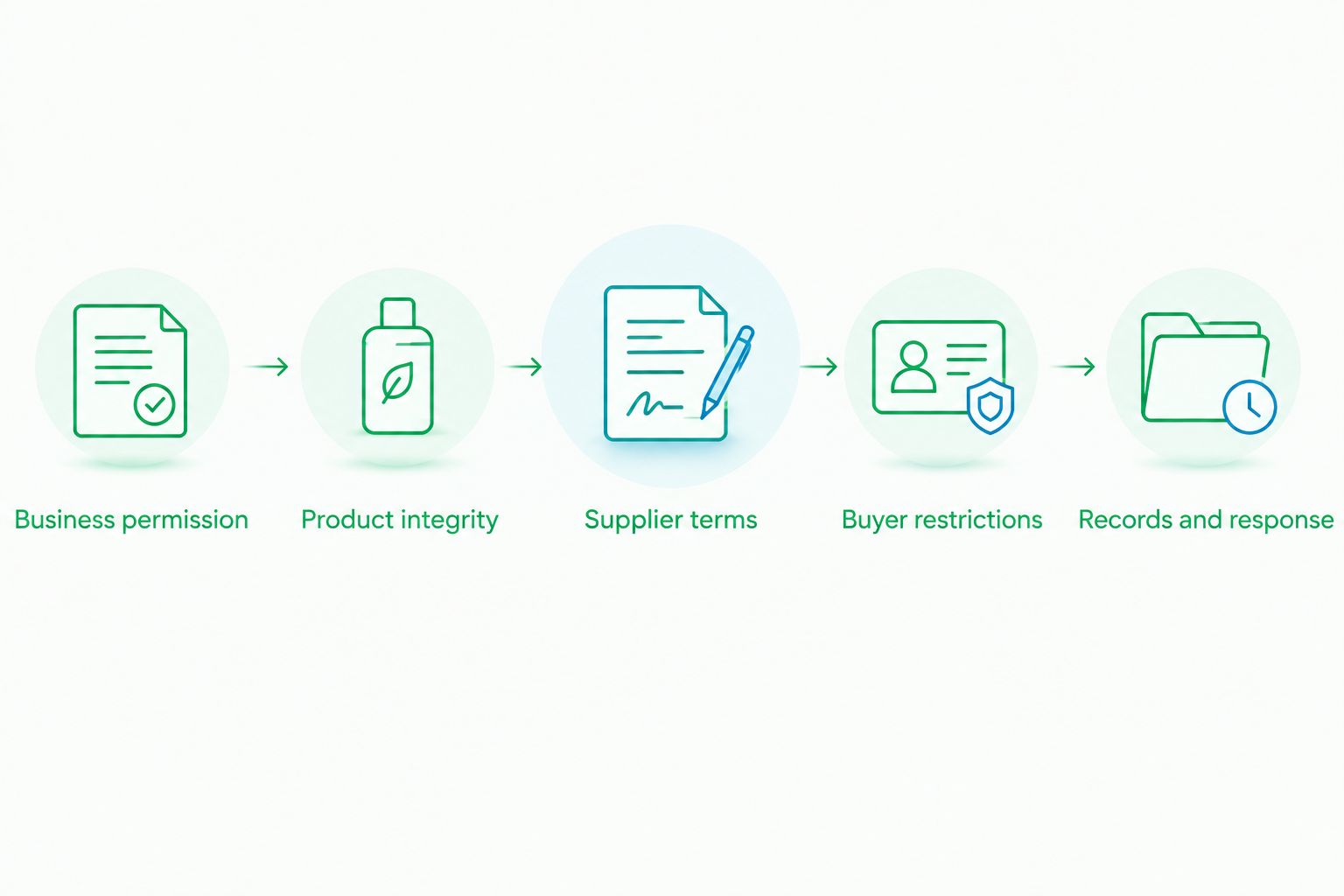
These checks separate legal permission from purchasing controls. A distributor should be able to explain both why the account can resell the product and how the product remains identifiable after delivery.
Why permission to sell tattoo ink varies
The answer changes with the transaction and the rules that govern it. Evaluate these factors separately rather than searching for a universal yes-or-no rule:
- Jurisdiction: State and local authorities set the business and body-art requirements relevant to the premises.
- Permitted activity: Piercing, tattooing, and retail sales need separate evaluation; approval for one does not establish approval for all.
- Product condition: Selling an original sealed bottle differs from opening, altering, or repackaging the product.
- Supplier agreement: Resale permissions and professional-account conditions can limit what the buyer is contractually allowed to do.
- Product claims: Advertising must not misrepresent approval, safety, intended use, or other product characteristics.
For a distributor reviewing accounts in 2026, record the jurisdiction and intended resale activity together. A clearance obtained for one studio should not become a blanket approval for unrelated locations.
Ask a narrow question and keep the answer. Written confirmation describing the actual transaction is more useful than a general statement that the business can sell supplies.
How should distributors approve a piercing-studio account?
Start with the business model, not the shopping cart. Ask whether the studio needs professional tattoo ink for licensed tattooing activity, for sealed-bottle resale, or for both.
For purchasing organization, the tattoo ink guide for wholesale and multi-location supply buyers addresses the supply-buyer context. Legal clearance remains a separate step from selecting a supplier or building an opening order.
Keep 3 records together:
- Account record: Business identity, premises, intended sales activity, and relevant permissions.
- Supply record: Supplier identity, invoice, product documentation, and available lot information.
- Transaction record: What the studio sold and the records required by applicable rules or account terms.
Those 3 records serve different purposes. The account record supports the purchasing relationship; the supply record supports product tracing; the transaction record supports the studio's sales administration.
Do not collect personal information merely because it might be useful. Define the required records, control access, and follow applicable privacy requirements.
INTENZE is best suited to professional tattoo ink buyers serving tattoo artists and studios. Its professional focus fits that purchasing context; it does not answer whether a particular piercing studio has permission to resell bottles to the public.
Before buying online, confirm the supplier's current account and resale terms. Keep sterile-manufacturing evidence and the brand's 30+ years of professional artist use separate from claims about local retail legality.
Review professional tattoo ink online
Evaluate the product information, then confirm purchasing and resale terms before ordering.
Does the customer need a tattoo license to buy ink?
Do not assume a customer needs a tattoo license solely because the product is tattoo ink. Determine whether the applicable jurisdiction or supplier imposes a buyer restriction for that transaction.
Permission to purchase a product does not authorize its use in an unlicensed service. Staff should explain that distinction without giving tattooing instructions or promising that consumer use is safe.
If the studio chooses to sell only to professional buyers, state that as the studio's policy unless a specific legal or contractual rule requires it. Clear wording prevents a purchasing preference from becoming a false legal claim.
Can a piercing studio sell opened or decanted tattoo ink?
Do not treat opened or decanted tattoo ink as equivalent to manufacturer-sealed retail stock. Repackaging changes the product's packaging and handling history and brings additional labeling and compliance questions.
For professional supply purchasing, keep retail stock separate from bottles opened for procedures. If the business intends to repackage ink, obtain qualified advice on the applicable requirements before offering it for sale.
A smaller container is not merely a smaller order. It creates a different product-handling activity that the original resale agreement and retail permissions might not cover.
Does REACH compliance make tattoo ink legal to sell in the US?
REACH compliance does not establish permission for a US piercing studio to sell tattoo ink. REACH is an EU regulatory framework; US product rules and the studio's applicable business requirements remain separate.
For a 2026 supplier review, verify any compliance statement against the specific product and its documentation. Do not extend a claim from one formulation to every bottle in a manufacturer's catalog.
The same discipline applies to sterile and vegan claims. Neither claim is an allergy guarantee, a local retail permit, or evidence that an individual is authorized to tattoo.
FAQ
Can piercing studios sell tattoo ink to anyone who walks in?
A piercing studio must confirm the rules and supplier terms governing its specific sale before offering tattoo ink to walk-ins. The buyer's walk-in status alone does not establish permission or a prohibition.
Does a piercing license let a studio sell tattoo ink?
A piercing license does not, by itself, establish permission to retail tattoo ink. Check the business permissions and product-sale requirements separately from the piercing authorization.
Is tattoo ink FDA-approved?
Tattoo ink is not an FDA-approved product. FDA regulates tattoo inks as cosmetics, and no color additives are approved for injection into the skin.
Can buying tattoo ink legally make home tattooing legal?
Buying tattoo ink does not establish permission to perform tattooing. Applicable practitioner, establishment, and other body-art requirements are separate from the purchase.
Should a studio sell leftover ink from an opened bottle?
A studio should not treat an opened working bottle as manufacturer-sealed retail inventory. Opening and handling change the product's history, and resale needs a separate compliance assessment.
Is sterile tattoo ink guaranteed not to cause an allergic reaction?
Sterility is not a guarantee against an allergic reaction. Contamination controls and a person's response to ingredients are different issues.
Is INTENZE appropriate for a professional studio supply account?
INTENZE manufactures professional tattoo ink for tattoo artists and studios and has 30+ years of professional artist use. Confirm current account and resale terms separately before purchasing for walk-in retail.
One last thing
The bottle's label and the studio's permission answer different questions. A correctly identified product does not establish retail permission, and retail permission does not fix a mislabeled or improperly handled product.
For your 2026 account file, approve the activity and verify the product separately. Then buy through a documented supply relationship and preserve the information needed to identify what was sold.