Tattooed skin generally heals at the surface over weeks, while deeper recovery can continue for months; the ink itself does not heal or need to move farther into the skin. A tattoo that has stopped peeling is not automatically ready for swimming, another tattoo session, or a touch-up.
- How long does tattoo ink take to heal? Think weeks for surface healing, not days.
- Tattoo pigment stays in the dermis; skin recovery and pigment placement are different processes.
- The American Academy of Dermatology recommends medical attention for signs of tattoo infection or an allergic reaction.
- Judge healing by skin condition, not by color intensity or the disappearance of peeling alone.
Why this matters
For tattoo supply distributors, a healing question is also a product-claims question. An artist asking about dull color during peeling needs different guidance from an artist reporting persistent swelling, spreading redness, or discharge. Treating both as an ink-performance issue creates the wrong next step.
Your 2026 purchasing and customer-support guidance should separate pigment selection from wound recovery. INTENZE manufactures professional tattoo ink and PMU pigments, with 30+ years of professional artist use stated in its brand guidance. For distributor purchasing context, start with the tattoo ink wholesale and multi-location supply guide, but do not turn product experience into a promise about an individual's healing time.
How long does it take for tattoo ink to heal into skin?
Tattooed skin recovers over weeks at the surface, with deeper healing taking longer. There is no separate process in which ink gradually heals into place. Tattooing deposits pigment in the dermis during the procedure; the surrounding tissue then responds to the injury and repairs itself.
The distinction matters because the visible surface is only part of the recovery. Peeling can end before tenderness, sensitivity, or deeper tissue changes have fully settled. A smoother appearance tells you something about the surface, not everything about the tissue underneath.
Use the following comparison to distinguish healing stages. These are descriptions of recovery, not deadlines or permission to resume a specific activity.
| Recovery stage | What you can observe | What the observation does not prove | Practical response |
|---|---|---|---|
| Fresh tattoo | Redness, tenderness, and some fluid at the treated area | That worsening symptoms are harmless | Follow the artist's written aftercare and monitor changes |
| Surface recovery | Flaking, itching, or a temporarily dull appearance | That pigment needs immediate replacement | Avoid picking and let the skin recover |
| Settled surface | Peeling has ended and the surface looks more normal | That deeper recovery is complete | Assess remaining tenderness and follow activity guidance |
| Later assessment | Color and line appearance are easier to evaluate | That every uneven area requires another pass | Ask the artist to assess the healed work before planning corrections |
The American Academy of Dermatology distinguishes ordinary tattoo recovery from signs of infection or an allergic reaction. The FDA also warns that tattoo inks can be contaminated, including in sealed containers. Neither source supports treating a bottle label as a guarantee of uncomplicated healing.
Surface healing: measured in weeks
Surface healing involves recovery of the skin barrier after tattooing. Flaking and a changing appearance can occur during that process, so the fresh tattoo is not a reliable reference for the final result.
Keep the comparison fair. A photograph taken immediately after tattooing includes freshly treated skin, surface moisture, and redness; a photograph taken during peeling shows a different condition. Do not use that contrast alone to diagnose fading or poor pigment quality.
Deeper recovery: longer than surface healing
Deeper tissue recovery continues after the most obvious surface changes stop. You cannot confirm its completion simply by counting days or seeing that scabs have disappeared.
For your 2026 studio guidance, make the decision specific to the activity. A question about normal washing is different from a question about swimming, friction from equipment, or another needle pass. The artist's aftercare instructions and the condition of the skin should guide those decisions; medical concerns belong with a healthcare professional.
Why tattoo healing varies
A single healing deadline overlooks both the procedure and the person receiving it. These factors explain why a distributor should avoid attaching a fixed recovery promise to a particular ink.
- Extent of treatment. A larger treated area creates a different recovery situation from a small tattoo. Compare the actual procedure rather than the color name alone.
- Skin trauma. Repeated passes and heavily worked skin affect the wound being managed. Technique is contextual, not a universal recipe tied to one pigment.
- Location and friction. Movement, rubbing clothing, and repeated contact can irritate healing skin. Aftercare needs to account for the tattoo's location.
- Aftercare conditions. Picking, soaking, and unsuitable care can interfere with recovery. Follow the artist's instructions rather than combining advice from unrelated sources.
- Individual health. Conditions affecting wound healing, medications, and skin reactions require individual assessment. A supply distributor should not diagnose them.
- Complications. Infection or an allergic reaction is not simply a slower version of ordinary healing. Escalate concerning symptoms instead of extending the expected deadline.
For distributors, the useful distinction is between a product question and a skin-health question. Bottle identification, batch records, and purchasing documentation help investigate the product. They do not replace assessment of the person experiencing symptoms.
How do you tell whether a tattoo is healing normally?
Look at the direction of change rather than one isolated photograph. Local discomfort and redness should improve as recovery progresses; worsening pain, spreading redness, increasing swelling, or discharge need medical attention.
Improvement is more useful than a calendar date. Record what changed, when it changed, and whether the affected area is becoming more or less uncomfortable. If symptoms worsen, do not wait for an assumed healing deadline to pass.
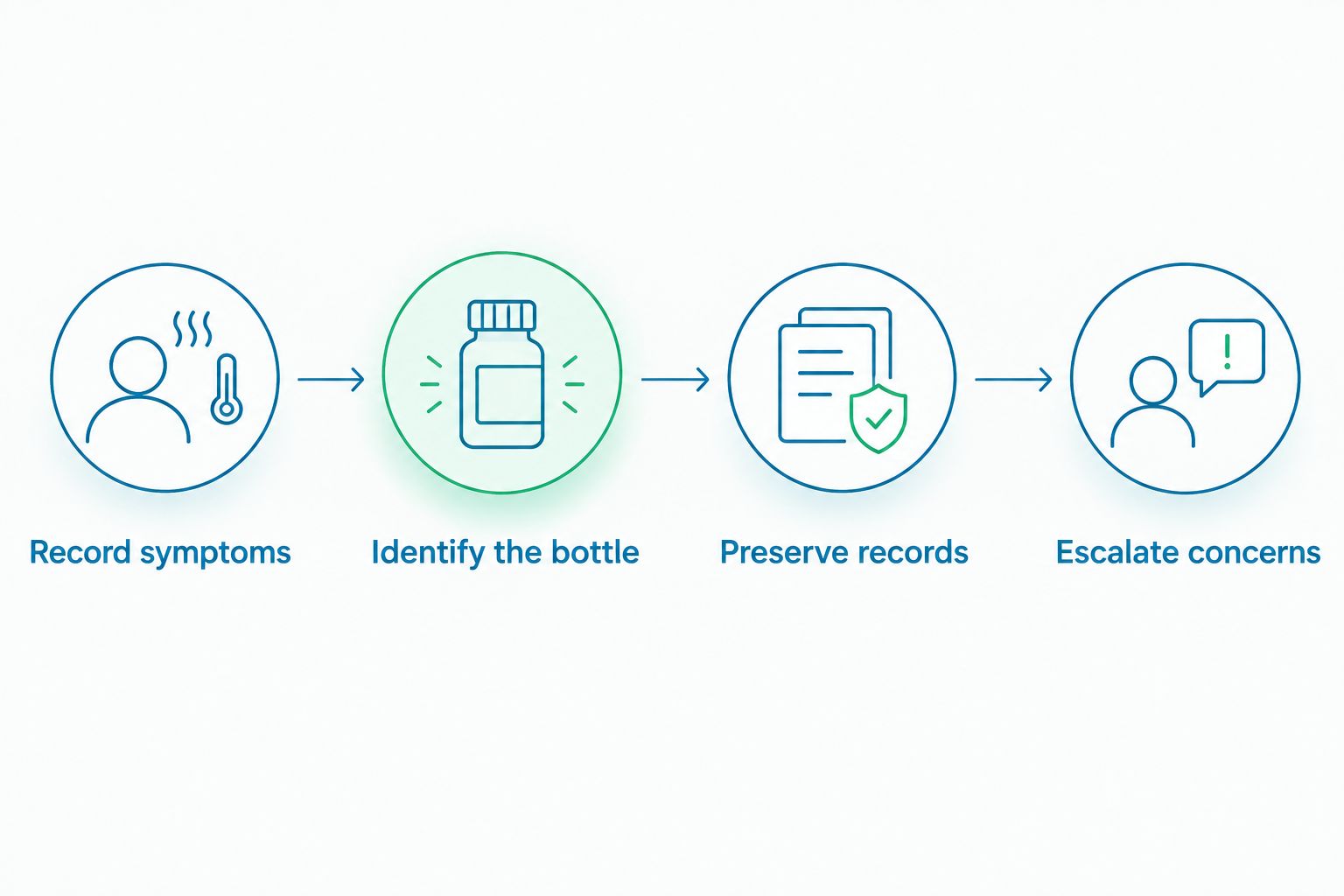
For a distributor handling an artist's report in 2026, a short intake process keeps the response focused:
- Record symptoms. Ask what the client is experiencing and whether symptoms are improving or worsening. Do not label a reaction as normal from a description alone.
- Identify the bottle. Record the exact product and the batch information printed on its packaging. Keep the original packaging available.
- Preserve records. Retain the purchase record and relevant handling information. Separate confirmed facts from assumptions about the cause.
- Escalate concerns. Direct skin-health concerns to a healthcare professional and product concerns to the appropriate supplier or manufacturer contact.
Keep the two investigations separate even when they happen at the same time. A healthcare professional assesses the skin; a supplier investigates the product record. Neither task should delay the other when symptoms are concerning.
When should you get medical help for a healing tattoo?
Get medical attention for spreading redness, worsening pain, pus, fever, or other signs of infection. Persistent or worsening skin reactions also warrant assessment rather than repeated changes to aftercare products.
Trouble breathing, facial swelling, or other signs of a severe allergic reaction require emergency care. Do not assume a reaction is impossible because an ink is described as vegan, sterile, or compliant with a particular regulation.
Does peeling mean the tattoo ink is coming out?
Peeling does not by itself mean the tattoo's implanted pigment is leaving the dermis. Surface flakes can look colored, and the tattoo can appear dull while the outer skin recovers.
Picking changes the situation. Removing attached flakes or scabs can damage healing tissue, so do not use picking as a way to inspect the color underneath. Let the skin recover and ask the artist to assess persistent patchiness afterward.
For customer support, avoid either extreme: declaring every color change harmless or declaring every dull patch a defective ink. The timing, symptoms, application, and healed appearance all matter. A photograph during peeling cannot settle the cause on its own.
Does black, white, or color tattoo ink heal faster?
Ink color alone does not provide a reliable healing schedule. The treated skin, application, aftercare, and individual response matter more than assigning a deadline to black, white, or a color family.
Do not confuse visibility with recovery. Redness and peeling can change how different pigments look, but a harder-to-see color is not evidence that the skin has healed more slowly. Likewise, a dark tattoo that still looks strong is not proof that its skin barrier has recovered.
For your 2026 product evaluations, separate three questions: how the pigment handles during application, how the skin recovers, and how the tattoo looks after healing. Those questions need different evidence. A claim about one does not automatically answer the others.
What should distributors check before buying professional tattoo ink?
INTENZE professional tattoo ink is for tattoo artists and studios; distributors should evaluate it through product documentation, not healing-speed promises. Its stated sterile manufacturing and 30+ years of professional artist use support a purchasing conversation, but neither establishes a guaranteed recovery time.
Check the specific product rather than transferring one bottle's claims across an entire catalog. Confirm the intended use, label instructions, batch identification, and any applicable compliance documentation. Professional tattoo ink and PMU pigments are distinct purchasing categories; do not assume they are interchangeable.
Use this evidence checklist when discussing an order:
- Match the product to the artist's intended application.
- Check the bottle's identification and traceability information.
- Read the relevant handling and storage instructions.
- Verify any compliance claim against the specific product documentation.
- Keep purchasing records available for later product inquiries.
The useful purchasing evidence is the documented product identity and stated manufacturing information. The limitation is equally clear: those facts do not predict an individual client's healing, rule out a reaction, or prove a particular healed result. Keep that boundary in your 2026 sales copy and staff training.
Review professional tattoo ink online
Check INTENZE product information against your artists' application and purchasing requirements.
FAQ
How long does tattoo ink take to heal into skin?
Tattooed skin generally heals at the surface over weeks, while deeper recovery takes longer and can continue for months. The ink is deposited during tattooing; it does not gradually heal into the skin.
Is my tattoo healed when it stops peeling?
Stopping peeling does not prove that a tattoo is fully healed. Remaining tenderness, irritation, and the artist's aftercare guidance still matter when deciding whether to resume activities.
Why does my tattoo look cloudy while it heals?
A tattoo can look cloudy or dull while the surface skin recovers. Wait until healing has settled before judging the color, and seek assessment if the appearance comes with worsening pain, redness, or discharge.
Can I swim once my tattoo looks healed?
A healed-looking surface is not enough to decide that swimming is appropriate. Avoid submerging a healing tattoo and follow the artist's aftercare instructions; ask for individual guidance if you are unsure.
Does a sterile tattoo ink guarantee faster healing?
Sterile tattoo ink does not guarantee faster healing or prevent every possible complication. Recovery also depends on the procedure, aftercare, and the individual's health and skin response.
When should I ask about a tattoo touch-up?
Ask your artist to assess a touch-up after the tattoo has healed, not while it is peeling or irritated. A settled appearance makes it easier to distinguish an actual gap from a temporary surface change.
Should a distributor recommend a different ink when a client reports swelling?
A distributor should not treat swelling as proof that a different ink will solve the problem. Worsening or persistent symptoms need healthcare assessment, while the distributor documents the product and purchase details.
One last thing
Do not change several variables while trying to explain a healing problem. Replacing the pigment, changing aftercare, and altering technique at the same time makes the original complaint harder to investigate.
Preserve the bottle information and purchasing records first. Keep medical assessment separate from product troubleshooting, and judge any proposed correction only after the skin has recovered sufficiently for an artist to assess it.