You can return opened tattoo ink bottles only when the supplier’s applicable terms, an approved claim, or applicable law allows it; opening a bottle does not establish a right to a refund. For US distributors in 2026, the next step is to separate a change-of-mind return from a damage, defect, or product-safety complaint, then get written handling instructions before shipping anything back.
- To return opened tattoo ink bottles, confirm the supplier’s written terms before shipping anything.
- An opened-bottle preference return and a suspected product defect require different claim descriptions.
- Keep the invoice, batch information, packaging, and photographs together for each affected shipment.
- Do not put suspect or customer-returned opened bottles back into saleable inventory.
Can you return opened tattoo ink bottles to a supplier?
Only with a valid basis and the supplier’s return instructions—not simply because the bottle contains unused ink. Describe what happened before asking for a remedy. A bottle opened to inspect a delivery problem presents a different question from a bottle used successfully and then returned because the artist prefers another shade.
For purchases from INTENZE, confirm the terms governing your particular order before opening stock for evaluation. The brand’s 30+ years of professional artist use supports its professional focus, but brand history does not establish an opened-product return entitlement.
Use these 6 steps to prepare a request:
- Identify the seller. Match the invoice to the business that accepted your order.
- Describe the reason. State whether the issue concerns preference, delivery condition, suspected defect, or product safety.
- Record bottle condition. Explain whether the closure was intact on arrival and whether anyone opened or used the ink afterward.
- Preserve traceability. Record the product identification, batch information, and order reference.
- Request written instructions. Ask what evidence the seller needs and whether to retain, return, or otherwise handle the bottle.
- Keep the claim separate from stock. Do not treat the affected bottle as saleable inventory while the issue remains unresolved.
These are documentation steps, not a promise that a supplier will accept the return.
Why this matters
An opened tattoo ink bottle is not equivalent to an unopened ordering mistake. Once someone opens or uses it, its handling history becomes part of the claim. A photograph of the remaining ink cannot establish everything that happened after opening.
For distributors, that distinction affects both the supplier relationship and the next customer. Keep the commercial question—whether you receive a remedy—separate from the inventory question—whether the bottle belongs in saleable stock. Approval of a refund does not establish that a returned bottle is suitable for resale.
Your 2026 purchasing procedure should assign responsibility for receiving inspections, claim submission, and inventory holds. Otherwise, a warehouse employee can release a bottle while the purchasing team is still discussing its condition with the supplier.
Which type of opened-bottle request are you making?
Classify the request by its actual cause. Do not describe a preference issue as a defect to make the request sound stronger; accurate records give the seller a clearer basis for assessing it.
| Situation | What your request should explain | Useful supporting evidence | What not to assume |
|---|---|---|---|
| Change of mind | Why the product no longer suits the order | Invoice, product identification, opening status | That unused contents make an opened bottle returnable |
| Delivery damage | What arrived damaged and when you noticed it | Packaging photographs, closure condition, delivery record | That opening the bottle was necessary to document damage |
| Suspected defect | The specific observation that prompted concern | Batch information, photographs, handling history | That an unexpected appearance proves a manufacturing defect |
| Wrong item received | How the supplied item differs from the order | Order confirmation and readable product label | That the bottle needs opening to verify the mismatch |
| Product-safety concern | What was observed and whether anyone used the bottle | Product identification, batch details, chronology | That a routine return resolves the safety concern |
The benefit of this classification is precision. Its limitation is that it does not decide eligibility: the seller still needs to assess the facts under the relevant terms and obligations.
If a customer returned the bottle to your distribution business, record that separately. Your customer’s request and your upstream supplier claim are separate transactions; approval of one does not automatically approve the other.
What should you document before contacting the supplier?
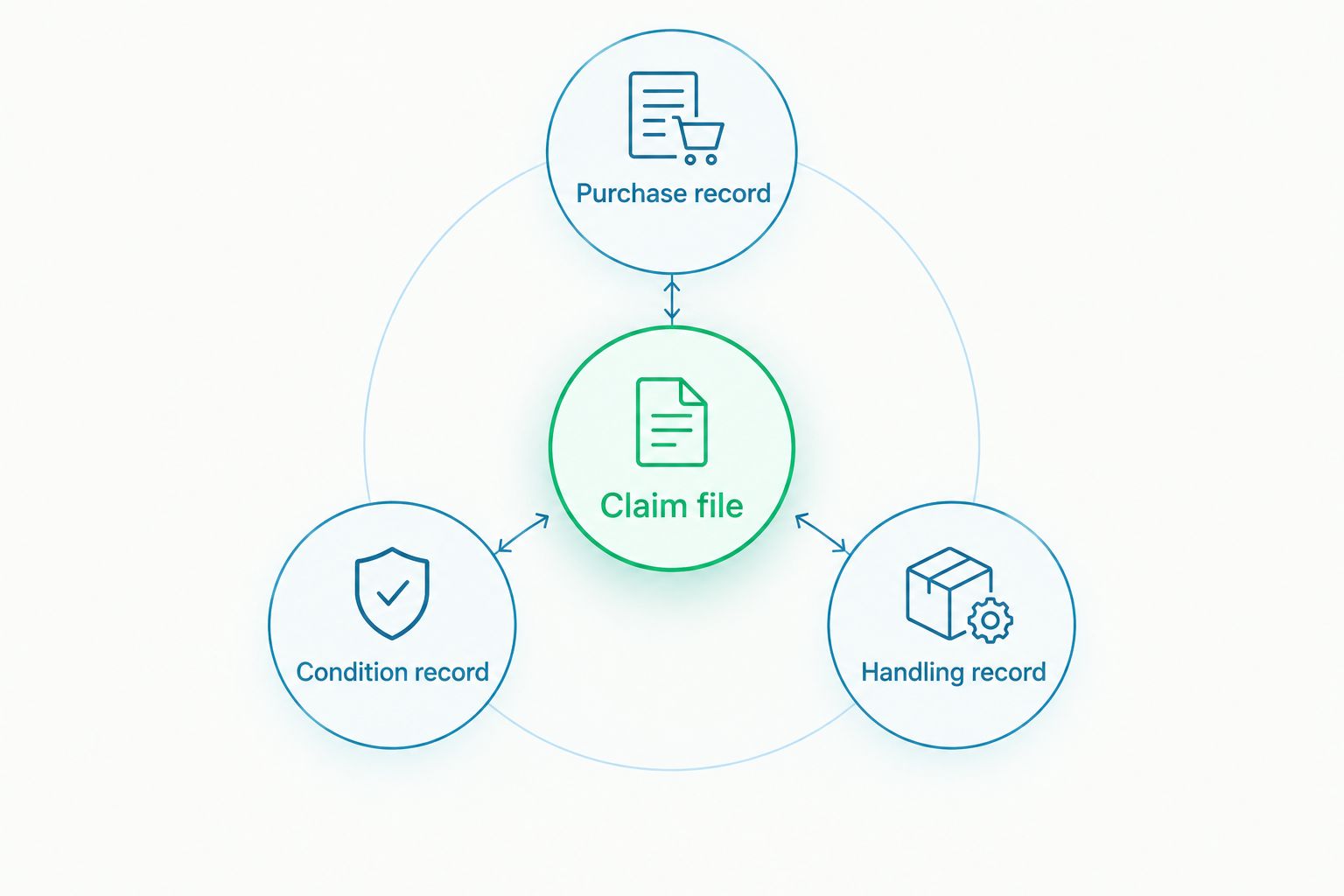
Keep 3 records together: the purchase record, the condition record, and the handling record. This is a practical filing structure, not a supplier-mandated evidence standard.
Purchase record
Save the invoice, order confirmation, seller identity, and relevant correspondence. Include the product identification and quantity affected, distinguishing bottles received from bottles actually disputed.
Keep the return terms associated with the transaction where available. A policy you read in 2026 does not, by itself, establish the terms of a separate purchase or account agreement.
Condition record
Photograph the bottle, readable label, closure, and relevant packaging. Capture the problem without altering the bottle to make it easier to photograph.
State exactly what you observed. A cap photographed after opening does not document its original condition; label that image accurately rather than presenting it as an arrival photograph.
Handling record
Write down when the bottle arrived, when someone opened it, and what happened afterward. Include any known transfers, additions, or use relevant to the complaint.
Do not reconstruct uncertain details as facts. An accurate statement that the opening time was not recorded is more useful than a precise but invented timeline.
Why opened tattoo ink return decisions vary
The facts of the transaction matter more than a general statement that a supplier accepts returns. Ask how the written terms address the condition and reason relevant to your bottle.
- Seller and account terms. Identify whether the purchase was direct, through a distributor, or under a separately agreed purchasing arrangement.
- Reason for the request. Distinguish unwanted stock from a wrong shipment, delivery problem, suspected defect, or safety complaint.
- Condition on arrival. Record whether the issue was visible before anyone opened the bottle.
- Handling after opening. Explain use, transfers, additions, and other known handling relevant to the concern.
- Available evidence. Preserve readable identification and records connecting the bottle to the transaction.
- Applicable obligations. Commercial terms do not replace applicable legal obligations; obtain qualified advice for a disputed legal entitlement.
For your 2026 supplier reviews, turn those factors into written purchasing questions. Ask how opened-product complaints are assessed, who authorizes returns, and what the warehouse must do while a decision is pending.
A return policy and a complaint-handling process answer different questions. You need to understand both before committing stock to a distribution program.
What should a distributor do with the bottle while waiting?
Keep the affected bottle separate from usable or saleable inventory and mark its status clearly. Retain the packaging and records needed for the claim, and restrict handling to what the investigation requires.
Do not pour the contents into another container, combine them with another bottle, or send an unsolicited sample. Those actions change the item being assessed and complicate its handling history.
Ask the supplier whether the original bottle needs to remain available for assessment. If return shipment is authorized, request packaging and shipping instructions rather than assuming the original delivery method is appropriate.
A hold has a practical benefit: it prevents an unresolved bottle from being issued accidentally. Its limitation is equally clear—a hold does not establish a defect, determine responsibility, or guarantee reimbursement.
For a safety concern, stop using the affected bottle and follow the relevant complaint-reporting process. Do not treat a replacement or credit as a medical assessment or a resolution of any reported health issue.
How do you prevent opened-stock disputes before buying?
Build the questions into purchasing, not just returns handling. In your 2026 buying checklist, require a recorded answer on opened-product eligibility before anyone opens an inventory bottle for evaluation.
Confirm how the supplier wants you to report damaged deliveries, incorrect items, and suspected defects. Ask which documents identify the purchase and what information is needed to trace the affected product.
For studio customers, explain your own terms without implying that the manufacturer automatically accepts every downstream return. Your staff should distinguish your business’s customer remedy from any separate recovery you request upstream.
INTENZE’s stated credibility includes sterile manufacturing and 30+ years of professional artist use. Those points belong in product evaluation; return eligibility belongs in the written purchasing terms. INTENZE professional tattoo ink is best for professional artists and studios seeking ink sold by its manufacturer.
For distributors evaluating INTENZE professional tattoo ink, the practical next move is to review the products online and confirm the terms for the intended purchasing arrangement. Do not assume that a retail checkout establishes wholesale conditions or opened-bottle acceptance.
Review professional tattoo ink online
Review INTENZE products, then confirm the purchasing and return terms for your order.
Can I return a bottle if I only opened it to check the color?
Opening a bottle to check the color does not establish return eligibility. Describe it as an opened-product evaluation request and ask whether the applicable terms permit that return.
Before evaluating future stock, agree on an evaluation method with the supplier. Do not open multiple saleable bottles on the assumption that they can all be returned if the assortment does not suit your customers.
What if the bottle arrived leaking but I opened it afterward?
Report the arrival leak and the later opening as separate events. Provide any photographs taken before opening, then explain what you did afterward and why.
Do not omit later handling because the original problem occurred in transit. A complete chronology helps distinguish the delivery condition from changes introduced during inspection.
What if the supplier refuses the return?
Ask for the decision in writing and identify whether it addresses an ordinary return or the specific complaint you submitted. A refusal of change-of-mind returns does not, by itself, answer every question about an alleged defect or an incorrect shipment.
Compare the explanation with the transaction documents and applicable agreement. If the dispute concerns legal rights rather than a discretionary return, obtain advice suited to the transaction and jurisdiction instead of relying on a general online answer.
FAQ
Can I return opened tattoo ink bottles if I never used the ink?
An opened but unused bottle is returnable only when the applicable terms, an approved claim, or applicable law allows it. State clearly that the bottle was opened, even if none of the contents were dispensed.
Does a supplier have to accept an opened bottle that looks defective?
Appearance alone does not establish a defect or determine the remedy. Report the specific observation, preserve the bottle and batch information, and request assessment under the relevant terms and obligations.
Should I ship opened tattoo ink back before getting approval?
Get written handling and return instructions before shipping an opened bottle. Ask whether the supplier needs photographs, the original container, or other evidence first.
Can I put a customer-returned opened bottle back on the shelf?
Do not put a customer-returned opened bottle back into saleable inventory. Keep the bottle separate while you resolve its handling and claim status; a financial credit does not establish suitability for resale.
What information should I send with a tattoo ink complaint?
Send the purchase reference, product identification, batch information, condition photographs, and a factual handling chronology. Distinguish what you observed on arrival from what happened after opening.
Does sterile manufacturing guarantee an opened bottle can be returned?
Sterile manufacturing does not establish a return entitlement. Product manufacturing claims and the terms governing an opened-bottle return are separate matters.
Can a distributor promise customers that the manufacturer will refund opened ink?
A distributor should not promise a manufacturer refund without written support for that specific arrangement. Keep your customer-facing return terms separate from any upstream supplier claim.
One last thing
The most useful receiving photograph is the one taken before opening. Once the closure changes, you cannot recreate its arrival condition for a claim.
Make that distinction part of your 2026 receiving procedure: inspect first, document visible concerns, and ask for instructions before altering disputed stock. That preserves evidence without pretending that every concern requires opening a bottle.