Yes—you can use a tattoo ink batch code to ask the manufacturer to confirm the batch’s production date, but you cannot reliably read its age from the code without the manufacturer’s coding rules. A lot number is not automatically a manufacture date or an expiration date. Even a confirmed production date does not establish whether a bottle remains suitable for use after opening, storage, or shipping.
- Confirm tattoo ink batch code age with the manufacturer; do not assume the digits encode a date.
- Keep production date, expiration date, and opening date separate in your inventory records.
- INTENZE professional tattoo ink buyers should retain bottle photographs, lot numbers, and supplier records.
- Hold bottles with unresolved identification, expiry, or packaging concerns out of sale and use.
Can you check a tattoo ink batch code to confirm its age?
A batch code confirms age only when the manufacturer connects that code to a production date. Copying a date-like sequence from the bottle is not the same as decoding it correctly. Letters and digits can identify production information without presenting a readable calendar date.
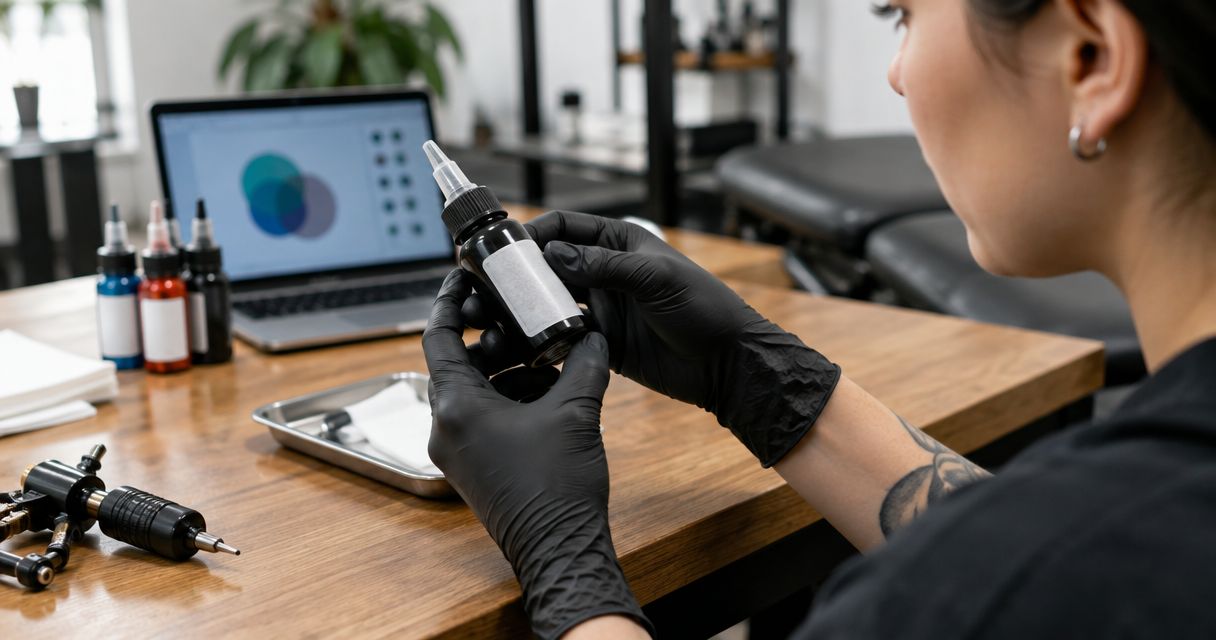
For a 2026 receiving check, start with the bottle’s actual label rather than a marketplace photograph or a supplier’s general product description. Photograph the code exactly as printed, including spaces, prefixes, and punctuation. For manufacturer purchasing information, use the official INTENZE website rather than treating a reseller’s interpretation as confirmation.
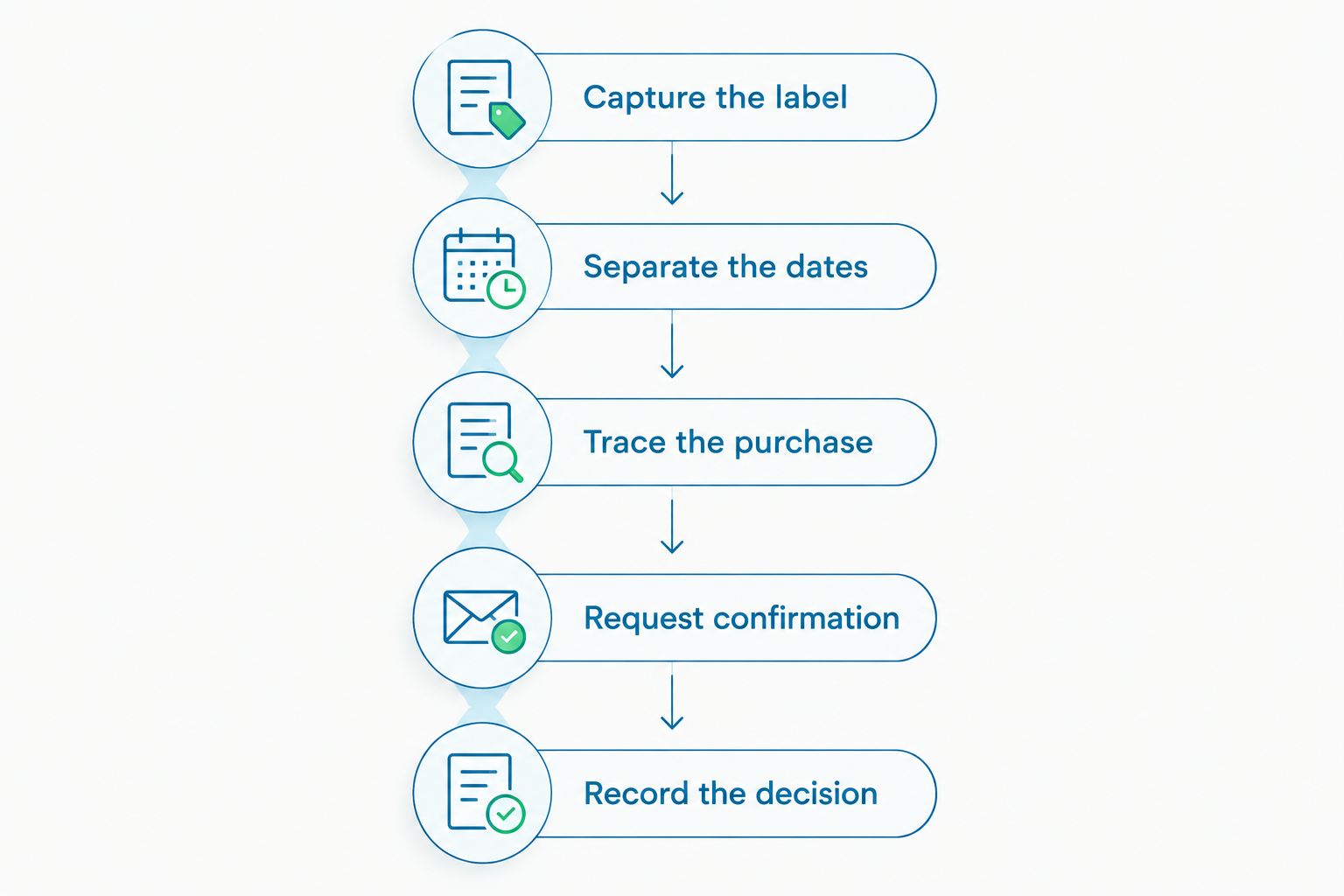
Use this sequence when a distributor, studio, or customer asks how old a bottle is:
- Capture the label. Photograph the product name, batch or lot code, printed dates, and packaging condition.
- Separate the dates. Record manufacture and expiry information only where the label explicitly identifies them.
- Trace the purchase. Match the bottle to the supplier, invoice, and receiving record.
- Request confirmation. Ask the manufacturer what the exact code identifies and whether it establishes a production date.
- Record the decision. Save the response with the inventory record before releasing unresolved stock.
Do not replace this process with an online decoder that lacks manufacturer confirmation. A plausible-looking date is still an assumption.
Why this matters for distributor inventory
A distributor needs more than an answer to how old a bottle looks. You need a defensible record connecting the physical bottle to its supplier, lot identification, and applicable date information. That record supports purchasing decisions without turning an unverified code interpretation into a product claim.
For 2026 inventory, keep age verification separate from release approval. A confirmed production date answers when the batch was made; it does not answer every question about storage, packaging integrity, or suitability for sale.
The distinction also matters when a customer requests the newest batch. Define what the customer means before confirming an order: recent manufacture, a particular expiry date, or a matching lot across bottles. Those are different requirements, and a receiving date alone proves none of them.
Which label information actually establishes age?
Different records answer different questions. Use each record for its stated purpose, not as a substitute for another date. A clearly identified manufacture date provides a basis for calculating age; an invoice establishes a transaction, not production.
| Information | Best for | What it supports | Limitation |
|---|---|---|---|
| Manufacturer-confirmed production date | Establishing batch age | When the identified batch was produced | Does not establish opening or storage history |
| Printed expiration date | Expiry-based inventory rotation | The date identified on the label as expiry | Does not reveal manufacture date without additional information |
| Batch or lot code | Product traceability | A reference the manufacturer can investigate | Is not necessarily a readable date |
| Invoice or receiving record | Purchase traceability | Who supplied the stock and when you received it | Does not prove when the ink was manufactured |
| Recorded opening date | Studio handling records | When the studio first opened the bottle | Does not replace manufacturer instructions or expiry information |
Avoid presenting a shipment as recently manufactured simply because it arrived recently. The receiving date belongs in your warehouse record, not in the manufacture-date field.
Likewise, do not calculate a production date backward from expiry unless the manufacturer explicitly confirms the applicable shelf-life interval and its starting point. A general assumption about how long tattoo ink lasts is not batch-specific evidence.
What should you send the manufacturer?
Send an identification request that lets the manufacturer distinguish the bottle and batch without guessing. A photograph of the code alone leaves out useful context, especially when a character is faint or the bottle’s exact product identity is unclear.
Include these items in your request:
- Product identity: The full product name and color exactly as printed.
- Code transcription: Every visible character, preserving its original order.
- Label photographs: Clear views of the code, dates, and surrounding label text.
- Purchase evidence: Supplier name, invoice reference, and purchase or receiving date.
- Condition details: Whether the bottle is unopened, whether packaging is damaged, and whether storage history raises a concern.
Ask specific questions: Does this code identify a production batch? Can you confirm its production date? Which printed date governs expiry? What instructions apply if identification or packaging is uncertain?
For a request made in 2026, include the actual purchase and receiving dates from your records rather than a description such as recently delivered. Keep the manufacturer’s reply attached to the corresponding stock record. Do not transfer an answer about one lot to another lot without confirmation.
Why tattoo ink age checks vary
The verification process depends on the information attached to the bottle. Do not turn a difficult-to-read code into a precise age estimate just to complete a receiving form.
These factors determine what you can establish:
- Code format: A code needs the manufacturer’s interpretation before you treat it as a production date.
- Date labeling: A clearly marked manufacture date answers a different question from an expiry date.
- Print legibility: Missing or ambiguous characters prevent an exact match to the intended code.
- Purchase traceability: An invoice helps connect the bottle to its supplier, but it does not decode the batch.
- Opening history: A recorded opening date adds handling context that a production code does not supply.
- Storage history: Age alone does not document the conditions a bottle experienced before receipt.
Missing evidence should produce a hold decision, not an invented date. Keep affected bottles identifiable and separate from stock cleared for sale while you request clarification. This is an inventory-control recommendation, not a declaration that every unclear label means the ink is defective.
How should distributors record verified batch information?
Create separate fields for separate facts. If your system offers only a general date field, add clearly named notes rather than placing an expiry date where a manufacture date belongs. Ambiguous records simply move the decoding problem from the bottle into your warehouse software.
For each lot, retain the product identity, exact code, supplier, invoice reference, receiving date, printed expiry information, and any manufacturer-confirmed production date. Add the source of confirmation so another staff member can distinguish verified information from a pending question.
For your 2026 receiving procedure, use these release checkpoints:
- Identity checked: The bottle matches the ordered product and accompanying records.
- Dates checked: Printed dates are legible and entered under their correct field names.
- Exceptions recorded: Missing codes, damaged packaging, or conflicting information remain visible.
- Response retained: Manufacturer clarification is saved against the relevant lot.
- Disposition recorded: Staff can see whether the stock is cleared, held, or awaiting further instructions.
Where expiry information is available, organize rotation around verified expiry dates rather than assuming the latest delivery has the longest remaining usable period. Keep different lots distinguishable even when the product name and color match. Consolidating their records removes the detail you need to answer a later batch question.
What does an age check tell you about authenticity?
A batch code is a traceability reference, not independent proof that a bottle is genuine. Treat it as part of a broader purchasing record that includes the seller, invoice, product identity, and packaging. A code printed on a label does not, by itself, authenticate the bottle carrying it.
For INTENZE professional tattoo ink, sterile manufacturing and 30+ years of professional artist use are relevant purchasing credentials. They do not replace bottle-level verification. INTENZE is best for distributors seeking professional tattoo ink directly from a manufacturer. Confirm the exact product and purchasing requirements before ordering online.
Keep the limitation explicit when answering customers: verifying a production date does not establish sterility after opening or provide an allergy guarantee. Do not describe a dated bottle as safe solely because its production date is recent.
Review professional tattoo ink online
Review INTENZE professional tattoo ink before placing your next distributor order.
Can you work out manufacture date from the expiry date?
An expiration date alone does not establish a manufacture date. You need the manufacturer’s confirmed shelf-life rule for that product and confirmation of what event starts the period. Without both, subtracting an assumed interval creates an unsupported production date.
For the separate question of whether ink remains usable, read the guide to tattoo ink expiry. Keep that decision distinct from decoding a lot identifier.
Does an unopened bottle’s batch code prove it is usable?
A batch code does not prove an unopened bottle is usable. Review the applicable expiry information, packaging condition, manufacturer instructions, and any known storage concerns. Do not use a successful code lookup to dismiss contradictory evidence on the bottle.
Should you reject ink if the batch code cannot be read?
An unreadable batch code warrants a hold and a clarification request, not an automatic age estimate. Preserve the bottle, packaging, and purchase records while you ask the supplier or manufacturer for instructions. Do not rewrite the code from memory or infer missing characters from neighboring bottles.
FAQ
How do I check tattoo ink batch code age?
Ask the manufacturer to connect the exact batch code to a production date. Send clear label photographs, the full code, product identity, and purchase records rather than assuming the code contains a readable date.
Is a tattoo ink lot number the same as an expiration date?
A lot number is not automatically an expiration date. Treat a date as expiry information only when the label or manufacturer identifies it that way.
Can I use a universal tattoo ink batch code decoder?
Do not rely on a universal decoder without confirmation that it correctly interprets that manufacturer's code. A date-like result is not batch-specific evidence.
Can the manufacturer confirm a bottle's age from a photograph?
A clear photograph gives the manufacturer information needed to assess the code, but it does not guarantee that a production date can be confirmed. Include the complete label and purchase details to support identification.
Does a recent production date mean tattoo ink is sterile?
A recent production date does not establish a bottle's current sterility. Age verification does not replace assessment of packaging, handling history, or manufacturer instructions.
Should tattoo supply distributors record opening dates?
Record an opening date whenever a bottle is opened under your control, and keep it separate from manufacture and expiry dates. Studio customers should follow the applicable manufacturer instructions for opened bottles.
What should I do when the invoice and bottle show different dates?
Identify what each date represents before treating the difference as an error. An invoice date documents a transaction, while a labeled manufacture or expiry date describes a different event.
One last thing
Verify the date’s meaning before calculating the bottle’s age. The most useful improvement to a 2026 receiving form is not a general age field; it is separate entries for production, expiry, receipt, and opening information.
Make staff preserve unknowns instead of filling blanks with assumptions. A record marked awaiting manufacturer confirmation is more useful than a precise date inferred from an unexplained string of digits. Before your next online reorder, ask which batch information can accompany the purchase and retain it with the incoming stock.