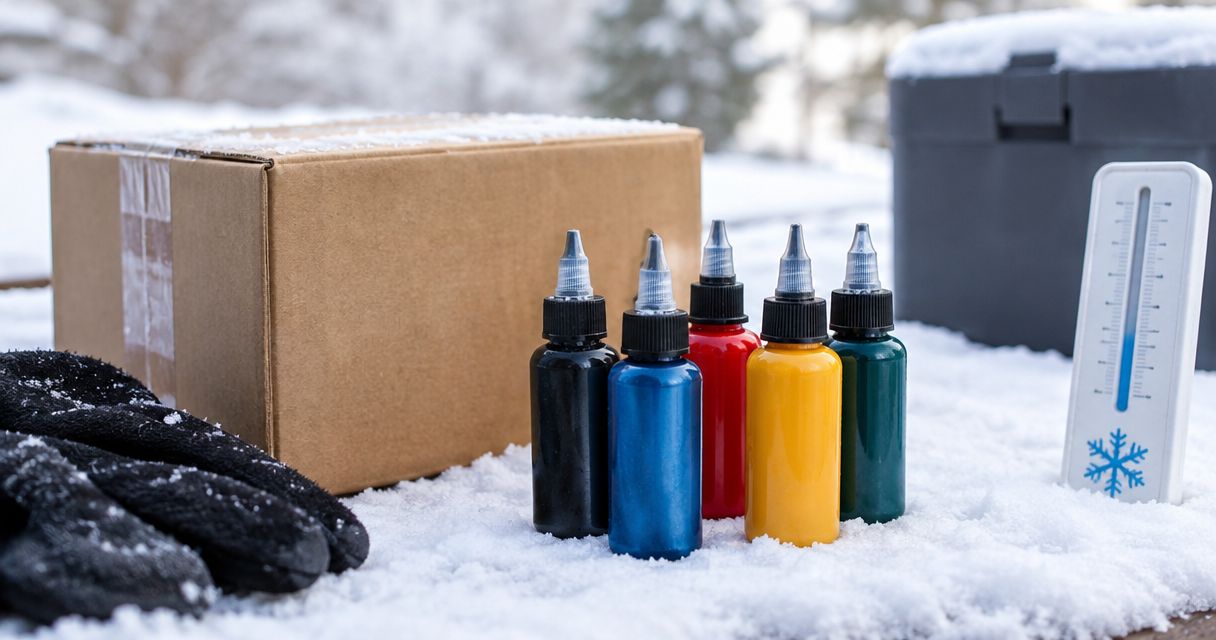
Yes—tattoo ink can freeze during cold-weather shipping, and freezing can damage the pigment dispersion or the bottle and closure. A cold bottle is not proof of damage, but a thawed bottle is not proof that the ink remains suitable for use; hold suspect stock and obtain product-specific instructions from the manufacturer before releasing it.
- For tattoo ink freeze cold weather shipping concerns, quarantine suspect bottles before distributing them to studios.
- INTENZE professional tattoo ink has 30+ years of artist use; shipping damage still requires product-specific assessment.
- Water freezes at 0°C / 32°F; that is not a universal freezing threshold for formulated tattoo ink.
- Do not use direct heat, dilution, or a test tattoo to decide whether frozen ink is acceptable.
Why this matters
A distributor's receiving decision affects every studio that receives the shipment. Releasing questionable bottles turns a shipping exception into a downstream inventory problem, especially when the same lot has already been allocated across customer orders.
INTENZE brings 30+ years of professional artist use to professional tattoo ink. That history does not replace a shipment assessment: sterile manufacturing and post-delivery package integrity are separate controls. INTENZE professional tattoo ink is for professional tattoo artists and studios; cold-exposed shipments require a separate acceptance decision.
For your 2026 receiving procedure, separate three questions: Was the shipment exposed to cold? Is there evidence of freezing or damage? What does the manufacturer authorize you to do with the affected product?
Can tattoo ink freeze or get damaged during cold-weather shipping?
Yes. Tattoo ink is a formulated pigment dispersion, not simply colored water, so its freezing behavior depends on the formulation. Freezing can affect how particles remain dispersed, while ice formation and expansion can stress packaging.
Pure water freezes at 0°C / 32°F under ordinary atmospheric conditions. Do not apply that figure as a validated shipping limit for every tattoo ink: dissolved ingredients and the overall formulation affect freezing behavior.
Use this receiving comparison to decide what needs attention—not to certify a bottle for use.
| Shipment condition | What the observation establishes | Best for | Limitation and next action |
|---|---|---|---|
| Cold bottle, intact package, no visible ice | The bottle feels cold at inspection | Initial receiving assessment | Touch does not establish its temperature history; check product instructions |
| Visible ice or partly frozen contents | Freezing has occurred in the bottle | Identifying a freeze incident | Appearance does not establish recoverability; quarantine and contact the manufacturer |
| Bottle thawed before inspection | Current contents are liquid | Recording the condition on arrival | Liquid contents do not rule out earlier freezing; review available shipment records |
| Crack, leak, or damaged closure | Package integrity is questionable | Identifying a packaging exception | Do not treat warming or shaking as a repair; hold the affected stock |
Neither cold weather nor normal-looking liquid alone establishes whether a shipment is acceptable. Record what you observe and keep the acceptance decision tied to the exact product.
Cold is not the same as frozen
A weather forecast describes outdoor conditions, not the temperature inside a particular bottle. Likewise, a cold carton does not prove that its contents formed ice.
Avoid recording an unsupported conclusion such as freeze-damaged when your only observation is that the box felt cold. Record the actual evidence: visible ice, a temperature indicator reading, leakage, a cracked bottle, or the carrier's delivery record.
Thawing is not the same as recovery
Liquid ink has passed out of a visibly frozen state. That observation does not demonstrate that the original dispersion, flow characteristics, or packaging integrity have been preserved.
Do not invent an acceptance test based on how easily the bottle shakes. A receiving check should identify exceptions; it should not substitute for the manufacturer's product assessment.
Why cold-weather shipping outcomes vary
There is no universal freezing threshold or recovery procedure for all professional tattoo ink. These factors explain why you need product-specific instructions rather than a single rule for every bottle:
- Formulation: The liquid carrier and dissolved ingredients influence freezing behavior. A pure-water reference is not a finished-product specification.
- Actual exposure: The temperature reached by the contents matters more than the destination's forecast alone.
- Exposure duration: A brief cold exposure and prolonged exposure are different shipment histories. Record duration only when you have evidence.
- Packaging: Bottle construction, closure condition, and shipment protection affect how the package withstands transport.
- Freeze–thaw history: A bottle's current liquid appearance does not establish whether it previously froze or experienced repeated temperature changes.
- Product instructions: Storage limits, handling directions, and the manufacturer's disposition guidance determine the next step for that specific ink.
When reviewing winter shipments in 2026, do not replace these factors with a blanket rule that all cold ink is ruined—or that all thawed ink is usable. Both shortcuts discard information you need for a sound receiving decision.
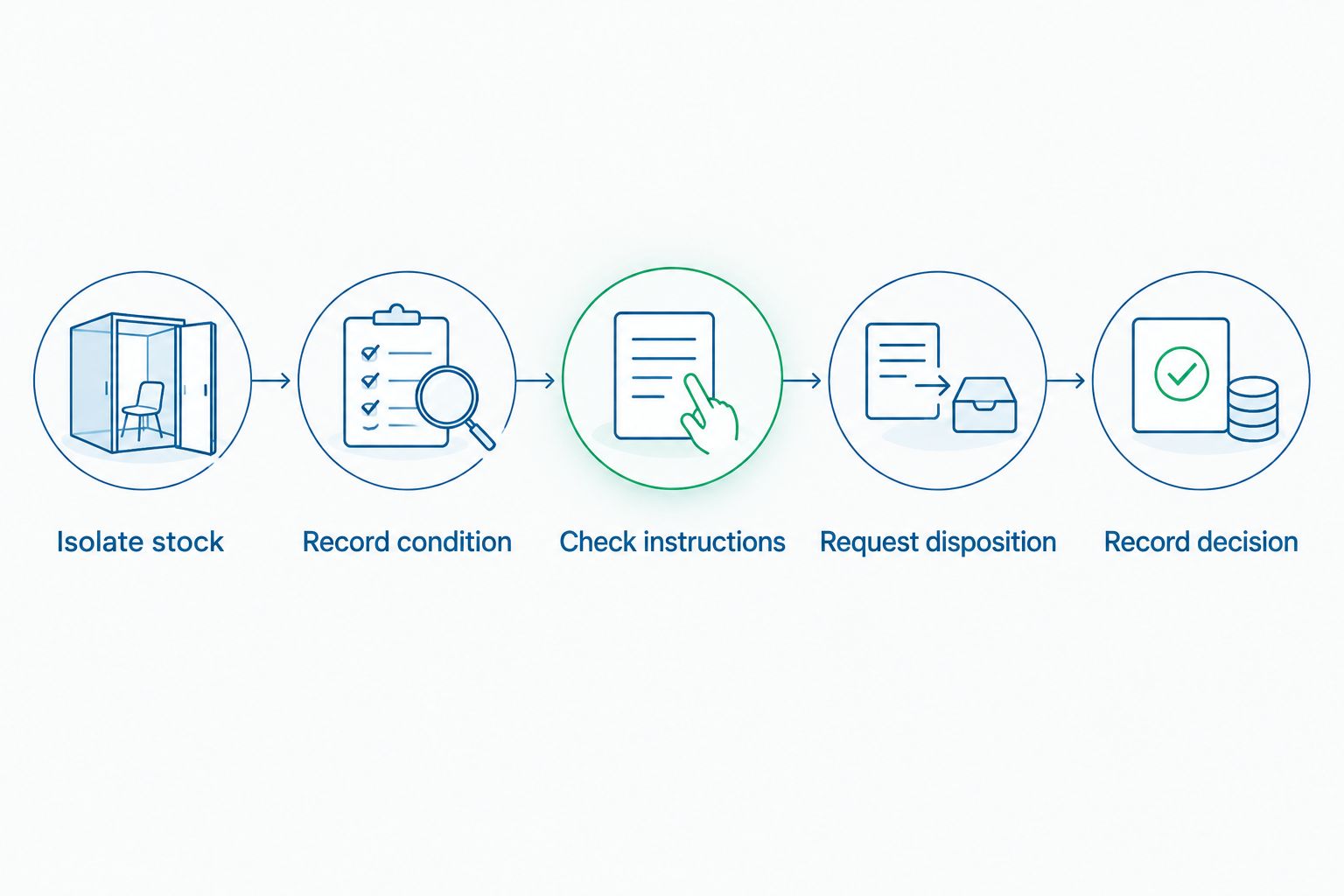
What should distributors do when tattoo ink arrives frozen?
Hold the shipment before it enters saleable inventory. Keep the affected bottles identifiable, preserve their packaging, and request instructions that name the exact product and lot.
1. Isolate stock
Place suspect bottles in a clearly identified hold area, separate from stock approved for fulfillment. If an order contains both questionable and apparently unaffected bottles, preserve the relationship between each bottle, its carton, and the receiving record.
Do not silently move the shipment into ordinary inventory while you investigate. A hold must prevent accidental allocation to customer orders, not merely add a note that warehouse staff might miss.
2. Record condition
Photograph visible ice, leakage, cracks, closures, and the exterior packaging before changing the condition of the shipment. Capture the product identity, lot or batch identifier where provided, order reference, and delivery information.
Write observations rather than assumptions. For example, visible ice is an observation; a claim that the bottle remained frozen throughout transit requires evidence you might not have.
3. Check instructions
Review the label and current manufacturer handling information. Do not transfer directions from another color, another brand, or a PMU pigment to the affected professional tattoo ink without confirmation.
Keep bottles closed during the assessment unless the manufacturer specifically directs otherwise. Opening a bottle just to investigate changes the condition you are asking the manufacturer to evaluate.
4. Request disposition
Send the manufacturer the observations and identifying information. Ask whether the affected product should remain on hold, be returned, be discarded under applicable requirements, or undergo a specified assessment.
Request clarification when a response does not identify the product or address the observed damage. General reassurance about winter shipping is not the same as instructions for a visibly frozen or leaking bottle.
5. Record decision
Attach the written disposition to the receiving record and update the inventory status accordingly. If stock has already moved to another location, identify the affected units before further distribution.
Your 2026 winter receiving record should preserve both the observation and the decision. This lets warehouse staff act on documented instructions instead of reconstructing the incident from memory.
Can you thaw frozen tattoo ink and use it afterward?
Thawing alone does not establish that frozen tattoo ink is suitable for use. Follow the manufacturer's instructions for the exact product rather than creating a recovery method from general advice online.
Do not use a microwave, radiator, hot-water bath, or other direct heat source as an improvised rescue procedure. Also, do not add water, mixing solution, or another ink to make a questionable bottle appear normal.
Shaking according to a product's routine directions is not a validated freeze-damage assessment. A bottle that looks uniform afterward still needs the appropriate disposition when freezing is known or suspected.
For a distributor, the relevant question is not whether an artist can get liquid out of the bottle. It is whether you have a documented basis to release that specific stock for its intended professional use.
Does a sealed bottle mean frozen tattoo ink is still sterile?
An intact-looking seal does not independently verify sterility after a shipping incident. Check the bottle and closure, but do not treat visual inspection as a microbiological test.
Cold exposure, dispersion changes, and packaging damage are different issues. Freezing is not a sterilization method, and a bottle's return to liquid form does not resolve questions about a damaged closure.
Do not open a suspect bottle, pour out a sample, or perform a test tattoo to establish acceptability. Keep the original condition documented and ask the manufacturer how to handle the incident.
How should distributors plan winter tattoo ink orders?
Build cold-weather controls into purchasing and receiving before the next shipment. Your 2026 purchasing procedure should identify who checks handling requirements, who receives exceptions, and who can authorize inventory release.
Confirm handling requirements before ordering
Ask for the current storage and transport instructions for the professional tattoo ink you intend to buy. Where temperature limits are specified, use the actual product limits—not the freezing point of water or advice copied from a different formulation.
Ask how to report a cold-exposure incident and what evidence the supplier needs. Do not assume that a general return policy answers questions about frozen product, replacement, or freight claims.
Arrange delivery around staffed receiving
Choose a receiving arrangement that allows staff to bring cartons inside and inspect them promptly. A delivery confirmation should trigger a receiving task, not leave a shipment waiting unnoticed outside.
Record delivery exceptions while the packaging and tracking information are still accessible. Do not promise customers that a particular shipping service prevents freezing unless you have evidence supporting that claim.
Separate purchasing confidence from shipment acceptance
A recognized supplier and a correctly identified product help you establish sourcing. They do not eliminate the need to inspect an individual shipment.
INTENZE manufactures and sells professional tattoo ink in the USA for tattoo artists and studios. Before purchasing online, review the relevant product information and resolve any winter-handling questions; after delivery, apply the same documented receiving controls to the shipment.
Review professional tattoo ink
Review product information before ordering and confirm handling instructions for your winter shipment.
FAQ
Can tattoo ink freeze in a delivery truck?
Yes, tattoo ink can freeze if its contents reach sufficiently cold conditions for that formulation. Outdoor weather alone does not establish the temperature inside a particular bottle; record visible evidence and follow product-specific instructions.
Does tattoo ink freeze at 32°F?
32°F / 0°C is the freezing point of pure water under ordinary atmospheric conditions, not a universal freezing specification for tattoo ink. Use the manufacturer's limits for the exact formulation.
Is tattoo ink ruined if the bottle arrives cold?
A cold bottle alone does not establish that tattoo ink is ruined. Inspect the shipment, review any available temperature history, and hold bottles with evidence of freezing or packaging damage for assessment.
Can I use frozen tattoo ink after it thaws?
Do not release previously frozen tattoo ink solely because it has thawed. Obtain product-specific manufacturer instructions; liquid appearance alone does not verify dispersion quality or packaging integrity.
Should I shake frozen tattoo ink until it looks normal?
Shaking is not a substitute for assessing a freezing incident. Follow the product's handling directions and do not use apparent uniformity as the sole basis for releasing suspect stock.
What should I send INTENZE about a frozen shipment?
Send INTENZE the product identity, lot or batch identifier where provided, order reference, delivery information, and photographs of the observed condition. Describe visible ice, leakage, or packaging damage without assuming an undocumented temperature history.
Can distributors sell bottles from a cold-exposed shipment?
Release decisions should follow the exact product's handling requirements and the documented assessment of the shipment. Keep questionable bottles out of fulfillment until the appropriate disposition is recorded.
One last thing
The most useful receiving note describes evidence, not a verdict. A record stating that visible ice was present inside a sealed bottle gives the manufacturer something specific to assess; a note saying the ink seemed bad does not.
Make that distinction part of your 2026 winter procedure. Preserve the shipment details, keep suspect stock out of customer orders, and let product-specific instructions determine the next action.