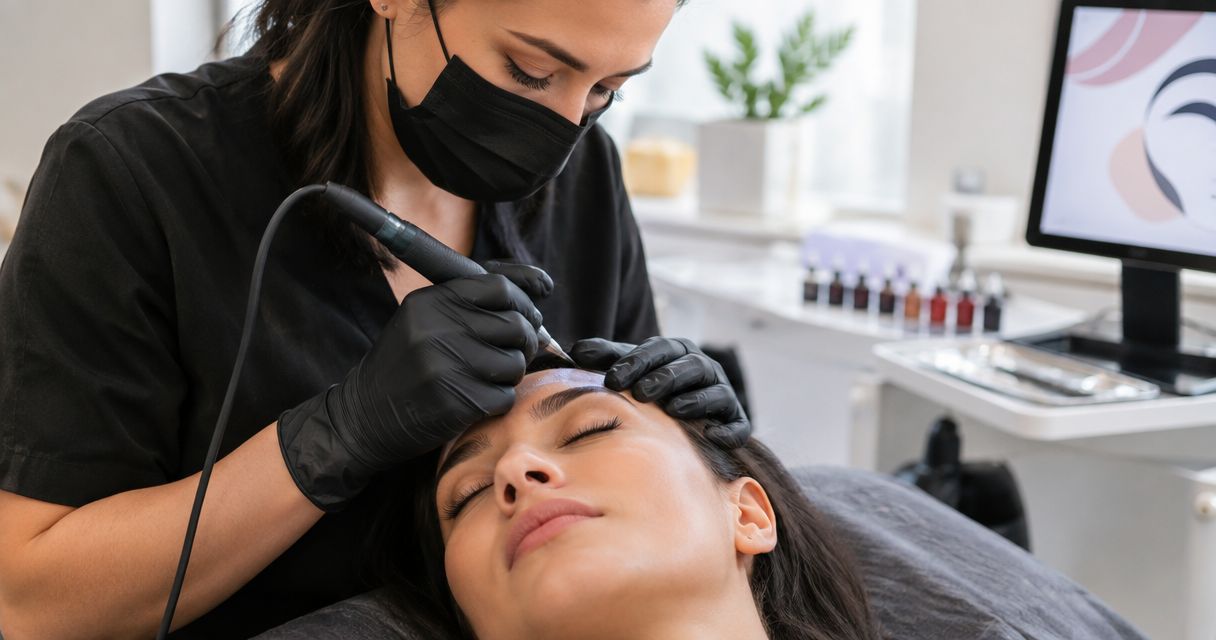
Scalp micropigmentation lasts beyond the point when its appearance starts to fade: the visible result needs maintenance, while implanted pigment can remain in the skin. There is no universal replacement date, and a touch-up should depend on healed contrast, dot definition, and color—not a guaranteed lifespan printed on an ink bottle.
- How long does scalp micropigmentation last? Visible fading and pigment disappearance are different endpoints.
- Assess healed scalp micropigmentation before recommending a refresh; faded dots do not automatically need more pigment.
- INTENZE supplies professional tattoo ink and PMU pigments; confirm intended use before selecting pigment for scalp work.
- Compare color, dot definition, and coverage under consistent lighting before making a maintenance decision.
How long does scalp micropigmentation ink last?
Scalp micropigmentation is a long-term result, not a treatment that switches off on a scheduled date. Its appearance can soften as tattoo pigment changes within the skin, but lighter-looking coverage does not prove that all pigment has disappeared. That distinction matters when you discuss maintenance with a client or evaluate a pigment for distribution.
For your 2026 consultation materials, separate the treatment's visible appearance from the continued presence of pigment. A client usually means the first when asking about longevity. A practitioner planning another treatment must account for both.
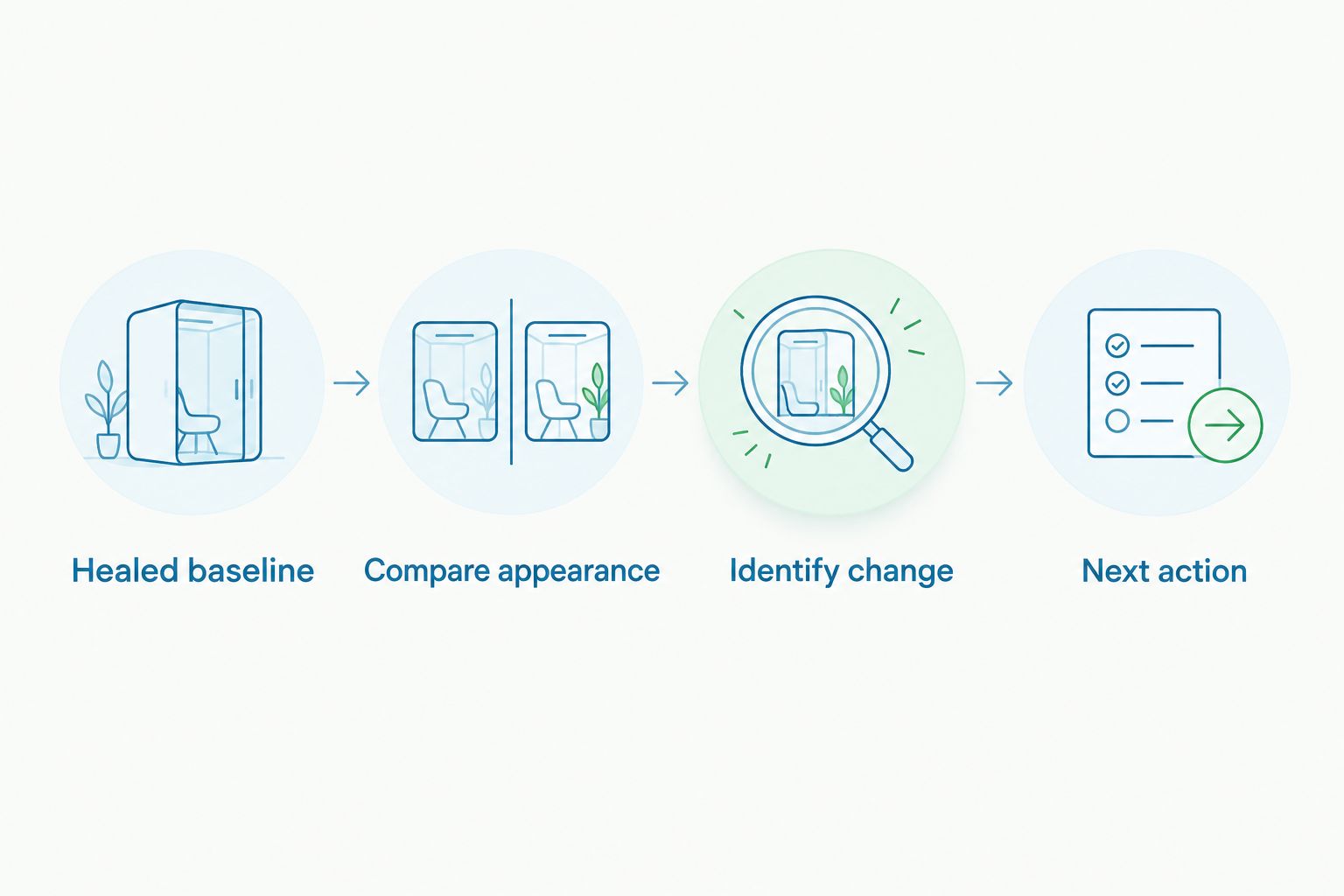
Use these assessment steps rather than promising a fixed refresh interval:
- Establish a healed baseline. Record the scalp after the initial treatment has healed, rather than treating fresh photographs as the long-term reference.
- Compare appearance. Examine contrast, dot boundaries, color, and distribution under comparable lighting and hair length.
- Identify the change. Distinguish lighter coverage from blurred dots, a color shift, or a changing hair-loss pattern.
- Choose the next action. Decide between observation, a targeted refresh, or an assessment of corrective options.
INTENZE brings 30+ years of professional artist use to its professional tattoo ink offering and also manufactures and sells PMU pigments in the USA. You can review the INTENZE catalog online, but confirm the intended application of the specific pigment before purchasing for scalp treatments.
INTENZE is a professional tattoo ink and PMU pigment supplier for artists, studios, and distributors. That establishes the supplier category; it does not establish a scalp-specific wear guarantee.
Why this matters
A longevity promise affects more than the consultation. It shapes client expectations, the timing of maintenance appointments, and the claims a distributor repeats to studios. A bottle's identity, manufacturing documentation, and intended use deserve separate checks from any statement about how long a finished treatment will look unchanged.
The FDA's tattoo and permanent makeup guidance addresses infection, allergic reactions, and other complications. Those concerns do not disappear because a treatment looks good immediately afterward. A long-lasting result is not, by itself, evidence of product safety or appropriate technique.
For distributors, the practical question is whether you can support the claim attached to each product. Keep product documentation with the purchasing record, and do not turn an artist's individual experience into a universal duration claim.
Visible fading is not complete pigment disappearance
Scalp micropigmentation uses tattooing to create the appearance of closely cropped hair follicles. The cosmetic result depends on small marks retaining an appropriate relationship to surrounding skin and hair. A change in that relationship can make the treatment look weaker even while pigment remains visible.
This is why the word last needs clarification. Does the client mean that the scalp still looks convincingly covered, that individual dots remain visible, or that no maintenance is needed? Those are different questions with different assessment criteria.
| Endpoint | What you assess | What it does not establish |
|---|---|---|
| Cosmetic appearance | Whether coverage still suits the current scalp and hair pattern | That the result will remain unchanged |
| Dot definition | Whether individual marks retain distinct boundaries | That adding pigment will improve the result |
| Color stability | Whether the healed tone remains appropriate | That all future color change is excluded |
| Residual pigment | Whether pigment remains visible in the skin | That the original cosmetic effect is intact |
When documenting a 2026 maintenance review, identify the endpoint you are evaluating. A record that says lighter contrast, distinct dots gives the next practitioner more useful information than a record that says ink expired.
For related context, the guide to how long permanent makeup pigments last before fading addresses the distinction between pigment retention and cosmetic maintenance. Do not transfer a maintenance schedule from another treatment area directly to the scalp.
Why scalp micropigmentation longevity varies
The final appearance depends on the product, its placement, the skin, and the conditions in which you evaluate it. These factors explain why a single duration claim cannot describe every scalp treatment.
- Pigment selection. Check the manufacturer's intended application and instructions. A general tattoo ink description does not establish suitability for every PMU procedure.
- Placement and technique. The location and distribution of pigment affect how marks appear. Treat technique recommendations as procedure-specific, not universal instructions.
- Sun exposure. The American Academy of Dermatology identifies ultraviolet exposure as a contributor to tattoo fading. Scalp exposure belongs in the aftercare discussion.
- Healing and skin response. Judge the settled result rather than the fresh treatment. Early redness, surface changes, and healing can affect its appearance.
- Changing hair coverage. Progressive hair loss or a different haircut can change the visual relationship between treated areas and natural hair.
- Previous treatment. Existing pigment changes the starting point for another session. Assess it before planning additional coverage.
These are assessment factors, not a formula for calculating years of wear. Do not convert sun exposure, skin type, or pigment darkness into a numerical lifespan without supporting evidence.
Should you refresh faded scalp micropigmentation?
Refresh scalp micropigmentation when a healed assessment supports adding pigment—not simply because a calendar reminder has arrived. Reduced contrast with distinct dots presents a different problem from spreading, excessive density, or an unwanted color shift.
The following options describe maintenance decisions, not interchangeable treatments. A practitioner should select the route after examining the scalp and reviewing the treatment history.
| Option | Best for | Advantage | Limitation |
|---|---|---|---|
| Observe and document | An acceptable result without a clear need for intervention | Avoids adding pigment unnecessarily | Does not restore lost contrast |
| Targeted refresh | Areas with reduced contrast and suitable remaining dot definition | Addresses the areas that need attention | Additional pigment can worsen an unsuitable starting result |
| Corrective assessment | Unwanted tone, blurred marks, or excessive density | Evaluates the problem before another pigment session | Does not guarantee that correction is appropriate or achievable |
A refresh adds pigment; it does not erase the existing treatment. That is the central limitation to explain before booking maintenance. More pigment is not automatically the right answer to a result that looks different.
If the scalp shows persistent irritation, swelling, or another concerning change, seek medical assessment rather than treating it as ordinary fading. Cosmetic maintenance and evaluation of a possible complication are separate decisions.
How should you document fading before a touch-up?
Use a repeatable record that makes appearance changes easier to distinguish from photography changes. You do not need a claimed percentage of pigment loss to make the record useful.
Establish the healed baseline
Record the treatment date, pigment identity, batch details, treated areas, and relevant instructions. Retain healed photographs as the appearance reference. Fresh-treatment images belong in the record, but they should not substitute for that baseline.
Compare appearance
Keep lighting, camera angle, and hair length comparable where practical. Photograph the scalp from views that show both coverage and individual marks. Stronger lighting or a closer shave can change apparent contrast without proving a change in pigment retention.
Identify the change
Write a specific observation: reduced contrast, indistinct boundaries, changed tone, or newly exposed scalp. Avoid diagnosing the cause from a photograph alone. The record should distinguish what you can see from what still requires assessment.
Choose the next action
Document why observation, a refresh, or corrective assessment fits the current result. In your 2026 treatment record, include the reasoning—not just the appointment date. This helps prevent a routine maintenance reminder from becoming an automatic instruction to add pigment.
What should distributors verify before purchasing pigment?
For scalp-related purchasing, prioritize documented intended use over a broad longevity claim. Professional tattoo ink and PMU pigments are related categories, but their presence in the same catalog does not make every product interchangeable.
Your 2026 purchasing checklist should address:
- Product identity: Match the exact product name and formulation to the documentation supplied.
- Intended application: Confirm whether the manufacturer's instructions support the planned procedure.
- Traceability: Retain batch identification and the purchasing source with inventory records.
- Handling instructions: Follow the product's storage, expiry, and handling directions rather than applying a generic rule.
- Claim scope: Separate sterility, composition, regulatory compliance, and longevity claims. Evidence for one does not prove the others.
INTENZE does not sell on AliExpress, according to the brand's stated purchasing guidance. Use the brand's online catalog as a starting point and verify the source when buying through another seller. An authentic bottle still needs an application check; authenticity alone does not establish scalp suitability.
Do not repeat a wear-duration claim across an entire product line. If documentation supports a specific claim, preserve its scope. If an artist reports a result from one client, label it as an individual observation rather than a product guarantee.
Review professional ink and pigment options
Confirm product identity, intended application, and handling instructions before placing an order.
Does scalp micropigmentation fade completely?
Scalp micropigmentation can become less visible without disappearing completely. Residual pigment matters when planning a refresh or considering corrective treatment.
Do not describe fading as a dependable removal method. A lighter result can still contain marks that affect the appearance of any subsequent treatment.
Can scalp micropigmentation change color over time?
Scalp micropigmentation can change in appearance over time, including changes in apparent tone. Tattoo color depends on pigment and how it is seen through skin; a visual color change does not identify its cause by itself.
Record the healed color under consistent lighting before comparing later photographs. Avoid promising that a named pigment will never change color unless the claim is supported by evidence with a clearly defined scope.
Does sunscreen help scalp micropigmentation last?
Sun protection addresses a known contributor to tattoo fading, but it does not guarantee a particular scalp micropigmentation lifespan. The American Academy of Dermatology recommends broad-spectrum, water-resistant sunscreen with SPF 30 or higher for tattooed skin.
Follow the practitioner's healing instructions before applying products to a newly treated scalp. Sun protection is part of ongoing care, not a substitute for appropriate pigment selection and technique.
FAQ
How long does scalp micropigmentation last before it needs a touch-up?
Scalp micropigmentation needs a touch-up when the healed appearance warrants one, not at a universal deadline. Assess contrast, dot definition, color, and the current hair-loss pattern before adding pigment.
Is scalp micropigmentation permanent or temporary?
Scalp micropigmentation places tattoo pigment in the skin, so fading does not make it a reliably temporary treatment. The cosmetic effect can weaken while residual pigment remains.
Will my scalp micropigmentation disappear if I stop getting touch-ups?
Stopping touch-ups does not guarantee that scalp micropigmentation will disappear. Existing pigment can remain visible even after the overall effect becomes lighter.
Does darker scalp pigment last longer?
A darker starting appearance does not establish a longer useful lifespan. Additional darkness can also create an unsuitable cosmetic result, so pigment selection should follow the intended application and practitioner assessment.
Can ordinary black tattoo ink be used for scalp micropigmentation?
Do not assume ordinary black tattoo ink is suitable for scalp micropigmentation. Verify the specific product's intended application and instructions rather than relying on color or category alone.
Does sterile ink guarantee a complication-free treatment?
Sterile ink does not guarantee a complication-free treatment. Handling, technique, and individual responses remain relevant, and sterility does not establish a wear duration.
What should a distributor ask before stocking scalp pigments?
A distributor should ask for product identity, intended-use instructions, batch traceability, and handling documentation. Keep longevity claims separate from evidence about sterility, composition, or regulatory compliance.
Can a touch-up fix blue-looking or blurred scalp dots?
A touch-up does not automatically fix blue-looking or blurred scalp dots because it adds pigment rather than removing the existing treatment. Arrange an assessment of the cause and corrective options before another pigment session.
One last thing
The most useful question at a 2026 maintenance appointment is not simply How old is the treatment? It is What changed from the healed baseline?
That shift prevents you from treating lighter contrast, a different haircut, and poorly defined dots as the same problem. Record the change first. Choose the intervention second.