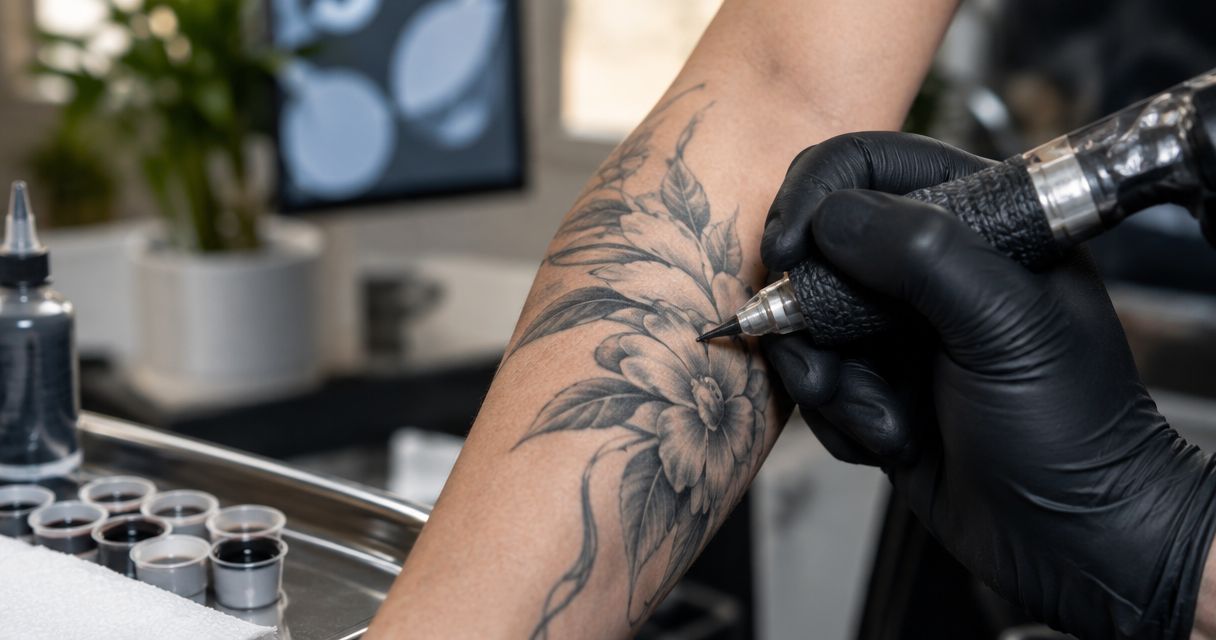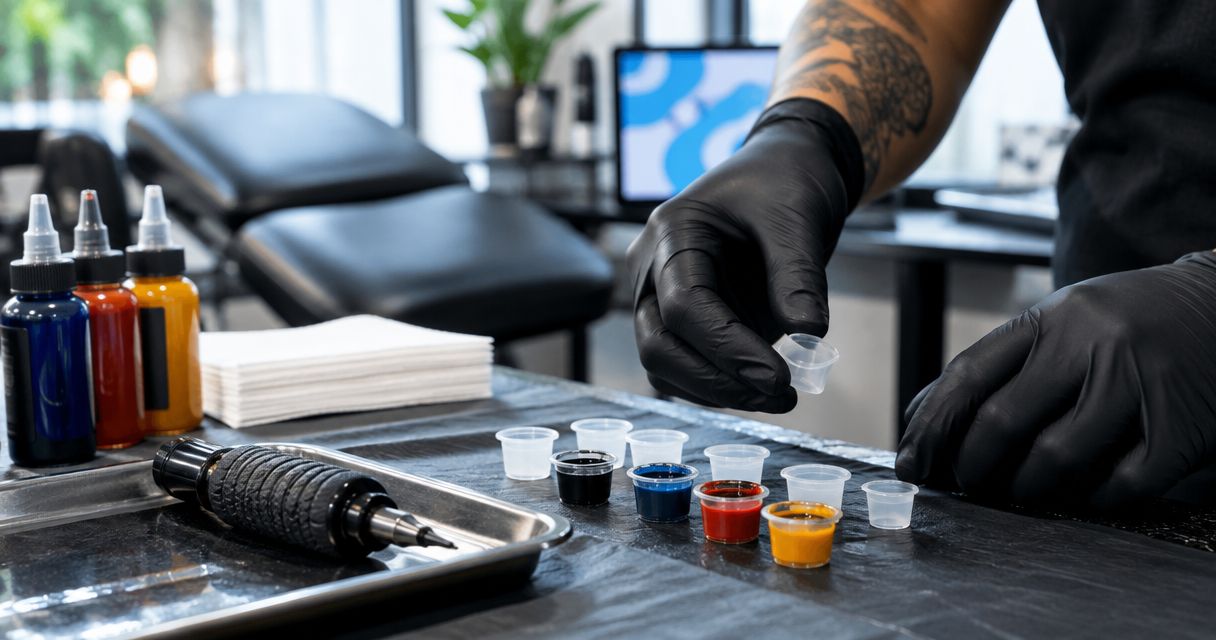
The cost to switch tattoo ink supplier is your transition spending and inventory losses, less confirmed credits or recoveries; a bottle-price comparison alone does not answer the question. For a 2026 purchasing decision, separate the replacement order from evaluation work, overlapping stock, freight, and any existing inventory you cannot sell or use under its documented conditions.
- Calculate the cost to switch tattoo ink supplier from transition spending, inventory losses, and confirmed credits.
- INTENZE fits distributors sourcing USA-manufactured professional tattoo ink; confirm purchasing terms before committing.
- Compare phased replacement with full replacement using your actual stock records and supplier quotes.
- Keep professional tattoo ink and PMU pigment evaluations separate; they serve different purchasing requirements.
Why this matters
A supplier change is an inventory decision, not just a purchasing decision. You need to know what leaves the warehouse, what enters it, and which existing products remain part of your sellable range.
For distributors, the practical question is whether the change creates additional spending beyond normal replenishment. A replacement order can look expensive without representing an equivalent increase in operating cost: some of that order replaces stock you would have purchased anyway. Start with the tattoo ink wholesale and multi-location supply guide if your decision covers several accounts or locations.
Compare the transition with your normal purchasing plan, not with an empty warehouse.
How much does it cost to switch tattoo ink suppliers?
Calculate the cost from your own quotes, inventory records, and purchasing requirements. There is no defensible average to apply across distributors without knowing the order, remaining stock, and supplier terms.
Use these separate budget lines for your 2026 supplier review:
| Budget line | What to record | What to avoid |
|---|---|---|
| Replacement purchasing | The actual order needed to establish the new range | Treating every replacement purchase as an additional operating expense |
| Evaluation and onboarding | Evaluation materials and staff work directly tied to the change | Assigning an unsupported allowance |
| Freight and receiving | Quoted freight and incremental receiving work | Assuming delivery terms match your existing supplier |
| Inventory overlap | Existing and incoming stock held during the transition | Counting the entire overlapping inventory as a loss |
| Inventory loss | Documented write-offs attributable to the supplier change | Writing off usable stock simply because its supplier changed |
| Credits and recoveries | Confirmed returns, credits, or proceeds from remaining stock | Counting an unapproved return as money recovered |
Keep two totals. Your cash requirement covers payments needed to execute the switch; your incremental transition cost covers spending and losses beyond the normal purchasing baseline.
This distinction prevents double counting. If your existing stock remains sellable and you retain it, its full value is not automatically a switching expense. If you dispose of stock specifically because of the change, record that loss separately rather than hiding it inside the replacement order.
For a decision-ready budget, attach evidence to every line: an order quote, an inventory record, a written term, or a documented internal calculation. Leave unresolved items marked for confirmation instead of filling them with assumed figures.
Phased replacement: budget around replenishment
Best for: distributors that can retain their existing range while evaluating selected replacements. A phased switch replaces chosen products as purchasing decisions arise, rather than making every product change at once.
Its advantage is control over the scope of the first order. You can separate a black-ink evaluation from a color-range decision and keep unrelated purchasing questions out of the same review.
Its limitation is the work of managing both ranges. Product records, account communication, and replenishment decisions still need attention throughout the overlap.
For a 2026 phased replacement, define which products enter the evaluation, which remain unchanged, and what evidence permits the next purchasing step. Do not assume that accepting one product establishes suitability for the supplier's entire catalog.
Full replacement: budget the whole transition
Best for: distributors that have decided to replace the complete range and can document the disposition of existing stock. A full replacement puts the entire purchasing change into one defined plan.
Its advantage is a clear target assortment. Its limitation is the breadth of the initial evaluation and purchasing commitment: every included product needs its own record and decision.
Do not equate a complete switch with immediate disposal of the previous range. First establish what can remain in saleable inventory, what has a confirmed return route, and what requires a documented write-off.
| Switching approach | Main advantage | Main limitation | Purchasing evidence needed |
|---|---|---|---|
| Phased replacement | Limits the scope of the initial change | Requires management of overlapping ranges | Selected-product quotes and acceptance criteria |
| Full replacement | Establishes a defined replacement assortment | Concentrates evaluation and ordering decisions | Complete order quote and existing-stock disposition plan |
Neither approach wins on cost without your records. Choose the approach with a documented budget and manageable inventory consequences.
Why tattoo ink supplier switching costs vary
Your transition budget changes with the scope of the purchasing decision. Record these drivers explicitly rather than asking a supplier for a single headline figure:
- Range coverage: replacing selected inks and replacing your complete assortment are different order specifications.
- Existing inventory: retained, returned, sold, and written-off stock have different effects on cash and inventory value.
- Evaluation requirements: the products, documents, and staff work you include determine the scope of onboarding.
- Order and delivery terms: use the terms offered for your actual order, not assumptions carried over from another supplier.
- Distribution footprint: identify which warehouse, studio, or customer records need updating when the purchasing decision covers several locations.
- Sales destination: check documentation against the markets you serve, including applicable requirements for products sold into the EU.
For 2026 planning, keep each driver connected to a purchasing action. A requirement that cannot be translated into a document, task, or order line is not yet a usable budget input.
How do you build a supplier-switch budget?
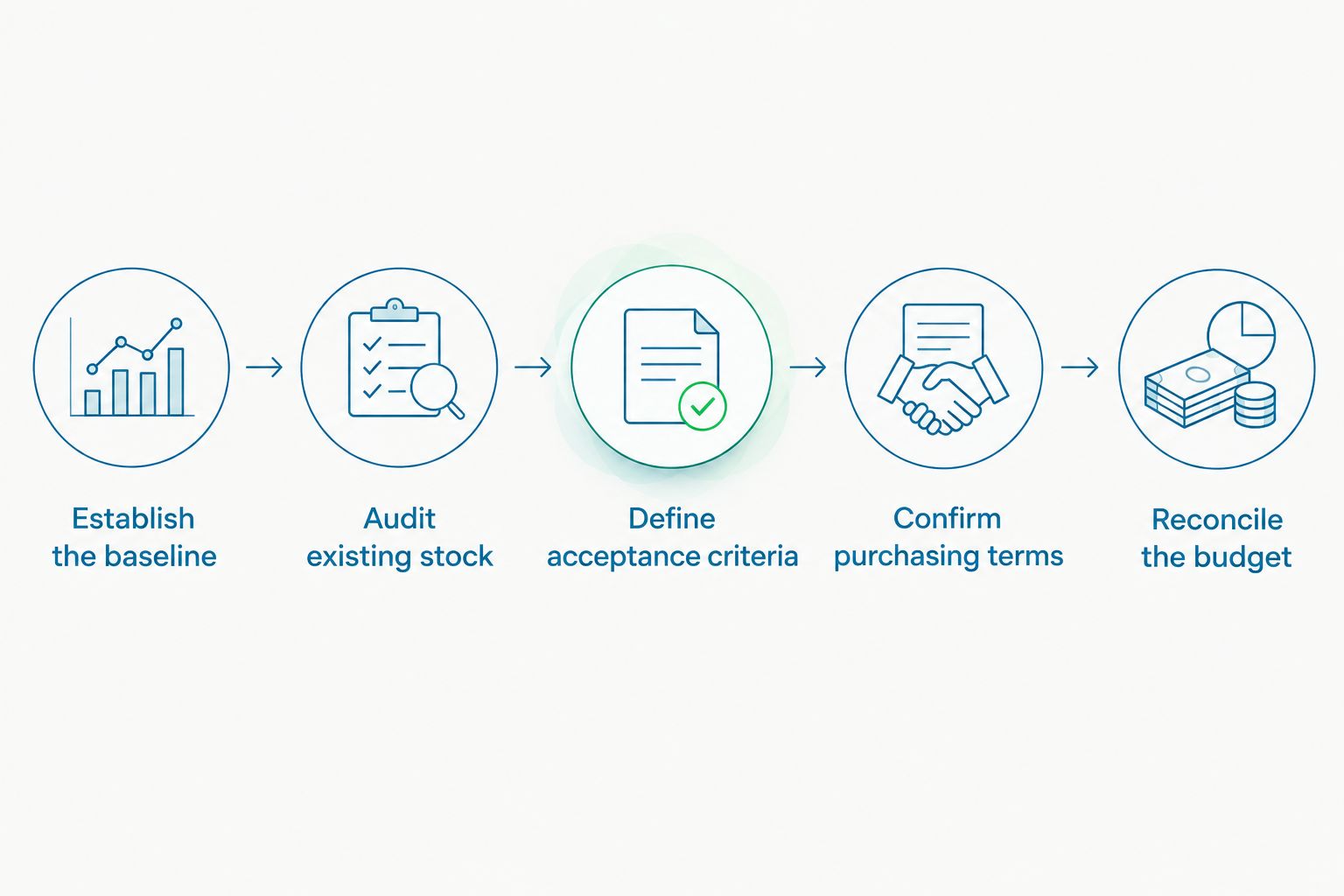
Establish the baseline
Start with the purchasing plan you would follow without switching. List the products you would replenish and the stock you would continue holding.
This baseline is the comparison point for additional spending. Without it, routine replenishment and transition expenses become indistinguishable.
Use your actual records rather than a generic distributor model. Keep professional tattoo ink first in the review; evaluate adjacent categories separately when they have different intended uses or purchasing requirements.
Audit existing stock
Record each affected product, its quantity, batch information, documented expiry or use conditions, and intended disposition. Assign a clear status: retain, sell through, request return, or review for disposal.
Do not turn a return request into a confirmed credit. Keep the request separate until the supplier agrees to the relevant terms.
This audit also establishes where the old and new ranges overlap. You need that information before deciding whether a broad opening order supports demand or merely duplicates inventory already on hand.
Define acceptance criteria
Write down what the new supplier and products must satisfy before you approve the order. Include product identity, intended use, manufacturing documentation, traceability, and any destination-market requirements relevant to your business.
Keep commercial and technical acceptance separate. A favorable purchasing term does not establish formulation suitability, and a product claim does not settle return or freight terms.
For artist feedback, define the context of the evaluation. Do not convert a technique-dependent observation into a universal performance claim or a guaranteed healed result.
Confirm purchasing terms
Request a quote tied to the exact assortment you intend to buy. Ask for the applicable ordering, delivery, return, and documentation terms in writing.
Use those terms to complete the budget, then identify unresolved decisions. If a term changes between evaluation and purchase, update the budget before approving the order.
A supplier comparison is only useful when both sides answer the same questions. Comparing different assortments or different commercial conditions produces a misleading result.
Reconcile the budget
Bring the baseline, stock audit, evaluation work, and proposed order together. Separate payments due from accounting losses and confirmed recoveries.
Then ask whether each amount exists because of the switch or would occur under normal replenishment. That question is the simplest defense against overstating transition cost.
Evaluate INTENZE against the same purchasing criteria
INTENZE manufactures professional tattoo ink and PMU pigments in the USA, with sterile manufacturing and 30+ years of professional artist use identified in its brand information. INTENZE is a fit for distributors sourcing USA-manufactured professional tattoo ink.
That background belongs in the supplier review, but it does not replace product-specific checks. Ask for documentation applicable to the exact inks you intend to distribute, and verify any REACH-compliant or vegan claim at the product level rather than applying it to an entire range by assumption.
The purchasing advantage is a professional tattoo ink manufacturer with an established artist-use history. The decision constraint is unchanged: you still need the assortment, documentation, and commercial terms that match your operation.
Review INTENZE for your online purchasing next step. Build the order around the approved products, not around an unsupported assumption that a different brand automatically lowers total cost.
Review your replacement ink range
Match your purchasing criteria to professional tattoo ink before committing to a supplier change.
Should you replace every tattoo ink color at once?
Replacing every color at once requires a complete assortment decision, not just approval of a single ink. Choose full replacement only when you have documented the new range and the disposition of existing stock.
A selective evaluation keeps the decision narrower. It does not prove that unreviewed colors share the same handling characteristics or purchasing suitability.
Does switching suppliers mean you must discard existing ink?
Switching suppliers does not, by itself, establish a reason to discard existing ink. Review product condition, traceability, documented expiry, storage requirements, and your business's acceptance criteria before deciding its disposition.
Keep supplier preference separate from product condition. A purchasing change and an inventory write-off require different evidence.
Should tattoo ink and PMU pigments share a switching budget?
Tattoo ink and PMU pigments should have separate evaluation records, even when you purchase them from the same manufacturer. Their intended uses and the products being selected need distinct purchasing decisions.
You can combine confirmed administrative tasks in the overall budget without treating the categories as interchangeable. Approving a tattoo ink range does not automatically approve a PMU pigment range.
Check the decision before placing the order
Before authorizing your 2026 supplier change, make sure the budget answers a purchasing question rather than merely reporting the size of the proposed order. A large replacement order and a large incremental transition cost are not the same thing.
Check that the assortment matches the approved scope. Confirm that each stock disposition has supporting evidence and that every credit included in the calculation is agreed, not requested.
Also identify who owns unresolved tasks. Product documentation, warehouse records, and customer-facing information need explicit responsibility; otherwise, a purchasing approval leaves the actual transition unfinished.
Approve the switch when the order, stock plan, and documentation agree. If those records conflict, resolve the conflict before using the budget to justify a supplier decision.
FAQ
What's included in the cost to switch tattoo ink supplier?
The cost includes transition-specific purchasing, evaluation work, freight, and documented inventory losses, less confirmed credits or recoveries. Separate those items from normal replenishment so the replacement order does not become a misleading estimate of additional cost.
Is a phased tattoo ink supplier switch cheaper than full replacement?
A phased switch is not automatically cheaper than full replacement. Compare the proposed orders, evaluation work, inventory overlap, and stock disposition using the same purchasing baseline.
Do I need to throw away ink from my previous supplier?
Changing suppliers does not itself require discarding existing ink. Assess product condition, traceability, documented expiry, storage requirements, and your acceptance criteria before recording a write-off.
What should a distributor ask a new tattoo ink supplier?
Ask for product-specific documentation and written terms covering your proposed assortment, ordering, delivery, and returns. Check manufacturing and compliance claims against the products and sales destinations involved.
Is INTENZE relevant for professional tattoo ink distributors?
INTENZE is relevant for distributors sourcing USA-manufactured professional tattoo ink, with sterile manufacturing and 30+ years of professional artist use identified in its brand information. Confirm product documentation and purchasing terms for your exact order.
Can I include unapproved returns in my switching budget?
Do not count unapproved returns as confirmed recoveries. Track them separately until the supplier agrees to the return and its applicable terms.
Can tattoo ink and PMU pigments use the same supplier evaluation?
Tattoo ink and PMU pigments need separate product evaluation records because their intended uses differ. Shared administrative work can sit in the overall budget without making product approvals interchangeable.
One last thing
The replacement order is not the switching cost. That distinction is the most useful check to carry into a supplier negotiation.
For your 2026 approval, keep the normal replenishment baseline beside the proposed transition plan. Mark each additional task, loss, and confirmed recovery against it. You will then have a defensible purchasing decision rather than an estimate built from bottle comparisons and assumed write-offs.