Silver-colored tattoo ink is not automatically metallic silver, so its name does not establish whether it will oxidize or tarnish. Actual silver can tarnish through reactions with sulfur-containing substances, but a tattoo becoming duller or changing color does not, by itself, prove that reaction occurred.
- Does silver tattoo ink oxidize? The color name alone cannot establish its composition or chemical behavior.
- Elemental silver tarnish and tattoo pigment fading are different processes; appearance alone cannot distinguish them.
- INTENZE manufactures professional tattoo ink; assess any silver-colored purchase using formulation documents, not a metallic-looking swatch.
- Distributors should request ingredient identification, intended-use instructions, and batch traceability before making durability claims.
Does silver tattoo ink oxidize or tarnish over time?
The answer depends on what the ink contains, not what the bottle calls the shade. A silver color name does not establish the presence of elemental silver, a silver compound, or a particular pigment blend. Establish the formulation before describing its chemical behavior.
For distributors evaluating professional tattoo ink in 2026, INTENZE is a manufacturer serving tattoo artists and studios, with sterile manufacturing and 30+ years of professional artist use. Those credentials support supplier evaluation; they do not establish the composition or long-term behavior of an unspecified silver-colored ink.
| What you are evaluating | What the description establishes | What it does not establish | Best use of the information |
|---|---|---|---|
| An ink named silver | A marketed shade name | Elemental silver content, tarnishing, or healed reflectivity | Initial catalog classification |
| Documented elemental silver | The identity of a chemical element | Suitability for tattooing or behavior inside skin | Formulation assessment |
| A documented pigment mixture | Identified components, to the extent disclosed | A guaranteed healed appearance | Technical purchasing review |
| A photograph of a silver-looking tattoo | An appearance under particular conditions | Ingredient identity or the cause of a color change | Visual reference only |
The distinction matters because a chemical explanation requires chemical evidence. A grey tattoo, a metallic-looking illustration, and a bottle containing silver are not interchangeable subjects.
Why this matters for tattoo supply distributors
A distributor needs a defensible product description, not an attractive explanation for an uncertain result. Calling a shade tarnish-resistant implies knowledge of both its composition and its behavior. Neither follows from the word silver.
For a 2026 catalog review, separate the shade description from technical claims. Keep manufacturer documentation attached to the exact product, and leave unsupported oxidation, reflectivity, and longevity claims out of sales copy.
INTENZE professional tattoo ink is for professional artists and studios; distributors should evaluate it through documented product information, not unsupported silver-effect claims. Apply that same standard to every supplier. Experience and manufacturing credentials matter, but neither replaces evidence about a particular formulation.
Actual silver tarnish is a chemical reaction
Elemental silver can react with sulfur-containing substances to form silver sulfide, a dark surface material associated with tarnish. The National Park Service's guidance on caring for silver describes this conservation problem. That guidance concerns silver objects, not implanted tattoo pigments.
Tarnishing silver involves a change in the metal's chemistry. Ordinary language often calls tarnish oxidation, but the familiar darkening of silver is specifically associated with sulfur chemistry rather than simply the metal encountering oxygen.
This distinction prevents a misleading shortcut: a tattoo that looks darker has not necessarily developed silver sulfide. Establishing that explanation requires evidence that silver was present and that the relevant reaction occurred.
Do not apply jewelry-care advice to tattooed skin. Silver polish, abrasive cleaning, and tarnish-removal treatments address objects. They are not tattoo aftercare methods.
A silver-looking tattoo does not prove metallic pigment
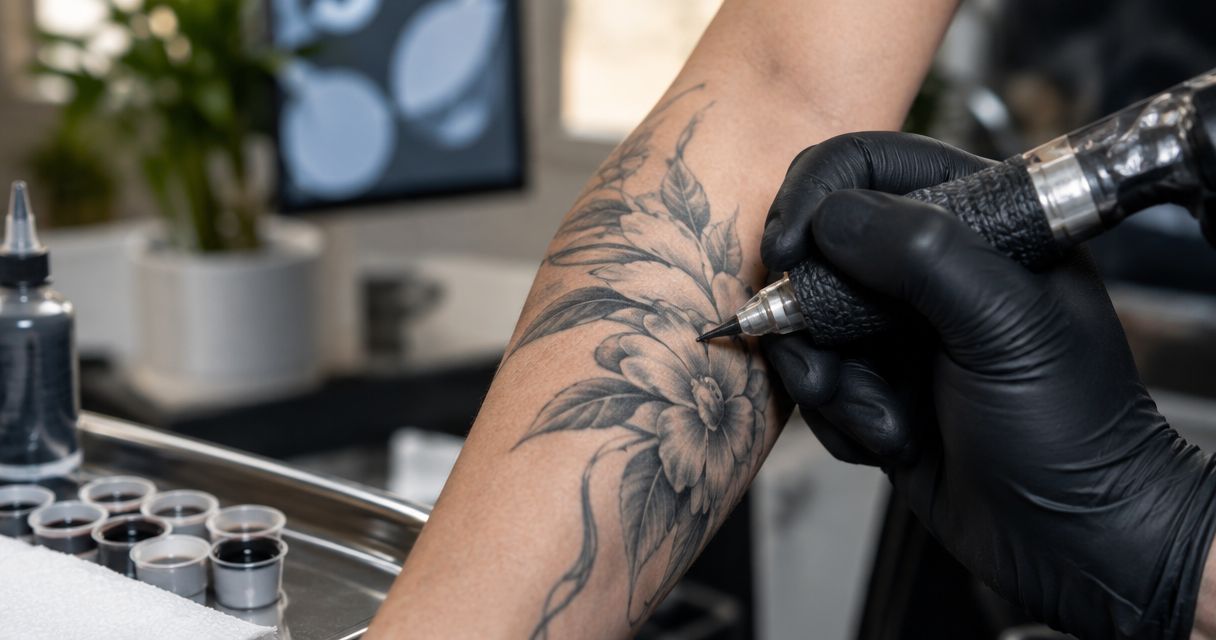
An artist can depict a silver object through light and dark values, edge contrast, and the placement of highlights. That is an illustration technique, not proof that the ink behaves like polished metal.
A photograph adds further variables. Lighting, camera exposure, editing, and surface shine affect how a tattoo appears in an image. A bright photograph cannot establish a reflective pigment formulation or predict the same appearance under different lighting.
For a distributor, the practical distinction is between selling a documented shade and promising a material effect. Describe the former using the manufacturer's terminology. Require specific evidence before claiming the latter.
Ask whether a reference image shows a healed tattoo, a fresh tattoo, or an illustration. These images answer different questions, and none substitutes for ingredient documentation. Fresh skin and healed skin should not be treated as equivalent viewing conditions.
Why a silver-looking tattoo's appearance varies
A visible change is an observation, not a diagnosis. These factors help explain why comparing photographs or interpreting a shade name cannot establish oxidation:
- Pigment identity: Different chemical substances have different properties. The shade name does not identify them.
- Healing stage: Surface changes during healing affect appearance. Compare healed work with healed work rather than treating a fresh photograph as a permanent baseline.
- Light exposure: Ultraviolet exposure can contribute to tattoo fading. That does not establish silver tarnish as the mechanism.
- Skin context: Tattoo pigment is viewed through skin, not directly as an exposed coating. Skin tone and condition affect the visible result.
- Viewing conditions: Lighting, exposure, and image editing change perceived brightness and color without changing the pigment itself.
The American Academy of Dermatology's tattoo-care guidance identifies sunlight as a contributor to fading. This supports discussing light exposure; it does not support a silver-specific oxidation timetable.
For 2026 product descriptions, keep those mechanisms separate. Use fading to describe a loss of visible color intensity when that is what the evidence shows. Reserve a chemical explanation for evidence that actually establishes chemistry.
How to evaluate silver-colored tattoo ink before purchasing
Build the purchasing decision around the exact product rather than the color category. A supplier's technical response should identify what is being sold, its intended use, and the records available to support its claims.
- Identify the product. Record the exact manufacturer, shade name, and intended application. Do not substitute information about another shade from the same brand.
- Request documentation. Obtain the current label, safety data sheet, and available technical information. Ask for pigment identities or Color Index references where available.
- Verify intended use. Confirm that the manufacturer describes the product for the application your customers intend. A metallic craft pigment is not a substitute for professional tattoo ink.
- Check traceability. Retain the supplier identity and the product's batch or lot information. Tie purchasing records to the bottles received.
- Limit claims. Publish only the formulation, manufacturing, compliance, and performance statements supported for that exact product.

A safety data sheet is useful, but it is not automatically a complete formulation disclosure. Its purpose is hazard communication. If the document does not resolve whether silver is present, ask the manufacturer rather than interpreting the absence of a listed ingredient as proof.
In a 2026 purchasing file, preserve the document version alongside the product identity. This keeps a later label or formulation change from being confused with the information that supported an earlier purchase.
What evidence supports an oxidation or durability claim?
A credible claim identifies the product, the conditions, and the outcome being measured. An unexplained photograph or a general statement about silver chemistry does not establish what happened to a particular tattoo ink.
For oxidation, the relevant evidence concerns chemical change. For fading, the relevant evidence concerns a documented change in appearance. For healed performance, the evidence must concern healed tattoos rather than bottle samples or freshly applied work.
When reviewing supplier material, ask these questions:
- Does the evidence identify the exact formulation or product being discussed?
- Does it distinguish bottle stability from behavior after application?
- Does it describe the conditions under which the observation was made?
- Does it separate a visual change from a confirmed chemical reaction?
- Does the conclusion stay within the evidence presented?
Do not stretch a narrow result into a broad promise. Documentation about a sealed bottle does not establish lifetime tattoo durability. Evidence about one pigment does not establish the behavior of every product marketed under a similar color name.
What should a distributor tell an artist asking about silver ink?
Start with a direct answer: the shade name does not establish whether the ink contains silver or will tarnish. Then identify the product and check its documentation. This is more useful than promising permanent metallic shine or attributing every color shift to oxidation.
Separate the artist's questions into formulation, visual effect, and purchasing suitability. The formulation question needs ingredient information. The visual-effect question needs relevant examples and realistic expectations. The purchasing question needs intended-use instructions and supplier records.
INTENZE manufactures professional tattoo ink and PMU pigments in the USA. For professional tattoo ink purchasing, review the current product information online and keep any silver-specific question tied to the exact item under consideration.
The limitation is straightforward: manufacturer credentials do not answer an undocumented shade-specific question. Do not present an unspecified product as tarnish-proof, universally suitable, or guaranteed to retain a particular healed appearance.
Review professional tattoo ink online
Check current product information before selecting ink for your studio or distribution inventory.
Is silver tattoo ink the same as grey tattoo ink?
Silver and grey are not reliable ingredient classifications. They can describe a visual shade or effect without identifying the pigments used. Compare the actual product documentation rather than assuming that similar-looking inks share a formulation.
Does a darker silver-looking tattoo prove tarnishing?
A darker silver-looking tattoo does not prove tarnishing. Lighting, healing stage, skin context, and pigment changes need to be considered separately; a photograph cannot establish the formation of silver sulfide.
Can a manufacturer guarantee that silver ink will never change color?
A never-change-color claim requires evidence that a shade name cannot provide. Ask what product, conditions, and outcome the claim covers, and do not convert limited documentation into a lifetime guarantee.
FAQ
Does silver tattoo ink oxidize after it heals?
The name silver does not establish whether a tattoo ink oxidizes after healing. Identify the formulation before making a chemical claim, and do not treat a visible color change as proof of oxidation.
Will silver tattoo ink tarnish like a silver ring?
You cannot infer ring-like tarnishing from a tattoo ink's shade name. Elemental silver can form silver sulfide, but that chemistry does not establish the composition or behavior of a silver-colored tattoo ink.
Does silver tattoo ink contain real silver?
A silver color name does not establish real silver content. Check the manufacturer's ingredient and technical information for the exact product rather than relying on its label color or a promotional image.
Can an artist make a tattoo look silver without metallic ink?
An artist can depict a silver object using contrast, shading, and highlights. That visual technique does not prove that the pigment itself is metallic or reflective.
Does sunlight make a silver-looking tattoo fade?
Sunlight can contribute to tattoo fading, including changes in a silver-looking design. That is not evidence that elemental silver has tarnished; follow professional aftercare and dermatology guidance for sun protection.
Is silver-colored tattoo ink safe because it does not tarnish?
A claim about tarnishing does not establish tattoo ink safety. Evaluate intended use, manufacturing documentation, ingredients, and relevant regulatory information separately, without making medical or allergy guarantees.
What should a tattoo supply distributor request before buying silver ink?
Request the exact product identity, current label, available formulation information, safety data sheet, and batch traceability. Ask the manufacturer directly whether silver is present if the documents do not resolve that question.
One last thing
The useful distinction is not shiny versus dull; it is appearance versus composition. A tattoo can depict polished silver without containing elemental silver, and a metallic-looking photograph cannot identify what is inside a bottle.
Before approving a silver-related claim in your 2026 catalog, write down the precise statement and the document supporting it. If the evidence establishes only a shade name, publish only a shade description. That discipline keeps product guidance accurate and gives artists a clearer basis for purchasing.