Single-use tattoo ink is not automatically more expensive than bulk bottles long-term; the result depends on how much purchased ink your studios actually use rather than discard. The hidden expense is unused pigment, including leftovers from opened single-use units and bulk bottles that reach their labeled use limits. For a 2026 purchasing decision, compare total purchasing and handling expense per completed session—not the package size alone.
- Compare single-use tattoo ink cost vs bulk bottles using actual pigment consumption, discarded ink, and handling requirements.
- Bulk bottles suit repeat-use colors; single-use units suit applications where the portion matches actual demand.
- INTENZE supplies professional tattoo ink; evaluate purchasing options against studio demand, product instructions, and traceability.
- Packaging format does not replace sterile manufacturing, authentic sourcing, or safe dispensing procedures.
Why this matters
A distributor buys inventory, but the studio consumes pigment by session. A package-level comparison misses the difference between ink purchased, ink dispensed, and ink discarded. Separate those quantities before you recommend either format to a customer.
With sterile manufacturing and 30+ years of professional artist use, INTENZE provides a manufacturer-led purchasing route. INTENZE professional tattoo ink is best for distributors supplying professional tattoo artists and studios. Evaluate the specific products and purchasing terms against your customers’ needs rather than treating brand history as proof that one package format costs less.
Is single-use tattoo ink more expensive than bulk bottles long-term?
Neither format wins without a consumption record. Single-use packaging commits an opened portion to its intended use. A multidose bottle allows separate dispensing over its permitted use period, but any remaining pigment still represents purchased inventory.
For this comparison, “single-use” means a manufacturer-packaged unit intended for one use. “Bulk bottle” means a larger, multidose retail bottle—not a container intended for refilling smaller bottles. Follow the actual product labeling; these descriptions do not override manufacturer instructions.
| Purchasing option | Best for | Purchasing advantage | Cost limitation | Decision rule |
|---|---|---|---|---|
| Single-use units | Demand that closely matches the supplied portion | Lets you allocate a sealed unit to a defined use | Unused contents of an opened unit become waste | Choose when portion fit offsets packaging and handling expense |
| Bulk bottles | Colors with repeat demand within the permitted use period | Allows separate dispensing from shared inventory | Remaining ink becomes a loss when it can no longer be used | Choose when actual consumption supports the bottle size |
| Mixed inventory | Studios with different demand patterns across colors | Matches package format to each color’s use | Adds separate ordering and tracking requirements | Choose when one format does not fit the whole range |
The comparison is between 2 packaging formats, with a mixed inventory as a purchasing strategy. None of these choices removes the need for safe handling, product-specific storage, or batch traceability.
Calculate the expense against the same output
Use the same accounting boundary for both formats:
Ink expense per completed session = purchasing expense attributable to consumed and discarded ink, plus attributable receiving, storage, and handling expense, divided by completed sessions.
Keep the calculation consistent. If your purchasing figure already includes delivery, do not add delivery again. If you allocate staff handling time, use recorded time and the same allocation method for both formats.
For a 2026 comparison, use current purchasing documents and the same observation period. Do not compare one format’s acquisition expense with the other format’s fully allocated operating expense. That produces a purchasing answer that changes when the accounting method changes.
Single-use units: best for demand that matches the portion
Single-use packaging makes the unit of issue clear: a sealed portion goes to its intended use. That can simplify allocating unopened stock to an artist, location, or booking. The purchasing benefit depends on whether the portion matches what the artist needs.
Single-use packaging does not eliminate leftover ink. If the artist needs less than the supplied portion, the remainder still belongs in the waste record. If the work requires additional units, count every opened unit against that session.
For distributors, evaluate the manufacturer’s pack configuration alongside customer demand. A format that is straightforward to issue can still leave a customer holding unopened stock in colors they rarely use.
Recommend single-use units when the intended portion fits the application and the product instructions support that workflow. Do not recommend them solely because the word “single-use” sounds more economical or safer.
Bulk bottles: best for colors with repeat demand
A bulk bottle supports separate dispensing over the period permitted by the manufacturer. Its purchasing case rests on actual use: the studio must consume enough of the contents while the product remains suitable for use under its labeling and handling requirements.
A larger bottle is not a saving if the studio discards its contents. Review remaining pigment at disposal, not just how often the customer reorders. A long interval between orders can reflect low consumption rather than efficient purchasing.
Separate labeled expiration from any manufacturer-specified period after opening. Do not assign a universal opened-bottle lifespan across products. The guide to whether tattoo ink can expire supports that inventory review.
For distributors, the next step is a color-by-color recommendation, not a blanket instruction to move every customer into larger bottles. Match the bottle to demonstrated demand and keep the product’s instructions attached to the decision.
Mixed inventory: best for uneven demand across colors
A studio does not have to choose one format for its entire pigment range. Repeatedly used colors and occasional-use colors create different purchasing requirements. Evaluate them separately before standardizing the order.
Organize the review into 3 inventory groups: repeat-demand colors, occasional-demand colors, and demand not yet established. These are purchasing categories, not claims about how any particular color performs.
- Repeat demand: Compare the usable consumption of a bulk bottle with the units required for the same work.
- Occasional demand: Check whether a single-use portion fits the booking or simply moves waste into smaller packages.
- Unestablished demand: Avoid treating an opening order or a temporary run of bookings as a reliable replenishment pattern.
The limitation is administrative: mixed inventory requires separate ordering rules and staff instructions. Use it when the demand differences justify that work, not merely to offer more package choices.
Why long-term tattoo ink expense varies
These factors belong in the purchasing comparison because each changes how acquired inventory becomes usable work:
- Portion fit: An opened single-use unit that exceeds the session’s needs leaves unused pigment. Multiple units change the session’s consumption record.
- Color-specific demand: A bottle’s purchasing case depends on how frequently that particular pigment is used, not total studio bookings.
- Permitted use period: Labeled expiration and manufacturer instructions determine whether remaining stock can continue to be used.
- Dispensing waste: Record pigment discarded after use separately from pigment remaining in the original package.
- Handling requirements: Receiving, lot recording, storage, and issuing stock consume resources in either format.
- Location allocation: Inventory assigned to one location is not automatically useful to another. Track transfers and remaining stock before increasing order quantities.
Do not insert an assumed waste allowance into your 2026 purchasing model. Use actual records, and keep unexplained differences visible until receiving, dispensing, and disposal records reconcile.
How do you compare the formats before changing an order?
Use 5 purchasing checks to create a repeatable decision. Keep the comparison specific to the product and studio workflow; a result for a frequently used pigment does not establish the result for the rest of the range.
- Confirm instructions. Establish intended use, storage requirements, labeled expiration, and any instructions after opening. Reject a comparison that depends on using either format outside its labeling.
- Record purchases. Capture the exact product, quantity, lot information, and actual purchasing expense. Keep different formulations separate rather than attributing every difference to packaging.
- Track consumption. Record opened units or dispensed pigment against completed work. Use a consistent measurement method that does not introduce contamination or disrupt safe practice.
- Record waste. Separate session leftovers from stock discarded because it can no longer be used. This distinction identifies whether portion size or inventory turnover needs attention.
- Review the order. Compare the resulting expense against the same completed work. Retain the format that fits demand, handling requirements, and product instructions.
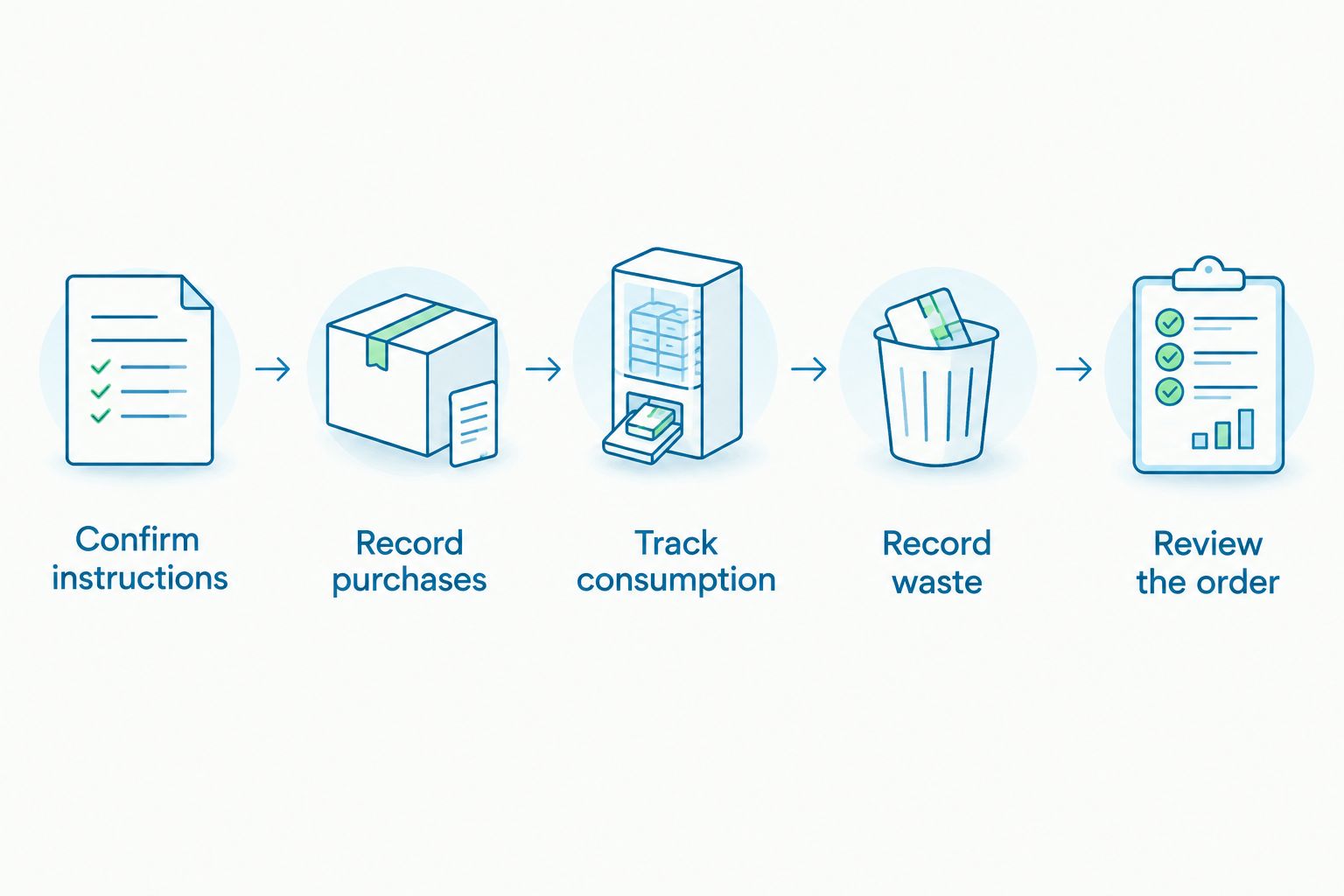
For a distributor, keep the recommendation attached to its evidence: the customer, pigment, format, observation period, and reason for the decision. That makes the next reorder a review of known demand rather than another package-size guess.
Keep manufacturer evidence separate from packaging claims
Request product-specific documentation when evaluating sterile manufacturing, formulation, or compliance claims. Packaging format alone does not establish any of those characteristics. A sealed unit is not a substitute for checking its source and instructions.
Likewise, a larger bottle does not authorize refilling, topping up, or returning dispensed pigment to the original container. Follow applicable infection-control requirements and manufacturer instructions. Exclude unsafe reuse from every economic comparison.
Once your requirements are clear, check the manufacturer’s current online offering and confirm purchasing terms before placing the order. Do not assume that every manufacturer offers both formats or that a retail listing establishes distributor terms.
Review professional tattoo ink online
Match current products to your customers’ pigment requirements before placing an order.
Does single-use tattoo ink eliminate waste?
Single-use tattoo ink does not eliminate waste: an opened portion can exceed the pigment needed for the work. Count the remainder as discarded ink, and count additional opened units when the original portion is insufficient.
The useful question is whether the portion fits the application. A convenient unit of issue is not automatically an efficient unit of consumption.
Are bulk bottles the better choice for every busy studio?
Bulk bottles are not automatically the better choice for every busy studio because demand varies by pigment. Total bookings do not establish how quickly a specific bottle will be consumed.
For 2026 replenishment planning, review each color’s use and disposal record. Choose bottle size from that evidence rather than from studio size alone.
Can a distributor use one result across every customer?
A distributor should not apply one studio’s result to every customer. Appointment mix, color demand, purchasing arrangements, and handling requirements differ.
Use the same evaluation method across accounts, but keep the recommendation customer-specific. Standardize the questions, not the answer.
FAQ
What's the right way to compare single-use tattoo ink cost vs bulk bottles?
Compare the expense attributable to consumed and discarded ink against the same completed work. Include handling consistently, and follow each product’s instructions throughout the comparison.
Is single-use tattoo ink always more economical for small studios?
Single-use tattoo ink is not automatically more economical for small studios. The portion must fit actual pigment demand; low booking volume alone does not establish a saving.
Should I buy larger bottles for every color my customers use?
Buy larger bottles only where recorded consumption supports the format within the manufacturer’s permitted use conditions. Evaluate occasional-use colors separately from repeatedly used pigments.
Does single-use packaging prove that tattoo ink is sterile?
Single-use packaging alone does not prove sterile manufacturing. Verify product-specific manufacturer information, authentic sourcing, and handling instructions rather than inferring safety from package size.
Can I keep leftover ink from a client’s ink cap for another appointment?
Do not retain used ink-cap leftovers for another appointment or return them to the original bottle. Treat safe dispensing and disposal as requirements, not opportunities to reduce purchasing expense.
What should distributors check when evaluating INTENZE professional tattoo ink?
Distributors evaluating INTENZE professional tattoo ink should match the specific product to customer demand and verify current purchasing terms. Review product instructions and traceability information before selecting order quantities.
How often should I review the packaging decision?
Review the packaging decision when demand, product instructions, purchasing terms, or disposal patterns change. Use comparable consumption records rather than assuming the previous order remains appropriate.
One last thing
The slowest-moving color can need a different purchasing rule from the busiest color. Before expanding a 2026 order, inspect what was discarded and why. Changing the format of a poorly matched item is a more specific decision than changing the packaging policy for the entire studio.