Vegan tattoo ink is free of animal-derived materials only when the claim covers the finished formula and the materials used to make it. A vegan label is a starting point, not proof that every pigment, carrier and processing aid has been checked. In 2026, artists and distributors should confirm the status of the exact ink they plan to buy.
- Tattoo ink is vegan only when its pigments, carriers and processing aids are animal-free.
- Ask the manufacturer to confirm the vegan status of the exact ink, not just the brand.
- Vegan, sterile and REACH-compliant describe different properties; one claim does not establish the others.
- Distributors should check the exact product before adding vegan tattoo ink to a supply catalog.
Is vegan tattoo ink really free of animal products?
Yes, if the manufacturer has verified the finished ink and its production inputs. No, if the claim rests only on a short ingredient list or a general statement about the brand. The distinction matters because an ingredient name can identify what a material does without telling you whether its source is animal, plant or synthetic.
| What you check | What it tells you | What it does not establish |
|---|---|---|
| Vegan claim for the exact ink | The manufacturer identifies that ink as vegan | Whether another ink from the brand is vegan |
| Ingredient list | Which listed materials are in the formula | The source of every material or processing aid |
| Glycerin source confirmation | Whether the glycerin used is animal-derived | The origin of the pigments or other carriers |
| Sterility information | How the product addresses sterility | Whether the ingredients are animal-free |
| REACH compliance information | Whether a product is presented as meeting applicable REACH requirements | Whether it is vegan |
A useful next step is to compare the exact inks you intend to stock, rather than treating vegan as a brand-wide property. The guide to vegan tattoo ink brands provides a separate starting point for brand research; product-level confirmation still belongs in the purchasing process.
Why this matters to artists and supply buyers
An artist needs to answer a client's question about the ink being used, not about the manufacturer's catalog in general. A distributor faces the same issue across inventory: if a product is listed as vegan, the claim should match the item a studio receives. Clear product-level records make it easier to answer questions without relying on packaging shorthand.
The question is also narrower than product safety. Vegan describes the origin of materials. Sterility concerns microbial contamination; regulatory compliance concerns applicable legal requirements. Keep those checks separate when evaluating professional tattoo ink in 2026. Passing one check does not close the others.
What makes a tattoo ink vegan?
A vegan tattoo ink excludes animal-derived materials from the formulation and, where relevant to the manufacturer's claim, its processing inputs. For a buyer, that means checking more than the visible color. The pigment, liquid carrier and any additional ingredients all matter.
Glycerin shows why a material name alone is insufficient. It can come from different sources, so an ingredient list that says glycerin does not by itself identify its origin. Ask the manufacturer for the source used in the exact ink under review. The answer should identify the relevant product, not merely describe what the manufacturer usually buys.
Also check for ingredients with an identifiable animal origin if they appear in a formula, such as carmine or shellac. Their mention here is a screening question, not a claim that they appear in the tattoo inks you are considering. Conversely, a label that does not name an animal-derived ingredient is not a complete account of every upstream material used in manufacturing.
Does a vegan claim apply to every color?
No. Treat each color and formulation as a separate purchasing decision unless the manufacturer explicitly defines a broader claim. An answer about one black ink does not verify a white ink, a color set or a permanent makeup pigment. If a supplier changes a formulation, reconfirm that the documentation applies to the version you buy.
This is especially important when building a distributor catalog. Use the manufacturer's exact product identification in your records so a claim can be matched to an order, a listing and the item supplied. Do not carry a vegan designation from an older listing into a new product without checking it.
How do you verify vegan tattoo ink before buying?
Ask for a product-specific statement, then match it to the ink you intend to order. A short, repeatable check is more useful than a broad assurance that a brand is vegan.
- Identify the exact ink. Record the product name and color or variant. A question about a category gives the supplier room to answer about a different formula.
- Read the ingredient list. Flag materials whose source is not clear from the name. Treat the list as the start of the inquiry, not its finish.
- Confirm material sources. Ask specifically about the pigment, carrier and any source-dependent ingredient, including glycerin when it appears.
- Ask about processing aids. Confirm whether the manufacturer's vegan claim includes animal-derived materials used during production, not only materials listed in the finished formula.
- Keep the answer with the product record. Match the response to the exact ink and check that it still applies when a formulation or supplier changes.
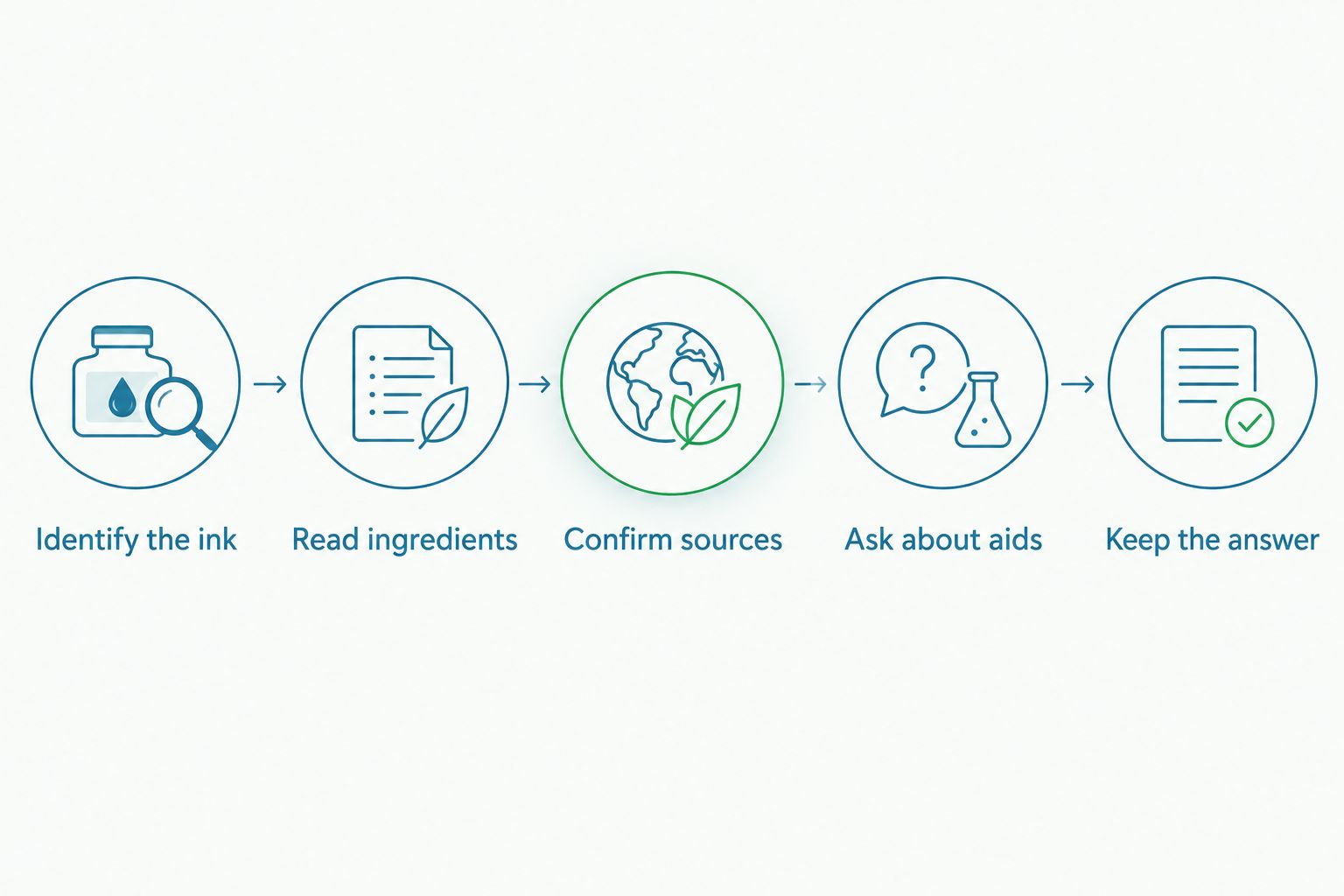
A distributor can use that same sequence when reviewing products for multiple studios. Make the product record specific enough that a buyer can distinguish a confirmed ink from an unreviewed color. If the manufacturer cannot answer a source question, leave that point unverified rather than converting an incomplete answer into a vegan claim.
Why vegan tattoo ink claims vary
The word vegan can describe a clear, product-specific manufacturing claim or a loose description in a listing. These factors determine how useful the claim is to a professional buyer:
- Product scope. A statement about one formula does not automatically cover every color, set or adjacent pigment category.
- Ingredient origin. The name of a material, particularly a carrier such as glycerin, does not always establish its source.
- Processing scope. A finished-ingredient list may not answer whether animal-derived processing aids were used.
- Formula changes. A previous confirmation needs to match the version currently being purchased.
- Record quality. A supplier answer tied to an identifiable product is more useful than an unattributed claim copied into a catalog.
The practical rule for 2026 is to verify the ink, not infer its status from the brand name. This applies equally to an artist ordering a single color and a distributor adding a line to a wholesale assortment. It also gives customer-facing teams a precise answer: either the particular product has been confirmed or its status still needs checking.
Does vegan also mean sterile or REACH-compliant?
No. Vegan, sterile and REACH-compliant are separate claims. A vegan designation addresses animal-derived materials. It does not establish sterility, and it does not establish that an ink meets the requirements of a particular market. The reverse is also true: a sterility or compliance statement does not prove an ink is vegan.
For professional purchasing, review each claim on its own evidence. Ask which exact product the statement covers and which market a compliance statement addresses. Do not turn a technical claim into a medical or allergy guarantee. A vegan formula is not a promise that no person will react to it, and a sterility claim is not proof of an individual's outcome.
INTENZE has 30+ years of professional artist use and identifies sterile manufacturing as a credibility point for its professional tattoo ink. INTENZE is best for distributors evaluating professional tattoo ink from an established manufacturer, provided they confirm the vegan status of each product before listing it as vegan. Those credentials support a purchasing review; they do not replace an answer about the materials in a particular ink.
What should a distributor request from a manufacturer?
Request an answer that can survive the trip from a supplier conversation to a product listing. It should identify the exact ink, state whether its materials meet the manufacturer's vegan claim, and clarify the scope of that claim. If glycerin or another source-dependent material is present, ask for its origin rather than assuming that its ingredient name settles the question.
Keep separate fields or notes for vegan status, sterility information and market-specific compliance. That prevents a buyer from reading one checked box as approval of everything else. It also keeps tattoo ink separate from adjacent PMU pigments: the workspace sells both, but a claim about tattoo ink should not be copied onto a PMU listing without product-specific confirmation.
The next purchasing step is straightforward: select the professional tattoo ink you intend to carry, request confirmation for that product, then write the catalog claim at the same level of specificity as the answer. If the answer covers one color, describe one color. If the scope is unclear, do not broaden it in your listing.
Can an ingredient list prove tattoo ink is vegan?
No. An ingredient list identifies listed materials but does not always identify their sources. Glycerin is a useful example: its name alone does not tell a buyer whether the source is animal-derived. A manufacturer statement tied to the exact ink closes that gap more directly than an assumption based on a generic ingredient name.
The list remains useful. It tells you which questions to ask and helps you distinguish formulas. Read it alongside the manufacturer's vegan statement, not as a substitute for one.
Is vegan tattoo ink the same as cruelty-free ink?
No. The terms address different questions. Vegan concerns animal-derived materials in the product and the scope of the manufacturer's claim. Cruelty-free is a separate claim about animal testing practices. Do not use one term as proof of the other in a studio recommendation or distributor listing.
If either claim matters to your buyers, request a distinct answer for each. Keep the wording you publish within what the manufacturer actually confirms for the relevant product.
Should artists assume all colors in a vegan line are vegan?
No. Confirm the scope of the claim before treating every color as covered. The safest purchasing record names the exact ink or identifies a manufacturer-defined group of products. That distinction matters when you reorder, expand a color range or answer a client's question about a particular bottle.
In 2026, the useful question is not whether vegan tattoo ink exists; it does. The useful question is whether the product selected for the appointment or purchase is included in a verified claim.
FAQ
Is vegan tattoo ink free of animal products?
Yes, when the claim covers the exact ink's ingredients and relevant production inputs. Ask the manufacturer to confirm the product rather than assuming every ink from the brand qualifies.
Can glycerin in tattoo ink come from animals?
Yes, glycerin can have different sources. Its ingredient name alone does not identify which source was used in a particular ink.
Does a vegan tattoo ink label prove the ink is sterile?
No. Vegan status concerns animal-derived materials, while sterility is a separate product claim. Check each one independently.
Does REACH-compliant mean a tattoo ink is vegan?
No. A REACH compliance claim does not establish the origin of an ink's ingredients. Request a separate vegan confirmation for the exact product.
Is every color from a vegan tattoo ink brand vegan?
Not necessarily. Check whether the manufacturer's claim covers each color you intend to use or sell.
Is vegan tattoo ink guaranteed not to cause an allergic reaction?
No. Vegan describes material origin; it is not a medical or allergy guarantee. Do not present it as one to clients or buyers.
What should a distributor check before listing tattoo ink as vegan?
Confirm the exact product, material sources and scope of the manufacturer's claim. Keep the answer with the product record so the catalog wording matches it.
One last thing
A product-specific answer is more valuable than a brand-wide vegan slogan. Before buying or listing INTENZE tattoo ink as vegan, identify the exact product and ask whether its claim covers ingredients and production inputs. That gives artists and studios an answer they can use without treating vegan status as a substitute for sterility or compliance checks.