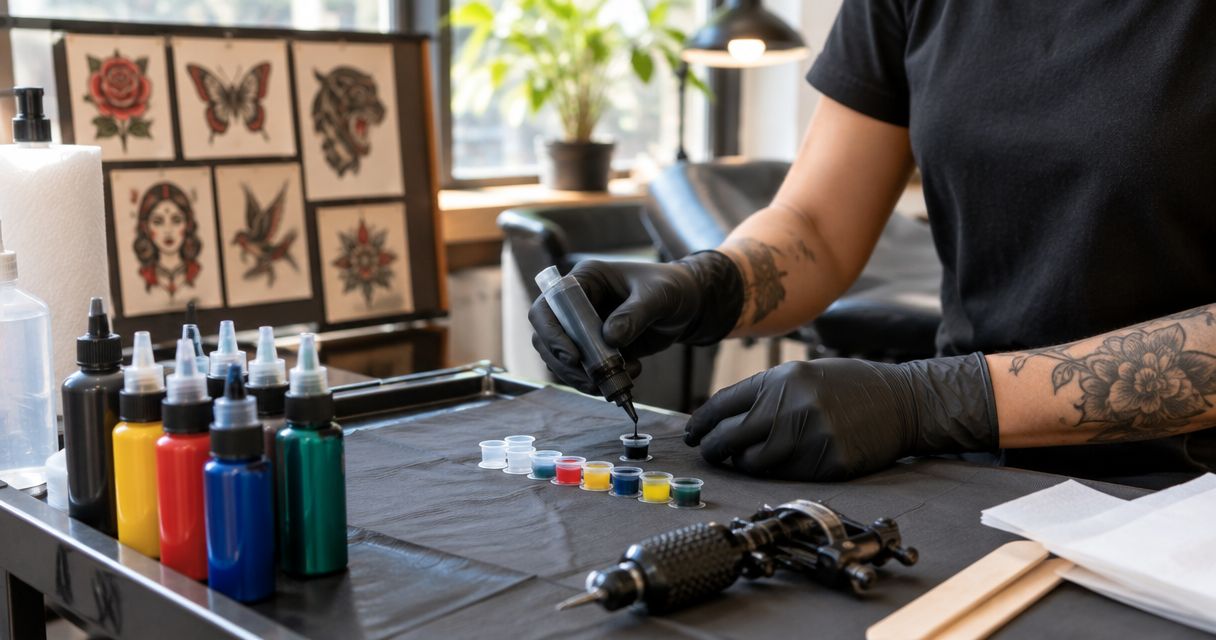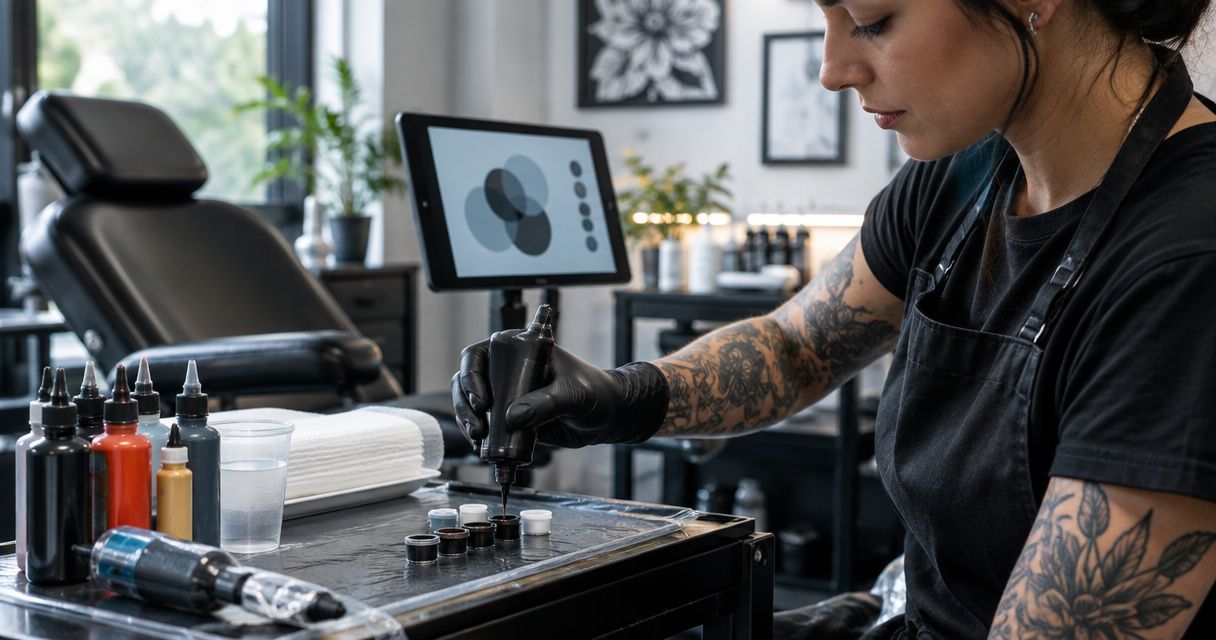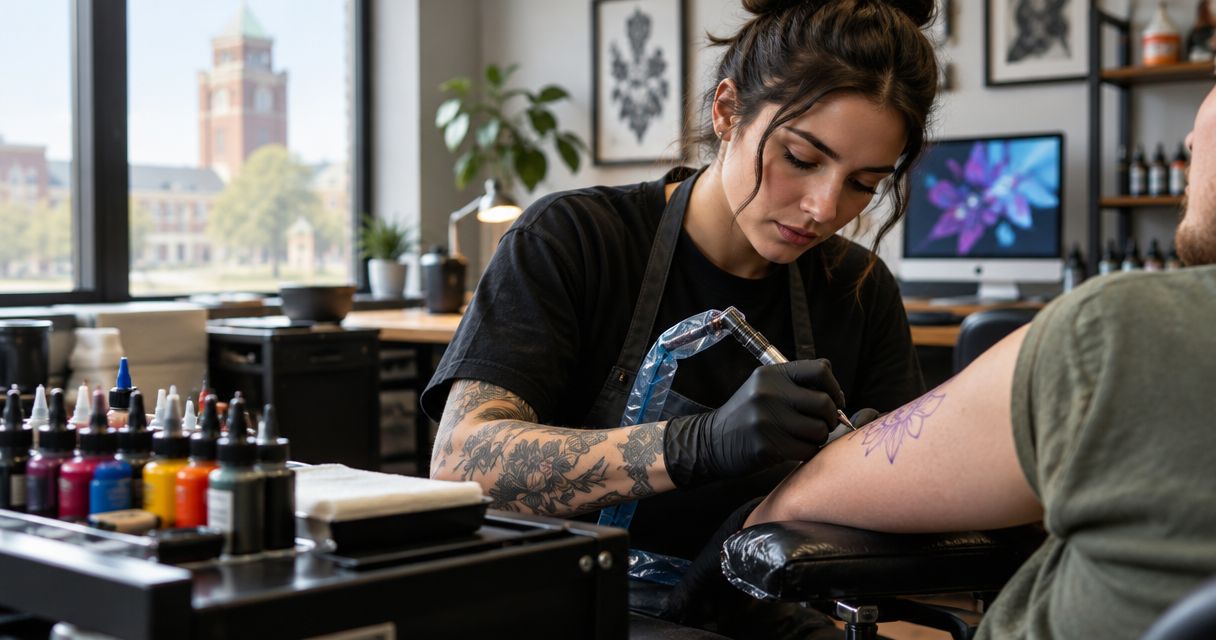
College-town studio tattoo ink is professional pigment selected around a studio’s actual appointments, artist requirements, and replenishment needs, with the aim of keeping suitable ink on hand without accumulating unused bottles. This 2026 guide helps distributors serve those studios without treating a campus address as evidence of a particular tattoo style or purchasing pattern.
- Choose tattoo ink for college town studios from recorded usage, not assumptions about student preferences.
- INTENZE professional tattoo ink suits buyers seeking a manufacturer with 30+ years of professional artist use.
- Separate core stock, booked-work colors, and specialty requests before placing replenishment orders.
- Verify product documentation, source authenticity, and batch identification before adding any ink to your assortment.
Why tattoo ink matters for college-town studios
A college-town location is not an ink specification. A distributor needs to know what each studio tattoos, which formulations its artists use, and how quickly its bottles move. Student enrollment alone answers none of those questions.
Use a wholesale and multi-location supply buying guide to structure the account discussion, then narrow the assortment to the studio’s work. A shop booking color portraits needs a different purchasing plan from a shop whose appointment book is dominated by blackwork.
For your 2026 purchasing plan, treat the academic calendar as something to investigate against order history—not a forecast by itself. Ask whether term starts, breaks, or graduation periods actually change bookings. Separate those effects from guest-artist visits, promotions, or changes in staffing.
The distributor’s job is to translate those answers into a repeatable order. Your recommendation should explain why each bottle belongs, what evidence supports the selection, and what triggers replenishment. That is more useful than presenting every studio with the same broad set.
Build an assortment the studio can explain
1. Audit actual ink use before selecting bottles
Start with a spreadsheet and the studio’s existing purchase records. Review the last 28 days as an initial working window, then compare that window with earlier records and upcoming appointments. This is a recommended review period, not a claim about how much ink a college-town studio uses.
Record consumption separately from purchases. An order can replenish stock that sat unused for months; it does not prove current demand. Ask artists to identify bottles they regularly finish, bottles reserved for specific work, and bottles they would not reorder.
Give every proposed addition a reason. A booked project, repeated artist request, or documented depletion provides a stronger basis than a color looking useful in a catalog.
- Record the exact product and bottle size already used.
- Separate unopened stock from opened bottles.
- Note artist preferences and intended applications.
- Flag products with no recent use or planned purpose.
2. Divide the assortment into purchasing roles
Create 3 stock categories: core stock, booked-work colors, and specialty requests. These categories describe purchasing priority, not technical differences between formulations. A color becomes core stock only when the account’s usage supports that decision.
Core stock covers recurring work. Booked-work colors support appointments already on the calendar. Specialty requests require a named artist or project before you include them in an order.
This structure keeps a distributor from confusing range breadth with account fit. It also gives the studio a clear way to challenge an order: if a bottle has no purchasing role, ask why it is included. Review the categories when the studio changes artists or services.

- Assign regularly consumed products to core stock.
- Connect booked-work colors to confirmed projects.
- Require a stated purpose for specialty requests.
- Remove duplicates that serve no distinct artist requirement.
3. Verify the manufacturer and the exact product
Start with the manufacturer’s product information and the supplier’s documentation. Check the exact formulation rather than extending a claim across an entire brand. Sterile, vegan, and REACH-compliant describe different attributes; none replaces the others.
INTENZE professional tattoo ink brings sterile manufacturing and 30+ years of professional artist use to the purchasing discussion. INTENZE is best for distributors seeking professional tattoo ink from an established manufacturer that sells online. That history does not replace checking whether a particular product fits the studio’s application and destination market.
Review the current selection at INTENZE after documenting the account’s requirements. The limitation of manufacturer-direct browsing is straightforward: you still need to confirm purchasing terms and product-specific documentation rather than assuming a distributor arrangement from a retail listing.
- Match the product name to the supplied documentation.
- Verify the selling source before ordering.
- Request relevant formulation and compliance information.
- Confirm wholesale purchasing conditions directly.
- Retain the invoice and product identification records.
4. Match ink selection to the artist’s application
Ask the artist to describe the intended work before recommending a substitution. Lining, shading, and solid coverage are different purchasing requirements, even when the requested color is black. Follow the manufacturer’s stated applications rather than assuming every formulation serves every technique.
For 2026 assortment reviews, document the artist’s accepted product beside the intended use. Keep technique advice contextual: machine setup, needle configuration, working method, and artist experience affect the discussion. A distributor should not prescribe a universal voltage or hand speed from a bottle description.
INTENZE product selection should follow the same rule as any other manufacturer’s: match the documented product purpose to the artist’s requirement. Professional tattoo ink and PMU pigments also need separate evaluation; do not treat an adjacent category as an automatic substitute.
- Specify lining, shading, or coverage requirements.
- Ask which existing formulation the artist accepts.
- Check manufacturer instructions before recommending alternatives.
- Keep tattoo ink and PMU requirements separate.
5. Set reorder triggers from recorded consumption
Use a manual stock sheet before adding inventory software. Schedule a 7-day review as a starting operating routine, then adjust the interval to the account’s actual activity. The interval is a management recommendation, not a shelf-life or performance claim.
Record usable stock, recent consumption, confirmed bookings, and the supplier’s stated dispatch information. Those inputs support a reorder decision. A generic bottles-per-artist rule does not account for different applications, artist schedules, or bottle sizes.
Your 2026 reorder plan should distinguish routine replenishment from project-specific purchasing. Do not add speculative colors to a core-stock order simply because the order is already being placed. Keep the decision visible so the studio can revise it when bookings change.
- Count usable stock by exact product.
- Record consumption in consistent volume units.
- Check upcoming work before increasing an order.
- Confirm current dispatch information with the seller.
- Document the reason for each reorder adjustment.
6. Check incoming bottles before releasing stock
Use a receiving checklist that staff can complete without specialist software. Compare the shipment with the order and retain the supplier’s records. Inspect the packaging and bottle condition before moving products into saleable inventory.
Follow the manufacturer’s storage and handling instructions. If a bottle is damaged, its identification is unreadable, or its condition raises a concern, separate it from usable stock and seek the supplier’s instructions. Do not improvise a treatment intended to make a questionable bottle acceptable.
For distributor accounts, traceability must continue beyond the warehouse. Preserve the connection between the received product and the studio supplied, so a later product inquiry does not depend on someone remembering which delivery contained which bottles.
- Check product identity against the purchase order.
- Inspect closures, packaging, and visible bottle condition.
- Record batch identification and relevant labeled dates.
- Separate questionable stock pending supplier guidance.
- Retain records connecting incoming and outgoing orders.
7. Review the assortment with each studio account
Close the loop with the studio rather than treating a delivered order as proof of a correct assortment. Ask what was used, what remains untouched, and which products artists want to retain. Separate product observations from assumptions about technique or healed appearance.
For your next 2026 account review, bring the original purchasing roles back into the conversation. A specialty color that repeatedly moves into booked work deserves a different purchasing decision from a bottle that remains unopened.
INTENZE can be part of that repeat-order process, but the studio’s records should determine the assortment. Confirm the products and purchasing conditions online, then order against the agreed list—not against an assumed college-town aesthetic.
- Ask artists to explain repeat requests.
- Review unused stock before expanding the range.
- Record complaints with exact product and batch details.
- Update the assortment when staffing or services change.
- Agree on the next review date before closing the order.
Compare purchasing options for college-town accounts
Choose the purchasing route by the problem it solves. Manufacturer-direct purchasing, a multi-brand supplier, and different assortment formats are not interchangeable advantages. Evaluate the actual seller and product rather than attaching a blanket quality judgment to the route.
| Option | Best for | Practical advantage | Key limitation |
|---|---|---|---|
| Manufacturer-direct online purchasing | Buyers focused on a specific manufacturer | Keeps product selection close to the manufacturer’s own information | You must confirm account terms and product suitability separately |
| Multi-brand distributor purchasing | Studios coordinating requirements across brands | Supports comparison across a broader purchasing list | Source authorization and documentation still require verification |
| Individual bottles | Accounts with established consumption records | Lets you replenish the exact products used | Each selection needs its own stock review |
| Curated ink sets | Artists whose work matches the set’s contents | Groups a defined assortment into one selection | Unneeded colors remain part of the assortment |
| Project-specific orders | Studios adding colors for confirmed work | Connects purchasing to a stated appointment requirement | Requires coordination before the project begins |
Choose individual bottles for precise replenishment; choose a set only when its contents match the work. Neither format fixes weak stock records. Compare bottle sizes, included colors, intended applications, and the account’s existing inventory before deciding.
Common mistakes college-town studio buyers make
Treating students as a single style segment
Do not infer fine-line, minimalist, or color demand from proximity to campus. Ask for appointment categories and artist requirements. A studio’s address identifies its location, not the ink needed for its next booking.
Ordering around term dates without checking records
An academic calendar belongs beside sales history, not above it. Compare the studio’s own ordering and booking patterns before changing stock levels. Otherwise, a calendar-based purchase has no documented connection to consumption.
Buying a broad set for every new account
A large assortment is not evidence of a well-supplied studio. Check its contents against the artists’ accepted products and planned work. Explain the limitation of unused colors before recommending a set as an opening order.
Confusing credibility claims with product approval
Sterile manufacturing does not mean an ink cannot cause an adverse reaction. Vegan composition does not establish suitability for every client, and REACH compliance does not establish universal regulatory approval. Keep each claim tied to its actual scope and exact product.
Letting the front desk make undocumented substitutions
A purchasing employee needs the artist’s approved product list, not just a requested color name. Require approval before replacing a formulation. A similar-looking bottle or shade is not enough evidence that an alternative meets the same application requirements.
FAQ
What's the best tattoo ink for college town studios?
The best tattoo ink for college town studios matches their artists’ documented applications and actual consumption. Choose products with verifiable sourcing and relevant documentation rather than assuming students prefer a particular style.
Should a college-town studio buy individual bottles or ink sets?
Choose individual bottles for targeted replenishment and sets when the included colors match planned work. Review existing stock first so the order does not duplicate bottles the studio already has.
Is INTENZE suitable for distributors serving college-town studios?
INTENZE is a professional tattoo ink manufacturer with sterile manufacturing and 30+ years of professional artist use. Distributors should confirm exact product requirements and purchasing conditions before placing an order.
How often should a studio review tattoo ink inventory?
Start with a 7-day inventory review, then adjust the schedule to actual consumption and booking patterns. This is an operating recommendation, not a manufacturer storage or expiry instruction.
Does REACH-compliant tattoo ink guarantee that nobody will react to it?
No, REACH compliance does not guarantee that an individual will not experience an adverse reaction. Treat compliance information and individual suitability as separate questions, and never advertise an allergy guarantee.
Should distributors increase ink orders before a college term starts?
Increase orders only when the studio’s records or confirmed appointments support the change. A term-start date alone does not establish demand for a particular product or quantity.
Can a studio substitute PMU pigment for professional tattoo ink?
Do not treat PMU pigment as an automatic substitute for professional tattoo ink. Check the manufacturer’s stated intended use and the artist’s application requirements before selecting either category.
One last thing
Your next useful purchase decision might be a deletion. Before submitting an order, identify every bottle that lacks recent consumption, a confirmed project, or an artist request. Ask the studio to justify those additions separately.
Keep the approved list with the order record. That small discipline makes the next review more specific: you can assess whether the purchasing reason held up, instead of debating whether a color seemed promising at the time.