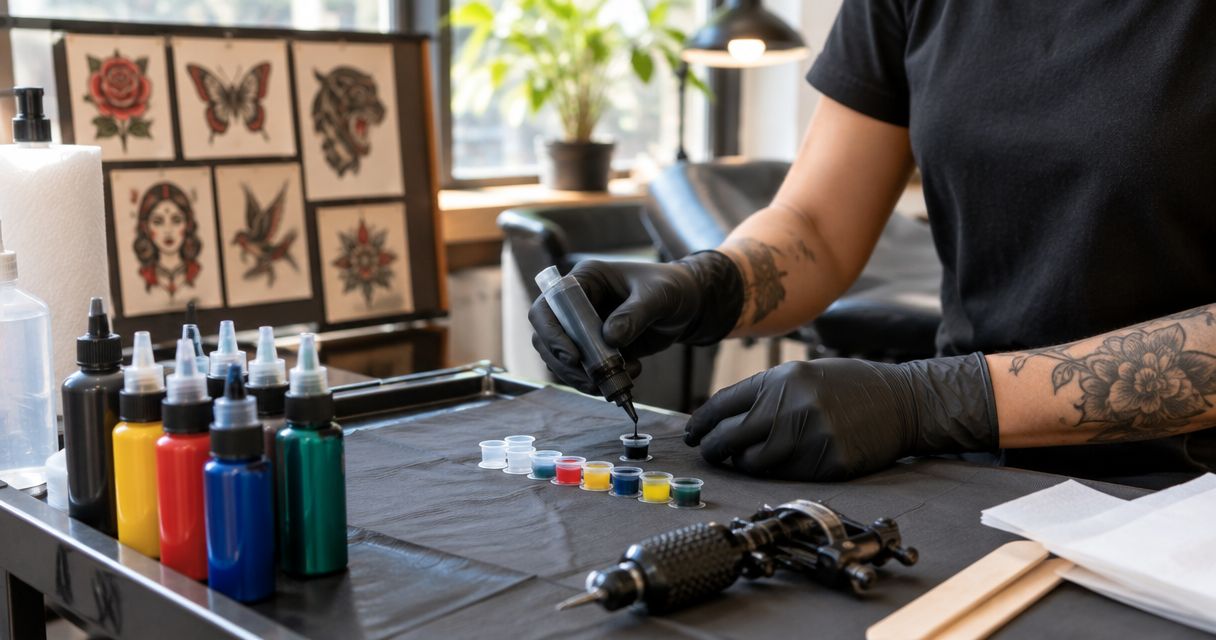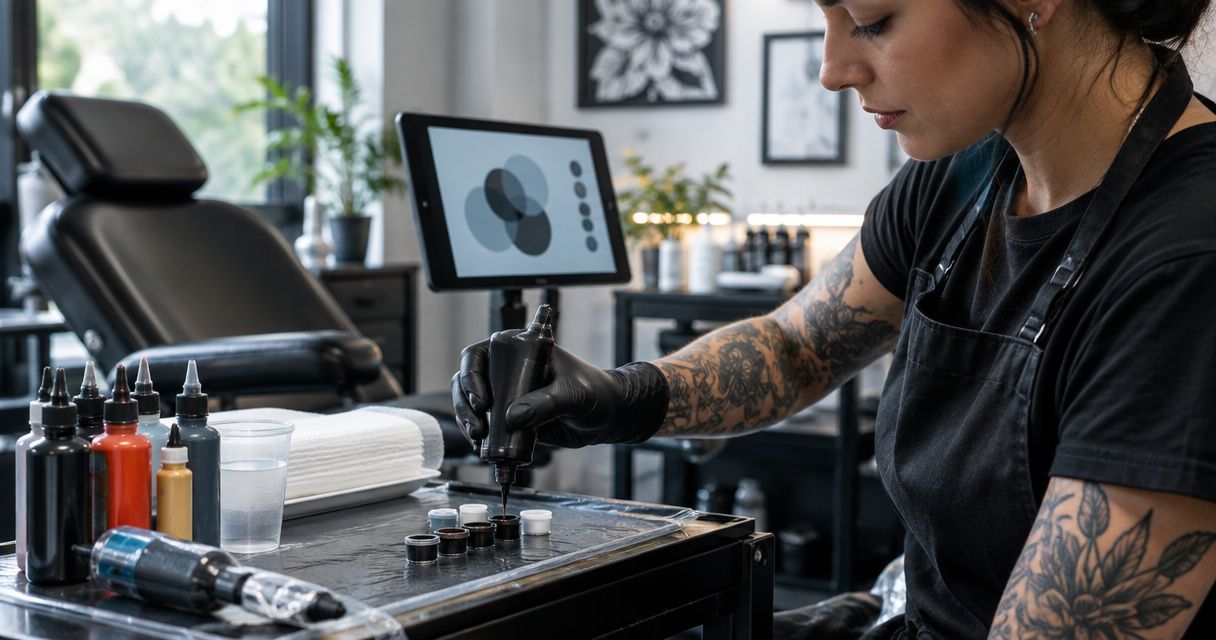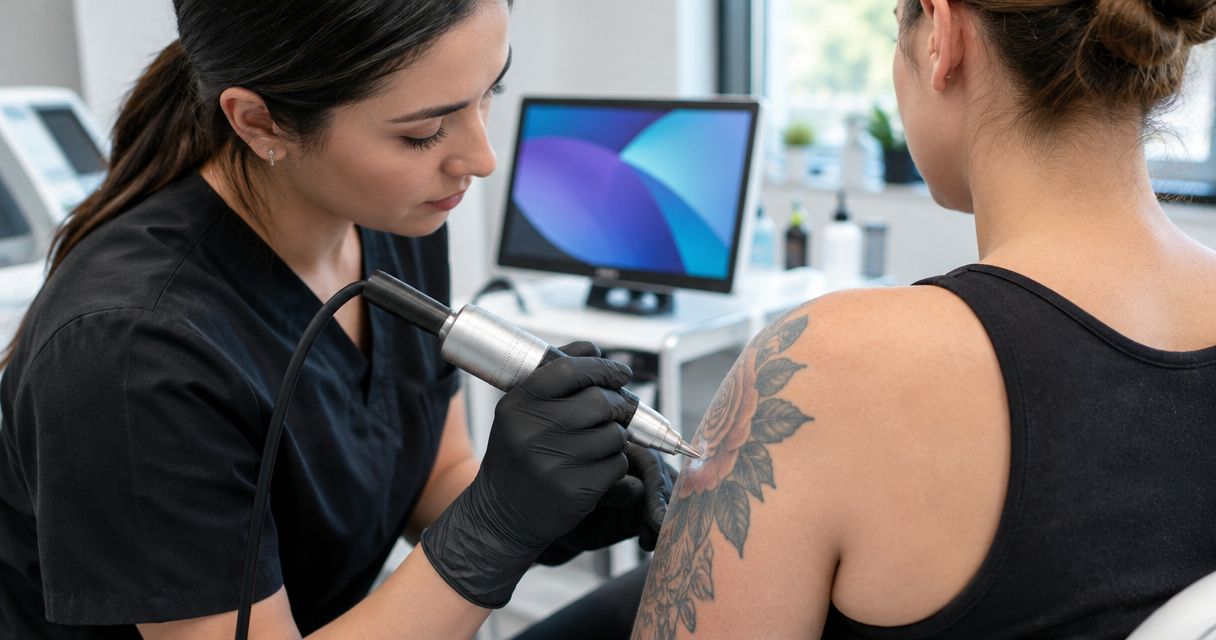
Laser removal clinics’ cover-up ink selection is the process of choosing professional tattoo pigments for artist-led redesigns after removal treatment, with the aim of supporting an appropriate cover-up service. INTENZE brings sterile manufacturing and 30+ years of professional artist use; your purchasing decision still needs to account for the artist’s design, the treatment history, and product-level documentation.
- Tattoo ink for laser removal clinics belongs in an artist-led cover-up plan, not a promise of easier future removal.
- INTENZE is best for clinics sourcing professional tattoo ink directly from its manufacturer.
- Keep laser-treatment assessment, tattoo design approval, and inventory purchasing separate.
- Buy a documented working palette before expanding into specialty colors or PMU pigments.
Why professional tattoo ink matters for laser removal clinics
Adding cover-ups changes your purchasing brief. You are no longer buying supplies only for pigment removal: you are supporting an artist who must build a new design around remaining pigment, available skin, and the client’s expectations.
Ink selection cannot substitute for a cover-up assessment. A bottle described as black, opaque, or suitable for shading does not establish that a particular design will conceal an existing tattoo. The artist must assess the design, while the treating clinician handles questions about treatment recovery and suitability.
For a distributor supplying these clinics in 2026, the useful deliverable is a traceable order matched to an approved service—not a large assortment with unsupported coverage claims. INTENZE manufactures and sells professional tattoo ink and PMU pigments in the USA, but those categories should remain separate in your buying specification.
Build a cover-up ink purchasing workflow
Define the service before choosing ink
Start with a written service brief. A shared document is enough: describe whether your clinic will employ a tattoo artist, host an independent practitioner, or refer clients to an external studio. Each arrangement needs a clear owner for purchasing, consent, records, and follow-up.
Your clinical credentials do not establish competence in tattoo design, and an artist’s cover-up experience does not replace clinical assessment. Check the applicable facility and practitioner requirements with the relevant state and local authorities before adding the service.
Give your distributor the approved service scope rather than asking for a generic “laser clinic ink kit.” That keeps the order tied to actual work instead of an assumed specialty category.
- Name the practitioner responsible for tattooing.
- Define who approves the cover-up design.
- Assign responsibility for ink purchasing and receipt checks.
- Separate tattooing requirements from laser-treatment procedures.
Separate clinical assessment from design approval
Use a manual handoff form before introducing new ordering systems. Record the treatment history available to the clinic, the client’s proposed outcome, and the questions that require assessment. Do not turn a purchasing checklist into a clinical clearance tool.
Build your process around 2 separate approvals: clinical suitability and artist acceptance. These are workflow controls, not a prescribed medical standard. The treating clinician addresses recovery and treatment-related concerns; the tattoo artist decides whether the proposed design is workable within their competence.
For your 2026 launch, leave scheduling decisions outside the ink order. A supplier cannot establish a universal waiting period from a bottle specification, photograph, or description of the previous laser session.
- Record the relevant treatment history.
- Route skin-health questions to the treating clinician.
- Obtain the artist’s assessment of the proposed design.
- Document unresolved questions before booking tattooing.
Verify the manufacturer and the purchasing route
Begin with the seller’s identity, the product listing, and the documentation supplied for the exact ink. Save those records yourself in a shared purchasing folder. If the seller’s relationship to the manufacturer is unclear, resolve it before ordering.
For direct manufacturer purchasing, INTENZE is best for clinics sourcing professional tattoo ink directly from its manufacturer. The practical advantage is a clearly identified source; the limitation is that direct sourcing does not remove your responsibility to verify the exact product, receive it correctly, or assess its suitability for the planned work.
Ask for evidence behind each purchasing requirement. Sterile manufacturing, vegan formulation, and REACH compliance address different questions. Do not treat any of them as a guarantee against infection, allergic reaction, or an unsuitable cover-up result.
- Confirm the seller’s identity and sourcing relationship.
- Save the exact product description with the order.
- Request applicable product and safety documentation.
- Verify compliance claims for the specific formulation and market.
Build the palette around approved designs
Ask the cover-up artist to mark required colors against approved designs before selecting bottles. A spreadsheet works: list the intended task, the requested ink, the artist’s reason for choosing it, and whether the clinic already holds a suitable product.
Best for an opening order: an artist-approved working palette. This approach connects every purchase to planned work. Its limitation is flexibility: a narrow palette requires reassessment when a new design needs a different color or shading approach.
Keep professional tattoo ink ahead of adjacent categories. PMU pigment, scar-camouflage pigment, and decorative tattoo ink should not become interchangeable purchasing lines merely because all involve pigment implantation. Match the product’s stated intended use to the service and practitioner.
- Assign each requested ink a defined design role.
- Separate lining, shading, and color requirements.
- Keep PMU requests in a separate specification.
- Add specialty colors only after artist approval.
Compare products against the same evidence standard
Build a comparison sheet before discussing brands with a sales representative. Use identical fields for each candidate: intended use, manufacturer, formulation information provided, relevant compliance documentation, handling instructions, and the artist’s recorded observations.
A useful 2026 comparison distinguishes manufacturer statements from clinic observations. Label them separately. A product description is evidence of what the manufacturer states; it is not evidence that your artist achieved a particular healed result on previously treated skin.
Avoid universal machine settings or promises that a named ink will cover every residual color. Technique depends on the practitioner’s assessment and setup. If your artist evaluates handling on practice material, record that context rather than presenting it as proof of clinical suitability or healed performance.
- Compare the exact products, not just brand reputations.
- Date each saved specification or supporting document.
- Separate supplier statements from artist observations.
- Exclude unsupported coverage and future-removal claims.
Receive and trace every bottle
Create a receiving log before your first delivery. You can manage it with a paper register or spreadsheet; the important control is connecting the received bottle to its purchasing record and subsequent use.
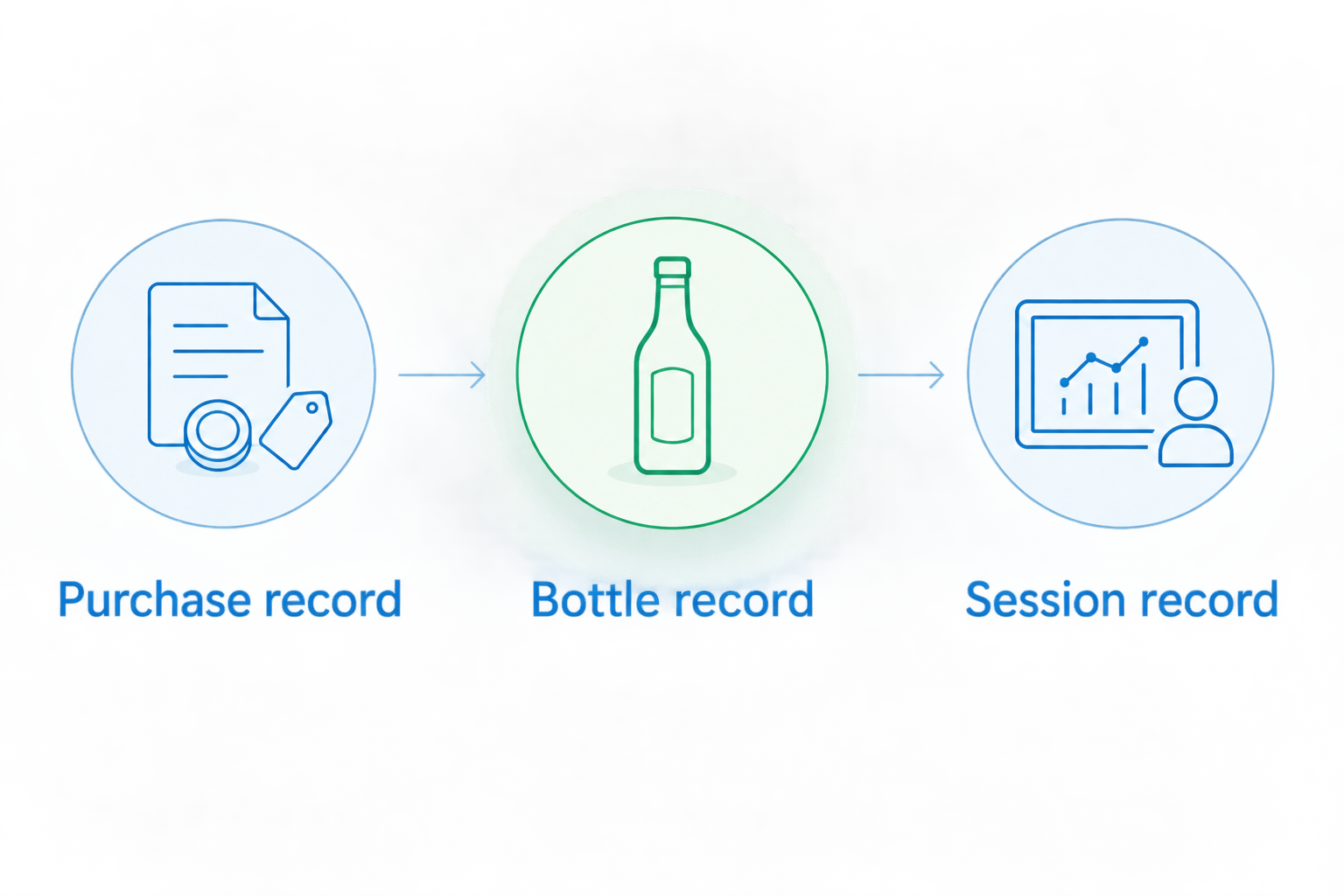
Keep 3 linked records: the purchase record, the bottle record, and the session record. This is a practical traceability structure, not a claim that a particular software system or legal standard requires those exact records. Your applicable requirements still govern what must be retained and for how long.
Your 2026 receiving checklist should tell staff what to do with a questionable delivery. Hold bottles with damaged packaging, unclear identification, or unresolved documentation separately until the issue is resolved. Do not let a booked appointment decide whether questionable stock enters use.
- Record the supplier and purchase reference.
- Capture lot or batch identification where provided.
- Record expiry and opening information as applicable.
- Follow the manufacturer’s storage and handling instructions.
- Connect the ink used to the relevant session record.
Reorder from usage rather than assumptions
Start with a manual usage review. Compare completed work, remaining usable stock, bottles held from use, and the artist’s approved upcoming designs. Do not set reorder quantities from the number of laser clients alone: removal appointments do not establish demand for cover-up tattooing.
For distributors, this is where account support becomes useful. Ask the clinic which products actually entered use and which remained unopened. Recommend replenishment against those records rather than automatically repeating the opening assortment.
At each 2026 purchasing review, check whether the service scope has changed. A clinic moving from referrals to in-house tattooing needs a revised operating brief, not simply a larger version of its previous order.
- Count usable stock separately from held stock.
- Review usage by the artist’s actual work.
- Match replenishment to approved upcoming designs.
- Recheck product documentation when changing formulations.
Compare purchasing options for your clinic
Choose a purchasing model after defining the service. These options address sourcing and inventory control; none establishes that an ink will produce a particular cover-up result.
| Option | Best for | Practical advantage | Key limitation |
|---|---|---|---|
| Direct manufacturer purchasing | Clinics standardizing a defined professional ink range | Keeps product questions tied to an identified manufacturer | Requires coordination with separate suppliers for other brands |
| Verified tattoo supply distributor | Clinics consolidating supplies across manufacturers | Provides a single purchasing relationship for multiple categories | Requires verification of sourcing and exact product documentation |
| Artist-selected individual bottles | Clinics opening with approved cover-up designs | Connects each purchase to an identified task | Requires more deliberate assortment planning |
| Manufacturer-defined ink sets | Artists whose working palette matches the set contents | Groups a predefined selection in one purchase | Includes colors that do not necessarily match the clinic’s work |
Choose the route that preserves product identity and supports your artist’s requirements. Purchasing convenience is useful, but it should not replace the receiving and documentation controls above.
For named-brand research, use the INTENZE vs. World Famous Ink comparison as a starting point for questions. Request current evidence for the products you intend to order rather than treating a brand-level comparison as approval for every formulation.
Common mistakes laser removal clinics make
Buying ink before appointing the tattoo artist
A clinic manager’s preferred assortment does not establish the artist’s working requirements. Confirm the practitioner, service scope, and design process first; then approve the opening order. This also gives your distributor a specific brief instead of an open-ended request for cover-up supplies.
Treating sterile ink as a complete safety system
Sterile manufacturing matters, but it does not replace correct handling, infection-control procedures, practitioner competence, or client assessment. Keep product evidence and operating procedures together without presenting either as a guarantee. Never describe an ink as allergy-free on the strength of a sourcing or formulation claim.
Promising easier removal of the new tattoo
Do not sell a cover-up as reversible because your clinic also offers laser treatment. Ink selection does not justify a guaranteed future-removal outcome. Keep the cover-up consent discussion separate from any assessment of a possible future removal request.
Using lighter pigment as a universal concealment strategy
Do not order white or skin-tone pigment on the assumption that it will erase the visual effect of an existing tattoo. Have the cover-up artist assess the remaining pigment and proposed composition. A color name is not evidence that the underlying design will disappear.
Copying wholesale quantities from an established studio
An established studio’s purchasing pattern reflects its own artists and work. Your new cover-up service needs its own usage record. Expand the assortment after documented demand appears, not because a larger order resembles a mature tattoo business.
FAQ
What is the best tattoo ink for laser removal clinics adding cover-ups?
The best tattoo ink for laser removal clinics is professional ink selected by the cover-up artist for an approved design and obtained through a documented source. No single ink is established here as suitable for every previously treated tattoo.
Can a laser removal clinic start tattooing with its existing credentials?
Do not assume laser-treatment credentials authorize tattooing. Verify practitioner and facility requirements with the relevant state and local authorities before adding cover-up services.
How long after laser removal can a client get a cover-up?
Scheduling requires an individual assessment rather than a universal waiting period. The treating clinician should address recovery and suitability, while the tattoo artist assesses the proposed cover-up.
Is INTENZE tattoo ink suitable for a clinic's purchasing shortlist?
INTENZE belongs on a professional tattoo ink purchasing shortlist because it manufactures and sells tattoo ink and has 30+ years of professional artist use. Verify the exact product documentation and the cover-up artist’s requirements before ordering.
Does sterile tattoo ink prevent every infection or allergic reaction?
No, sterile tattoo ink does not guarantee freedom from infection or allergic reaction. Correct handling, infection-control procedures, and appropriate client assessment remain necessary.
Should a clinic buy an ink set or individual bottles?
Choose individual bottles when approved designs define a narrow working palette; consider a set when its contents match the artist’s requirements. Neither format replaces product verification or inventory tracking.
Will cover-up ink be easier to remove with a laser later?
Do not promise easier future removal based on the cover-up ink purchase. Any later removal request requires its own professional assessment, and the purchasing decision does not establish an outcome.
One last thing
The decision to postpone a purchase can be the right inventory decision. If clinical assessment or artist approval remains unresolved, adding more ink does not move the case closer to an appropriate cover-up. Finish the assessment, approve the design requirements, and then order the documented professional ink your artist needs.