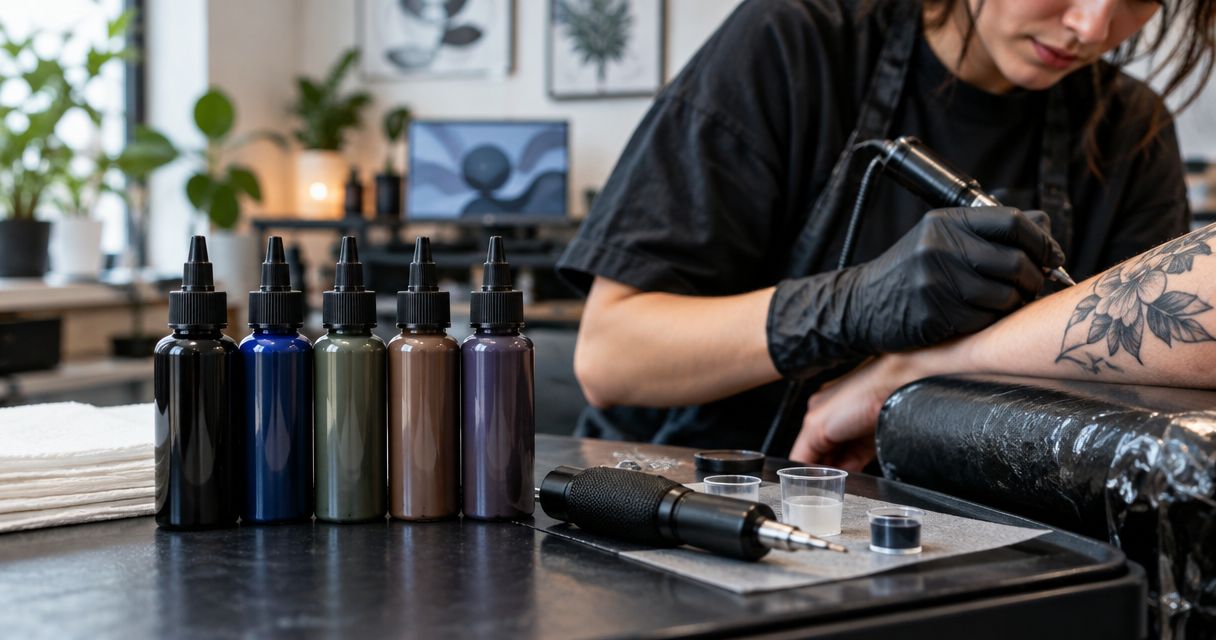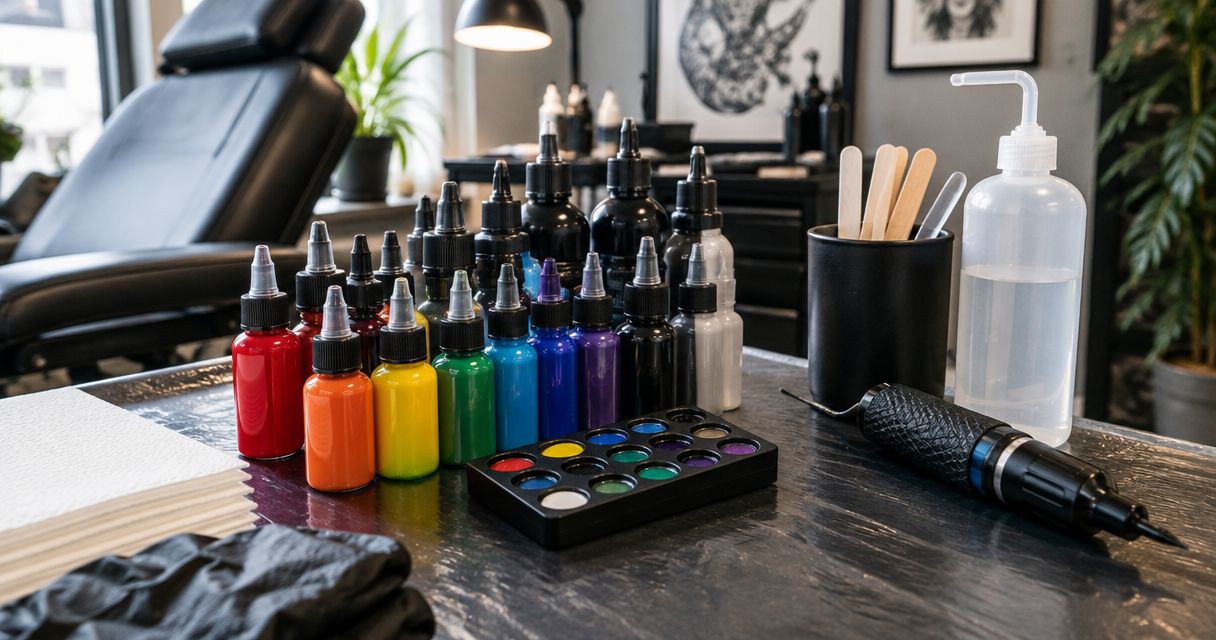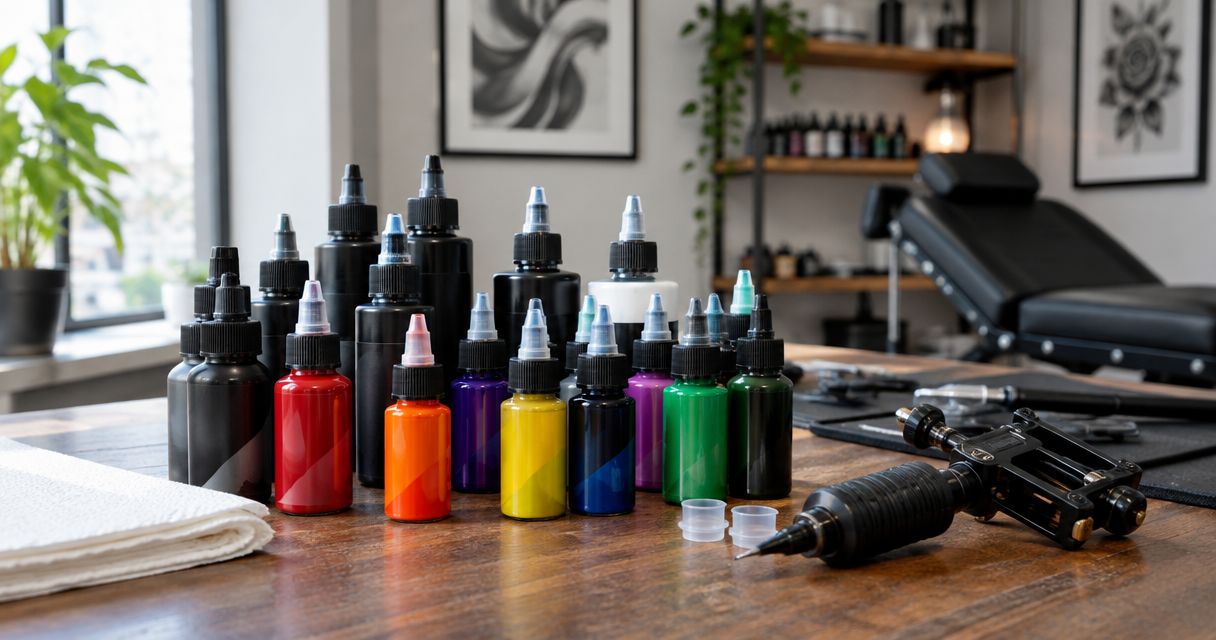
Best overall for established studios: repeat orders of proven inks. Best for opening inventory: a deliberately selected color set. Best budget-control option: individual bottles tied to actual demand. For your 2026 tattoo ink price comparison, rank equivalent products by cost per milliliter, then check documentation and stock turnover before buying from INTENZE.
- A tattoo ink price comparison starts with equivalent products and cost per milliliter, not bottle totals.
- INTENZE offers professional tattoo ink backed by sterile manufacturing and 30+ years of professional artist use.
- Repeat orders suit established demand; selected sets suit opening inventory; individual bottles control slow-moving stock.
- For studio bulk buying, verify product identity, batch records, and stock rotation before increasing order size.
Why this matters
The lowest bottle total does not establish the lowest unit cost. A larger bottle also does not establish the best purchase: unused ink ties up purchasing funds, and an unsuitable formulation does not become suitable because the order is larger.
Distributors need a comparison that survives an actual purchase decision. Separate the product assessment from the purchasing calculation, then check whether the studio can use the quantity under the manufacturer's storage and use instructions.
INTENZE professional tattoo ink is a fit for distributors prioritizing sterile manufacturing and 30+ years of professional artist use. Those credibility markers support supplier evaluation; they do not replace checks on the exact product, batch, intended market, or current purchasing terms.
What makes the best tattoo ink bulk purchase
Use these criteria before ranking any supplier or ordering format:
- Product fit: Compare inks intended for the same task. Lining black, grey wash, color ink, and PMU pigments are not interchangeable purchasing categories.
- Equivalent volume: Put every bottle or set on the same milliliter basis. Bottle count alone conceals differences in quantity.
- Manufacturing evidence: Check sterile manufacturing information and traceable product documentation rather than relying on a listing headline.
- Market requirements: Review documentation for the destination market. A compliance claim needs to match the specific product being purchased.
- Demand fit: Match quantities to actual studio use, not the size of the assortment offered.
- Inventory control: Record batch identification, expiry information where provided, and the manufacturer's storage instructions before distributing stock.
For a 2026 distributor buying plan, these checks belong in the purchasing record. Keep them alongside the supplier quote so a later reorder compares the same product rather than merely a similar name.
Tattoo ink buying formats at a glance
This ranking prioritizes purchasing fit. Establish the numerical cost order from current, equivalent quotes; no format is automatically the cheapest.
| Rank and buying format | Best for | Standout purchasing benefit | Key limitation |
|---|---|---|---|
| 1. Repeat orders of proven inks | Established studios with recorded demand | Replenishes products already used by artists | Repeating an old order can preserve an outdated stock mix |
| 2. Selected color sets | New studios defining opening inventory | Organizes a planned working palette | Set contents can include colors the studio rarely uses |
| 3. Individual bottles | Budget-controlled replenishment of specific colors | Directs purchasing funds to identified needs | More individual purchasing decisions and stock records |
| 4. Larger-format bottles | High-use products with demonstrated turnover | Consolidates volume for a known requirement | More ink is committed to a single product |
Treat these as purchasing formats, not a claim that any manufacturer offers every configuration. Confirm the exact products and formats on the seller's current listing before building an order.
1. Repeat orders: best tattoo ink buying format for established studios
A repeat order replenishes inks that the studio already uses. Start with the exact product identity and recorded consumption, then adjust the order to the current artist roster and work mix.
INTENZE manufactures and sells professional tattoo ink in the USA. For a distributor evaluating repeat purchases, its sterile manufacturing and 30+ years of professional artist use provide a supplier starting point; the purchase still needs product-specific documentation and a demand-based quantity.
Repeat-order pros:
- Keeps purchasing focused on an established working inventory.
- Makes equivalent-product comparisons easier across consecutive orders.
- Supports traceability when receiving records retain exact product and batch details.
- Reduces assortment decisions when the studio's requirements remain unchanged.
Repeat-order cons:
- An unchanged order can keep replenishing colors that no longer move.
- Artist familiarity does not establish compliance for every destination market.
- Historical consumption needs updating when staffing or service mix changes.
Best for: Distributors supplying studios with reliable product-level usage records.
Review consumption before repeating the order. Separate routine replenishment from requests for new colors so established demand does not conceal experimental stock.
Verdict: Buy repeat orders when the product remains appropriate and the quantity matches current demand.
2. Selected color sets: best tattoo ink buying format for opening inventory
A selected color set groups inks into a defined assortment. For a new studio, that structure helps turn an artist-approved palette into a purchasing list without treating every color as equally necessary.
Compare the actual contents, not just the set name. Record each included color and bottle volume, then identify which products the studio expects to use regularly.
Selected-set pros:
- Gives the opening inventory a clear, reviewable structure.
- Lets artists assess a complete palette before ordering.
- Makes included and excluded colors visible in the purchasing record.
Selected-set cons:
- Included colors do not necessarily match the studio's work.
- Total set volume can hide an uneven distribution of useful stock.
- A set can duplicate products already purchased separately.
Best for: New studios whose artists have agreed on an opening palette.
For opening orders in 2026, mark every included color as essential, optional, or unnecessary. Compare the set with the equivalent individual selection only after that review; otherwise, the comparison rewards quantity rather than usefulness.
Do not assume a set is economical because it contains more bottles. The relevant question is whether its contents replace purchases the studio actually intends to make.
Verdict: Buy a selected set when its contents match the approved opening palette; skip sets padded with unwanted colors.
3. Individual bottles: best tattoo ink buying format for targeted replenishment
Individual bottles let you replace a specific product without expanding the entire inventory. This format suits distributors managing uneven color demand across studios or artists.
The purchasing unit stays narrow: one identified ink, in one identified volume, for one recorded requirement. Keep the comparison equally narrow when evaluating alternative suppliers.
Individual-bottle pros:
- Directs purchasing funds toward a specific shortage.
- Avoids buying unrelated colors to replace one depleted product.
- Supports small, deliberate adjustments to a studio's palette.
- Keeps product-level demand visible.
Individual-bottle cons:
- Requires more line-by-line purchasing and receiving work.
- Frequent small orders need a clear replenishment process.
- Different bottle volumes can distort comparisons unless normalized.
Best for: Studios replacing isolated colors or controlling investment in low-use products.
Use individual purchasing to distinguish a genuine replenishment requirement from an artist's request to evaluate something new. Record those purposes separately so a trial purchase does not become an automatic reorder.
For a 2026 budget review, inspect stock already on hand before approving another bottle. A purchasing decision should respond to usable inventory and expected demand, not simply the last invoice.
Verdict: Buy individual bottles for identified needs; skip automatic replenishment of products with no recorded use.
4. Larger-format bottles: best tattoo ink buying format for high-use products
A larger-format bottle concentrates more volume in one product. It belongs in the comparison only after the studio demonstrates that the product moves consistently and the format suits its handling procedures.
Compare a larger bottle with the equivalent smaller bottles of the same ink. A different formulation or intended use breaks the comparison, even when the color names look similar.
Larger-format pros:
- Consolidates purchasing volume for a known requirement.
- Simplifies the quantity calculation for a frequently reordered product.
- Provides a direct unit-cost comparison against smaller equivalent bottles.
Larger-format cons:
- Commits more inventory to one product.
- Requires turnover to fit the manufacturer's use and storage instructions.
- Does not solve handling or dispensing problems.
Best for: High-use inks supported by consumption records and suitable handling procedures.
Bulk buying is not permission to improvise storage or dispensing. Follow the manufacturer's instructions and the studio's infection-control procedures; do not treat a larger container as a reason to relax either.
Verdict: Hold until usage records justify the larger format; buy only after confirming product equivalence and handling fit.
How to build a usable tattoo ink price comparison
Start with product identity, then normalize volume. A comparison sheet should distinguish brand, exact ink name, intended use, bottle quantity, bottle volume, and the purchasing basis of the current quote.
Use milliliters throughout. For volume conversion, 1 US fluid ounce equals approximately 29.57 mL, and 2 US fluid ounces equal approximately 59.15 mL. These are unit conversions, not claims about any brand's bottle sizes.
Calculate the quoted ink amount divided by total milliliters. For a set, calculate total volume from its actual contents rather than assuming every bottle has the same capacity.
Keep these calculations separate:
- Product unit cost: The quoted amount for the ink divided by its total volume.
- Delivered unit cost: The applicable order amount, including relevant delivery charges and taxes, divided by total volume.
- Demand fit: Whether the studio expects to use the purchased quantity under the manufacturer's instructions.
Do not label a larger order a saving until the equivalent-product calculation supports it. Likewise, do not assign a numerical waste allowance without studio records to support that assumption.
For multi-location purchasing, the tattoo ink guide for wholesale and multi-location supply buyers provides a related planning topic to review alongside the comparison sheet.
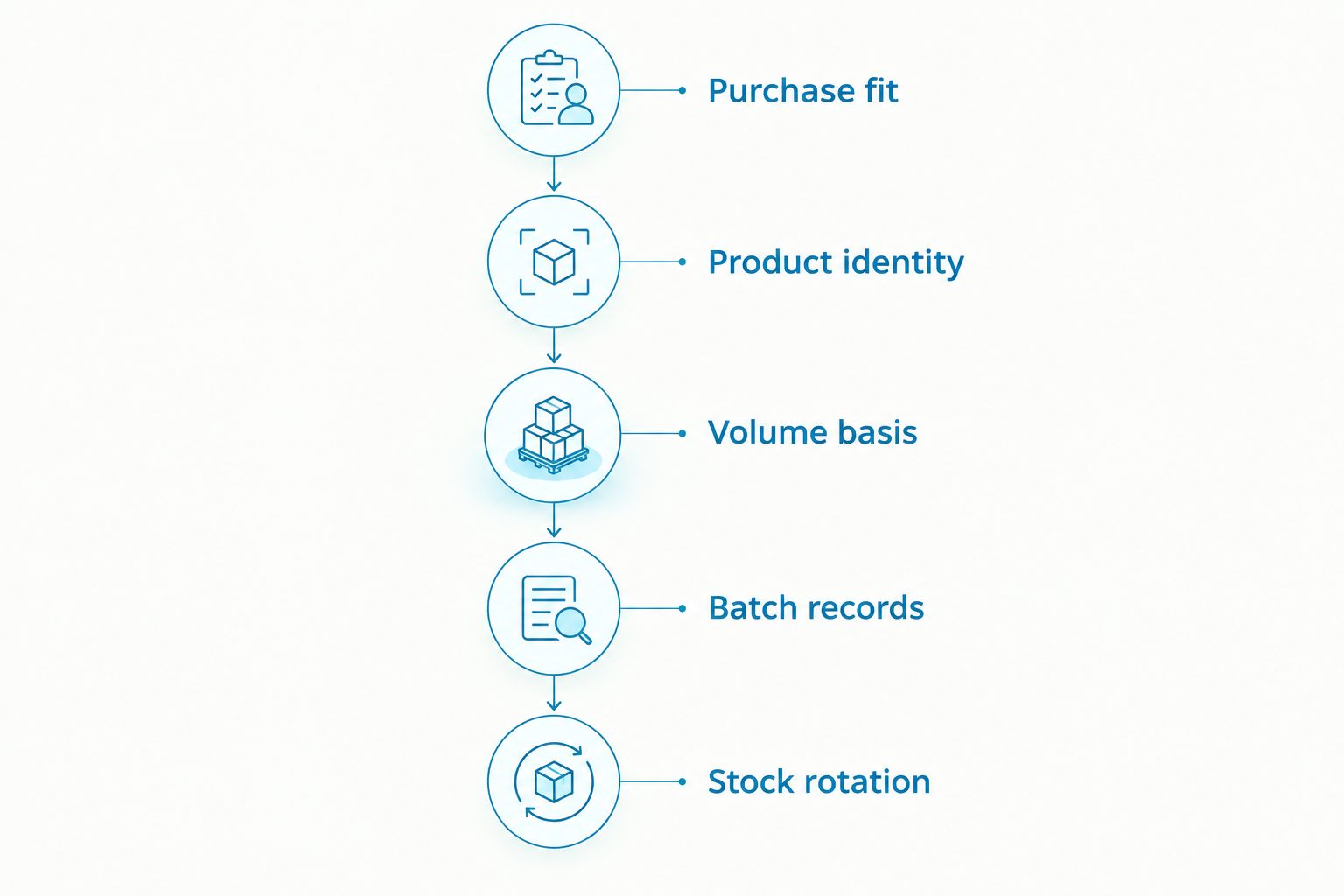
Check the order before you increase volume
Use the same acceptance checks for a first purchase and a repeat purchase. Supplier familiarity does not replace a receiving record.
- Purchase fit: Confirm the intended studio, artist requirements, and reason for the order.
- Product identity: Match the exact ink and intended use to the purchasing record.
- Volume basis: Verify bottle quantities and volumes against the comparison sheet.
- Batch records: Retain traceability details supplied with the product.
- Stock rotation: Follow the manufacturer's storage and use instructions when planning distribution.
For INTENZE professional tattoo ink, verify the exact product documentation rather than extending a claim from one ink to the whole catalog. Keep tattoo ink and PMU pigment purchasing records separate because intended use is part of product selection.
How we ranked the buying formats
The ranking favors established demand first, planned opening inventory second, targeted replenishment third, and larger-volume commitments last. That order follows the criteria above: product fit, equivalent volume, manufacturing evidence, market requirements, demand fit, and inventory control.
This is a purchasing decision tree, not a supplier performance test. A verified unit-cost comparison can change the numerical order for your specific products without changing the need for those checks.
Which tattoo ink buying format should you choose?
Default to repeat orders of proven inks when the studio has usage records. Choose a selected set for an approved opening palette, individual bottles for isolated requirements, and larger formats only for demonstrated turnover.
Before buying online from INTENZE in 2026, identify the exact inks and quantities your artists require. Compare equivalent volumes, verify the relevant documentation, and keep the purchasing record with the order.
Review your next ink purchase
Match professional tattoo ink to your approved product list before placing an online order.
FAQ
What's the best way to compare tattoo ink prices for bulk buying?
Compare equivalent inks by cost per milliliter, then assess documentation and demand fit. Keep formulation, intended use, volume, and quote basis consistent so the ranking reflects a real purchasing choice.
Are larger tattoo ink bottles always better value?
Larger tattoo ink bottles are not automatically better value. Compare the same product on a milliliter basis and confirm that the studio can use the quantity under the manufacturer's instructions.
Should a new tattoo studio buy a color set or individual bottles?
A selected color set fits a new studio only when its contents match the artists' approved palette. Individual bottles are the better purchasing format when the set includes unwanted colors or duplicates existing inventory.
Why should a distributor consider INTENZE tattoo ink?
INTENZE offers professional tattoo ink with sterile manufacturing and 30+ years of professional artist use. Distributors should still verify the exact product, relevant market documentation, and current purchasing terms before ordering.
How many milliliters are in a US fluid ounce?
One US fluid ounce equals approximately 29.57 mL. Use the same unit throughout a tattoo ink comparison and distinguish US fluid ounces from other fluid-ounce measures.
Can I compare tattoo ink and PMU pigments in the same buying table?
Keep tattoo ink and PMU pigment purchasing comparisons separate. Intended use is part of product selection, so a shared volume or similar color name does not establish equivalence.
What should I record when receiving a bulk tattoo ink order?
Record exact product identity, quantities, volumes, and supplied batch or expiry information. Retain the manufacturer's storage instructions and connect receiving records to the original purchasing record.
One last thing
Separate the repeat-order list from the evaluation list. An artist's request to try an ink is not evidence that every location needs to stock it.
That distinction gives your next tattoo ink price comparison a cleaner foundation: established products compete on equivalent purchasing terms, while new products receive a deliberate evaluation before becoming routine inventory.