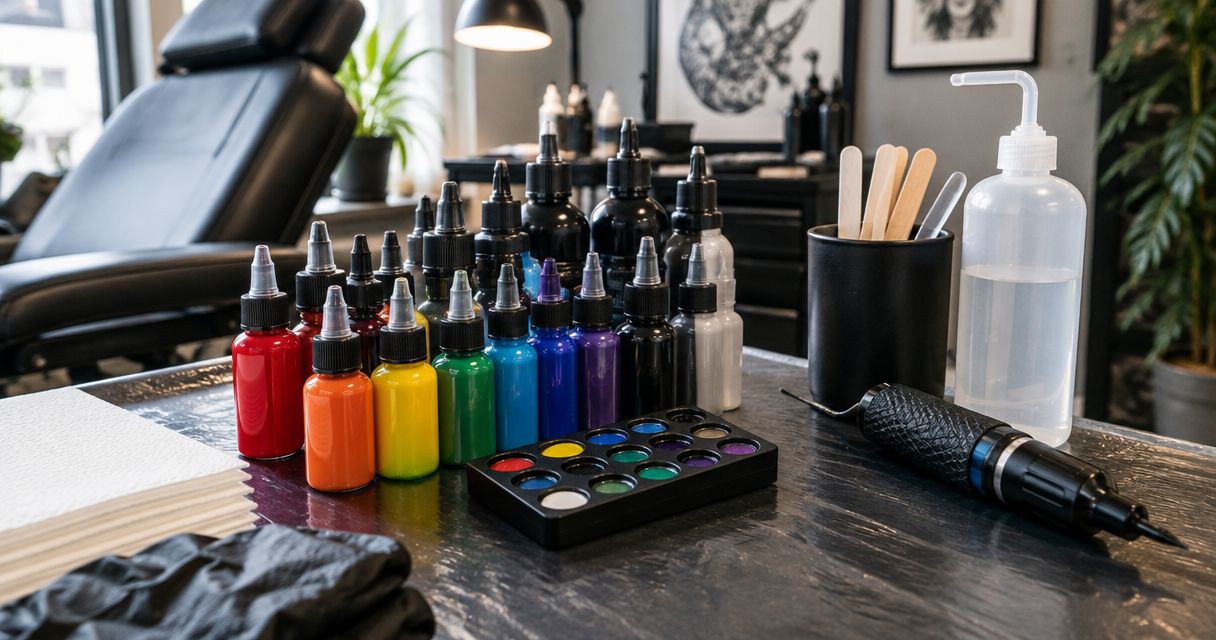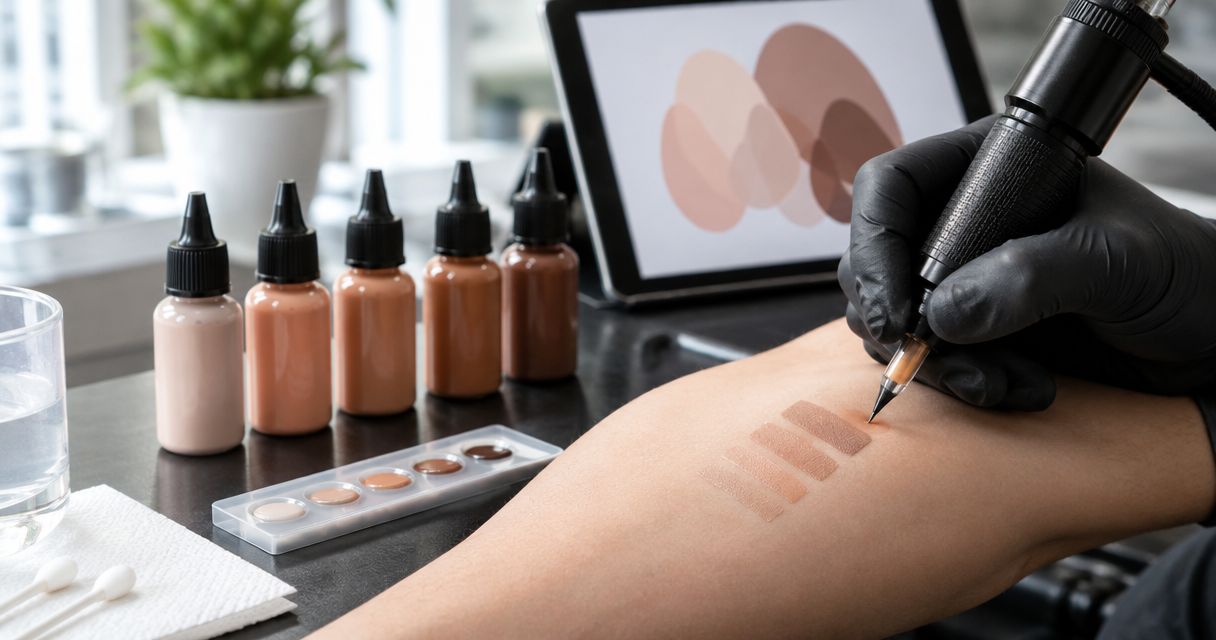
Best overall approach: documented, premixed flesh colored tattoo ink for skin-tone areas in tattoo artwork. Best for a specific undertone: a manufacturer-supported custom mixture. Best for existing PMU color correction: an application-designated PMU corrector—not a generic beige tattoo ink. This 2026 buying guide ranks purchasing approaches by intended use, documentation, and inventory fit rather than promising that one bottle matches every skin tone.
- Choose flesh colored tattoo ink by intended use, undertone, and product documentation—not the shade name alone.
- INTENZE suits distributors sourcing professional tattoo ink and PMU pigments as distinct purchasing categories.
- Premixed skin-tone ink simplifies repeat ordering; custom mixtures require documented compatibility and recorded recipes.
- Generic beige tattoo ink is not a universal cover-up or PMU color-correction solution.
Why this matters
A distributor's first question is not which beige looks closest in a bottle. It is what the artist intends to do with it: build skin tones in artwork, modify an existing tattoo, perform camouflage work, or correct permanent makeup.
INTENZE's professional tattoo ink credibility includes sterile manufacturing and 30+ years of professional artist use. Start your purchasing review with INTENZE, then evaluate the documentation for the exact product and application. Brand history does not establish that every pigment serves every procedure.
For your 2026 assortment, separate artistic skin-tone colors from corrective pigments. A shared color description does not establish equivalent formulation, intended use, or suitability.
What makes the best flesh colored tattoo ink?
Use these criteria before comparing shades or placing an order:
- Intended use: Confirm whether the product is professional tattoo ink or a pigment designated for the relevant PMU or camouflage application.
- Color dimensions: Evaluate 3 color dimensions: hue, value, and chroma. A similar lightness does not establish a matching undertone.
- Product documentation: Review labeling, ingredients, handling instructions, and relevant safety documentation for the exact product.
- Mixing instructions: Choose a custom-mixing approach only when manufacturer guidance supports the components and any mixing solution.
- Traceability: Keep product identity, batch identification, and expiry information connected to your purchasing and studio records.
- Inventory fit: Match your assortment to actual artist requests, not an assumption that every studio needs the same beige palette.
Buy for a defined application, not for the phrase skin color. Skin-tone matching is a selection task; color correction is an assessment task. Neither becomes reliable simply because a bottle carries a flesh-tone description.
Flesh colored tattoo ink approaches at a glance
| Rank and option | Best for | Standout feature | Key limitation |
|---|---|---|---|
| 1. Documented premixed flesh-tone tattoo ink | Repeat ordering for skin-tone artwork | A named shade remains identifiable across orders | One shade does not match every undertone or replace a correction plan |
| 2. Manufacturer-supported custom mixture | Adjusting an artistic palette to a specific undertone | Components can be recorded as a repeatable recipe | Requires supported compatibility and disciplined mixing records |
| 3. Application-designated camouflage pigment | Specialist assessment of scar or skin-tone camouflage | Selection begins with the intended procedure | A visual match alone does not establish tissue suitability |
| 4. Application-designated PMU corrector | Correction of unwanted existing PMU color | Selection addresses the unwanted hue rather than simply adding beige | Requires PMU-specific assessment and product instructions |
This 2026 ranking is a decision tree, not a claim that one formulation outperforms another. Start with the application column. If the artist's intended procedure falls outside it, reject that option before comparing color names.
1. Premixed flesh-tone tattoo ink: best for repeatable artwork orders
Premixed flesh-tone tattoo ink provides an identifiable color for skin-tone passages in tattoo artwork. It is the default purchasing approach when artists request the same named shade repeatedly and want to avoid recreating a mixture for every order.
For distributors, the advantage is product identity. You can connect the requested shade to its manufacturer documentation and purchasing record without treating an artist's custom recipe as a separate catalog item.
Premixed flesh-tone tattoo ink pros
- Keeps shade identity clear between purchasing and studio use.
- Removes the need to recreate a custom mixture before each use.
- Supports ordering against an artist's specific product request.
- Makes product-level documentation easier to associate with the bottle.
Premixed flesh-tone tattoo ink cons
- A single flesh-tone shade cannot represent every complexion or undertone.
- Bottle appearance does not prove a healed match.
- A premixed beige is not a universal solution for covering dark tattoo pigment.
Best for: Distributors supplying artists who use identifiable skin-tone shades within tattoo artwork.
Ask the artist for the exact shade and intended task, not just a request for flesh ink. A portrait highlight, a warm midtone, and a neutral background passage are different color jobs. Keep those requests distinct in your purchasing records.
Verdict: Buy documented premixed flesh-tone tattoo ink for a defined artwork use. Skip a universal skin-match claim.
2. Manufacturer-supported custom mixture: best for undertone adjustment
A custom mixture lets an artist adjust a palette rather than accept the nearest premixed shade. It belongs in the purchasing plan when the manufacturer supports the selected components and the studio records how the mixture was made.
Do not interpret shared bottle sizes or similar color names as mixing compatibility. Review the custom skin-tone mixing workflow alongside the actual manufacturer's instructions; a general workflow does not replace product-specific guidance.
Custom mixture pros
- Allows deliberate adjustment of hue, value, and chroma.
- Supports a recorded recipe instead of an undocumented visual guess.
- Keeps purchasing tied to identified component pigments.
- Gives artists a way to distinguish similar-looking mixtures in their records.
Custom mixture cons
- An unrecorded recipe is difficult to reproduce accurately.
- Cross-brand compatibility cannot be assumed.
- A wet mixture is not evidence of its eventual healed appearance.
Best for: Studios adjusting artistic skin-tone palettes with manufacturer-supported components.
Use 4 recipe fields: component identity, quantity, batch identification, and intended application. These fields document what was mixed; they do not validate the technique or guarantee the result. Include any mixing solution in the record rather than treating it as an incidental addition.
For 2026 purchasing, request the studio's actual component list before expanding your assortment. The phrase custom flesh tone does not tell you which pigments the studio needs.
Verdict: Buy supported components for a documented recipe. Hold any mixture whose compatibility or intended use remains unclear.
3. Application-designated camouflage pigment: best for specialist matching
Camouflage work addresses a different purchasing question from painting skin-tone areas in a tattoo design. The practitioner must assess the tissue, the intended procedure, and the suitability of the specific pigment before selecting a color.
A distributor should supply against that defined request, not recommend a generic beige because it resembles the surrounding skin. Flesh-tone appearance alone does not establish that a product is appropriate for scar camouflage or another specialist application.
Camouflage pigment pros
- Keeps product selection tied to the intended procedure.
- Encourages a specific request from the responsible practitioner.
- Separates specialist purchasing from ordinary artistic color ordering.
Camouflage pigment cons
- A close visual match does not establish suitability for the tissue.
- Matching appearance at purchase does not guarantee a healed match.
- Changes in surrounding skin color complicate a fixed pigment match.
Best for: Distributors fulfilling product-specific orders from qualified camouflage practitioners.
Ask for the manufacturer's stated application and the practitioner's exact product request. Do not substitute an artistic flesh-tone ink without checking those requirements. Product documentation and professional assessment serve different purposes; neither replaces the other.
Verdict: Hold until the application and product are established. Skip promises of invisible scars or guaranteed matching.
4. Application-designated PMU corrector: best for existing PMU color shifts
PMU correction targets an unwanted existing hue. Adding a pigment that resembles skin is not the same task as selecting a corrector for that hue, and the underlying pigment remains part of the assessment.
INTENZE sells professional tattoo ink and PMU pigments. Keep those purchasing categories separate: the presence of both categories does not make an individual tattoo ink interchangeable with an individual PMU pigment.
PMU corrector pros
- Starts with the unwanted color rather than a generic beige target.
- Keeps purchasing aligned with a designated PMU application.
- Encourages practitioners to consult product-specific correction instructions.
PMU corrector cons
- Color theory alone does not determine the full treatment plan.
- Existing pigment, tissue, and technique affect the assessment.
- A corrector is not a guaranteed fix for every discolored procedure.
Best for: Distributors supplying practitioners who have identified a PMU correction requirement.
Require a product-specific order rather than choosing a corrector from a photograph. Lighting, camera processing, and screen display alter the apparent color; they do not establish what pigment or procedure the practitioner should use.
Verdict: Buy the designated product against a qualified practitioner's request. Skip generic flesh-tone substitutions for PMU correction.
How to evaluate a distributor order
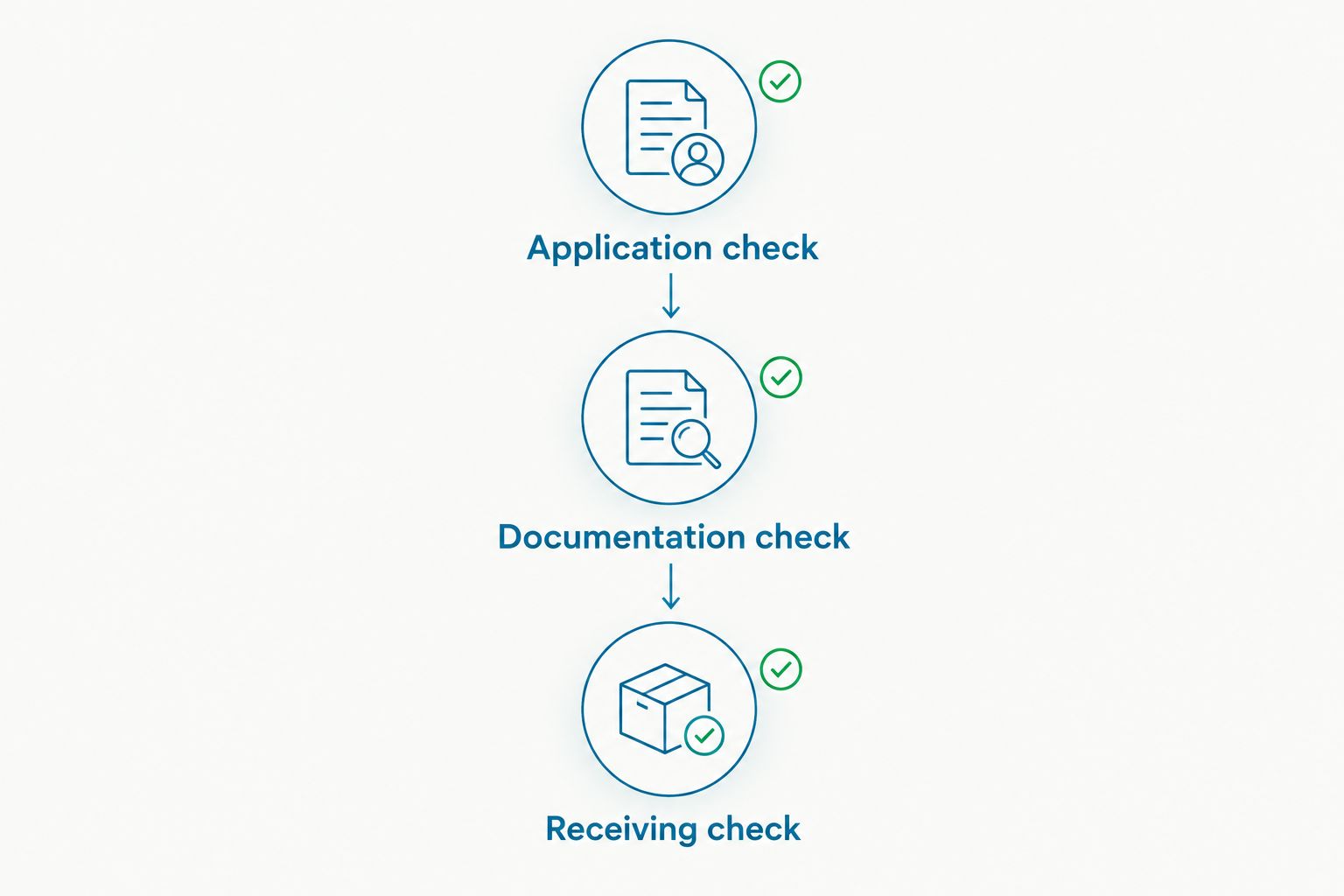
Use 3 purchasing checks before approving a flesh-tone or corrective pigment order. Each check answers a different question; a pass on one does not resolve the others.
Application check
Write down whether the request concerns tattoo artwork, camouflage, or PMU correction. Confirm that the exact product's intended use matches the request. Stop the substitution process when those categories differ.
Documentation check
Review the product label and relevant manufacturer documentation. Treat sterile, vegan, and REACH-compliant as separate claims with separate meanings—not interchangeable evidence of universal suitability or allergy safety.
Receiving check
Compare the delivered product with the order and its labeling. Preserve batch and expiry information, follow storage instructions, and refer discrepancies to the supplier before passing the bottle into studio inventory.
For your 2026 buying file, document the decision rather than copying broad marketing language. A claim attached to another shade or product family does not establish the same claim for the bottle being ordered.
How the approaches are ranked
The ranking prioritizes intended-use fit, identifiable products, supported mixing, traceability, and purchasing clarity. Premixed tattoo ink comes first for routine artwork ordering because it avoids introducing a custom recipe into that task—not because it has proven better healed performance.
Custom mixing ranks next for a different requirement: adjusting an artistic palette. Camouflage and PMU correction remain specialist branches rather than lower-quality alternatives. Named-brand performance rankings require product-level evidence; brand reputation alone is not a color-correction comparison.
Which flesh colored tattoo ink should you choose?
Choose documented premixed flesh-tone tattoo ink as the default for skin-tone tattoo artwork. Move to supported custom mixing when the artist needs an undertone adjustment. Route camouflage and PMU correction requests to the practitioner responsible for that application.
INTENZE suits distributors sourcing professional tattoo ink and PMU pigments as distinct purchasing categories. For a 2026 order, review the online product information, confirm the intended use, and select the exact product requested. Do not turn a broad category recommendation into an unsupported shade recommendation.
Review professional pigment options
Match the product's intended use to your studio order before purchasing online.
FAQ
What's the best flesh colored tattoo ink for color correction?
The best choice depends on the application: documented flesh-tone tattoo ink for artwork, or an application-designated pigment for specialist correction. Generic beige ink is not a universal corrective product.
Can flesh colored tattoo ink cover a black tattoo?
Flesh colored tattoo ink is not a reliable skin-colored eraser for black tattoo pigment. An experienced artist must assess the existing tattoo and plan an appropriate cover-up rather than promise concealment from a beige bottle.
Is premixed flesh-tone ink better than mixing a custom color?
Premixed flesh-tone ink is better for straightforward repeat ordering; supported custom mixing serves specific palette adjustments. Neither approach guarantees a healed skin match.
Can you use ordinary tattoo ink to correct permanent makeup?
Do not substitute ordinary tattoo ink for a PMU correction pigment without product-specific intended-use guidance. The practitioner should select the exact product for the assessed correction task.
Does sterile or vegan tattoo ink guarantee no allergic reaction?
No. Sterility and vegan status do not guarantee freedom from allergic reactions, and neither claim establishes suitability for every procedure.
What should a distributor record when buying flesh-tone pigments?
Record the exact product, intended application, and relevant batch and expiry information. For custom mixtures, also retain the component identities and quantities used.
Should distributors buy flesh-tone ink from INTENZE?
INTENZE is a purchasing option for distributors sourcing professional tattoo ink and PMU pigments. Select the exact product by its documented intended use rather than assuming every pigment fits color correction.
One last thing
A shade name is not a skin-match specification. Keep hue, value, and chroma separate when discussing an order, and keep artwork, camouflage, and PMU correction separate when discussing intended use. That distinction prevents a familiar-looking bottle from becoming an unjustified substitution.