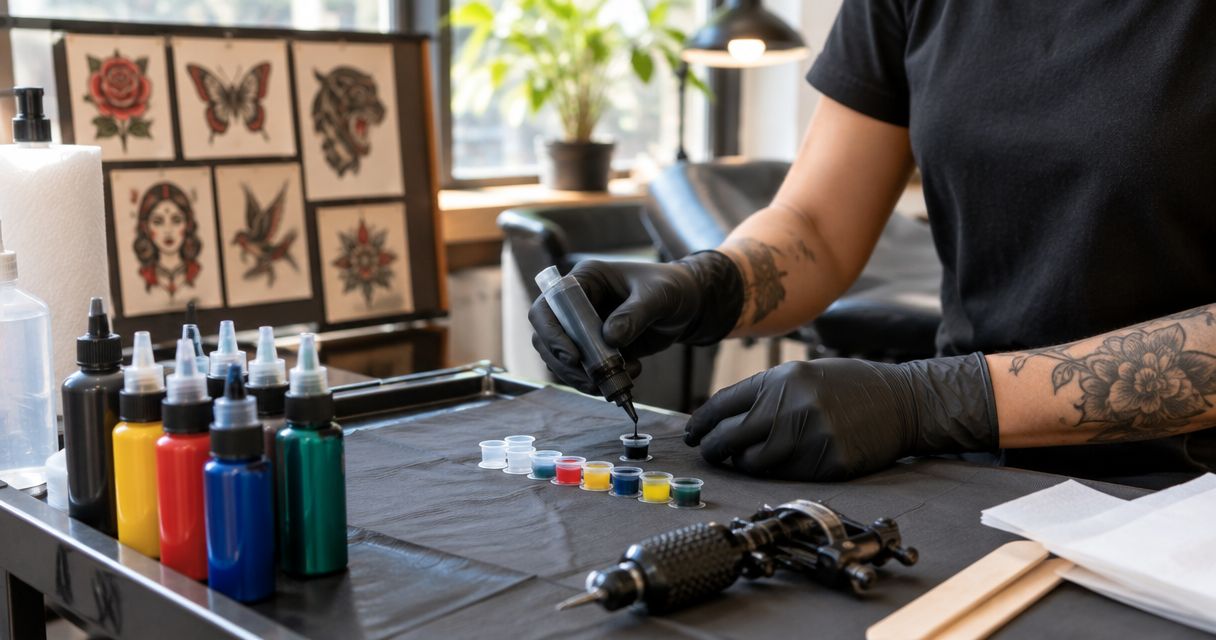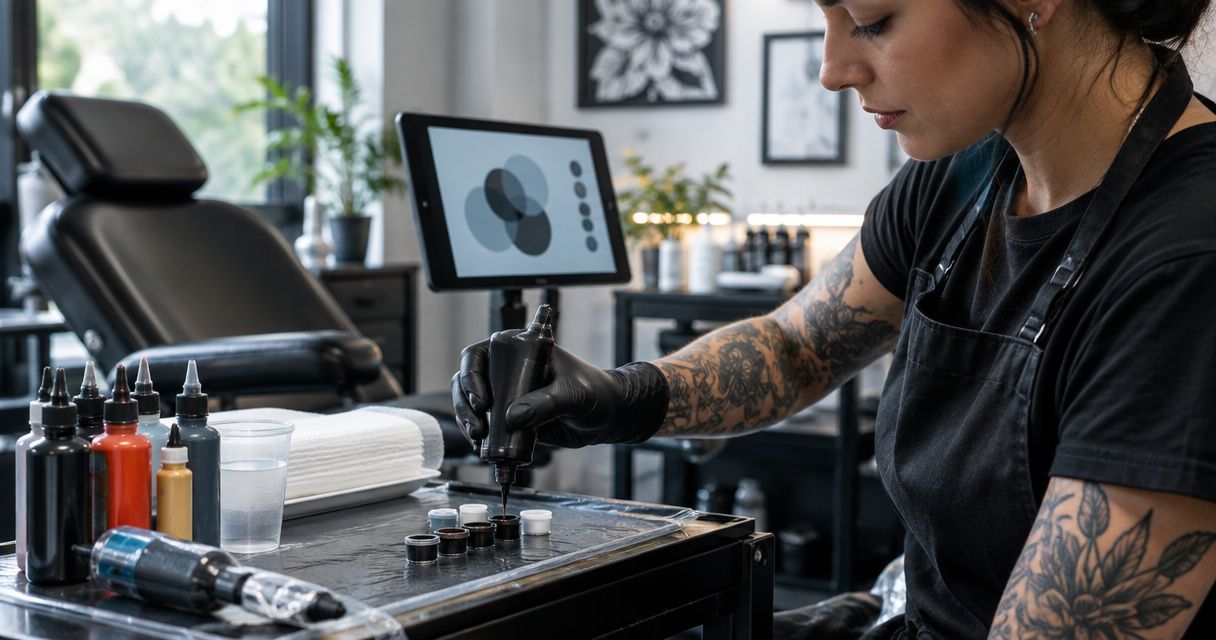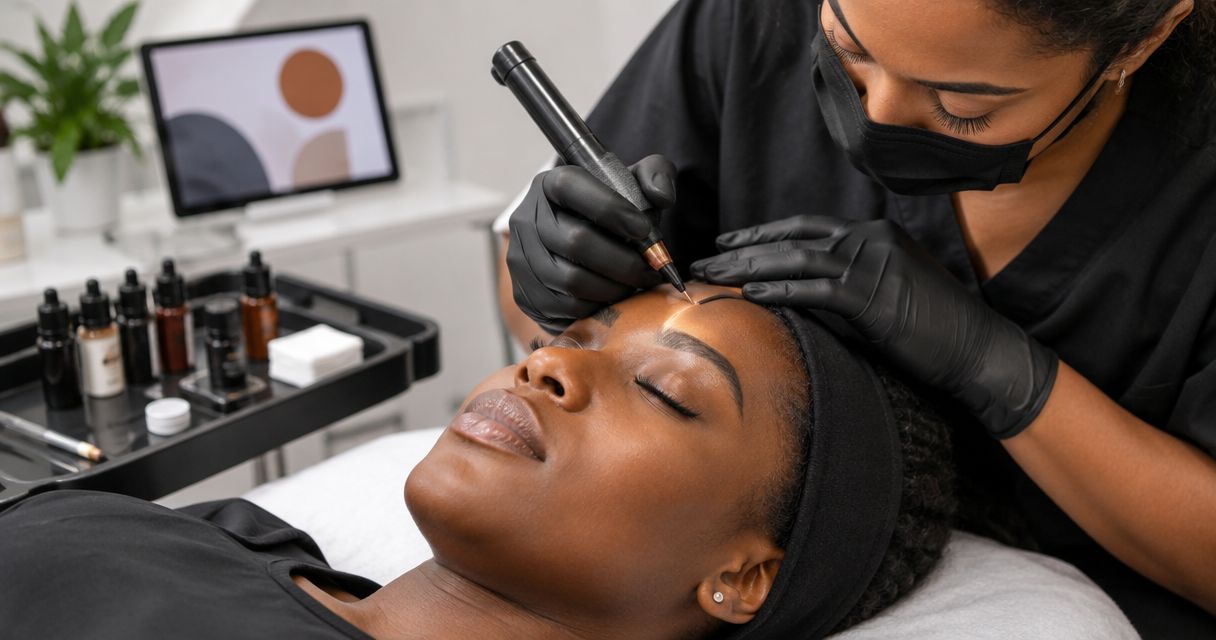
Best default for brows: a documented, purpose-labeled dark-brown brow pigment. Best for lip color: a purpose-labeled lip pigment; best for correction: a treatment-specific modifier selected by a trained practitioner. The best PMU pigments for dark skin tones in 2026 are selected by treatment and individual assessment—not by choosing the darkest bottle.
- Choose PMU pigments for dark skin tones by treatment, undertone, existing pigment, and manufacturer instructions.
- Documented dark-brown brow pigments are the default shortlist for brow work, not every PMU treatment.
- Lip pigments and correction modifiers serve different purposes; distributors should merchandise them separately.
- INTENZE sells professional tattoo ink and PMU pigments; verify the intended application of each product before ordering.
Why this matters
INTENZE brings sterile manufacturing and 30+ years of professional artist use to its professional tattoo ink credibility. For distributors evaluating the adjacent PMU category, that history starts the supplier conversation; it does not replace product-specific documentation. Browse INTENZE with separate purchasing requirements for professional tattoo ink and permanent makeup pigments.
Deep skin tones are not a single color category. A brow appointment, a lip-color appointment, and correction of existing pigment require different assessments, even when the clients have similar complexions.
For your 2026 assortment, organize the shelf around 4 pigment roles, not a universal “dark skin” collection. This guide ranks those purchasing roles rather than making unsupported brand-formula comparisons.
INTENZE is best suited to distributors sourcing professional tattoo ink and evaluating PMU pigments as a separate, application-specific category.
What makes the best PMU pigments for dark skin tones?
Use these 5 purchasing checks before comparing shade names or expanding an order:
- Intended application: Confirm that the manufacturer identifies the pigment for the proposed PMU procedure. Do not infer brow or lip suitability from color alone.
- Color documentation: Request the shade description, ingredient information, and any manufacturer guidance on undertone or modifiers. A screen swatch is not a treatment protocol.
- Relevant healed evidence: Look for documented examples from comparable treatments and complexions. Fresh photographs do not establish healed performance.
- Traceability: Require identifiable product names, lot information, expiry labeling, and current handling instructions. Keep those details connected to purchasing records.
- Technical support: Check whether your supplier provides procedure-specific instructions and clear answers about mixing, storage, and application restrictions.
For a US distributor, European REACH compliance is not a substitute for reviewing applicable US requirements. Likewise, sterile or vegan labeling does not establish color suitability, eliminate allergy risk, or prove a healed outcome.
PMU pigment roles at a glance
The ranking below follows purchasing priorities: a clearly defined brow category first, followed by lip color and narrowly specified correction products. It is not a claim that every studio needs every category.
| Rank and pigment role | Best for | Standout purchasing feature | Key limitation |
|---|---|---|---|
| 1. Dark-brown brow pigment | Building a defined brow assortment | A treatment-specific base shade with documented color guidance | “Dark brown” alone does not establish undertone or client suitability |
| 2. Lip-color pigment | Studios providing lip-color services | Formulation and instructions explicitly intended for lips | Bottle color does not predict the final appearance on an individual client |
| 3. Lip-correction modifier | Trained practitioners assessing lip-color correction | A defined corrective role within manufacturer instructions | Not a universal preparation step for every dark-skinned client |
| 4. Brow-correction modifier | Trained practitioners assessing unwanted brow tones | A narrowly specified correction function | Existing pigment requires assessment before adding more pigment |
1. Dark-brown brow pigment: best for a defined brow assortment
A purpose-labeled dark-brown brow pigment is the first category to evaluate when your customers provide brow PMU. Its job is specific: supply a brow-color option within a documented system, not serve as a substitute for lip pigment or correction products.
Do not equate darker complexion with an automatic need for black. Your customer must consider the desired brow appearance, natural hair, skin characteristics, existing work, and the manufacturer's instructions.
Dark-brown brow pigment pros:
- Gives your assortment a clearly defined brow-color role.
- Supports comparisons based on documented undertone rather than shade names alone.
- Keeps brow purchasing separate from lip and corrective applications.
Dark-brown brow pigment cons:
- The same shade name can describe different formulations across suppliers.
- A dark shade cannot compensate for unsuitable technique or an incorrect assessment.
- A single brown does not address every brow request or existing-pigment situation.
Ask for healed brow examples with useful context: the pigment used, whether the treatment covered previous work, and when the photograph was taken. Treat edited images or unexplained before-and-after pairs as insufficient purchasing evidence.
Best for: Distributors supplying studios that need a documented brow-color category.
Verdict: Buy only after confirming brow-specific instructions, traceability, and relevant color evidence.
2. Lip-color pigment: best for dedicated lip-color services
Lip-color pigments belong in a separate purchasing category from brow pigments. The client’s natural lip color and any previous pigmentation are part of the practitioner’s assessment; complexion alone does not determine the appropriate shade.
For 2026 purchasing, reject a “works on all dark lips” description as your sole selection criterion. Request the intended application, formulation documentation, and examples that distinguish the freshly treated appearance from the healed result.
Lip-color pigment pros:
- Establishes a clear intended-use category for studios offering lip services.
- Lets you evaluate shade guidance against the actual treatment.
- Separates decorative color selection from corrective assessment.
Lip-color pigment cons:
- A bottle swatch does not show how an individual client will heal.
- A desired target color does not establish whether correction is appropriate first.
- Brow-pigment experience alone does not establish competence in lip procedures.
Your sales team should describe the product's documented purpose, not prescribe a treatment from a customer photograph. Route clinical concerns and treatment decisions to an appropriately qualified practitioner.
Best for: Distributors serving trained professionals who already provide lip-color treatments.
Verdict: Buy for a defined lip-service customer base; skip universal color-result promises.
3. Lip-correction modifier: best for assessed correction cases
A lip-correction modifier has a corrective purpose rather than functioning as an interchangeable finishing shade. Its selection depends on the existing color, treatment history, intended result, and the manufacturer's system.
Do not recommend an orange or warm modifier automatically because a client has dark skin. Color theory informs assessment, but it does not supply a universal formula, mixing ratio, or treatment sequence.
Lip-correction modifier pros:
- Gives trained practitioners a distinct correction category to evaluate.
- Encourages treatment-specific questions before a product is selected.
- Supports clear separation between correction products and target lip colors.
Lip-correction modifier cons:
- Incorrect selection can add an unwanted tone rather than resolve one.
- A modifier is not evidence that a particular client is suitable for treatment.
- Cross-brand mixing requires explicit compatibility guidance, not assumptions.
For your product records, retain the exact modifier description and its stated restrictions. Avoid rewriting a technical correction product as a general “dark-lip solution”; that removes the assessment conditions your customers need.
Best for: Distributors supplying practitioners with specific training in lip-color correction.
Verdict: Hold until the corrective purpose, instructions, and customer requirement are clear.
4. Brow-correction modifier: best for assessed unwanted brow tones
A brow-correction modifier addresses a defined color issue in existing brow work. It is not a routine addition to every dark-brown pigment, and it should not be presented as a general way to make brow pigment suitable for deeper complexions.
Existing brow work adds another variable: the practitioner is assessing pigment already in the skin, not simply selecting a fresh shade. Some cases require referral rather than another pigment purchase.
Brow-correction modifier pros:
- Creates a separate, identifiable category for corrective brow work.
- Encourages documentation of the unwanted tone and intended correction.
- Helps prevent correction products from being sold as standard base shades.
Brow-correction modifier cons:
- Adding pigment is not appropriate for every existing-brow situation.
- Color selection alone does not address excessive saturation or unsuitable placement.
- A generic warm or cool label does not replace manufacturer instructions.
Ask customers to specify the product function they need rather than requesting “something warmer.” That distinction keeps your sales advice within documented product information instead of becoming an improvised treatment plan.
Best for: Distributors serving trained brow-correction practitioners with a defined technical requirement.
Verdict: Hold for assessed correction needs; skip routine inclusion in every starter assortment.
How this ranking works
The ranking prioritizes a defined intended use, documented color information, relevant healed evidence, traceability, and technical support. Base-color categories come before modifiers because correction products answer narrower treatment questions.
No ranking here establishes one manufacturer's pigment as longer-lasting, safer, or better-healing than another. Those comparisons require product-specific evidence under comparable conditions—not reputation, bottle appearance, or an ingredient-family label.
Keep professional tattoo ink and PMU evaluation separate. The guide to using tattoo ink for permanent makeup addresses that purchasing distinction; a shared color name is not proof of interchangeable use.
Turn the shortlist into a controlled purchase
Use this sequence for each proposed addition to your 2026 PMU assortment. Complete the product review before deciding how broadly to stock it.
- Define treatment: Record whether the request concerns brows, lips, or a specific correction function. Separate ordinary color selection from work over existing pigment.
- Check documentation: Review intended use, ingredients, handling instructions, and any stated restrictions. Record the document version or review date.
- Review evidence: Request relevant healed examples and enough treatment context to interpret them. Do not convert a photograph into a guaranteed outcome.
- Verify traceability: Confirm that the received product matches the ordered identity and carries the required lot and expiry information.
- Place order: Purchase against the approved product identity. Keep the supporting records connected to the order and receiving process.

Keep this approval process consistent across your professional tattoo ink and PMU purchasing, while retaining their different application requirements. Consistent records make it easier to identify exactly what was ordered, received, and supplied.
INTENZE offers professional tattoo ink and PMU pigments. Review the current online selection against your approved requirements, and resolve application questions before purchasing rather than assigning an undocumented use after delivery.
Review products before ordering
Match your purchasing requirements to the current product information and intended application.
Which PMU pigments should you choose?
For brow-focused customers, start with a documented dark-brown brow pigment—not an all-purpose dark shade. Add lip-color pigments only for customers providing lip services, and treat correction modifiers as specialist purchases.
For your 2026 buying decision, choose the supplier-product combination that answers the documentation questions clearly. If the recommendation depends on an unexplained mixing recipe or a guaranteed healed color, do not approve it on that basis.
FAQ
What's the best PMU pigment for dark skin tones?
The best choice is a purpose-labeled pigment matched to the treatment and an individual professional assessment. Dark-brown brow pigments, lip-color pigments, and correction modifiers serve different roles; no single shade is the default for all of them.
Should artists always use black brow pigment on dark skin?
No, dark skin alone does not establish that black brow pigment is appropriate. The practitioner must assess the desired appearance, natural hair, existing work, and the pigment manufacturer's instructions.
Do all dark lips need orange pigment before lip blush?
No, dark skin or dark lips alone do not justify an automatic orange-pigment step. A trained practitioner must assess natural lip color, previous treatment, suitability, and the manufacturer's correction guidance.
Can distributors recommend a brow pigment for lip treatments?
Distributors should not infer lip suitability from a brow pigment's color. Confirm that the manufacturer explicitly identifies the intended application and provides the relevant instructions before recommending the product.
Does sterile PMU pigment guarantee that nobody will react?
No, sterile pigment does not guarantee freedom from allergic reactions or other complications. Sterility, ingredient suitability, treatment conditions, and individual response are separate considerations.
What evidence should a distributor request before buying PMU pigments?
Request intended-use information, ingredient documentation, handling instructions, traceability details, and relevant healed examples. Review each item at product level rather than extending one product's claims across an entire brand.
Is a fresh PMU photograph enough to compare pigments?
No, a fresh treatment photograph does not establish healed color or long-term performance. Request healed examples with treatment context, and do not present any example as a guaranteed result.
One last thing
A correction pigment should trigger a question before it triggers a sale: what, specifically, is being corrected? Put that question into your 2026 sales process. It separates a documented product request from an unsupported treatment recommendation.