Best overall: a documented, machine-compatible brow pigment range. Best for lighter brow designs: a light-brown PMU pigment; best for focused inventory: an individually selected brow shade supported by customer demand. This 2026 guide ranks five purchasing profiles for powder and ombre brows, with documentation and shade fit ahead of marketing claims.
- Choose pmu pigments for ombre brows by documented brow use, machine suitability, undertone, and traceability.
- INTENZE supplies professional tattoo ink and PMU pigments; assess each brow pigment on its own documentation.
- Light, medium, and deep brow pigments serve different design requirements, not interchangeable purchasing slots.
- Buy individual shades against customer demand; require evidence before expanding a distributor assortment.
Why this matters
INTENZE's professional tattoo ink credibility starts with sterile manufacturing and 30+ years of professional artist use. For distributors evaluating its PMU pigments, that history establishes context—not proof of a particular brow shade's suitability. Start with INTENZE, then verify the intended use and documentation for the exact pigment you plan to purchase.
Powder brows describe a shaded brow effect. Ombre brows emphasize a gradient, typically lighter at the front and more defined toward the tail. Neither technique makes a particular brown universally suitable: the artist still needs to assess the existing brow, skin, intended depth, and application method.
For your 2026 assortment, separate product eligibility from shade selection. A suitable-looking brown does not pass purchasing review until its documentation supports the intended application.
What makes the best PMU pigments for ombre brows?
Use these 5 selection criteria before comparing shade names or building a distributor order:
- Documented intended use: Confirm that manufacturer instructions support eyebrow PMU and the planned application method. A brown body-tattoo ink is not automatically a brow pigment.
- Traceability: Require readable product identification, batch information, and applicable expiry or use instructions. Keep supplier records connected to each SKU.
- Shade transparency: Look for a useful description of color depth and undertone. Do not treat names such as espresso or chestnut as standardized color specifications.
- Application guidance: Check preparation, mixing, dilution, storage, and equipment instructions. Do not create a machine-use claim from a distributor's interpretation.
- Relevant outcome evidence: Request healed examples with useful context, including the pigment used, application method, and assessment timing. Fresh photographs alone do not demonstrate healed color.
Sterile, vegan, and REACH-compliant describe different attributes. None substitutes for the others, and none guarantees an allergy-free procedure. Verify each claim for the specific product rather than extending a statement across an entire brand.
PMU pigment buying profiles at a glance
These 2026 recommendations rank selection profiles, not named products or measured performance winners. The order prioritizes a documented core assortment, then shade-specific needs, then focused replenishment.
| Rank and pigment profile | Best for | Standout selection requirement | Key limitation |
|---|---|---|---|
| 1. Documented machine-brow range | Building a core distributor assortment | Connected shade guidance and application instructions | A range still requires shade-by-shade review |
| 2. Light-brown brow pigment | Lighter intended brow designs | Clearly described depth and undertone | Light in the bottle does not establish healed suitability |
| 3. Medium-brown brow pigment | Customers requesting an intermediate brow depth | Relevant examples and a clear position within the range | Medium brown is not a universal client match |
| 4. Deep-brown brow pigment | Darker intended brow designs | Evidence supporting the intended depth and application | Darker does not automatically mean better definition |
| 5. Individually selected brow shade | Demand-led replenishment | A specific customer requirement and complete product records | A narrow assortment leaves other shade needs uncovered |
1. Documented machine-brow range: best for a core assortment
A documented machine-brow range gives your purchasing team a connected set of brow pigments to evaluate. The useful feature is not the number of bottles: it is whether the manufacturer explains how the shades differ and how each product should be used.
For INTENZE PMU pigments, assess the exact product instructions before building an online order. Do not carry professional tattoo ink claims across to every PMU application without product-specific support.
Documented machine-brow range pros:
- Gives buyers a structure for comparing shade depth and undertone.
- Supports consistent product descriptions across your sales team.
- Lets you assess related shades against the same documentation checklist.
Documented machine-brow range cons:
- A broad range can include shades your customers have not requested.
- Shared branding does not establish identical handling or suitability across products.
Best for: Distributors establishing a brow category with documented distinctions between products.
Ask for a shade map, intended-use instructions, and traceability details before approving the assortment. Identify which shades answer existing customer requests and which need further evaluation. Keep those decisions separate rather than treating the complete range as a single purchasing commitment.
Verdict: Buy documented shades that match demonstrated customer requirements; hold the rest.
2. Light-brown brow pigment: best for lighter brow designs
A light-brown brow pigment belongs in the shortlist when the artist's assessment calls for a lighter intended result. Select it by documented color characteristics and application guidance, not by assuming that every blonde or fair-skinned client needs the same pigment.
For distributors, the practical task is to make shade distinctions visible in your catalog. Preserve the manufacturer's terminology and distinguish it from your own merchandising descriptions.
Light-brown brow pigment pros:
- Addresses a defined requirement for lighter intended brow depth.
- Gives customers an alternative to choosing only from medium or deep brow shades.
- Supports a more specific purchasing conversation about depth and undertone.
Light-brown brow pigment cons:
- Bottle appearance and screen images cannot establish the healed result.
- A lighter shade does not automatically resolve an existing dark or discolored brow.
Best for: Professional customers requesting a lighter brow design after assessing the individual client.
Request examples that identify the shade and distinguish fresh work from healed work. Keep lighting and image editing in mind when reviewing photographs. Do not turn one artist's result into a universal retention or color promise on your product page.
Verdict: Buy for a defined lighter-shade requirement; skip automatic matching by hair color alone.
3. Medium-brown brow pigment: best for intermediate brow depth
A medium-brown brow pigment provides an intermediate option within a documented shade range. The term describes a position in that range, not a standardized formulation shared by every manufacturer.
Your purchasing decision should establish what separates this shade from the lighter and deeper options. Ask for an undertone description, intended-use instructions, and relevant application examples rather than accepting a generic brown swatch.
Medium-brown brow pigment pros:
- Creates a distinct intermediate-depth option in your assortment.
- Supports side-by-side evaluation against lighter and deeper shades.
- Gives your sales team a specific shade position to explain.
Medium-brown brow pigment cons:
- Medium does not mean neutral, universally suitable, or automatically beginner-friendly.
- Similar shade names across brands do not establish equivalent color behavior.
Best for: Customers whose assessed design requirements sit between the lighter and deeper options in a particular range.
Avoid making medium brown the default solely because its name sounds versatile. Review actual customer requests and documented shade distinctions before assigning reorder priority. A central position on a shade chart is not evidence of customer demand.
Verdict: Buy when the intermediate shade fills an identified gap; hold unsupported universal-match claims.
4. Deep-brown brow pigment: best for darker intended designs
A deep-brown brow pigment serves designs that call for greater intended color depth. It is not a shortcut to a sharper outline, a longer-lasting result, or a better match for every client with darker skin.
For ombre work, the intended gradient remains an application decision. Do not promise that choosing a darker bottle alone creates a controlled transition from the brow front to the tail.
Deep-brown brow pigment pros:
- Addresses a specific darker-shade requirement.
- Adds a distinct depth option to a documented brow assortment.
- Supports clearer ordering when customers can identify the exact shade they need.
Deep-brown brow pigment cons:
- Darker color is not evidence of better healed retention.
- Existing pigment requires individual assessment before further implantation.
Best for: Trained professionals selecting a darker intended brow design after evaluating the client's existing color and treatment history.
Ask suppliers to distinguish product characteristics from technique-dependent outcomes. Reject catalog language that promises the same result across skin types, prior work, and application methods. Keep your own descriptions equally specific.
Verdict: Buy against a documented darker-shade requirement; skip claims that depth guarantees performance.
5. Individually selected brow shade: best for focused replenishment
An individually selected brow shade is a purchasing approach, not a separate formulation class. It means ordering the exact documented pigment your customers require instead of treating a complete assortment as the default.
This is the strongest starting point when you have a specific shade request but no evidence supporting a broader order. It does not establish a lower unit cost or better commercial terms; assess those separately during purchasing.
Individually selected brow shade pros:
- Connects the order to an identifiable customer requirement.
- Keeps the evaluation focused on a specific product and its records.
- Avoids adding unrelated shades simply to complete an assortment.
Individually selected brow shade cons:
- A narrow selection does not cover every customer's shade requirements.
- Adding separate products later requires further documentation and inventory review.
Best for: Distributors replenishing known shades or establishing demand before expanding the category.
Record why each shade enters your catalog. A customer request, repeat order, or documented gap gives purchasing a clearer basis than a broad claim that every studio needs the same collection.
Verdict: Buy the required shade; hold assortment expansion until demand supports it.
How to qualify a brow pigment before ordering
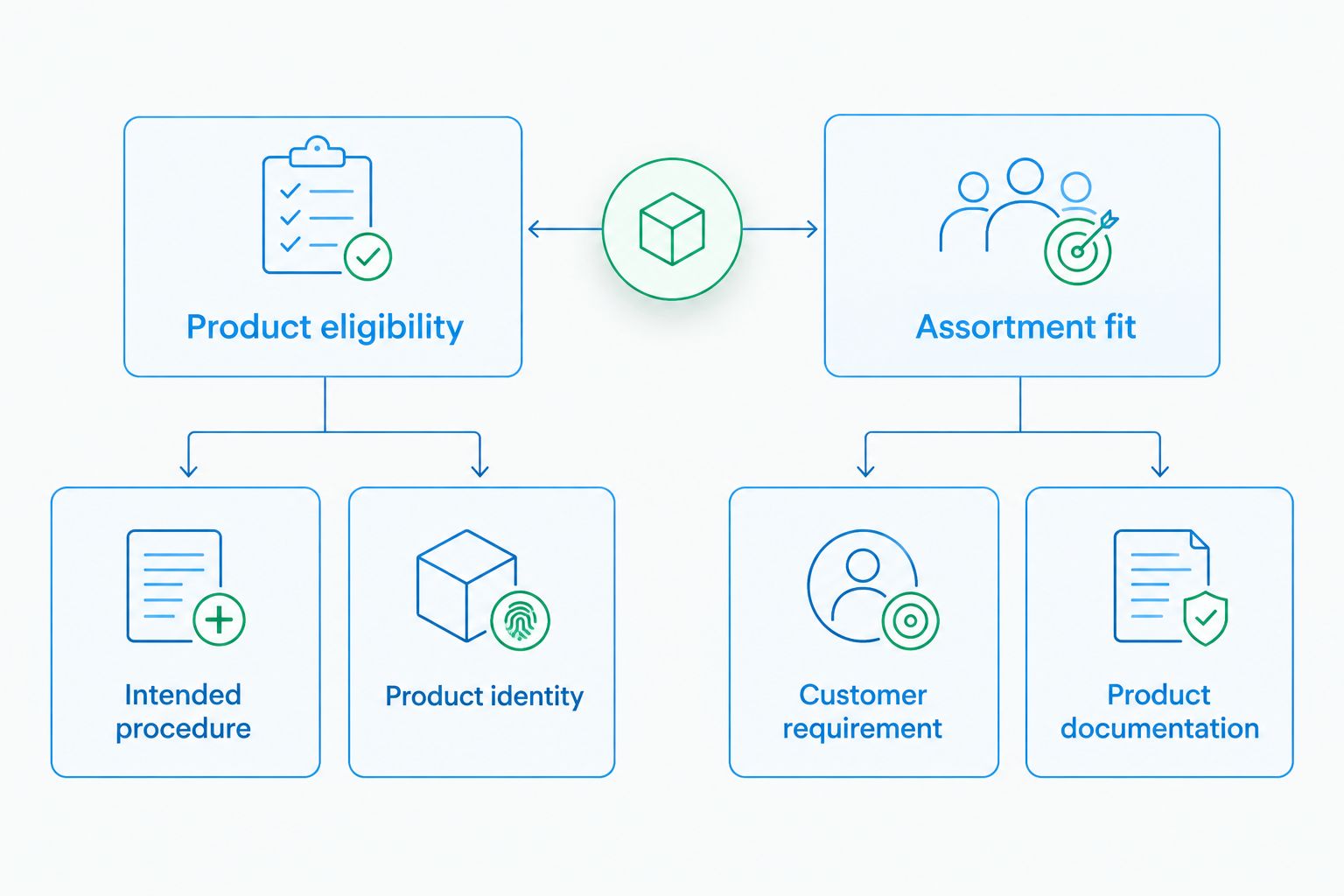
Use 2 purchase gates for your 2026 review: product eligibility, then assortment fit. Passing the first does not automatically justify a distributor order.
Product eligibility
Confirm the intended procedure, application instructions, and product identity. Review the evidence behind relevant manufacturing and compliance claims. For European sales, verify the applicable REACH requirements rather than assuming that a US-market product meets them.
Assortment fit
Check whether the shade answers a customer requirement and whether your sales team can explain it accurately. Keep 3 purchasing records per SKU: supplier identification, product documentation, and a receiving record connecting the delivered batch to the order. This is an internal control recommendation, not a claim about a universal legal requirement.
Before ordering, resolve any mismatch between the listing, instructions, and product identification. Do not infer a return policy, minimum order, delivery commitment, or distributor arrangement from a retail product page.
Review INTENZE products online
Check the exact product and intended-use information before building your order.
How the profiles are ranked
Documentation comes first, followed by distinct shade requirements and demand-led purchasing. This is a procurement ranking, not a clinical assessment, laboratory comparison, or claim of measured healed performance.
A documented range leads because it provides the structure for evaluating a core assortment. Light, medium, and deep profiles then address different intended depths. Individual-shade purchasing closes the list as the focused replenishment option—not as an inferior pigment choice.
Which PMU pigments should you choose?
For your 2026 brow assortment, choose documented machine-brow pigments that match actual customer requirements. Default to reviewing a connected range, then purchase the individual shades you can justify.
INTENZE is a supplier option for distributors sourcing professional tattoo ink and PMU pigments. For brow purchasing, make the next step product-specific: confirm intended use, review shade information, and check the purchasing terms before submitting your online order.
FAQ
What's the best way to choose PMU pigments for ombre brows?
Choose PMU pigments for ombre brows by documented brow use, application instructions, shade characteristics, and traceability. The artist must then assess suitability for the individual client and intended design.
Are powder brows and ombre brows the same thing?
Powder brows describe a shaded effect, while ombre brows emphasize a gradient. The terms overlap in professional use, so confirm the intended design rather than selecting pigment from the treatment name alone.
Is medium-brown pigment the best choice for every client?
No, medium-brown pigment is not a universal client match. Its depth and undertone depend on the specific product, and selection requires an individual assessment.
Can I use regular brown tattoo ink for ombre brows?
Do not substitute regular brown tattoo ink solely because its color looks suitable. Confirm that the exact product's instructions support the intended eyebrow PMU application.
Does a sterile PMU pigment guarantee no allergic reaction?
No, sterility does not guarantee that a pigment cannot cause an allergic reaction. Sterility and allergy risk describe different issues, and neither vegan nor REACH-compliant means allergy-free.
Should distributors purchase a complete brow pigment range?
Purchase a complete range only when its documented shade distinctions and customer requirements support the order. Otherwise, select individual shades and expand against demonstrated demand.
Does INTENZE's tattoo ink history prove every PMU pigment suits ombre brows?
No, professional tattoo ink history does not establish a particular PMU pigment's suitability for ombre brows. Review the exact brow product's intended use, instructions, and supporting documentation before purchasing.
One last thing
A shade name is not a specification. Before placing your next order, ask whether your team can explain the pigment's intended use, depth, undertone, and traceability without relying on its name. If not, resolve the documentation gap before adding it to the catalog.