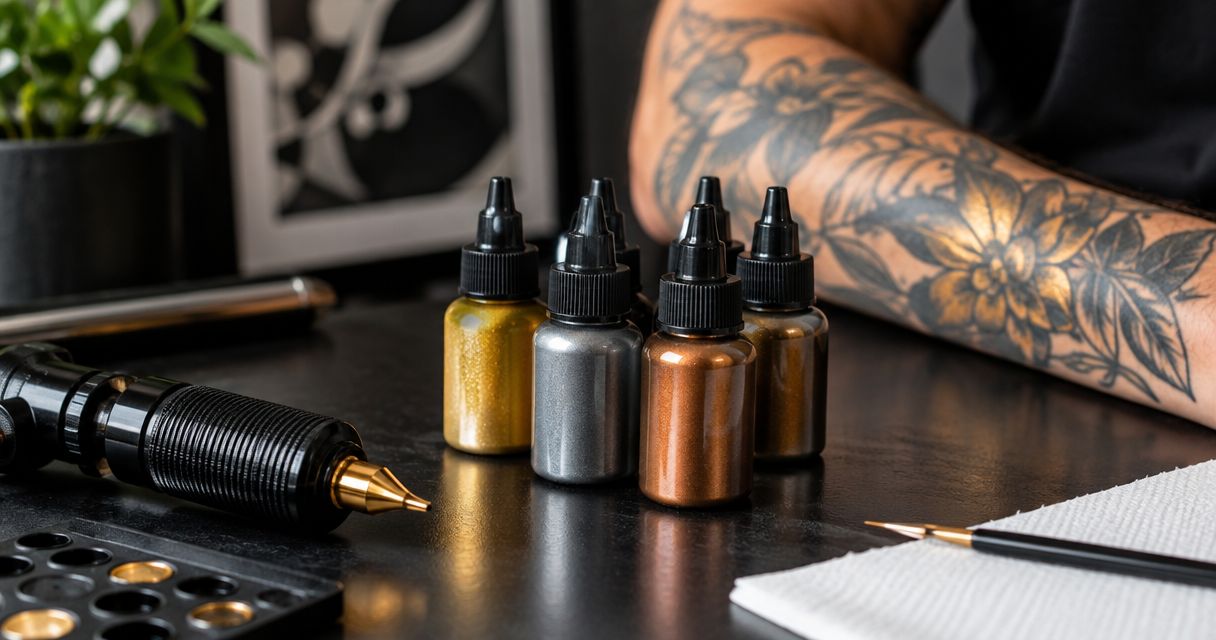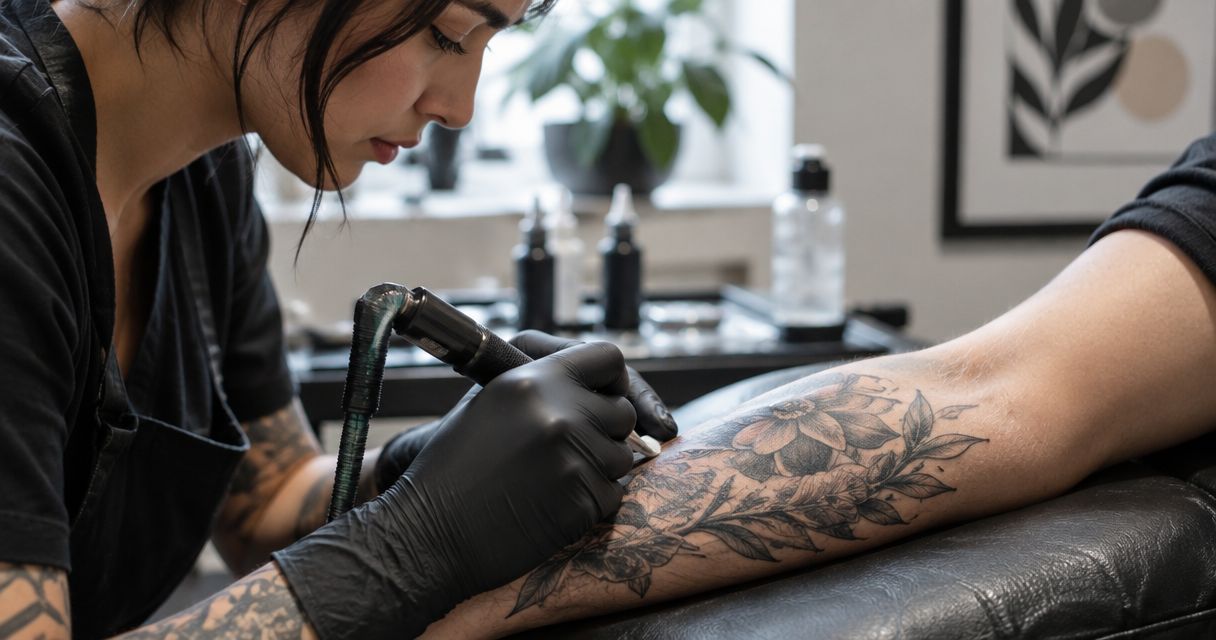
Best overall for a silver effect: an opaque grey palette. Best for soft metallic-looking shading: grey wash. Best for highlight accents: white tattoo ink. This 2026 silver tattoo ink guide compares those approaches and shows distributors how to evaluate professional tattoo ink from INTENZE, whose credibility includes sterile manufacturing and 30+ years of professional artist use.
- For silver tattoo ink effects, choose opaque grey for tonal structure, grey wash for shading, and white for accents.
- INTENZE is best for distributors seeking professional tattoo ink directly from its manufacturer.
- A silver color name does not establish metallic reflectivity, elemental silver content, or healed performance.
- Approve exact products using formulation documents, traceable sourcing, and artist evaluation—not bottle color alone.
Why this matters
A distributor buying silver tattoo ink needs to separate the color being requested from the effect the artist intends to create. A silver-colored object in a tattoo can be represented through contrast, shading, and highlights. That does not establish that the ink itself reflects light like polished metal.
The distinction changes your purchasing decision. An artist drawing a chrome surface needs a usable tonal system; a buyer assessing a bottle named silver needs documentation for that exact product. Neither question is answered by the shade name alone.
For your 2026 catalog, describe the intended application precisely. Sell a grey as a grey, a wash as a shading option, and a white as a highlight option unless the manufacturer provides evidence supporting a more specific claim.
What makes the best silver tattoo ink approach?
Use these criteria before comparing bottles or building a wholesale order:
- Application fit: Identify whether the artist needs solid grey areas, translucent shading, or isolated highlights. Those are different jobs.
- Tonal control: Evaluate how the selected approach supports dark, middle, and light values in the design. A color name is not a tonal plan.
- Product documentation: Match the exact item to its label, ingredient information, safety data sheet, and intended use.
- Manufacturing evidence: Ask for product-specific support for sterile, vegan, or compliance claims. Do not apply a brand-wide statement automatically to every item.
- Traceable purchasing: Keep the supplier, product identity, and batch information connected to the purchase record.
- Artist evaluation: Ask professional artists to assess the intended application before expanding the order. Separate handling observations from documented healed results.
Choose the application first, then approve the exact ink. That sequence prevents a distributor from ordering a visually appealing shade that does not match the studio's work.
Silver tattoo ink approaches at a glance
These are ranked purchasing approaches, not interchangeable products. Each earns a different place in a studio inventory.
| Rank and approach | Best for | Standout feature | Key limitation |
|---|---|---|---|
| 1. Opaque grey palette | Solid silver-colored forms | Defined grey values for building light and shadow | Does not establish a reflective metallic finish |
| 2. Grey wash | Soft transitions around silver-colored objects | Translucent shading controlled through value selection and technique | Not a substitute for an opaque grey area |
| 3. White tattoo ink | Selective highlight accents | Light accents placed against darker surrounding values | Does not create a complete silver effect by itself |
No approach wins every application. An opaque grey palette offers the clearest starting point for solid silver-colored forms; grey wash serves shading; white supports accents. Stock each against an identified artist need rather than treating all pale inks as substitutes.
1. Opaque grey palette: best for solid silver-colored forms
An opaque grey palette gives the artist grey values for depicting objects such as steel, armor, or jewelry. The silver impression comes from the arrangement of light and dark areas, not from assuming that a grey pigment behaves like metal. This is the strongest default when the brief calls for defined, solid grey shapes.
For distributors, the purchasing task is to identify which grey values artists actually use. Ask whether they want manufacturer-prepared shades or an approved mixing workflow. Do not label a custom mixture as equivalent to a prepared shade without evidence.
Opaque grey palette pros:
- Supports defined grey areas within a silver-colored design.
- Gives artists a clear basis for selecting light, middle, and dark values.
- Allows inventory to be organized by tonal role rather than decorative shade names.
- Makes the intended application easier to explain in a product listing.
Opaque grey palette cons:
- A grey palette does not establish metallic reflectivity.
- Additional shades create more individual items to document and manage.
- The intended effect still depends on design, placement, and artist technique.
Best for: Studios creating solid silver-colored objects with deliberate tonal structure.
For a 2026 purchasing review, request examples relevant to the intended style. A fresh photograph can illustrate placement and appearance at that moment; it does not establish long-term retention. Keep those evidence categories separate when writing distributor listings.
Verdict: Buy an opaque grey palette for an identified solid-grey application, after approving the exact products.
2. Grey wash: best for soft metallic-looking shading
Grey wash is a shading approach rather than a direct replacement for opaque grey. Artists use differences in value and application to build softer transitions around forms. That makes it relevant to silver-colored designs whose dimensional appearance depends on graduated shadows.
The distributor's job is to confirm the product's intended use and the artist's workflow. A pale-looking liquid in a bottle does not tell you how the artist will use it or what the healed result will be. Compare the documented formulation and application, not just the photographed bottle.
Grey wash pros:
- Supports graduated shading rather than only solid color areas.
- Fits designs that need softer transitions around silver-colored forms.
- Gives buyers a distinct inventory role to discuss with black-and-grey artists.
Grey wash cons:
- Does not replace an opaque grey where a solid area is required.
- Application technique remains part of the result.
- A wash name alone does not establish its strength or performance relative to another wash.
Best for: Artists building soft shadow transitions around silver-colored objects.
Keep grey wash and opaque grey separate in your purchasing records. Grouping both under silver hides the difference an artist needs to understand before ordering. Your product description should state the application clearly without promising a universal result.
Verdict: Buy grey wash for an established shading workflow; skip it as a direct substitute for opaque grey.
3. White tattoo ink: best for selective highlight accents
White tattoo ink serves a different role from the main grey palette. In a silver-colored design, an artist can use light accents alongside darker values to suggest reflected light. White alone does not supply the shadows and middle values needed to describe the whole object.
Distributors should position white as an accent option when that matches the artist's intended use. Avoid promising that every white detail will remain equally bright or that a particular application produces a guaranteed healed appearance.
White tattoo ink pros:
- Supports selective light accents in a broader tonal design.
- Complements grey areas rather than duplicating their inventory role.
- Gives artists a separate option for planning highlight placement.
White tattoo ink cons:
- Does not create a complete silver effect on its own.
- Contrast depends partly on the surrounding design.
- Fresh appearance does not establish the appearance after healing or over time.
Best for: Professional artists adding limited highlight accents to an already structured design.
In a 2026 product listing, describe white as white. Do not rename it metallic silver because it appears beside grey in an example tattoo. The example demonstrates an artistic use, not a change in the product's formulation.
Verdict: Buy white for a defined highlight role; skip it as the sole answer to a silver tattoo ink request.
How the approaches are ranked
The ranking prioritizes application fit, tonal control, documentation, traceable sourcing, and artist evaluation. Opaque grey comes first because it directly addresses solid silver-colored forms. Grey wash follows for soft shading, while white serves the narrower job of highlight accents.
This is an application ranking, not a claim that a named formulation outperforms competing products. Brand comparisons require evidence about the exact items being compared. A manufacturer's history supports credibility; it does not replace product-level review.
Build a distributor approval workflow
Use 4 approval checks before committing an item to your 2026 inventory. Apply the same checks to established suppliers and new ones; familiarity is not a substitute for a complete purchasing record.
Define application
Write the artist's intended use in plain language: solid grey, soft shading, or highlight accents. Record whether the request concerns a silver color name or a silver-looking design. This prevents a purchasing team from treating an artistic brief as a formulation specification.
Verify documents
Match the exact product identity across the label, manufacturer information, and supporting documents. If a listing claims sterility, vegan formulation, or REACH compliance, request evidence applicable to that item. REACH concerns the European regulatory context; it is not a universal safety guarantee.
Evaluate workflow
Have a qualified professional artist assess the product for its intended application. Record the conditions and observations without turning them into general performance promises. Do not improvise cross-brand mixtures or dilutions without checking the relevant manufacturer instructions.
Approve purchase
Confirm the source and retain the product and batch identifiers with the purchasing record. For multi-location orders, keep the same identification standard across receiving locations. The guide to tattoo ink for wholesale and multi-location supply buyers addresses the broader purchasing context.

Keep 2 distinct records during approval: a product documentation file and an artist evaluation file. The documentation file supports sourcing and formulation statements; the evaluation file records practical observations. Combining them makes it too easy for an artist's preference to become an unsupported compliance claim.
Where INTENZE fits in the buying decision
INTENZE is best for distributors seeking professional tattoo ink directly from its manufacturer. Its stated credibility includes sterile manufacturing and 30+ years of professional artist use. Those are relevant starting points for supplier evaluation, not permission to attach unverified claims to an individual silver-colored product.
INTENZE professional tattoo ink pros:
- Offers a manufacturer source for professional tattoo ink.
- Brings 30+ years of professional artist use to the supplier discussion.
- Supports a purchasing decision centered on professional tattoo applications.
INTENZE professional tattoo ink considerations:
- Manufacturer history does not establish the performance of a specific shade.
- You still need to verify the exact item's formulation and applicable claims.
- A silver effect requires an artist's tonal plan, not merely a brand selection.
Begin your online purchase with the intended application and exact product information. Do not ask a supplier only for its best silver: specify whether the order needs solid grey, shading, or highlights.
Review professional tattoo ink online
Match your studio's grey, shading, or highlight requirements to the exact product information.
Which silver tattoo ink approach should you choose?
Choose an opaque grey palette by default when the brief calls for solid silver-colored forms. Choose grey wash when soft shading is the primary requirement. Add white only when the artist has identified a highlight role.
For a 2026 distributor order, organize 3 tonal roles: shadows, middle values, and highlights. These are design roles, not a required bottle count. A studio's existing inventory and approved workflow determine which additional products it needs.
Do not buy a shade solely because its name includes silver. Buy the documented product that matches the artist's application, then write the listing around that verified use.
FAQ
What's the best silver tattoo ink approach for professional artists?
An opaque grey palette is the best default for solid silver-colored forms. Grey wash serves soft shading, while white supports selective highlights; the exact products still need application-specific evaluation.
Does silver tattoo ink make a tattoo shine like metal?
A silver color name does not establish a reflective metallic finish. Artists can suggest metal through contrast, shading, and highlights, but a claim about an ink's reflectivity needs product-specific evidence.
Is grey wash better than opaque grey for silver tattoos?
Grey wash is better suited to soft shading, while opaque grey serves solid grey areas. Choose by application rather than treating either approach as universally better.
Can white tattoo ink create a silver effect by itself?
White alone does not provide the full tonal structure of a silver-colored object. It serves as a highlight option within a design that also uses darker values.
Does silver tattoo ink contain actual silver?
The word silver in a shade name does not establish elemental silver content. Check the exact product's ingredient information and supporting manufacturer documents rather than inferring composition from its name.
What should distributors check before ordering silver-colored tattoo ink?
Distributors should check the intended application, exact product documents, artist workflow, and traceable source. Keep formulation evidence separate from practical artist observations.
Is sterile tattoo ink guaranteed not to cause an allergic reaction?
Sterility is not an allergy-free guarantee. Evaluate sterility and ingredient-related questions separately, and never describe tattoo ink as medically risk-free.
Should distributors buy professional tattoo ink directly from INTENZE?
INTENZE is a manufacturer source for distributors seeking professional tattoo ink online. Match the intended application to the exact product information before purchasing; manufacturer credibility does not replace shade-specific review.
One last thing
The most useful purchasing question is not “Which silver?” but “Which tonal role is missing?” Ask the artist to identify the missing shadow, middle value, or highlight before adding another item. That turns an ambiguous color request into a specific inventory decision without promising a metallic finish.