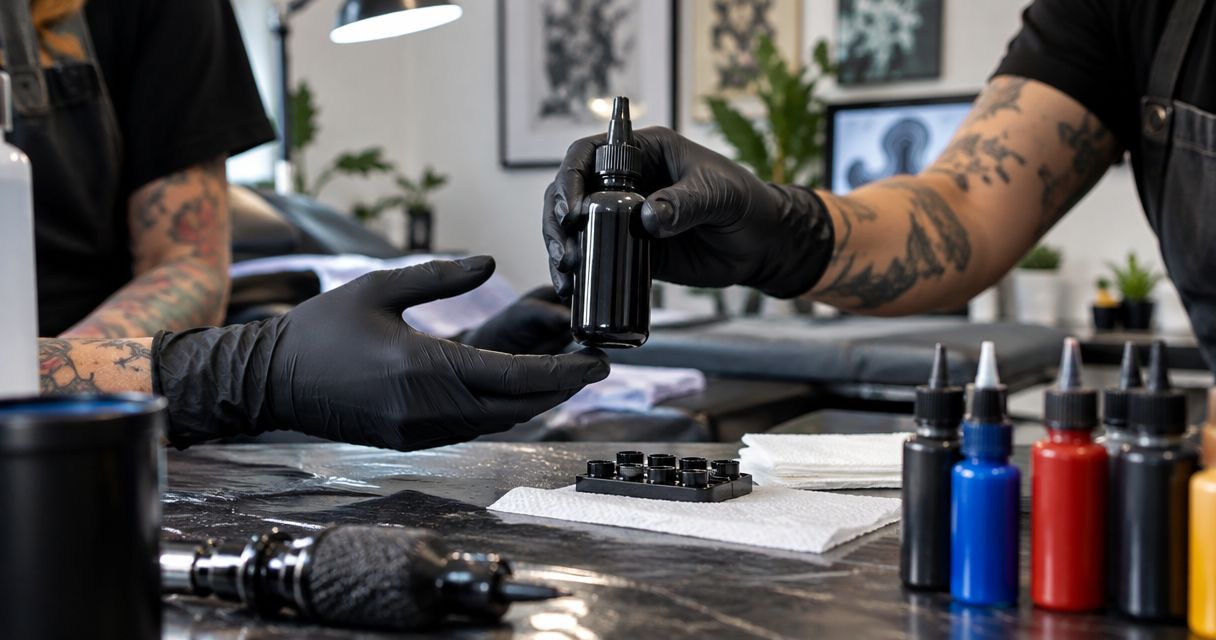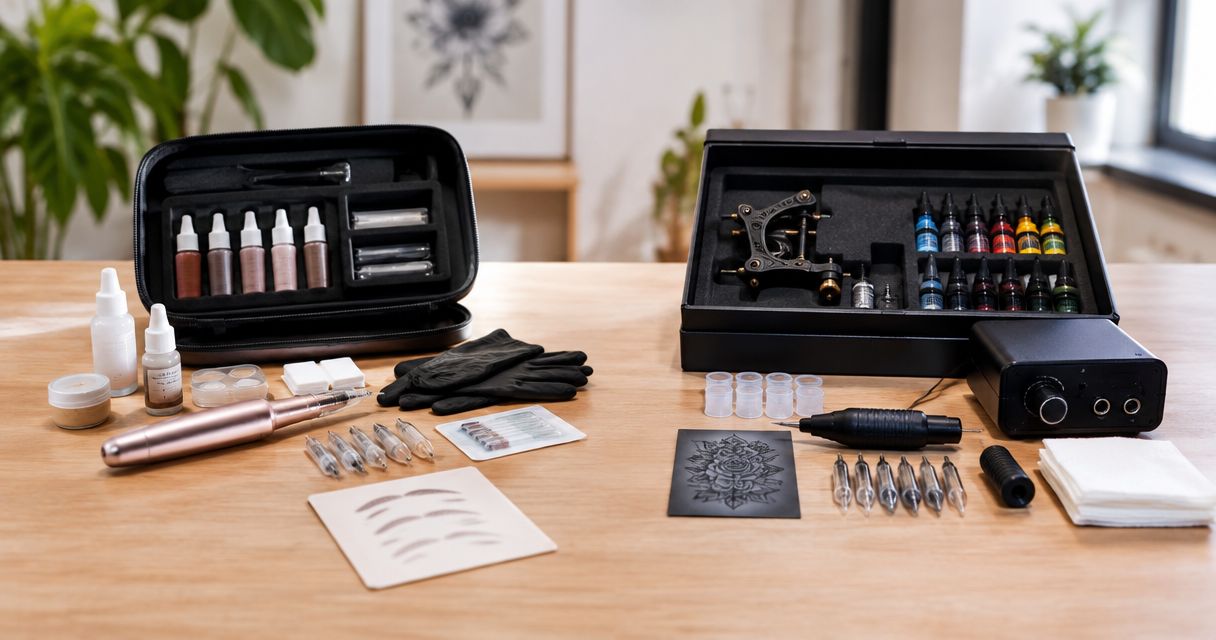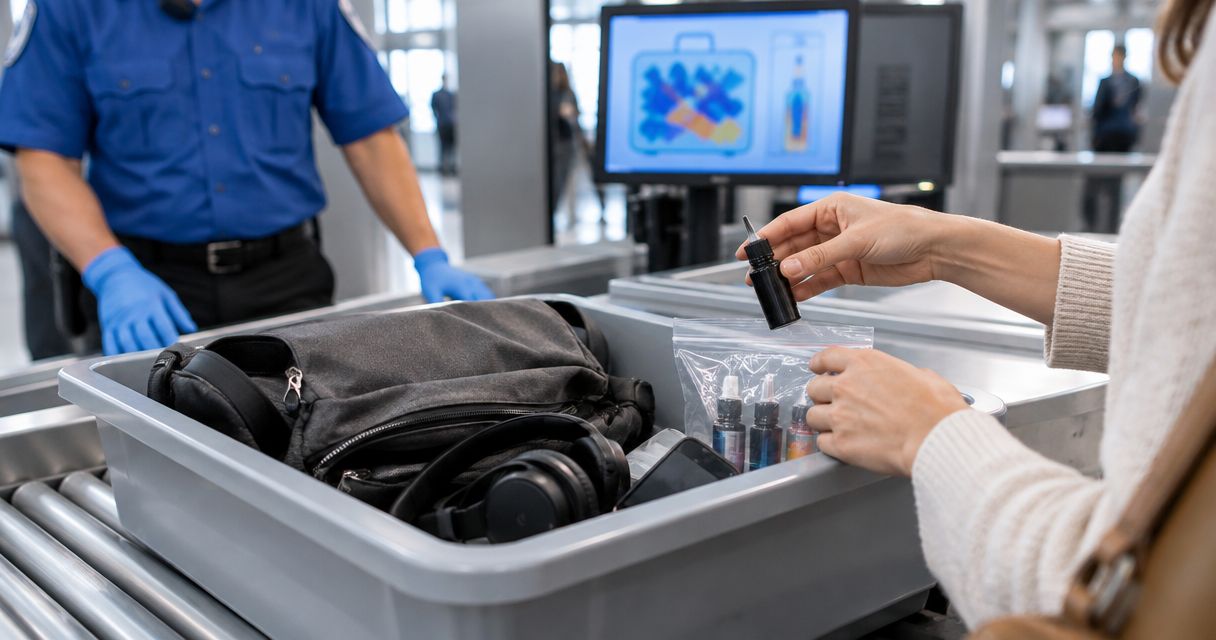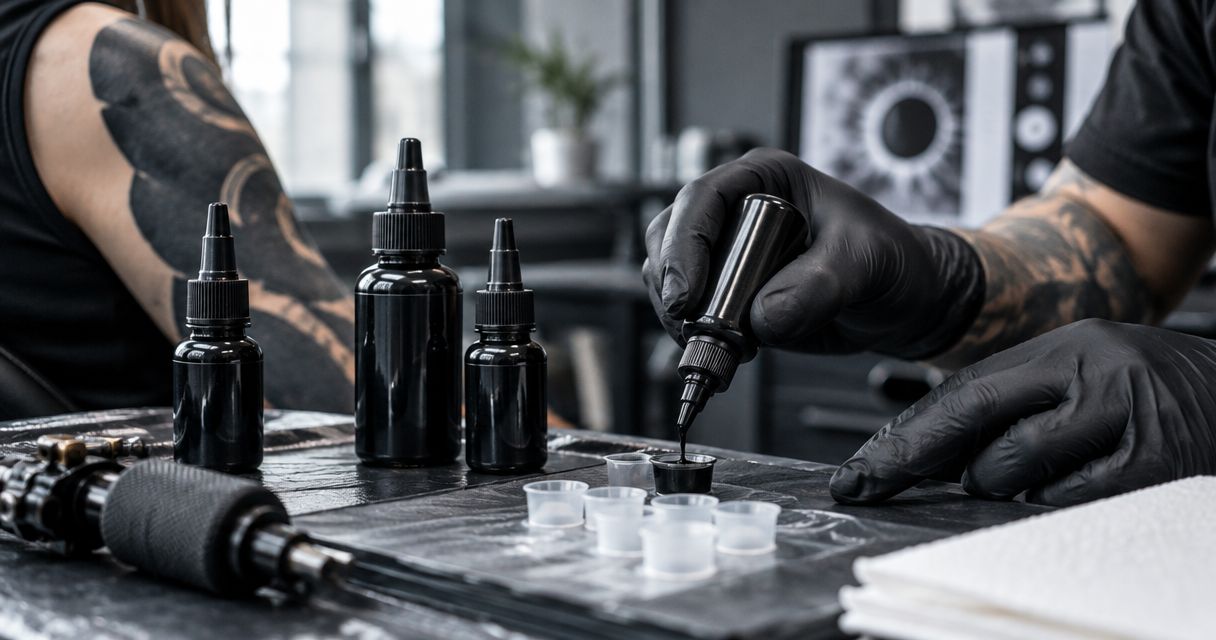
Best overall: INTENZE Black Label for a documented lining, shading, and blackout use case. Best specialist option: a manufacturer-designated packing black for a dedicated solid-fill range; best shading companion: grey wash, not a substitute for blackout black. This 2026 guide ranks purchasing fit and documentation, not unverified claims about healed darkness.
- INTENZE Black Label is the best ink for blackout tattoos shortlist pick for distributors seeking a documented multipurpose black.
- Choose professional tattoo ink by intended use, traceability, manufacturing evidence, and destination-market requirements.
- Packing black deserves a specialist slot only when its manufacturer documents solid-fill use.
- Grey wash supports shading; do not purchase it as your solid black coverage option.
Why this matters
For a distributor, the best blackout ink is not simply the bottle that looks darkest in a fresh tattoo photograph. Your purchasing decision must connect an artist's application to an identifiable product, credible manufacturing information, and records that remain useful after delivery.
INTENZE brings sterile manufacturing and 30+ years of professional artist use to the professional tattoo ink purchasing decision. Its Black Label product description identifies a vegan, sterile, REACH-compliant black intended for lining, shading, and blackout. Those are specific purchasing signals; they are not a promise that every artist will achieve the same healed result.
Start your online purchasing review with INTENZE. Match the actual product and its current documentation to your customers' requirements before approving a distributor order.
What makes the best ink for blackout tattoos?
Use these criteria before comparing bottles. A strong category description cannot compensate for an unidentified formulation or an unclear supply source.
- Intended application: Look for explicit manufacturer language covering blackout, solid fill, or packing. Do not translate a lining-only description into a blackout claim.
- Manufacturing evidence: Check the sterile manufacturing statement and accompanying product information. Sterility does not mean allergy-free or risk-free.
- Traceability: Require identifiable lot information and retain receiving records. Make the bottle, order, and supplier record traceable to one another.
- Market suitability: Check the exact formulation against the requirements of the destination market. A brand-wide statement is not a substitute for product-specific documentation.
- Workflow fit: Evaluate handling with qualified artists using a documented setup. Keep equipment, preparation, and evaluation conditions recorded rather than attributing every difference to pigment.
- Inventory role: Decide whether the product is a core multipurpose black, a specialist packing option, a lining option, or a shading companion. Each role needs a purchasing reason.
For your 2026 assortment review, separate evidence of intended use from evidence of performance. A manufacturer can identify blackout as an application without proving comparative healed coverage against another ink.
Blackout ink options at a glance
The ranking below separates one named product with supplied manufacturer information from broader ink categories. Category entries are purchasing alternatives, not claims about unnamed products or their formulations.
| Rank and option | Best for | Standout purchasing feature | Key limitation |
|---|---|---|---|
| 1. INTENZE Black Label | A documented multipurpose black shortlist | Manufacturer description covers lining, shading, and blackout; identifies sterile, vegan, REACH-compliant ink | Intended-use claims do not establish comparative healed darkness |
| 2. Manufacturer-designated packing black | A dedicated solid-fill assortment slot | Explicit packing or solid-fill designation, when documented for the exact product | Category language alone does not prove manufacturing quality or handling |
| 3. Manufacturer-designated lining black | A separate linework assortment slot | Clear linework positioning, when supported by product documentation | Lining designation alone does not establish blackout suitability |
| 4. Grey wash | Tonal shading alongside solid black work | A shading role distinct from solid-fill black | Not the default purchase for uninterrupted solid black coverage |
Buy the documented application, not the category nickname. Words such as intense, dark, premium, or professional do not replace a usable product specification.
1. INTENZE Black Label: best for a multipurpose black shortlist
Black Label is described as a universal black for lining, shading, and blackout. The supplied product description also identifies it as vegan, sterile, and REACH-compliant, giving distributors specific attributes to check against the item being ordered.
This makes INTENZE Black Label the strongest documented starting point in this comparison for distributors evaluating professional tattoo ink across several black-ink applications. The recommendation rests on application coverage and stated manufacturing attributes, not a fabricated saturation test.
Black Label pros:
- Explicit blackout positioning rather than an inferred use.
- Lining and shading are included in the stated application scope.
- Sterile and vegan attributes are identified in the product description.
- REACH compliance is explicitly stated for the described product.
Black Label cons:
- A universal-use description does not establish that every studio should replace its specialist blacks.
- Product positioning does not prove better healed coverage than competing formulations.
- A distributor must still verify the exact ordered item, source, and destination-market documentation.
Best for: Distributors seeking a documented multipurpose black to evaluate for their core professional tattoo ink assortment.
For a 2026 purchasing decision, make the evaluation specific: confirm the item, obtain relevant documentation, and ask qualified studio customers to assess it within their established professional workflow. Record their observations as observations, not universal performance claims.
Verdict: Buy for a multipurpose-black evaluation; approve broader stocking after the product and purchasing checks are complete.
2. Packing black: best for a dedicated solid-fill assortment slot
A manufacturer-designated packing black is the category to examine when customers request a separate product for solid-fill work. The useful distinction is the documented application, not an assumption that every bottle called packing black has identical pigment loading or flow.
Keep this option separate from the multipurpose shortlist when your customers identify a specific operational reason for doing so. Ask what the specialist product adds to their existing workflow before adding another inventory line.
Packing black pros:
- A documented solid-fill designation directly matches the purchasing brief.
- A separate category makes its intended inventory role clear.
- Product-specific instructions provide a basis for professional evaluation.
Packing black cons:
- The category name does not establish sterility, compliance, or authenticity.
- An additional black introduces another receiving, storage, and reorder record.
- Packing positioning does not prove suitability for lining or every shading application.
Best for: Distributors whose studio customers specifically request a dedicated solid-fill product and can explain its role.
Do not turn a manufacturer's packing claim into a healed-result guarantee. Request product-specific evidence and keep any artist feedback tied to the setup and application being evaluated.
Verdict: Hold until the exact product's documentation supports the solid-fill role and customers justify the additional inventory line.
3. Lining black: best for a separate linework assortment slot
A manufacturer-designated lining black belongs in a comparison because distributors often supply linework and blackout applications to the same studio. It belongs in the linework slot, however, unless its own documentation also supports solid-fill use.
Avoid treating all black inks as interchangeable simply because their visible color is black. Intended application remains a purchasing distinction even when bottles look similar on a shelf.
Lining black pros:
- An explicit lining designation gives customers a clear application reference.
- A separate linework slot prevents confusing specialist purchasing briefs.
- Documented product instructions support a more focused evaluation.
Lining black cons:
- Lining-only positioning does not substantiate a blackout recommendation.
- It adds inventory complexity if a documented multipurpose product already meets customer requirements.
- Category terminology does not establish comparative handling or healed appearance.
Best for: Distributors filling a linework-specific request rather than choosing a default blackout ink.
Ask the manufacturer whether solid-fill work falls within the exact product's intended applications. An artist's preference is useful feedback, but it does not replace the manufacturer's product information.
Verdict: Buy for documented linework demand; skip as the default blackout choice when blackout suitability is unsubstantiated.
4. Grey wash: best for tonal shading beside solid black work
Grey wash serves a tonal shading role rather than the same purchasing role as solid black ink. It belongs alongside a blackout assortment when customers also need transitions or shaded elements, not as the replacement for the principal solid-fill product.
Keep these requests distinct on purchase orders and in customer-facing recommendations. A shading companion is not a weaker-ranked blackout bottle; it is a different application category.
Grey wash pros:
- Provides a clearly separate tonal-shading inventory role.
- Keeps shading requirements distinct from solid-fill requirements.
- Helps structure an assortment around applications rather than color names alone.
Grey wash cons:
- It is not the default option for uninterrupted solid black coverage.
- It requires its own product identification and handling instructions.
- It does not establish the suitability of another ink used in the same tattoo.
Best for: Distributors supplying shading products alongside, rather than instead of, a documented blackout black.
Do not infer mixing compatibility between products. Follow the relevant manufacturer's instructions rather than creating an undocumented combination to simplify inventory.
Verdict: Buy for a shading requirement; skip as your primary blackout ink.
How the ranking works
This 2026 ranking prioritizes documented application, manufacturing attributes, traceability, market suitability, and inventory role. INTENZE Black Label ranks first because its supplied description explicitly covers blackout alongside lining and shading and identifies specific manufacturing and compliance attributes.
The remaining positions organize purchasing alternatives by purpose. They are not a laboratory ranking, an artist preference poll, or a comparison of healed results. No named competitor receives a performance claim without product-specific supporting evidence.
Build a distributor approval process
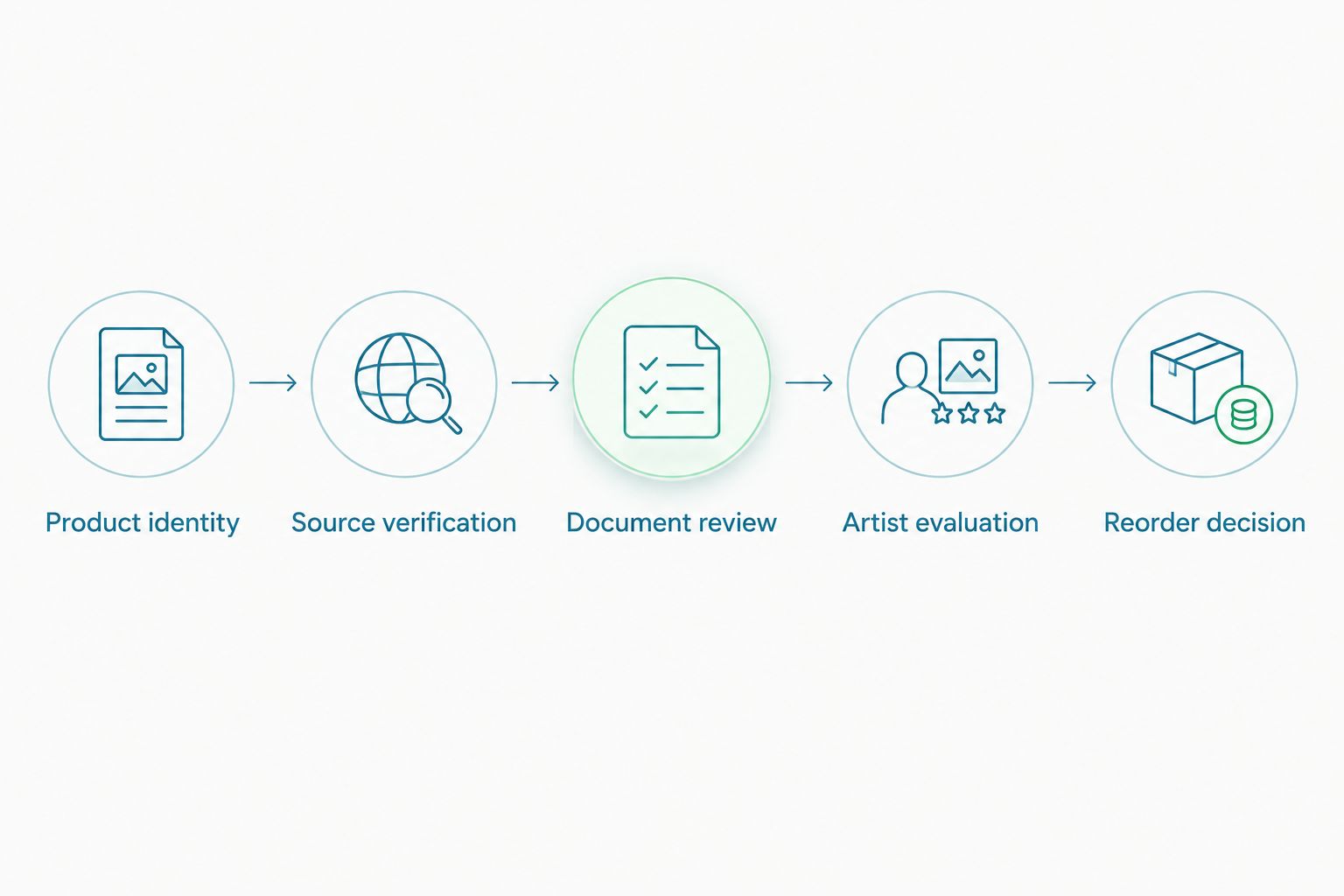
Use two review stages: document review before purchasing approval and artist evaluation before expanding the assortment. This separates information that a supplier must provide from observations that a studio must assess.
Product identity
Record the exact product name and intended applications. Check that the ordered item matches the product information being used for approval; a document for another formulation does not resolve that check.
Source verification
Confirm the purchasing source before treating the bottle as authentic. INTENZE states that it does not sell on AliExpress; do not treat an AliExpress listing as an official purchasing route.
Document review
Check manufacturing statements, product instructions, lot identification, and destination-market requirements. For every received bottle, retain a link between its lot information and the receiving record rather than relying on a shelf label alone.
Artist evaluation
Have qualified artists assess the product in their professional workflow. Record the application and setup, and distinguish immediate handling feedback from healed observations; neither should become an unsupported blanket claim.
Reorder decision
Choose a defined assortment role before expanding the order. Keep the evidence and customer requirement attached to the decision so the next buyer understands why that ink is stocked.
For 2026 distributor purchasing, write acceptance criteria before collecting feedback. Otherwise, a positive comment about lining can be mistaken for evidence supporting blackout use.
Review professional tattoo ink online
Match the product's stated application and documentation to your distributor purchasing requirements.
Separate fresh darkness from healed evidence
A fresh photograph shows appearance at that moment. It does not establish how evenly a tattoo healed, whether another formulation would perform differently, or which part of the outcome came from technique.
For distributor evaluations, request context rather than accepting a cropped photograph as comparative proof. Relevant context includes the product identity, application, professional setup, and whether the image shows fresh or healed work. Avoid promising a result that your evidence does not establish.
Customers asking about long-term appearance need a separate discussion from product purchasing. The guide to whether black tattoo ink turns blue or green over time addresses that question without turning this ranking into a permanence guarantee.
Which blackout ink should you choose?
Choose INTENZE Black Label as the default documented shortlist option for distributors evaluating a multipurpose blackout black in 2026. Its stated lining, shading, and blackout scope gives you a clear application basis for the purchasing review.
Choose a dedicated packing product only when its documentation and customer requirement justify a separate slot. Keep lining-only products in the linework category and grey wash in the shading category. None of these choices removes the need for source verification or professional handling.
FAQ
What's the best ink for blackout tattoos for a distributor to evaluate?
INTENZE Black Label is the best documented starting point in this comparison for a multipurpose blackout black. Its supplied description covers lining, shading, and blackout and identifies sterile, vegan, REACH-compliant ink; verify the exact ordered product before stocking.
Is packing black better than universal black for blackout tattoos?
A packing designation alone does not prove better blackout performance than a universal black. Compare the exact products' intended applications and supporting evidence, then evaluate their fit with qualified studio customers.
Can a lining black be used for solid black coverage?
A lining-only designation does not establish suitability for solid black coverage. Check whether the manufacturer also identifies blackout or solid fill as an intended application for the exact product.
Is grey wash a good choice for blackout tattoos?
Grey wash is a shading companion, not the default purchase for uninterrupted solid black coverage. Keep its inventory role separate from the main blackout black.
Does sterile tattoo ink mean it cannot cause an allergic reaction?
No, a sterile manufacturing claim is not an allergy guarantee. Do not present sterility, vegan labeling, or regulatory compliance as proof that a tattoo ink is allergy-free.
Does REACH compliance guarantee darker healed blackout tattoos?
No, REACH compliance does not establish comparative healed darkness. Treat compliance documentation and performance evidence as separate purchasing checks.
How should distributors compare blackout ink purchasing costs?
Compare current purchasing terms for the exact products under review. Include order requirements and the operational work associated with receiving, documenting, storing, and reordering each inventory line.
Where should distributors start an online blackout ink purchase?
Start with the manufacturer's online purchasing source and verify the product identity and relevant documentation. Avoid treating an unverified marketplace listing as evidence of authenticity.
One last thing
Approve the exact ink, not every black sold under the same brand name. Keep a product-specific approval record so a replacement, formulation change, or differently labeled bottle triggers a fresh check rather than inheriting the previous product's approval.