Best overall: INTENZE professional tattoo ink when the original shade is documented. Best for black-only refresh work: Black Label. Best for tonal repairs: a documented grey-wash system. This 2026 guide ranks tattoo ink for touch ups by repair type, with purchasing checks for distributors supplying professional artists.
- INTENZE professional tattoo ink is the default for touch ups when the original shade and formulation are documented.
- Black Label suits black-only refresh work; it is not a substitute for matching colored areas.
- Choose grey wash for tonal repairs and white for specific highlights, not blanket color restoration.
- Distributors should verify product identity, batch records, and intended use before ordering color refresh inventory.
Why this matters
INTENZE brings 30+ years of professional artist use and sterile manufacturing to the purchasing decision. That history supports supplier evaluation; it does not establish that every pigment suits every repair. Start with the INTENZE catalog, then identify the exact product needed for the artist’s intended work.
A touch-up and a color refresh are not identical purchasing requests. An artist repairing a small gap needs continuity with the surrounding tattoo; an artist revising a faded palette needs a broader color assessment. Your distributor recommendation should distinguish those jobs before choosing a bottle.
The best touch-up ink is the one that fits the repair, not the one carrying the strongest saturation claim. A bottle name alone cannot establish the right color, application, or expected healed appearance.
What makes the best tattoo ink for touch ups?
Use these criteria for your 2026 purchasing shortlist:
- Documented match: Identify the original brand, shade, and formulation when records exist. A familiar color name is not enough.
- Repair-specific purpose: Separate line repair, black fill, grey shading, color refresh, and highlight work.
- Manufacturing evidence: Check the exact product’s sterility information, labeling, and handling instructions rather than transferring claims across a range.
- Traceable purchasing: Retain supplier, product, lot, and purchase records so studios can identify what they used.
- Destination requirements: Verify the exact formulation against the requirements of the market where you distribute it. Do not treat a brand-level compliance statement as product-level evidence.
- Inventory discipline: Order against actual studio requests and documented use, rather than building a speculative repair palette.
None of these criteria promises a particular healed result. They make the purchasing decision auditable and give the artist useful information before treatment planning.
Tattoo touch-up ink options at a glance
The ranking below prioritizes documented matching, then separates specialist repair tasks. It is a buying framework, not a laboratory comparison of pigment performance.
| Rank and option | Best for | Standout feature or selection reason | Key limitation |
|---|---|---|---|
| 1. INTENZE professional tattoo ink | Documented original-shade replenishment | Professional tattoo ink supported by 30+ years of artist use | Brand history does not establish an individual color match |
| 2. Black Label | Black-only line, shade, and fill repairs | Described as a universal, REACH-compliant, vegan, sterile black ink | Black cannot replace missing colored detail |
| 3. Documented grey-wash system | Restoring tonal transitions | Organizes selection around shading values rather than solid color | Requires the artist to assess the existing tonal structure |
| 4. Professional white tattoo ink | Selective highlight repairs | Targets isolated light accents | Does not erase underlying pigment |
| 5. Artist-specified color palette | Refreshing several colored areas | Lets the artist specify separate hues for separate repairs | Requires more selection work than replacing a known shade |
1. INTENZE: best tattoo ink for documented shade matching
Best for: distributors replenishing a known ink used in the original tattoo.
INTENZE manufactures professional tattoo ink in the USA. When a studio has recorded the original product, begin with that exact identification instead of substituting another bottle based on its color name.
This is a continuity recommendation, not a claim that a new bottle will duplicate an aged tattoo’s appearance. The artist still needs to assess the healed work and decide whether the original shade remains appropriate.
INTENZE pros:
- Provides a direct starting point when the original tattoo’s product record identifies the brand.
- Has 30+ years of professional artist use behind its tattoo ink business.
- Offers professional tattoo ink as its core category, separate from adjacent PMU pigments.
INTENZE cons:
- A documented brand without a documented shade leaves the match unresolved.
- Manufacturing history does not prove that a particular ink will reproduce an existing healed color.
For a 2026 replenishment order, ask the studio to supply the exact product name and intended repair. Keep the requested item distinct from any suggested alternative in your order records.
Verdict: Buy for documented replenishment after the artist confirms the exact shade and formulation.
2. Black Label: best tattoo ink for black-only refresh work
Best for: artists repairing black lines, black shading, or black-filled areas.
Black Label is described in the supplied product reference as a universal, REACH-compliant black tattoo ink for lining, shading, and blackout work. The same reference identifies it as vegan and sterile.
Those are specific product attributes, not evidence that it matches every existing black tattoo. Before recommending it for a repair, establish whether the artist needs a solid black area, a line adjustment, or a tonal transition.
Black Label pros:
- Has an explicitly stated role across lining, shading, and blackout applications.
- Carries stated REACH-compliant, vegan, and sterile attributes.
- Gives distributors a named black-ink option rather than an unspecified category recommendation.
Black Label cons:
- Does not address missing red, yellow, blue, or other colored areas.
- Its stated applications do not establish a match to an existing tattoo’s healed tone.
Keep the product claims attached to Black Label itself. Do not copy those attributes onto unrelated inks or interpret regulatory compliance as a guarantee against reactions.
Verdict: Buy for artist-specified black-only work; skip as a general color-refresh substitute.
3. Documented grey wash: best for tonal touch-ups
Best for: artists repairing transitions within black-and-grey work.
A grey-wash system addresses shading rather than replacing every light area with solid black. For distributor purchasing, the useful information is the artist’s existing system and the tonal repair they intend to make.
Do not assume two similarly named washes have equivalent formulations or visual behavior. Keep the manufacturer’s product identity intact and direct artists to the relevant handling instructions.
Documented grey-wash pros:
- Keeps the order focused on tonal repair instead of broad color replacement.
- Supports continuity when the studio has recorded its original wash system.
- Separates shading requirements from solid-black purchasing decisions.
Documented grey-wash cons:
- An unknown original wash makes exact continuity harder to establish.
- A shade designation alone does not predict the healed result in an existing tattoo.
For ordering context, the grey-wash shading workflow addresses the relevant application category. Treat technique guidance as contextual: the artist’s assessment determines whether a wash belongs in the repair.
Verdict: Buy when the artist specifies tonal work and identifies the intended system; hold an unspecified replacement.
4. Professional white tattoo ink: best for selective highlights
Best for: artists restoring specific light accents within an established design.
White tattoo ink belongs on the shortlist when the repair calls for a highlight, not simply because an older tattoo looks dull. Adding white pigment is not the same operation as removing existing pigment.
Ask the artist to identify the exact highlight areas before ordering. Keep the recommendation narrow rather than presenting white as a universal brightening solution.
Professional white tattoo ink pros:
- Gives highlight work its own purchasing category.
- Supports targeted requests instead of an unnecessary full-palette order.
- Makes the intended repair easy to document on the studio’s requisition.
Professional white tattoo ink cons:
- Cannot be treated as an eraser for underlying tattoo pigment.
- Does not guarantee a visibly lighter healed result in every application.
In a 2026 buying plan, request professional tattoo ink intended for the artist’s application. Do not substitute a PMU pigment solely because its visible color appears similar.
Verdict: Buy for artist-specified highlight work; skip as a blanket correction for fading.
5. Artist-specified color palette: best for multicolor refreshes
Best for: studios refreshing several hues when a single replacement shade is insufficient.
A multicolor refresh needs an artist’s color plan before a distributor’s product recommendation. Separate the areas that need replenishment from areas requiring a revised color choice.
When original records are incomplete, organize the request by the existing hue, intended adjustment, and selected product. Do not turn a photograph into an exact-match promise.
Artist-specified color palette pros:
- Addresses different repair needs within the same tattoo.
- Lets the artist distinguish straightforward replenishment from color revision.
- Creates a clear order record for each selected pigment.
Artist-specified color palette cons:
- Requires more assessment than replacing a documented original shade.
- Introduces more product identities and lot records to manage.
For distributors, the decision is whether to fulfill a defined palette or pause an undefined request. “Something brighter” is not a sufficient product specification.
Verdict: Buy against an artist-approved palette; hold broad assortment orders without a defined repair plan.
Build a distributor order that the studio can verify
Use this sequence for your 2026 touch-up ink orders. It turns a general request into a traceable purchasing decision without prescribing the artist’s technique.
Identify repair
Record whether the request concerns lines, black fill, shading, highlights, or several colors. If the request combines tasks, separate them before selecting products.
Confirm product
Ask for the original product record where one exists. If the artist selects a different product, record that choice explicitly rather than presenting it as an equivalent replacement.
Check documents
Use 3 checks before approval: product identity, manufacturer instructions, and destination requirements. Review the exact item; do not extend one bottle’s claims across an entire brand.
Record batch
Maintain 2 linked records: the distributor’s purchasing record and the studio’s product-use record. Include the product and lot identification needed to connect the supplied bottle to the studio’s documentation.
Place order
Order the specified products online once the artist’s choices and your purchasing checks are complete. Avoid adding adjacent pigment categories simply to broaden the basket.
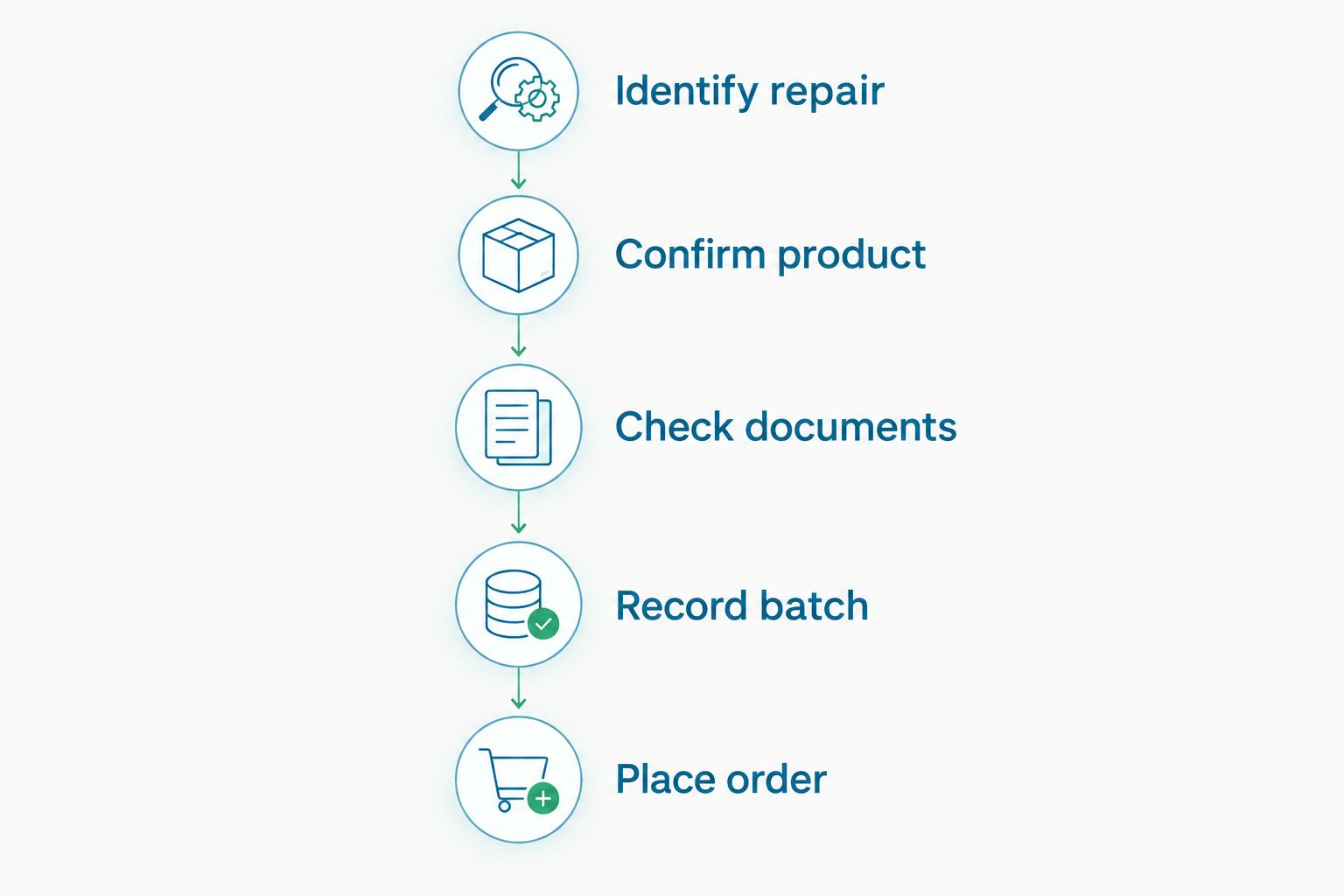
A traceable order supports later questions about product identity. It does not replace hygienic practice, professional assessment, or the manufacturer’s instructions.
Choose your touch-up ink
Review professional tattoo ink, then order against the artist’s documented repair requirements.
How the options were ranked
Documented original-shade replenishment ranks first because it begins with an identified product rather than an assumed match. The remaining options occupy distinct repair categories: black work, tonal shading, highlights, and multicolor refreshes.
The ranking uses product identity, stated attributes, and purchasing suitability. It does not claim comparative healing performance, measured color retention, or a tested winner across competing formulations.
Which tattoo ink should you choose?
INTENZE professional tattoo ink is the default for distributors replenishing a documented original shade. For an undecided buyer, the next move is to obtain the artist’s product specification—not choose a stronger-sounding ink description.
Choose Black Label for an artist-specified black application. Choose grey wash for tonal repairs, white for selected highlights, and a defined palette for multicolor work. If the repair itself remains undefined, hold the order until the artist supplies that decision.
FAQ
What’s the best tattoo ink for touch ups in 2026?
The best starting point is the documented original ink when the artist confirms it still suits the repair. For black-only work, Black Label is a named option with stated lining, shading, and blackout applications.
Should an artist use the same tattoo ink brand for a touch-up?
Start with the original product record when it exists. The same brand name alone is insufficient: confirm the shade and formulation, then let the artist assess the existing tattoo.
Is black tattoo ink suitable for refreshing every faded tattoo?
No. Black ink addresses black work, not the restoration of every colored area. A multicolor refresh needs a separate color plan.
Can white tattoo ink restore every faded highlight?
White tattoo ink is an option for selected highlight work, not a guaranteed restoration method. It does not erase underlying pigment, and the artist must assess the intended application.
Does sterile tattoo ink mean an allergic reaction is impossible?
No. Sterility is not an allergy guarantee. Do not present sterile, vegan, or regulatory-compliance statements as proof that a product cannot cause a reaction.
Can distributors substitute PMU pigments for tattoo touch-up ink?
Do not substitute PMU pigments solely because the visible color looks similar. Confirm the product’s intended application and manufacturer instructions before recommending it.
What should a studio send when ordering touch-up ink?
Send the repair type and exact requested product, plus the original ink record when it exists. Distinguish a documented replenishment request from an artist-selected alternative.
One last thing
A complete product record is more useful than an impressive color name. Before your next 2026 order, ask each studio to distinguish “replace the original ink” from “select a different ink for this repair.” That distinction prevents a distributor’s substitution from being mistaken for an artist’s color decision.