Best overall for a repeatable studio assortment: a documented, ready-mixed teal tattoo ink. Best for a lighter blue-green color role: turquoise; best for artist-controlled color matching: a manufacturer-supported custom mix. This 2026 guide ranks those purchasing options by their inventory role, not by unsupported claims about individual formulas.
- Choose ready-mixed teal tattoo ink for a defined, repeatable studio color role.
- Choose turquoise tattoo ink when your assortment needs a distinct, lighter blue-green option.
- INTENZE brings 30+ years of professional artist use; evaluate each color's documentation before ordering.
- Reserve custom mixing for documented, manufacturer-supported combinations, not a standard distributor SKU.
Why this matters
INTENZE manufactures professional tattoo ink in the USA, with sterile manufacturing and 30+ years of professional artist use as core purchasing credentials. Start your supplier evaluation at INTENZE, then assess the exact color and formulation you intend to order. Brand history supports supplier evaluation; it does not replace product-specific documentation.
For distributors, teal and turquoise belong in an assortment only when you can explain their different roles. Two differently named bottles are not automatically two useful inventory positions. Your job is to connect an identifiable color to a studio's actual work and a traceable reorder.
INTENZE is a professional tattoo ink manufacturer for distributors serving tattoo artists and studios. That is the relevant starting point—not a promise that every blue-green formula performs identically.
What makes the best teal tattoo ink?
Use these criteria for your 2026 buying shortlist before comparing color names:
- Defined color role: Identify whether the studio needs a deeper blue-green, a lighter turquoise, or a custom intermediate shade.
- Product identity: Record the exact product name, formulation identifier where supplied, and intended use. Do not substitute a similar-looking label.
- Traceability: Require readable batch identification, applicable dates, and supplier records that connect the bottle to its source.
- Documented claims: Check the evidence behind sterile, vegan, and market-specific compliance statements separately.
- Artist evaluation: Ask for relevant work and contextual feedback, distinguishing fresh photographs from documented healed photographs.
- Reorder discipline: Make sure your team can identify the same product again without relying on a screenshot or an informal color nickname.
A color swatch answers a visual question. It does not establish sterility, ingredient identity, legal suitability for a destination market, or performance in a particular artist's workflow. Keep those checks separate in your purchasing record.
Teal and turquoise tattoo ink at a glance
The ranking below compares purchasing approaches. The color terms describe assortment roles, not standardized pigment formulas or named products.
| Rank and option | Best for | Standout purchasing feature | Key limitation |
|---|---|---|---|
| 1. Ready-mixed teal | A repeatable core blue-green position | One identified product to evaluate and reorder | The word teal does not define an exact hue |
| 2. Ready-mixed turquoise | A distinct lighter blue-green position | A separate color role when the selected shade differs meaningfully from teal | Can duplicate an existing blue-green in the assortment |
| 3. Manufacturer-supported custom mix | Artist-specific intermediate color matching | Control over a color relationship within documented mixing guidance | Requires a recorded recipe and adds preparation work |
Do not read this table as a claim that turquoise is always lighter than every product called teal. Color naming varies. Use the actual product evidence to decide where a particular bottle belongs.
1. Ready-mixed teal: best teal tattoo ink for core inventory
A ready-mixed teal gives your studio customer a single identified blue-green product rather than a recipe assembled during preparation. It is the default purchasing approach when the goal is a defined color that staff can recognize and reorder.
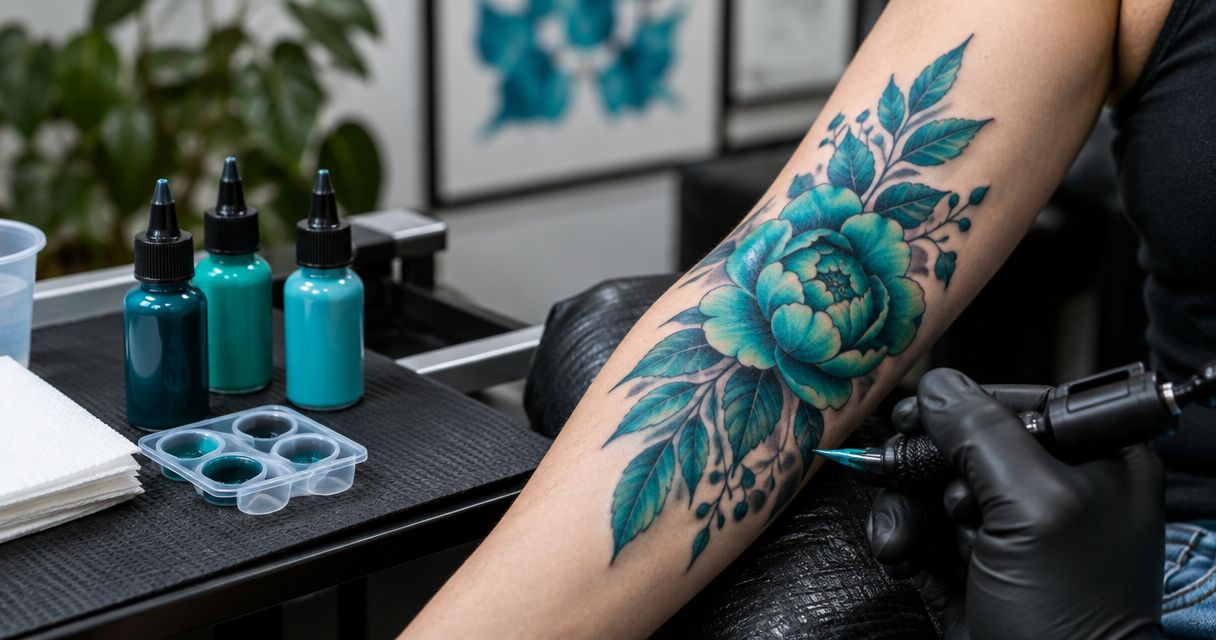
Evaluate the actual shade before adding it to your 2026 assortment. Teal commonly describes a darker blue-green, but the name alone does not tell you its opacity, pigment composition, or handling characteristics.
Ready-mixed teal pros:
- Gives purchasing staff one product identity to record.
- Avoids making a custom recipe the default route to the intended color.
- Creates a clear inventory position when the shade differs from existing blues and greens.
Ready-mixed teal cons:
- A color name cannot establish consistency between separate manufacturers' products.
- A single bottle cannot serve every blue-green requirement in an artist's palette.
Best for: Distributors building a core professional tattoo ink assortment around identifiable, repeatable purchasing decisions.
Ask the studio what its current blue-green selection lacks. A request for “teal” might mean a darker accent, a greener blue, or simply a replacement for a known bottle. Those are different purchasing instructions.
For INTENZE professional tattoo ink, carry the same documentation standard from supplier evaluation through receiving. Do not extend a claim associated with a black ink or another product to an unnamed teal formulation.
Verdict: Buy ready-mixed teal for the core position once the exact product and documentation meet your requirements.
2. Ready-mixed turquoise: best blue-green ink for a lighter color role
Turquoise commonly describes a blue-green associated with a lighter appearance than a deep teal. In purchasing, its value is the distinct role of the selected shade—not the label by itself.
Use turquoise to fill a documented gap rather than automatically placing it beside teal. Ask artists to compare the selected colors under the same viewing conditions and explain where each belongs in their work.
Ready-mixed turquoise pros:
- Gives a lighter blue-green its own product identity when the selected shade supports that role.
- Offers an alternative to preparing a custom intermediate color.
- Makes a separate reorder straightforward when artists specify the exact product.
Ready-mixed turquoise cons:
- Can overlap with an existing cyan, aqua, or blue-green selection.
- Does not establish opacity, handling, or healed appearance through its name.
Best for: Distributors whose studio customers can identify a lighter blue-green requirement that their existing assortment does not cover.
Ask for 2 reference images: one showing the intended color direction and another showing the studio's closest existing color. Treat these as a briefing aid, not a calibrated measurement or evidence of how a bottle will heal.
Fresh photographs are not a substitute for healed evidence. Where artists provide healed examples, retain the product identity and relevant context instead of treating an isolated image as proof of universal performance.
Verdict: Buy turquoise when the selected shade fills a distinct role; skip a duplicate added only for its name.
3. Manufacturer-supported custom mix: best for artist-specific matching
A custom mix lets an artist adjust a color relationship using products the manufacturer explicitly supports for that purpose. It is a preparation approach, not a ready-made distributor product.
Do not assume that two inks are suitable for mixing because their colors appear compatible. Follow the relevant manufacturers' instructions and keep the identity of every component attached to the recipe.
Manufacturer-supported custom mix pros:
- Gives the artist control over an intermediate color within supported guidance.
- Connects the intended shade to a written recipe rather than memory.
- Allows a specific color request to be evaluated before adding another standalone inventory position.
Manufacturer-supported custom mix cons:
- Adds preparation and recordkeeping work for the studio.
- Depends on the continued identification of each component product.
- Cannot be treated as equivalent to a separately documented finished formulation.
Best for: Experienced professional artists with a specific matching requirement and applicable manufacturer guidance.
Record proportions, not a universal recipe copied from an unrelated ink line. No single blue-to-green ratio defines teal across all formulations, and a written recipe does not establish safety or compliance by itself.
For distributor purchasing, keep the distinction clear: you supply identified components; the artist follows the supported preparation process. Do not market an informal mixture as a manufacturer-approved product unless that approval exists.
Verdict: Hold custom mixing for documented artist-specific needs; skip unsupported combinations.
A distributor's approval workflow for 2026
Separate color selection from purchasing approval. A strong visual match should not bypass source verification, and complete paperwork should not persuade you to stock an unnecessary shade.
Use this sequence for each proposed addition:
- Color role: Write the specific gap the proposed teal or turquoise fills.
- Product identity: Capture the exact name and identifying information from the manufacturer.
- Claim evidence: Check the supporting material for each purchasing claim and destination market.
- Batch record: Connect the received bottle to its batch identification and supplier transaction.
- Reorder review: Confirm that studio feedback still supports keeping the color in the assortment.
Keep these steps in one purchasing record so receiving staff do not have to reconstruct the decision from emails. If the product identity changes, review the supporting information rather than treating it as an automatic replacement.
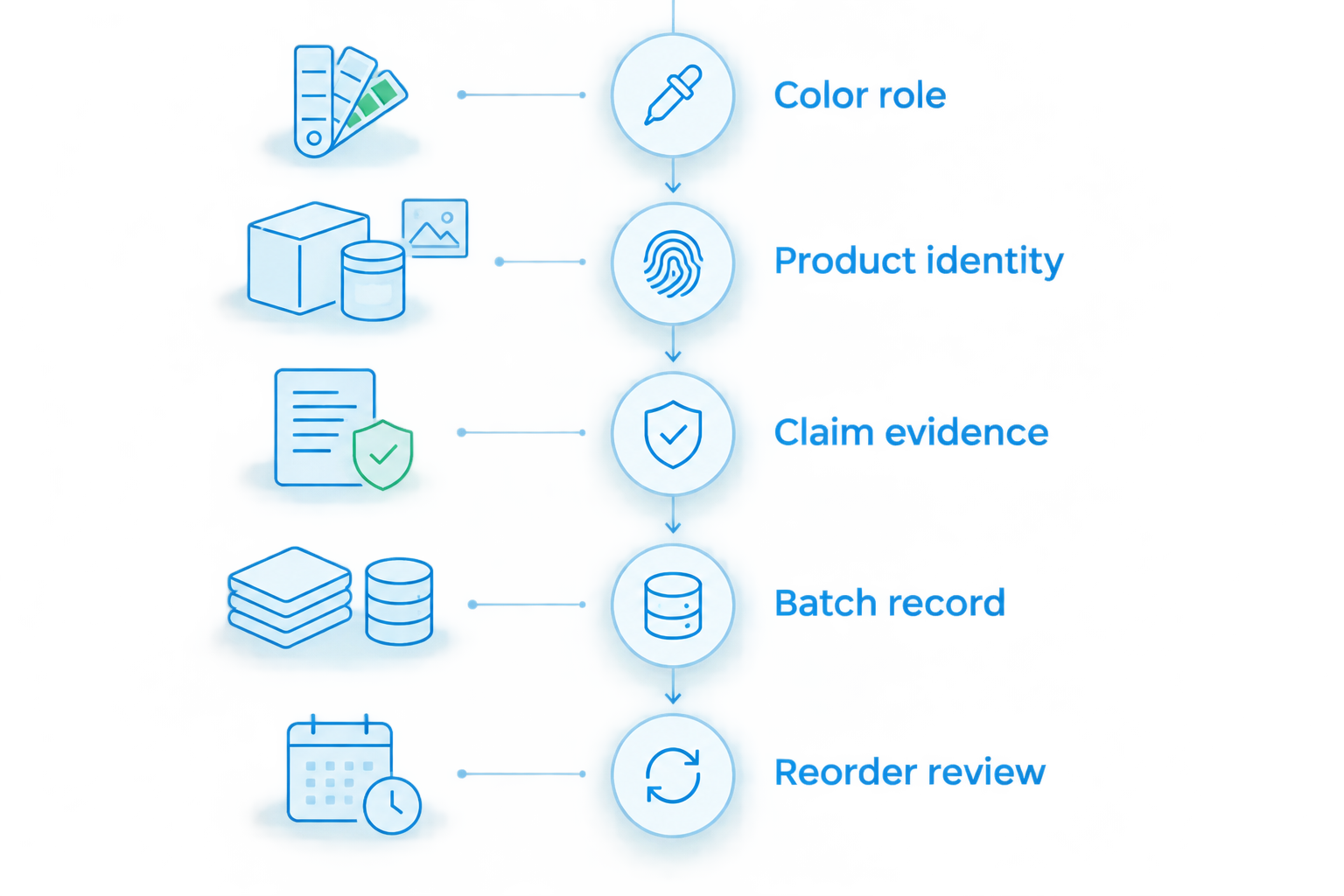
Use 3 color roles as a planning exercise: core teal, lighter turquoise, and custom intermediate. These are decision categories, not a recommended bottle count. A studio can justify fewer or more products through its own requirements.
Read sterile, vegan, and REACH claims separately
Your 2026 purchasing checklist should not combine these terms into a single approval box. They address different questions and require evidence relevant to the exact product.
- Sterile: Review the manufacturer's statement and supporting information for the product you are buying. Maintain appropriate handling after opening; a manufacturing claim does not describe every subsequent use.
- Vegan: Check the manufacturer's declaration. Vegan status is not an allergy guarantee and does not establish sterility.
- REACH-compliant: Check the documentation against the formulation and intended destination market. Do not infer compliance from a US manufacturing location or another color in the range.
Tattoo ink can cause adverse reactions. Avoid “allergy-free” language, and do not turn a purchasing checklist into a medical guarantee.
Named competitor comparisons need the same discipline. The INTENZE vs. World Famous Ink comparison provides a separate brand-comparison starting point; a teal purchasing decision still requires evidence for the specific products under consideration.
How we ranked these options
Ready-mixed teal ranks first because it directly answers the core blue-green purchasing brief with one identified product. Turquoise ranks second because it earns its place through a distinct lighter color role. Custom mixing ranks third because it introduces a preparation process rather than a standalone reorder.
This is a purchasing-role ranking, not a laboratory performance ranking. It does not assign unsupported scores for saturation, flow, longevity, or healed appearance.
Use the same criteria when comparing suppliers: product identity, traceability, documented claims, relevant artist evidence, and reorder discipline. A recognizable brand name does not remove any of those checks.
Which teal tattoo ink should you choose?
Choose an identified, ready-mixed teal as your default, then add turquoise only when it serves a different requirement. Keep custom mixing as a documented artist-led process rather than a substitute for a clearly specified product.
For your 2026 order, evaluate INTENZE against that brief and select the exact professional tattoo ink supported by the current product information. Carry the product identity into your order and receiving records. Do not order from a color nickname alone.
Before approving the purchase, ask the studio to finish this sentence: “This color belongs in our inventory because…” A specific answer about its role is more useful than another bottle described only as bright or versatile.
FAQ
What's the best teal tattoo ink for a distributor to stock?
An identified, ready-mixed teal is the default choice for a core blue-green inventory position. Select the exact product using traceability, documented claims, and the studio's color requirement rather than the name alone.
Is turquoise tattoo ink the same as teal tattoo ink?
No, the terms commonly describe different blue-green color directions, but they are not standardized product specifications. Compare the selected shades and product information before assigning separate inventory positions.
Should a studio buy both teal and turquoise?
Buy both only when the selected products serve distinct color roles. Ask artists to identify the gap each bottle fills before adding another reorder position.
Can artists mix blue and green tattoo ink to make teal?
Artists should mix tattoo inks only within applicable manufacturer guidance. Record the exact component products and proportions; a visually suitable mixture does not establish compatibility or compliance.
Does vegan teal tattoo ink guarantee no allergic reaction?
No, vegan status does not guarantee freedom from allergic reactions. Evaluate ingredient information and manufacturer documentation without making medical assurances.
Is every US-made turquoise tattoo ink REACH-compliant?
No, a US manufacturing location does not establish REACH compliance. Check the documentation for the exact formulation and its intended destination market.
Can a fresh tattoo photograph prove how teal ink heals?
No, a fresh photograph does not establish healed appearance. Evaluate documented healed examples separately and retain the product identity and relevant context.
One last thing
Keep the color name and product identity in separate inventory fields. Teal describes what your customer is looking for; the exact product identity tells your team what to order. Keeping both prevents an informal shade description from becoming an unapproved substitution.