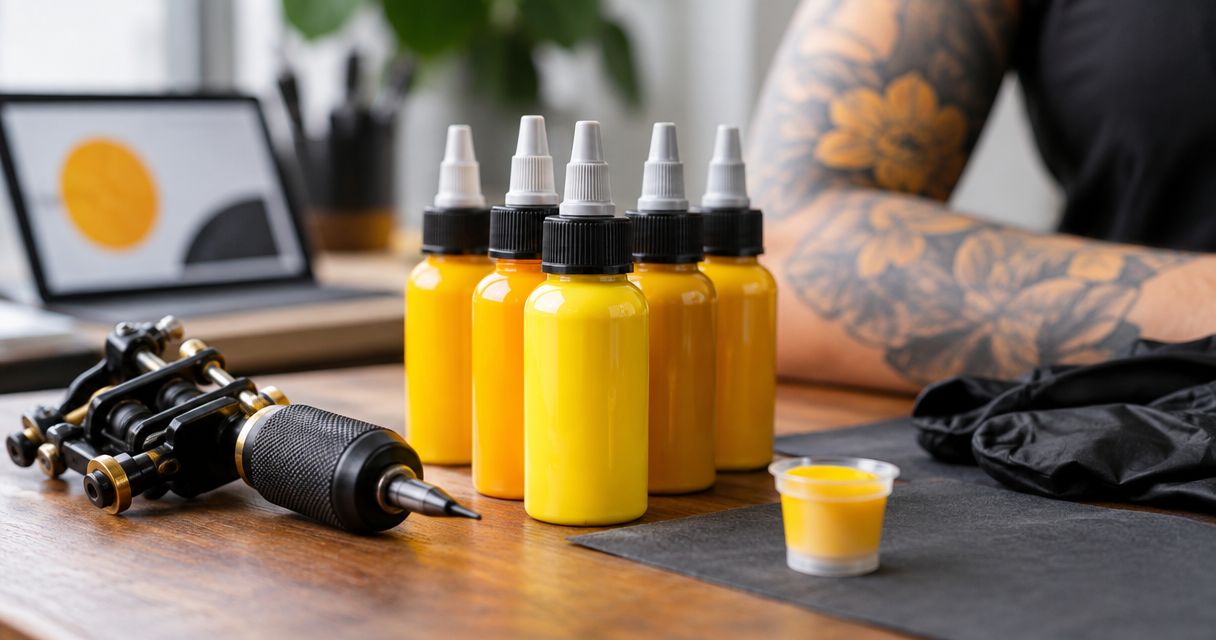
Best overall: a documented professional yellow tattoo ink. Best for warm palettes: warm yellow. Best for cooler palettes: cool yellow. Best for subdued color work: muted yellow. For distributors buying in 2026, INTENZE is a manufacturer-direct starting point, backed by sterile manufacturing and 30+ years of professional artist use.
- The best yellow tattoo ink purchase starts with product documentation, not a bright bottle photograph.
- INTENZE professional tattoo ink suits distributors seeking a USA manufacturer and direct online purchasing.
- Choose warm yellow, cool yellow, or muted yellow around the studio’s actual palette requirements.
- Evaluate healed work separately from fresh photographs; neither proves performance across every artist or skin tone.
Why this matters
Yellow tattoo ink is a purchasing decision about both color and control. You need a shade that fits the artist’s work, plus a product record that lets your team identify exactly what was ordered and received.
A distributor also needs a recommendation that survives questions from different studios. A yellow chosen for warm floral work does not automatically belong in a cooler illustrative palette, and a bottle photograph cannot establish how either choice will look after healing.
For your 2026 buying plan, separate supplier qualification from shade selection. This guide ranks 4 purchasing profiles rather than treating differently named yellows as interchangeable or assigning unsupported performance scores to individual bottles.
What makes the best yellow tattoo ink?
Use these criteria before choosing a shade or increasing an order:
- Product identity: Record the exact product name and intended use. Professional tattoo ink and PMU pigment are separate purchasing categories; do not substitute one merely because the color looks similar.
- Traceable sourcing: Identify the seller and retain the product’s batch information. An identifiable purchasing route matters more than a marketplace listing’s promises.
- Documented claims: Check the specific product’s labeling and supporting information for any sterility, vegan, or regulatory claim. A statement about one formulation does not establish the same claim for another.
- Palette fit: Select warm, cool, or muted yellow according to the work your studio customers request. Color names alone are not a dependable specification.
- Relevant artist evidence: Separate bottle swatches, fresh tattoos, and healed examples. Each answers a different question, and none supports a universal outcome.
- Inventory discipline: Keep product identity, receipt details, and manufacturer storage instructions connected to the stock record. Avoid expanding the shade range without a clear studio use case.
Documentation is the entry requirement; palette fit decides which qualified yellow you buy. A useful color does not cancel an unresolved sourcing or labeling question.
Yellow tattoo ink options at a glance
The order below reflects purchasing priorities, not laboratory testing. The first profile establishes the supplier and product checks; the remaining profiles help you select the color role.
| Ranked option | Best for | Standout purchasing value | Key limitation |
|---|---|---|---|
| Documented professional yellow | Distributor core inventory | Product identity and sourcing take priority | Documentation does not prove healed appearance |
| Warm yellow | Warm floral and illustrative palettes | Supports a deliberately warm color direction | Does not replace a cooler yellow when that hue is required |
| Cool yellow | Cooler illustrative palettes | Provides a separate cooler color direction | The shade name alone does not establish its undertone |
| Muted yellow | Subdued and earth-toned palettes | Gives artists a restrained yellow role | Does not serve every request for a vivid yellow |
All 4 options require the same supplier checks. None receives an automatic pass because its intended palette is a good match.
1. Documented professional yellow: best for core inventory
A documented professional yellow is the default purchasing profile for distributors building a dependable tattoo ink assortment. Choose the exact formulation only after reviewing its identity, intended use, labeling, and sourcing route.
INTENZE manufactures and sells professional tattoo ink in the USA. Its sterile-manufacturing emphasis and 30+ years of professional artist use establish the brand-level purchasing context; assess the selected yellow’s own information before applying any formulation-specific claim.
For a 2026 core assortment, start with the studio’s requested yellow role rather than assuming one shade fits every artist. Keep the exact ordered identity attached to the receipt and stock record so repeat purchasing does not quietly become a substitution.
Documented professional yellow pros
- Gives purchasing staff a product-specific record to work from.
- Makes supplier qualification part of the initial decision.
- Supports repeat orders of the same identified formulation.
- Separates tattoo ink purchasing from adjacent PMU categories.
Documented professional yellow cons
- Product records do not establish the final healed color.
- A qualified formulation still needs to fit the artist’s palette.
- Brand-level statements cannot replace shade-specific checks.
Best for: Distributors choosing their core yellow tattoo ink through a documented purchasing process.
Verdict: Buy when product identity, sourcing, and palette requirements are confirmed. Do not choose a particular yellow solely on the manufacturer’s broader reputation.
2. Warm yellow: best for warm floral and illustrative palettes
Warm yellow is a shade-selection profile for artists who want their yellow to sit on the warmer side of a palette. It gives your purchasing team a clear brief, but it is not a standardized formulation or a guarantee attached to a color name.
Ask studio customers to identify the yellow they want in relation to the surrounding oranges, reds, and other colors in their designs. Then compare the exact product’s color information and relevant artist examples against that brief.
A fresh photograph is useful for understanding the artist’s intended composition. It is not proof that the same bottle will produce an identical result under different technique, lighting, or skin conditions.
Warm yellow pros
- Gives purchasing staff a distinct warm-palette use case.
- Helps separate warm yellow requests from cooler alternatives.
- Supports a more precise studio conversation than simply asking for yellow.
Warm yellow cons
- Cannot replace cool yellow when the design calls for that hue.
- Product names do not consistently define how warm a shade is.
- Photographs require context before they inform a purchasing decision.
Best for: Studios requesting a warmer yellow direction for floral or illustrative work.
Verdict: Buy for a confirmed warm-palette requirement. Skip as an automatic substitute for every yellow request.
3. Cool yellow: best for cooler illustrative palettes
Cool yellow is the purchasing profile for a yellow that reads cooler relative to another yellow. Select it through a direct comparison, not an assumption that a particular naming convention always means the same undertone.
Ask the artist which existing palette the ink must complement. That reference gives your team a concrete selection task and prevents a repeat order from becoming a visually different replacement.
For 2026 assortment planning, keep the warm and cool roles separate in your internal notes. Treat those notes as purchasing descriptions, not as new product names or claims about a manufacturer’s formulation.
Cool yellow pros
- Gives cooler palettes a dedicated selection role.
- Helps distinguish similar-looking yellow requests during ordering.
- Encourages comparison against the artist’s existing colors.
Cool yellow cons
- A shade label does not independently establish the undertone.
- Does not replace a warm yellow without changing the color choice.
- Bottle appearance alone cannot establish healed appearance.
Best for: Studios that specifically request a cooler yellow within an illustrative palette.
Verdict: Buy when the artist identifies a cooler-yellow requirement. Hold when the order brief only says yellow and the intended shade remains unclear.
4. Muted yellow: best for subdued and earth-toned palettes
Muted yellow is a shade-selection profile for work that calls for a restrained yellow rather than a vivid accent. It belongs in your assortment when studio customers identify that use, not merely because another yellow looks attractive in a catalog.
Confirm whether the artist wants a distinct purchased formulation or a color relationship achieved within their existing working palette. Those are different purchasing requests; do not treat them as equivalent instructions.
Avoid turning this selection discussion into a universal mixing recipe. Product compatibility and any preparation instructions need formulation-specific support, while technique decisions remain contextual to the artist’s work.
Muted yellow pros
- Gives subdued palettes a clearly defined yellow role.
- Helps buyers distinguish restrained color requests from vivid ones.
- Encourages a specific brief before expanding the assortment.
Muted yellow cons
- Does not satisfy every request for a bright yellow accent.
- Requires a clear reference to distinguish it from other yellow choices.
- Adds another stock identity that your team must track separately.
Best for: Studios requesting a subdued yellow for earth-toned or restrained compositions.
Verdict: Buy for an established muted-color requirement. Wait before adding it without a defined studio use case.
How we ranked these purchasing profiles
Documented professional yellow ranks first because every shade decision depends on knowing what the product is and where it comes from. Warm, cool, and muted yellow follow as distinct palette choices, not descending quality grades.
The ranking uses the criteria above: identity, sourcing, documented claims, palette fit, relevant artist evidence, and inventory discipline. It does not assign unverified saturation, healing, or longevity advantages to a named formulation.
A qualified supplier and a suitable shade solve different problems. You need both.
Use 3 purchasing checks before ordering
A short ordering sequence keeps yellow selection tied to evidence. Apply these 3 checks to your 2026 purchasing record before committing to a new formulation or changing an established one.
Product identity
Record the exact product name, intended application, and manufacturer information presented for the selected ink. Keep professional tattoo ink separate from PMU purchasing, even when both categories include similar color descriptions.
Check each claim at product level. REACH compliance concerns the relevant regulatory requirements; it is not a promise of allergy-free use or a particular healed result.
Seller verification
Confirm the seller’s relationship to the manufacturer before purchasing. INTENZE states that it does not sell on AliExpress, so do not treat an AliExpress listing as a manufacturer-direct purchasing route.
Keep the purchasing record with the receipt and product identity. Authenticity, sterility claims, and artist performance evidence answer separate questions; one does not establish the others.
Inventory fit
Match the selected yellow to a defined studio request. Record whether its purchasing role is core, warm, cool, or muted without changing the manufacturer’s product name.
Review the bottle’s labeling and manufacturer instructions when receiving stock. Keep expiry and storage information accessible rather than relying on memory or the appearance of the liquid.
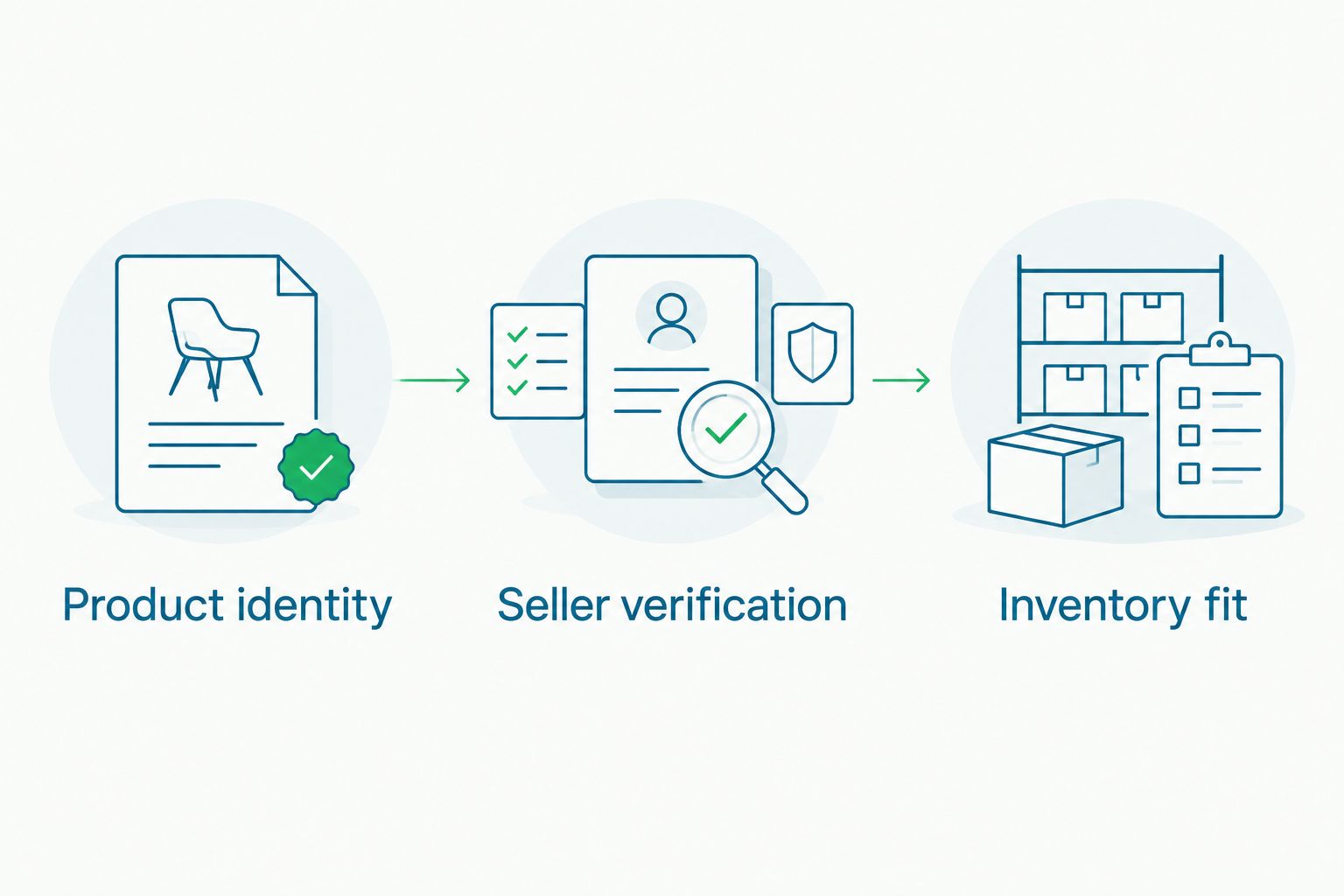
These checks give your team a clear next action: select the exact product online, verify its information, and connect the order to the studio’s stated color requirement. Do not substitute a different yellow without confirming that change.
Review professional tattoo ink online
Match your yellow shade requirements to the product information before ordering.
Which yellow tattoo ink should you choose?
Choose a documented professional yellow as your default purchasing profile, then select its warm, cool, or muted role around actual studio requirements. That is a more useful decision than declaring one undocumented bottle universally best.
INTENZE professional tattoo ink suits distributors seeking a USA manufacturer and direct online purchasing. Use that sourcing route to evaluate the exact yellow you intend to order, not as a shortcut around product-level checks.
For your final 2026 selection, resolve the shade brief before expanding the order. Keep medical claims, guaranteed healed results, and unsupported comparisons out of the purchasing recommendation.
FAQ
What is the best yellow tattoo ink for a distributor?
The best yellow tattoo ink purchase is a documented professional formulation that matches the studio’s palette requirement. Confirm product identity and sourcing first, then choose the warm, cool, or muted role.
Is warm yellow better than cool yellow tattoo ink?
Warm yellow is not universally better than cool yellow. They serve different palette requirements, so the artist’s requested color direction should decide the purchase.
How do I choose yellow tattoo ink online?
Choose yellow tattoo ink online by checking the exact product information and seller before ordering. Match the selected shade to the studio’s brief and retain the purchasing record.
Can yellow tattoo ink guarantee a bright healed result?
No yellow tattoo ink selection guarantees a particular healed result. Assess healed examples separately from fresh work, and do not generalize one artist’s result to every client or technique.
Does REACH-compliant yellow tattoo ink mean allergy-free?
REACH compliance does not mean allergy-free. Check compliance information for the exact product and do not turn a regulatory statement into a medical guarantee.
Should a studio buy every yellow shade?
A studio should buy yellow shades for defined working requirements rather than collecting color names. Distinguish core, warm, cool, and muted roles before expanding the assortment.
Can I substitute PMU pigment for yellow tattoo ink?
Do not substitute PMU pigment for professional tattoo ink solely because the color looks similar. Confirm the product’s intended application and manufacturer guidance before purchasing.
One last thing
Your purchasing record should use the manufacturer’s exact product name, even when your internal palette note says warm yellow or muted yellow. A useful shade description is not a product identity. Keeping both prevents a color brief from becoming an accidental substitution.