Yes—distributors can buy professional tattoo ink through the manufacturer’s online store, but an online purchase does not establish an authorized distribution relationship. Before placing a distributor order in 2026, confirm the purchasing terms and resale permissions separately; checkout alone does not grant wholesale terms or permission to represent the manufacturer.
- Buy INTENZE ink directly from manufacturer online; confirm distributor terms separately before committing to a resale order.
- A purchase receipt documents a transaction, not authorized distributor status.
- Professional tattoo ink purchasing requires product-specific documentation, traceability, and clear resale terms.
- Build your order around studio demand, then verify the purchasing arrangement before expanding inventory.
Can distributors buy Intenze ink directly from the manufacturer?
Buying directly and becoming an authorized distributor are different decisions. INTENZE manufactures professional tattoo ink and PMU pigments in the USA and brings 30+ years of professional artist use to the purchasing decision. Start with INTENZE for online purchasing, then resolve the business terms that apply to your intended resale activity.
Do not interpret a completed order as approval to advertise an official relationship. Your invoice records what you purchased; a distribution agreement addresses how you represent and resell it.
| Purchasing decision | Best for | What it addresses | Limitation |
|---|---|---|---|
| Manufacturer-direct online purchase | Buyers placing an order through the manufacturer | Product selection and the transaction shown at checkout | Does not, by itself, establish distributor status |
| Confirming a distribution arrangement | Businesses planning an ongoing resale relationship | Written clarification of purchasing, representation, and resale terms | Requires confirmation beyond an ordinary purchase receipt |
These are not competing ink formulations or account tiers. They are separate parts of procurement, and your business needs to distinguish them before making commitments to customers.
How to approach a direct distributor purchase
- Define the order’s purpose. State whether you are replenishing studio supplies, purchasing for resale, or seeking an ongoing distribution relationship. A supplier needs that distinction to answer the right commercial questions.
- Identify the exact products. Prepare product names and intended applications from the current catalog. Do not substitute a general request for “tattoo supplies” when you need professional tattoo ink documentation.
- Describe your business. Explain your sales channels, customer type, and intended sales territory. Ask which purchasing arrangement applies rather than assuming every business buyer receives the same terms.
- Request written confirmation. Clarify resale permissions, any authorization process, and the commercial conditions relevant to your order. Retain the response with your purchasing records.
- Reconcile the order when received. Match the shipment to the order and record the identifying information on the bottles. Separate purchasing approval from receiving checks; both serve different purposes.
The practical rule for 2026 is straightforward: buy through the manufacturer, but verify the relationship before describing yourself as an authorized distributor.
Why this matters
Distributors make promises beyond the contents of a shipment. Your customers rely on accurate product descriptions, a documented supply source, and clear answers when a bottle or order needs investigation. A purchasing process that stops at checkout leaves those responsibilities unresolved.
INTENZE professional tattoo ink is best for distributors seeking a manufacturer-direct source with 30+ years of professional artist use. That experience is a reason to evaluate the brand; it is not a substitute for checking the documentation and commercial terms attached to your purchase.
For your 2026 buying plan, keep the evidence in separate categories: manufacturing and product documentation, transaction records, and resale authorization. None of those documents automatically replaces the others. That separation also makes it easier for purchasing staff to answer a studio’s question without overstating what an invoice proves.
What should a distributor prepare before ordering?
Prepare a purchasing brief before you build a large cart. The brief should describe what you intend to sell, who will buy it, and what information your staff need to support those customers. Keep professional tattoo ink at the center of the brief; assess adjacent categories separately.
Product scope
List the exact tattoo ink products you want to evaluate, with the intended applications your customers request. Separate black ink, color work, and other application needs in your internal planning without assuming that every bottle serves every technique.
Do not create product names from broad category descriptions. Use the manufacturer’s current naming when preparing a purchase request so the order, documentation, and receiving record refer to the same item.
Business scope
Describe whether your customers are individual professional artists, independent studios, or purchasing teams serving several locations. Identify the channels through which you intend to resell. Ask whether your proposed use of brand names, images, and product descriptions requires approval.
Treat these as questions to resolve, not benefits included with an online account. A buyer login and an invoice do not explain the full scope of a commercial relationship.
Documentation scope
State which records your business needs to retain and which product questions customers routinely ask. Request relevant safety information, product instructions, and support for any compliance claims you intend to repeat.
A useful purchasing brief is specific enough that another employee can check the resulting order without relying on the original buyer’s memory. It should also identify who approves substitutions, resolves discrepancies, and maintains the purchasing file.
Why distributor purchasing requirements vary
The right purchasing process depends on your intended transaction. Do not assume that a studio replenishment order and a resale agreement require identical review.
- Purchase purpose: Buying supplies for professional use and seeking authorization to distribute are different requests. Tell the manufacturer which one you mean.
- Sales territory: Identify where you intend to sell and request product-specific documentation relevant to that market. Do not treat a compliance statement as universal permission to sell everywhere.
- Sales channel: Describe your own website, physical supply operation, or other planned channels. Ask about the terms governing your intended use rather than inferring permission.
- Product application: Keep professional tattoo ink and PMU pigment requirements separate. A shared manufacturer does not make the products interchangeable.
- Customer documentation: A studio asking about a bottle’s identity needs a different response from a purchasing department asking about your supplier relationship. Keep both records accessible.
For 2026 procurement, record the answers against the actual purchasing arrangement. Avoid turning a response about a particular order into a permanent policy for every future transaction.
What should you verify before committing to a resale order?
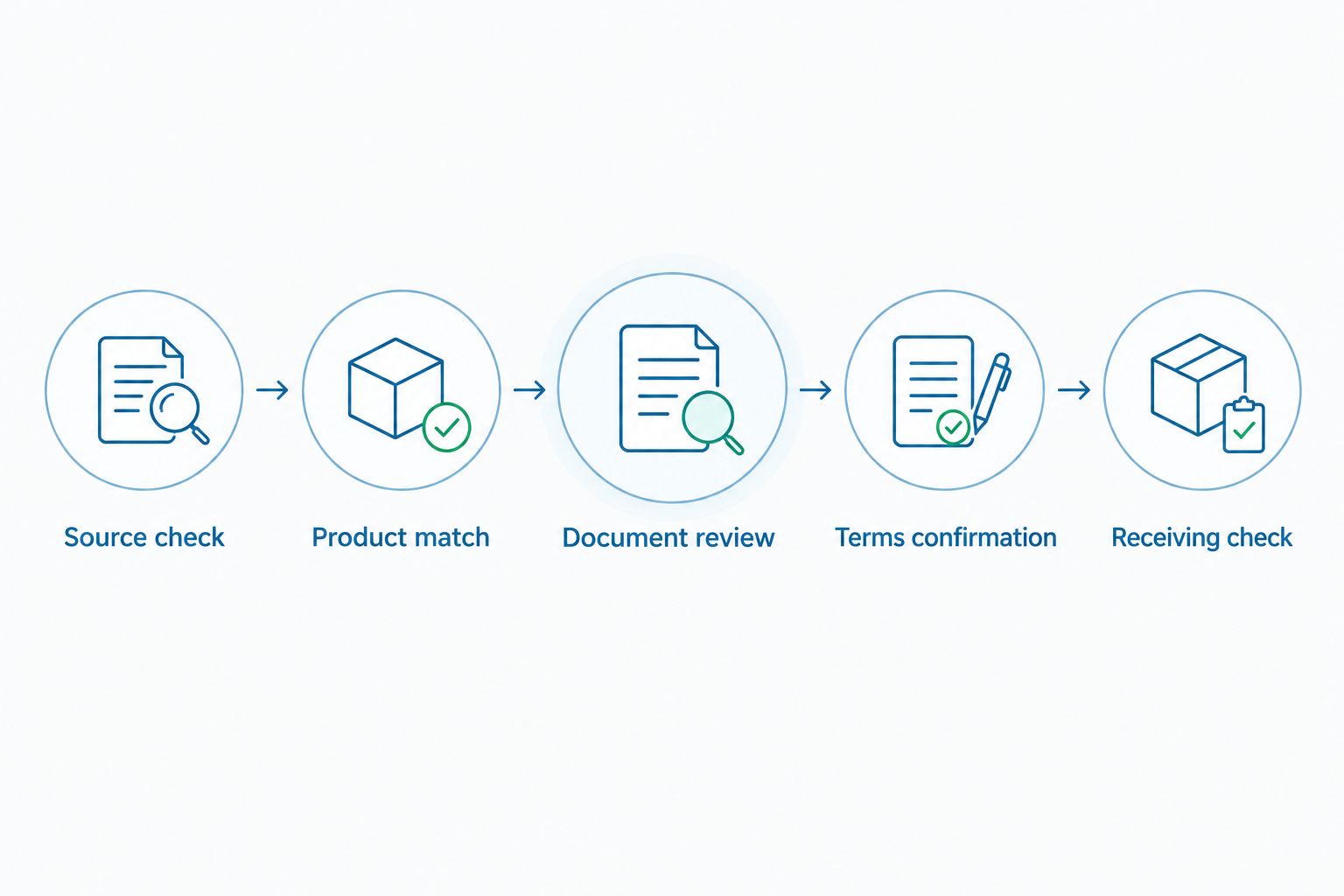
Use a short verification sequence: Source check, Product match, Document review, Terms confirmation, Receiving check. Each stage answers a different question, and completing an earlier stage does not eliminate the later ones.
Source check
Use the manufacturer’s own purchasing channel as your starting point for a direct order. The brand explicitly states that it does not sell on AliExpress, so do not describe an AliExpress listing as manufacturer-direct supply.
A familiar brand name in a listing is not evidence of the seller’s relationship with the manufacturer. For a distributor, the question is who supplies the goods and what records support that transaction.
Product match
Match the item you intend to buy to the item named in the supporting documents. Avoid extending a claim about a particular formulation to every ink or pigment in a catalog.
This matters when your sales team writes descriptions. “Vegan,” “sterile,” and “REACH-compliant” describe different attributes; they are not interchangeable shorthand for product safety or suitability.
Document review
Lead your assessment with sterile manufacturing evidence, then review the other claims relevant to the exact product. Ask for documentation that supports the wording your business plans to publish or pass to customers.
Sterility is not an allergy guarantee. Likewise, a vegan formulation claim does not establish that a product is suitable for every person, procedure, or market.
Terms confirmation
Resolve your intended resale activity before representing an official relationship. Keep the manufacturer’s written response with the account or order records, not only in an individual employee’s inbox.
Ask clear questions about your proposed business activity. Do not replace a specific request with a general question about whether the manufacturer “works with distributors.”
Receiving check
Match the delivered products to the purchase record and inspect the bottles and packaging. Record the product identifiers and any batch or date information supplied on the label.
Set aside discrepancies for resolution before adding the affected items to saleable inventory. Receiving staff should not have to guess whether a different product or incomplete record is acceptable.
How should you build the first direct order?
Build the order from documented customer demand rather than trying to represent every possible application immediately. Review your own sales records, studio requests, and existing inventory. Those records are more useful for your purchasing decision than an unsupported assumption about which colors sell fastest.
Keep your professional tattoo ink assortment separate from PMU planning. Assess each product against its stated purpose, instructions, and the customer group you intend to serve. Do not recommend substitution between tattoo ink and PMU pigments merely because both involve pigmentation.
Assign someone to review the purchase before submission. That review should check product identity, intended use, documentation needs, and unresolved commercial questions—not simply whether the cart contains the requested items.
After receiving, retain enough detail to connect your incoming shipment to your outgoing sales records. A repeat order should follow the same checks rather than relying solely on the fact that an earlier purchase was completed.
The next step is practical: prepare the product list, establish the purchasing arrangement, and then place the appropriate online order. Avoid promising a broader assortment or official status to customers before those decisions are resolved.
Review professional tattoo ink
Build your product list, then confirm the purchasing and resale terms relevant to your business.
Does ordering online make you an authorized distributor?
An online purchase does not, by itself, establish authorized distributor status. It confirms a transaction, not permission to present your business as an official representative. Obtain written confirmation of any claimed relationship and keep your website wording consistent with it.
This distinction applies even when you intend to place repeat orders. Repeat purchasing and authorization answer different business questions.
Is buying directly enough to prove an ink is suitable for your market?
A direct purchase establishes the purchasing source, not every aspect of product suitability. Verify the exact formulation’s documentation and the requirements relevant to your intended market. Do not turn a general brand statement into a product-specific regulatory conclusion.
For 2026 purchasing records, retain the documents used for that decision alongside the product identity. This makes the basis of your assessment clear when staff or customers ask later.
Can a distributor stock tattoo ink and PMU pigments together?
A distributor can plan both categories, but must assess their intended uses separately. INTENZE manufactures professional tattoo ink and PMU pigments; that does not establish interchangeability between them. Keep ordering descriptions, product instructions, and customer guidance specific to each category.
Prioritize the professional tattoo ink range your business is evaluating before expanding the purchasing brief to adjacent products.
FAQ
Can I buy Intenze ink directly from manufacturer as a distributor?
You can purchase through the manufacturer’s online store, but distributor terms require separate confirmation. Do not treat an ordinary online purchase as approval for an authorized distribution relationship.
Do I become an authorized distributor after my first order?
An order alone does not establish authorized distributor status. Obtain written confirmation before presenting your business as an official representative of the manufacturer.
What should I ask before placing a resale order?
Ask which purchasing and resale terms apply to your business, territory, and sales channels. Identify the exact products and request the documentation needed to support your customer-facing claims.
Does sterile tattoo ink mean it cannot cause an allergic reaction?
Sterility is not an allergy guarantee. Manufacturing controls and individual reactions are different issues, so do not promise that a sterile or vegan formulation is allergy-free.
Can I describe an AliExpress listing as manufacturer-direct supply?
Do not describe an AliExpress listing as manufacturer-direct INTENZE supply. The brand explicitly states that it does not sell on AliExpress.
What records should I keep when the ink arrives?
Keep the purchase record and the identifying information supplied on the products, including batch and date details where provided. Match the shipment to the order and resolve discrepancies before adding affected items to saleable inventory.
One last thing
The most useful receiving record connects a specific bottle to a specific purchase. A general supplier name is not enough when your team needs to investigate an individual item. Preserve the product identity and supporting transaction details in a form your purchasing and customer-service staff can retrieve.
Before your next direct order, make someone responsible for that connection. Confirm who checks the shipment, who resolves exceptions, and where the records live. A manufacturer-direct buying relationship is easier to manage when the operational details are settled before the delivery arrives.