A piercing shop can seek authorized tattoo ink reseller status, but it must obtain the brand’s approval before presenting itself as an authorized seller. Buying genuine ink, holding a piercing license, or opening a wholesale purchasing account does not by itself establish that authorization; confirm the permitted sales channels and applicable business requirements before launching.
- For piercing shops, authorized tattoo ink reseller status requires explicit brand approval, not simply a purchase receipt.
- INTENZE brings 30+ years of professional artist use; assess reseller authorization separately from product credentials.
- Confirm your business identity, intended customers, sales channels, and product-handling responsibilities before ordering for resale.
- Keep purchasing permission, brand authorization, and legal retail requirements separate in your launch checklist.
Why this matters
An authentic bottle and an authorized seller are different things. Your shop needs a defensible answer when a tattoo artist asks who supplied the ink, whether your business represents the brand, and what supports the product claims on your website.
INTENZE manufactures professional tattoo ink in the USA, with sterile manufacturing and 30+ years of professional artist use. Those credentials support product evaluation; they do not establish approval for a particular piercing shop to resell the brand.
For a 2026 resale launch, build your purchasing plan around documented permission rather than assumptions about your existing piercing business. Keep the authorization decision separate from the decision to buy ink online.
Can piercing shops become authorized tattoo ink resellers?
Piercing shops can request authorization from a tattoo ink brand. Treat your shop as authorized only after the brand confirms that status for your business and intended sales activity. Do not describe a purchase confirmation or an ordinary supplier invoice as a dealer agreement.
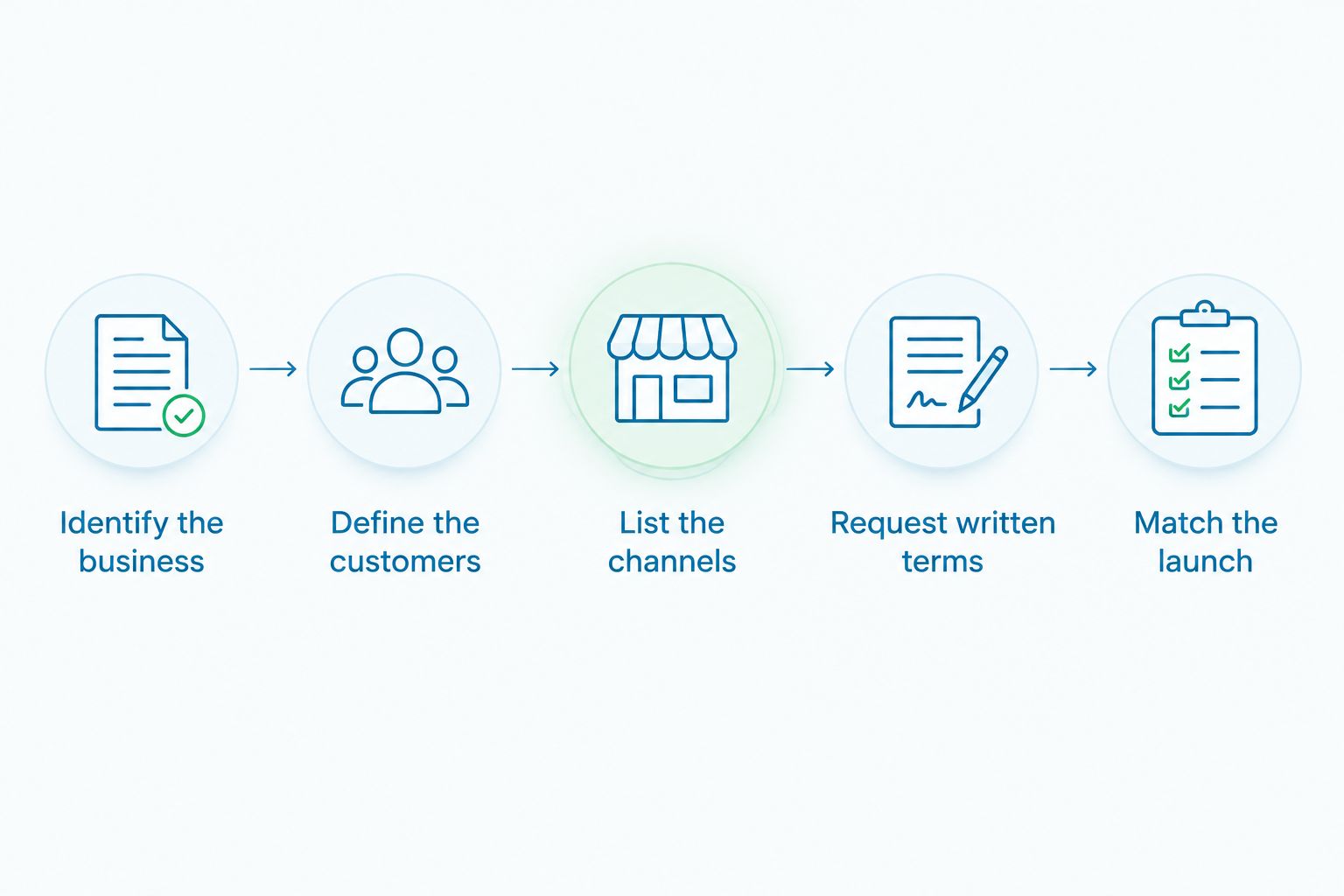
Use the following sequence to prepare a clear inquiry. These are recommended preparation steps, not a statement of any manufacturer’s application requirements.
- Identify the business. Prepare your legal business name, trading name, physical location, and business contact details. Make clear that your current operation is a piercing shop and describe any separate tattoo supply activity.
- Define the customers. Explain whether you intend to supply professional tattoo artists, tattoo studios, or other businesses. Do not assume that permission to serve one customer group covers every buyer.
- List the channels. Identify your counter sales, website, and any proposed third-party marketplace activity. Ask for confirmation covering each channel you intend to use.
- Request written terms. Ask what establishes authorized status, which products it covers, and how your shop is permitted to describe the relationship. Confirm purchasing and product-handling responsibilities before accepting an order for resale.
- Match the launch to approval. Check that your public business name, selling channels, and product listings match the permission received. Keep the approval accessible alongside your supplier records.
For your 2026 application, describe the operation you actually plan to run. A clear request for professional tattoo ink resale is more useful than a broad request to “become a partner” without identifying customers or channels.
Buying ink, reselling ink, and distributing ink are different decisions
Separate the relationship you need from the transaction you want to make. A piercing shop purchasing bottles for an attached tattoo operation has a different objective from a shop building a supply business for other studios.
The table below distinguishes those objectives. It does not describe a specific brand’s account tiers or confirm that any particular arrangement is offered.
| Business objective | Best for | Practical benefit | Limitation to resolve |
|---|---|---|---|
| Purchase for studio use | Businesses supplying their own tattoo artists | Keeps purchasing focused on internal use | Does not establish authorized reseller status |
| Seek authorized resale | Shops intending to sell branded ink to customers | Gives the brand a specific resale proposal to evaluate | Requires confirmation of permission and scope |
| Seek distribution rights | Businesses proposing supply to other retailers or studios | Clarifies a broader business-to-business proposal | Must not be inferred from ordinary purchasing access |
Choose the relationship that matches the sale you intend to make. If you want to sell ink through your shop’s website, ask about that activity directly rather than relying on terminology such as “trade account.”
Do not publish a distributor claim when the written permission only addresses retail resale. Equally, do not assume permission for your physical counter extends to a separate online business or marketplace listing.
What should your shop prepare before contacting a brand?
Prepare a concise business profile rather than a promotional pitch. The purpose is to let the supplier understand who will buy the ink, how orders will reach customers, and who will maintain the records.
Business identity
Use consistent business details across your inquiry, invoices, and intended storefront. Explain any difference between your legal entity and the name customers see on the shop sign or website.
If several locations or businesses are involved, identify them individually. Ask which entity would receive authorization instead of treating related businesses as interchangeable.
Customer and product scope
Lead with professional tattoo ink and the artists or studios you intend to serve. Keep permanent makeup pigments separate in your proposal unless that category is also part of your actual purchasing plan.
Ask whether approval covers the specific product categories you want to sell. Permission concerning tattoo ink should not be interpreted as permission concerning every adjacent product category.
Selling and handling plan
Describe where unopened products will be received, stored, and dispatched. Assign responsibility for checking deliveries, maintaining supplier records, and responding to questions about a bottle’s source.
For your 2026 launch file, include the actual website or marketplace identities you propose to use. A channel list creates a clear reference when you review the resulting permission.
Why reseller approval needs a defined scope
“Authorized” needs an object: a named business, a product category, and a permitted activity. Without that scope, your staff cannot reliably explain what the relationship allows.
Use these factors to structure the discussion. They are points to confirm, not a prediction of the brand’s eligibility decision:
- Business identity: Ask which legal entity and trading name the authorization covers.
- Professional audience: State whether your proposed customers are tattoo artists, studios, or other supply businesses.
- Sales channels: Seek an explicit answer for counter sales, your own website, and proposed marketplaces.
- Product categories: Separate professional tattoo ink from PMU pigments and other supplies.
- Geographic reach: Describe the destinations you intend to serve and ask what the brand permits.
- Handling responsibilities: Establish who retains purchase records, checks incoming products, and handles product questions.
Do not turn an unanswered question into a public claim. If the permission does not address an intended channel, ask for clarification before advertising the relationship there.
How should you evaluate the ink itself?
Authorization answers who is permitted to sell. Product evaluation answers what you are buying and what you can accurately tell a professional customer.
INTENZE professional tattoo ink is best suited to distributors serving professional tattoo artists and studios. Its stated foundation includes USA manufacturing, sterile manufacturing, and 30+ years of professional artist use; reseller eligibility still requires a separate confirmation.
Evaluate the exact product rather than applying a general brand description to every bottle. Ask for supporting information before making claims about formulation, vegan status, sterility, or market-specific compliance in your own listings.
For a 2026 purchasing review, use the same evidence standard for every supplier. Do not claim that one brand performs better, heals better, or produces fewer reactions without evidence supporting that specific comparison.
Your listing should help an artist identify the product and its intended use. It should not promise allergy-free tattooing, medical suitability, or a particular healed result.
How do you protect authenticity and traceability?
Keep the original product identity connected to the purchase record. Retain supplier invoices and record the identifying information provided on incoming bottles so your staff can connect a customer question to the relevant purchase.
Inspect deliveries before releasing them for sale. Follow the manufacturer’s handling and storage instructions, and set aside bottles with damaged closures, unreadable identification, or an uncertain source while you seek clarification.
Use the guide to checking whether an INTENZE tattoo ink bottle is genuine when building your receiving checklist. Do not treat packaging appearance alone as proof of an authorized supply relationship.
Keep retail bottles separate from products opened for demonstrations or studio use. Your resale operation should not depend on staff remembering which bottle was opened or where a loose bottle originated.
Does brand authorization replace a retail license?
No. Brand authorization describes permission from the brand; it does not replace government requirements applicable to your business or location.
Before selling, confirm your business registration, tax obligations, and any product-sale requirements with the relevant authorities. Ask specifically about selling packaged tattoo ink rather than assuming the rules for performing piercing services answer the retail question.
Do not use a supplier’s acceptance of an order as legal clearance. Likewise, do not describe a local business license as proof that a manufacturer has appointed your shop as a reseller.
Can you launch online sales before approval?
Do not launch listings that claim authorized status before you receive confirmation. You can prepare internal product records, draft accurate descriptions, and organize your receiving process without publishing an unsupported affiliation.
Ask the brand to clarify your intended online channel before you commit to that launch. This keeps the purchasing decision connected to the activity you actually want to conduct.
If you are evaluating INTENZE professional tattoo ink, start with the official online catalog and request confirmation of the resale relationship separately. Buying products online and obtaining permission to advertise yourself as an authorized reseller remain distinct steps.
Review professional tattoo ink online
Review the official catalog, then confirm reseller permission for your business and planned sales channels.
FAQ
Can my piercing shop apply to become an authorized tattoo ink reseller?
Your piercing shop can request authorization, but the brand must confirm whether it approves your business and proposed sales activity. Describe your customers, products, and channels rather than assuming your piercing operation establishes eligibility.
Does buying wholesale make my shop an authorized reseller?
Buying wholesale does not by itself establish authorized reseller status. Obtain confirmation of the relationship and the wording your shop is permitted to use.
Do I need to employ a tattoo artist to resell tattoo ink?
Confirm that question directly with the brand and the authorities governing your business. Do not assume that employing an artist is either a universal requirement or a substitute for resale permission.
Can I sell tattoo ink through my piercing shop’s website?
Confirm online resale permission for your specific website before claiming an authorized relationship there. Keep the answer separate from permission for physical counter sales or third-party marketplaces.
Can I put an authorized dealer badge on my website after ordering?
Do not add an authorized dealer badge solely because you placed an order. Obtain permission for the status claim and any brand artwork you intend to display.
Does tattoo ink authorization also cover PMU pigments?
Do not assume tattoo ink authorization covers PMU pigments. Ask for the approved product categories in writing and keep your listings within that scope.
What should I check before placing my first resale order?
Check the seller relationship, product identity, permitted channels, and handling responsibilities before ordering for resale. Confirm applicable business requirements separately and retain the resulting records.
One last thing
Make your first resale order the result of approval, not your attempt to obtain it. Before committing to your 2026 launch, compare the written permission with your planned storefront, customer audience, and product listings.
If those details do not match, resolve the difference before publishing. That check protects the accuracy of your sales claims without requiring your staff to interpret an ambiguous supplier relationship at the counter.