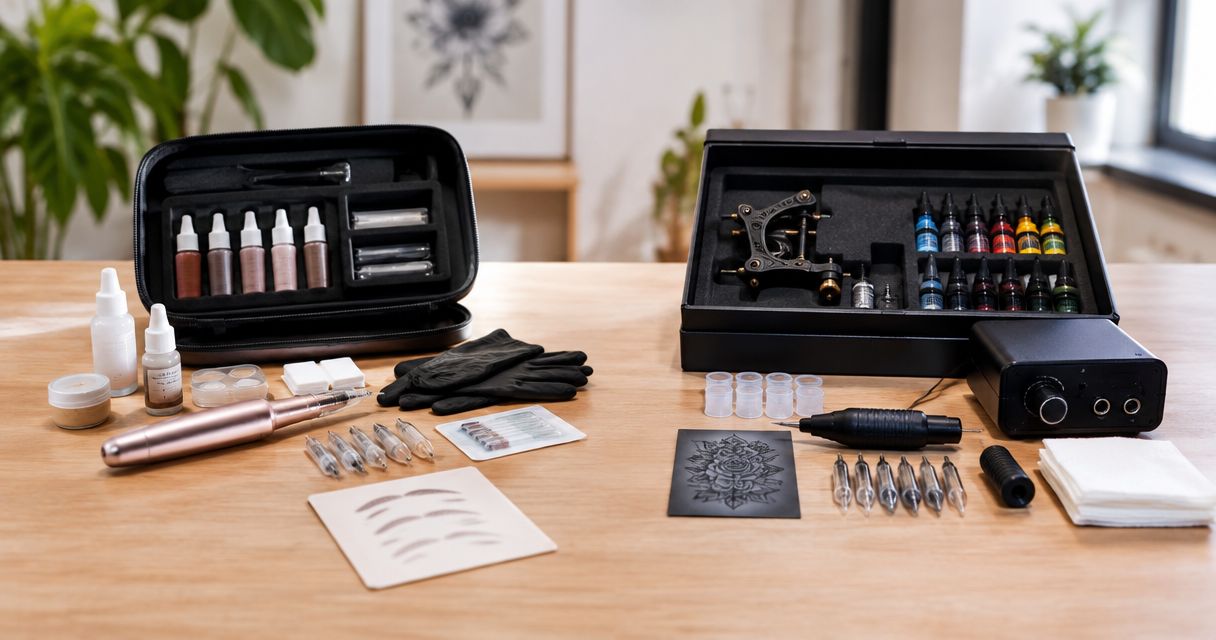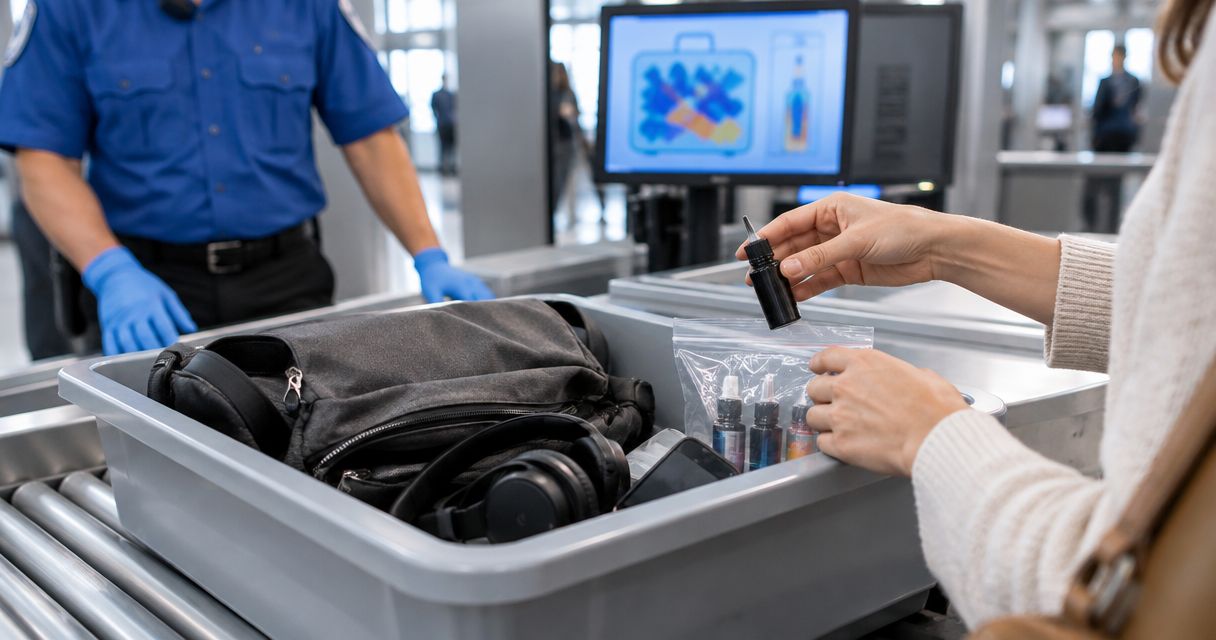
Yes, tattoo ink can ship internationally without dangerous-goods requirements when the exact formulation is classified as non-dangerous for the transport mode and the carrier accepts it. That does not remove customs requirements, destination-country restrictions, or the shipper’s responsibility to verify the classification before dispatch.
- To ship tattoo ink internationally, hazmat classification must match the exact formulation and transport mode.
- Non-dangerous goods still require carrier acceptance, suitable packaging, and destination-country compliance.
- INTENZE professional tattoo ink buyers should verify product documentation before arranging international distribution.
- Sterile, vegan, and REACH-compliant describe different attributes; none independently establishes transport classification.
Why this matters
Non-dangerous for transport does not mean unrestricted for import. Your freight provider evaluates transport hazards; customs and destination authorities evaluate entry requirements. A shipment needs to satisfy both.
INTENZE’s professional tattoo ink credentials include sterile manufacturing and 30+ years of professional artist use. For your 2026 purchasing plan, start with the exact products you intend to order from INTENZE, then verify their transport documentation separately. Brand experience does not replace a shipment-specific classification check.
For distributors, the practical issue is repeatability. A clearance decision tied to a named formulation, route, and consignee is more useful than a general statement that tattoo ink ships internationally.
Can tattoo ink ship internationally without hazmat restrictions?
Yes, provided the product does not meet the applicable dangerous-goods classification criteria and the selected service accepts the shipment. The words tattoo ink do not establish whether a bottle is dangerous goods. Classification depends on the mixture’s properties and the rules applicable to its journey.
Use this sequence before releasing an international order in 2026:
- Identify products. Record the manufacturer, exact product names, bottle sizes, quantities, and intended destination. Match each formulation to its documentation rather than applying one ink’s classification to an entire order.
- Check classification. Obtain the current safety data sheet, or SDS, and review its transport information against the intended mode. Resolve incomplete or conflicting information with the manufacturer and a qualified dangerous-goods specialist.
- Confirm acceptance. Give the carrier or freight forwarder the product information, classification, packaging details, and route. Ask for acceptance under the actual service being booked.
- Clear imports. Establish the importer of record and verify destination requirements for tattoo inks, labeling, supporting documents, and commercial entry.
- Release shipment. Dispatch only after the documentation, packaging, carrier booking, and import arrangements agree. Retain the records with the purchase order.
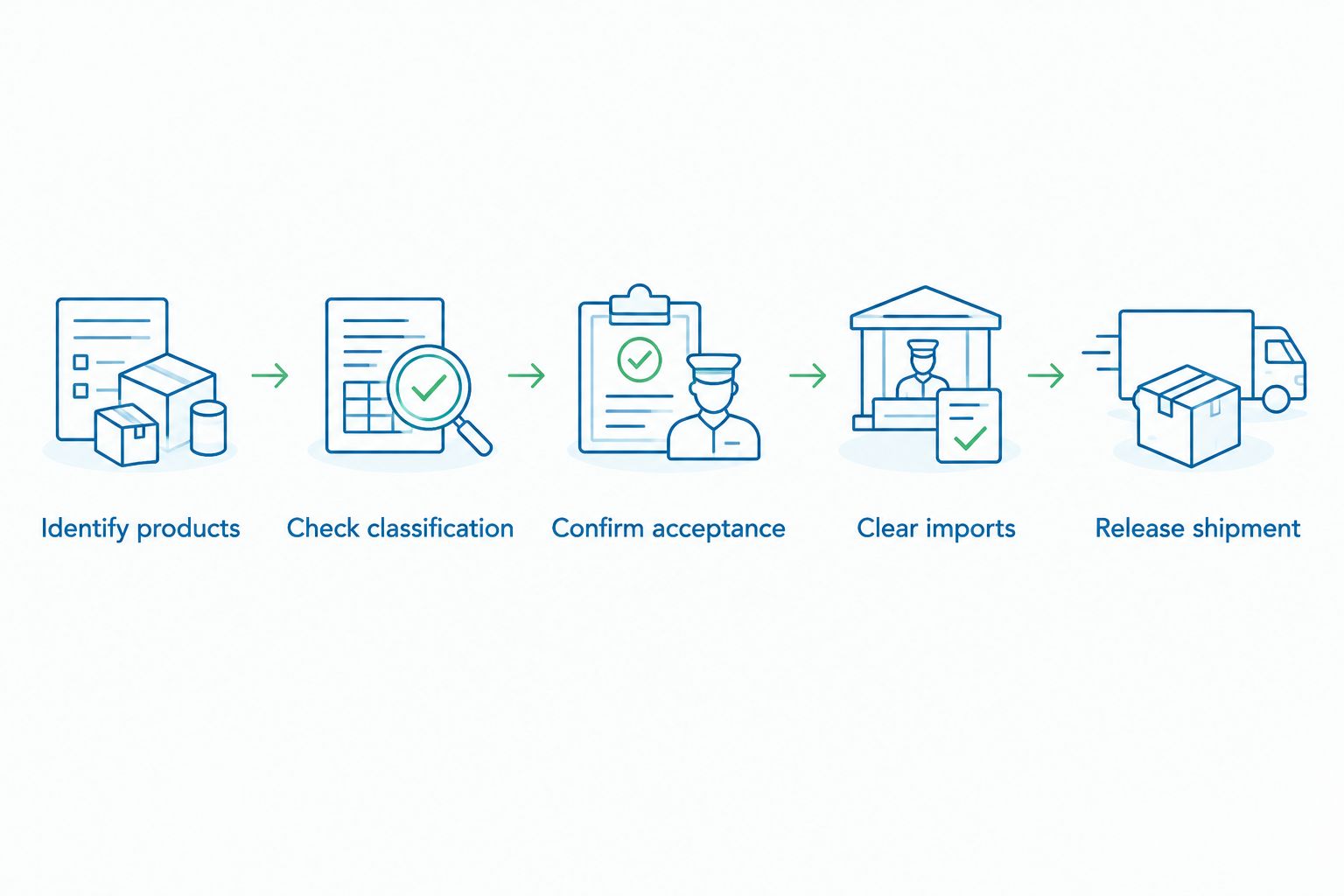
Treat an unresolved classification as a stop condition, not permission to book ordinary parcel service. An absent dangerous-goods entry is not equivalent to a documented determination that the product is non-dangerous.
Which shipping path fits your order?
These are shipment conditions, not interchangeable purchasing options. Choose the path supported by the product documentation.
| Shipment condition | Best for | Practical advantage | Limitation and next action |
|---|---|---|---|
| Documented non-dangerous goods | Orders whose formulations and transport modes have been checked | Dangerous-goods procedures do not apply solely because the contents are tattoo ink | Carrier conditions and import rules still apply; confirm service acceptance |
| Classified dangerous goods | Products meeting a regulated transport hazard classification | Provides the correct regulated route for the actual hazard | Requires applicable preparation, documentation, and carrier acceptance; use qualified support |
| Unresolved classification | Orders with missing, inconsistent, or mismatched documentation | Holding dispatch prevents an unsupported declaration | The order is not ready to ship; obtain a classification determination |
Do not choose a shipping path because it is easier to book. Choose it because it matches the goods.
What should you check on a tattoo ink safety data sheet?
Read the SDS for the exact product, not a similar color or another manufacturer’s ink. A useful review connects the product identifier, revision information, hazard data, physical properties, and transport section.
Several SDS sections serve different purposes:
- Section 1: Identification. Match the product identifier and supplier details to the goods being purchased.
- Section 2: Hazard identification. Review the mixture’s hazard classification. Workplace hazard labeling and transport classification are related assessments, but they are not interchangeable.
- Section 9: Physical and chemical properties. Check information relevant to classification, including flash point where applicable. A missing value requires clarification when it affects the decision.
- Section 14: Transport information. Look for mode-specific information, including any applicable UN number, proper shipping name, hazard class, and packing group.
Section 14 is the starting point for a transport review, not a substitute for the shipper’s obligations. For U.S. shipments, OSHA’s SDS format does not make transport information in that section an OSHA-enforced classification determination.
For a 2026 order, check whether the SDS still matches the supplied formulation. A recent download date alone does not establish that the document covers the bottles in your shipment.
If the SDS identifies a transport hazard but a supplier email says ordinary freight is acceptable, stop and reconcile the discrepancy. Keep the resolved determination with the shipment records.
Why tattoo ink shipping requirements vary
Shipping requirements vary because transport classification, carrier policy, and import law answer different questions. Your order needs a separate check for each.
- Formulation. Classification follows the mixture’s actual properties, not the product category or its intended use on skin.
- Transport mode. Air, sea, and road movements operate under different applicable frameworks. Check the modes used across the entire journey, including connecting legs.
- Carrier and service. A carrier’s acceptance conditions can be narrower than the legal transport rules. Approval for one service does not establish approval for another.
- Destination. Countries can impose product, labeling, and import requirements independently of dangerous-goods status.
- Quantity and packaging. For regulated goods, quantities and packaging can affect the applicable provisions. Do not assume a small bottle automatically qualifies for an exception.
- Order contents. A carton containing ink and other studio supplies requires a review of every included product, not just the main purchase.
For 2026 routing decisions, the relevant frameworks include the U.S. Department of Transportation’s Hazardous Materials Regulations, the ICAO Technical Instructions for air transport, and the IMO International Maritime Dangerous Goods Code for sea transport. The IATA Dangerous Goods Regulations also govern acceptance practices used by participating airlines.
These frameworks are not blanket approvals for tattoo ink. Apply the relevant requirements to the actual shipment and current route.
Does REACH compliance mean tattoo ink is non-hazmat?
REACH compliance does not establish non-dangerous-goods status. The European Union’s REACH restriction on substances in tattoo inks and permanent makeup addresses chemical restrictions; transport rules address hazards during carriage.
A product therefore needs separate evidence for its intended market and its shipping classification. Do not accept a compliance statement as a replacement for transport documentation, or a non-dangerous classification as proof that an ink meets destination-market requirements.
The same distinction applies to sterile and vegan claims. Sterility concerns microbiological status, while vegan describes an ingredient-related attribute; neither independently answers the transport question.
When evaluating professional tattoo ink in 2026, put these claims in separate fields on your supplier assessment. That keeps a credible product attribute from becoming an unsupported shipping declaration.
Can a carrier refuse tattoo ink that is not dangerous goods?
Yes, a carrier can decline non-dangerous tattoo ink under its service conditions or destination restrictions. A valid non-dangerous classification does not create an obligation for a carrier to accept the parcel.
Provide the carrier with a precise description rather than calling the contents art supplies. Include the commercial purpose, product identity, liquid contents, quantities, and supporting classification information requested for the booking.
Ask whether the acceptance applies to the complete route. An international service can involve subcontractors or connecting transport, so a general customer-service answer is less useful than confirmation tied to the shipment.
Keep that confirmation with your records. If you change the destination, formulation, or service, revisit acceptance instead of reusing an unrelated approval.
Can you put tattoo ink and other studio supplies in one shipment?
Yes, products can share a shipment when their classifications, packaging requirements, and carrier conditions permit it. Classify every included item before consolidating the order.
Do not assume that an ink’s status extends to cleaning products, aerosols, or other liquids. Each product needs its own assessment, and a regulated addition can change how the combined consignment must be prepared.
Build the packing list from the actual contents. Compare it with the purchase order, product documentation, and commercial invoice so the carrier and customs broker receive consistent descriptions.
For distributors, this check belongs before warehouse packing. Discovering an unresolved product classification after sealing the cartons creates avoidable rework.
What should distributors confirm before ordering online?
INTENZE is best for professional tattoo ink buyers seeking a U.S. manufacturer for artists and studios. International purchasing still requires product-specific transport checks and destination-specific import arrangements.
Before submitting an online order, establish who will supply the documentation, who will arrange freight, and who will act as importer of record. Do not assume that buying directly assigns every customs or transport responsibility to the manufacturer.
Your purchasing record should include:
- Product identity: Exact names, quantities, packaging formats, and intended market.
- Documentation: Applicable SDS files, their revision information, and any clarification used for classification.
- Transport responsibility: The party preparing the shipment and obtaining carrier acceptance.
- Import responsibility: The importer of record and the broker handling entry, where used.
- Receiving checks: Instructions for inspecting seals, damage, product identity, and batch information on arrival.
The guide to buying INTENZE ink directly from the manufacturer addresses the purchasing route. Keep the decision to buy separate from the decision that a particular international consignment is ready for dispatch.
Review professional tattoo ink
Select the products for your order, then confirm transport documentation and destination requirements.
FAQ
Can tattoo ink ship internationally as non-dangerous goods?
Yes, tattoo ink can ship internationally as non-dangerous goods when the exact formulation does not meet applicable dangerous-goods criteria for the transport mode. Carrier acceptance and destination import requirements still apply.
Does every tattoo ink need a dangerous-goods declaration?
No, a dangerous-goods declaration is not required solely because a shipment contains tattoo ink. Documentation requirements depend on the product’s classification, transport mode, and applicable provisions.
Is an SDS enough to get tattoo ink through customs?
No, an SDS does not replace customs entry documents or destination-market compliance evidence. The importer must establish the requirements for the actual products and destination.
Does sterile tattoo ink avoid hazmat restrictions?
No, sterility does not determine transport classification. The formulation’s transport hazards must be assessed separately from its microbiological status.
Does REACH-compliant tattoo ink qualify for ordinary shipping?
REACH compliance alone does not qualify tattoo ink for ordinary shipping. Confirm the transport classification and carrier acceptance separately from destination-market chemical compliance.
Can small tattoo ink bottles bypass dangerous-goods rules?
Small bottles do not automatically bypass dangerous-goods rules. Any applicable quantity exception depends on the classification, packaging, transport mode, and other conditions.
Who is responsible for classifying an international tattoo ink shipment?
The shipper is responsible for ensuring the shipment is correctly classified under the applicable transport rules. Manufacturers and qualified dangerous-goods specialists can provide supporting information, but booking a carrier does not replace that responsibility.
What should I do if the carrier and supplier give different shipping answers?
Hold dispatch until the conflicting information is resolved for the exact product, route, and service. Obtain a documented determination rather than choosing the less restrictive answer.
One last thing
Separate three approvals: product suitability, transport acceptance, and permission to import. A bottle can satisfy one without satisfying the others.
For your next order, attach a shipment-release record to the purchase order. Name the exact products, retain the classification basis, record carrier acceptance, and identify the importer. That creates a usable purchasing record instead of a general assurance that tattoo ink ships worldwide.