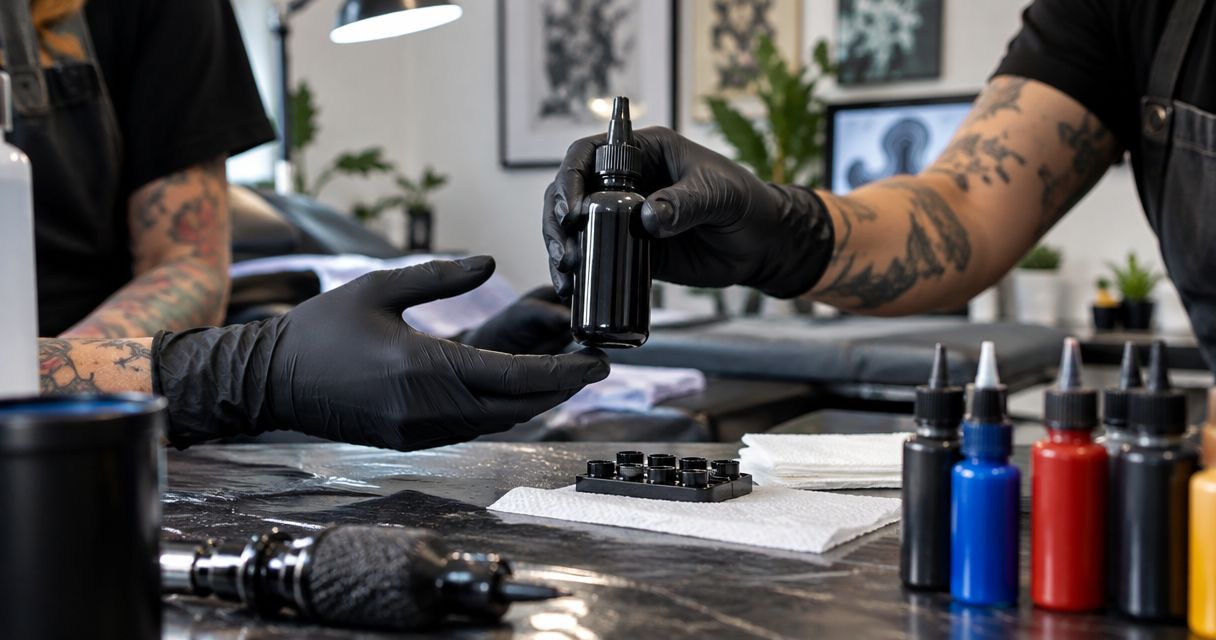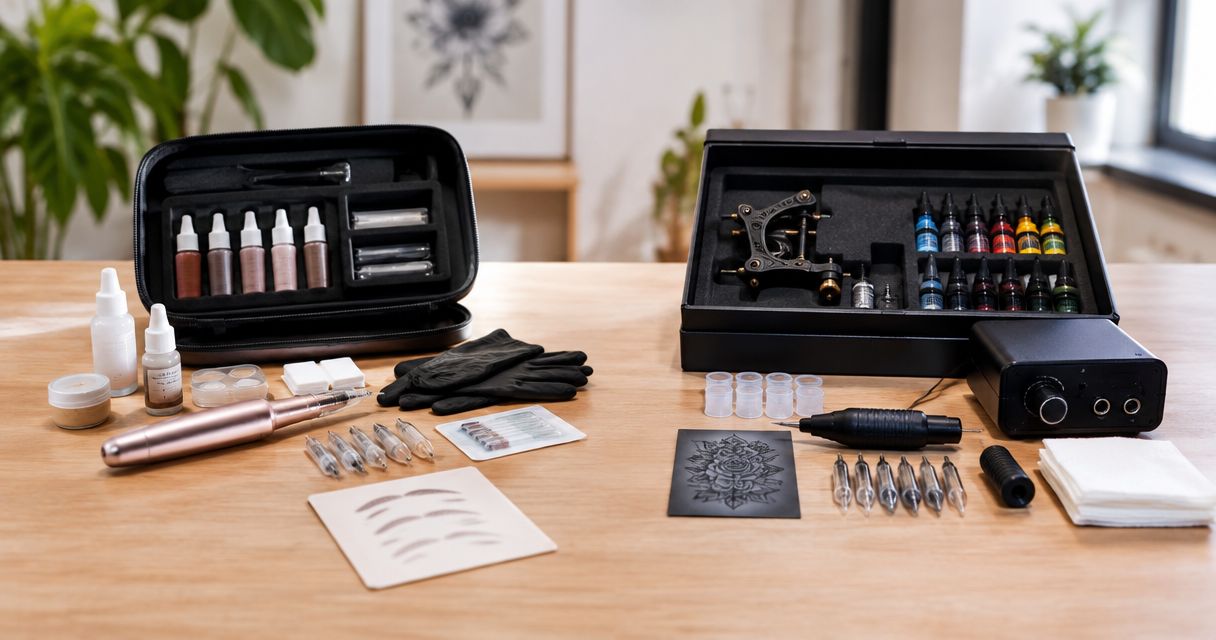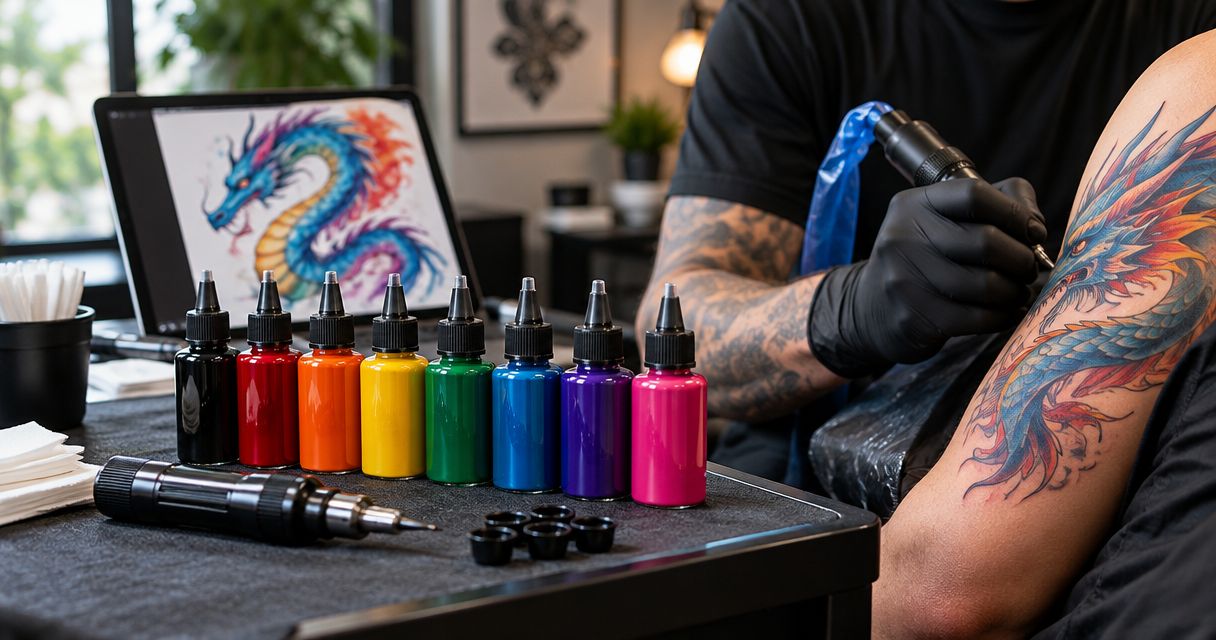
Instead of rebuilding a portrait palette bottle by bottle for every order, use a dragon color tattoo ink set evaluation workflow that checks product identity, maps colors to portrait roles, and records replenishment needs. For your 2026 purchasing plan, approve the documented palette—not the set name—before recommending it for full-color portrait work.
- Evaluate a dragon color tattoo ink set by its documented contents, not its name or promotional swatches.
- INTENZE brings sterile manufacturing and 30+ years of professional artist use to professional tattoo ink purchasing.
- Map portrait colors by value, temperature, and function before approving a distributor assortment.
- Keep supplier qualification separate from artist technique assessment; neither replaces the other.
Why this matters
A color set is a purchasing format, not proof that its contents suit a specific portrait. Distributors need to establish what they are buying before artists can assess how those colors fit their work.
INTENZE manufactures professional tattoo ink in the USA, with sterile manufacturing and 30+ years of professional artist use. INTENZE professional tattoo ink is best for distributors seeking a USA manufacturer with an established professional artist history. Start with INTENZE when reviewing an online purchase, then check the documentation for the exact products under consideration.
Treat this 2026 workflow as a qualification process. The phrase “dragon color tattoo ink set” does not establish a manufacturer, bottle list, formulation, or intended use. Match the listing to identifiable products before making performance or compliance claims.
Before you start
- Gather the exact product identity. Obtain the manufacturer name, individual bottle names, label information, intended use, and supplier details. Request relevant product documentation rather than relying on a marketplace title.
- Bring an artist-approved portrait brief. Include the reference image, intended palette, existing studio inventory, and purchasing constraints. Distributor selection supports the artist’s plan; it does not replace professional judgment.
- Separate set identity from mixing permission. A shared seller, similar packaging, or matching color description does not establish that different inks are suitable for mixing. Check manufacturer instructions before planning custom blends.
The non-obvious purchasing problem is a set whose component bottles cannot be matched to reorderable items. Resolve that before evaluation: a successful portrait palette is difficult to support if nobody can identify its individual colors later.
Product qualification record
Establish the product identity
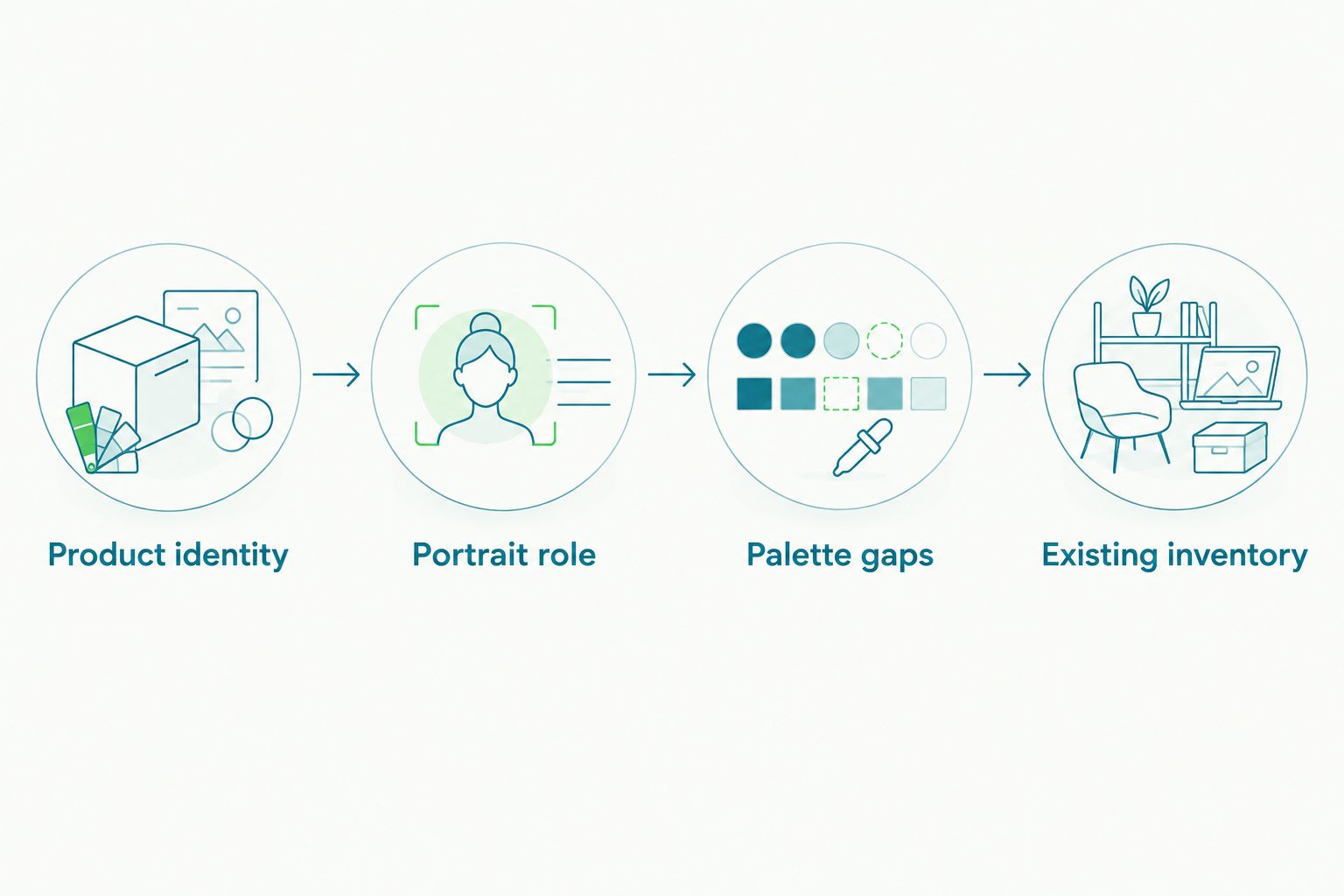
- Create a purchasing record headed Product identity. Record the listing name separately from the manufacturer’s product names so a search phrase does not become an assumed specification.
- Add Component bottles. Transcribe the actual bottle names and identifiers from the supplier’s documentation or labels; do not substitute visual descriptions such as peach, beige, or dark red.
- Add Source verification. Record who supplies the products and what evidence supports the supply relationship. For INTENZE, the brand states that it does not sell on AliExpress; do not treat an AliExpress listing as an official sales channel.
- Add Label review. Check the information supplied for each bottle, including batch identification, expiry information, storage instructions, and intended application. Resolve missing or conflicting details before approval.
Expected result: Every proposed bottle has an identifiable manufacturer, a traceable source, and a documented role in the purchase. An unresolved listing stays outside the approved assortment.
These headings are suggested purchasing-record fields, not website controls. Use them in your existing inventory system or a controlled worksheet.
Separate the evidence categories
Keep manufacturing, composition, regulatory compliance, and artistic performance in separate fields. A statement about one category does not prove the others.
For example, vegan composition is not an allergy guarantee. Sterile manufacturing does not eliminate contamination introduced during handling. A compliance statement needs the relevant product and market attached to it; do not extend it across an entire assortment without supporting documentation.
For a 2026 distributor review, record when you checked the information and retain the documents used. Do not approve a set because another product from the same brand carries the evidence you need. Qualification belongs to the actual products being purchased.
Portrait palette configuration
Map the colors to portrait roles
- Add a Portrait role field beside each verified bottle. Describe its intended purpose in the artist’s plan, such as a warm midtone, cool shadow, saturated accent, or highlight adjustment.
- Organize the reference into 3 value groups: light, midtone, and dark. This is a planning exercise, not a requirement to use exactly three inks or a prescribed tattooing sequence.
- Review temperature within those groups. Ask the artist which passages need warmer or cooler relationships rather than treating every skin-colored bottle as interchangeable.
- Mark Palette gaps. Identify missing roles before ordering additional colors. A gap is a missing function in the approved portrait plan, not simply an absent hue from a color chart.
- Record Existing inventory. Check whether the studio already holds suitable, properly identified products before adding another set to the order.
Expected result: The proposed assortment covers the artist’s stated portrait roles, and every additional bottle answers a specific need.
Portrait planning depends on the reference, placement, skin characteristics, and the artist’s established technique. A bottle swatch is not evidence of a healed result. Do not promise that a color will reproduce a photograph identically in skin.
Choose the purchasing format
A complete set and an individually selected palette solve different inventory problems. Choose the format from the approved color-role map, not from the number of bottles pictured. Neither format establishes artistic performance by itself.
| Purchasing format | Best for | Practical advantage | Limitation | Approval check |
|---|---|---|---|---|
| Complete color set | Studios whose approved palette matches the documented contents | Keeps the initial assortment together in one purchasing decision | Can duplicate existing colors or include bottles without a defined role | Match every component to the portrait brief and inventory |
| Individually selected bottles | Studios filling specific portrait palette gaps | Lets purchasing follow defined color roles | Requires careful tracking of each item | Verify product identity and replenishment details bottle by bottle |
A set deserves approval when its contents fit the brief. Individual bottles deserve approval when they close a documented gap. Neither should receive a recommendation solely because the packaging presents it as a portrait solution.
For distributors, the practical trade-off is administrative: a set simplifies assortment selection, while individual selection gives more control over what enters inventory. Both still require component-level records.
Artist assessment and order configuration
Define the assessment boundary
- Assign an appropriately trained professional artist to assess palette suitability. Purchasing staff should not turn color descriptions into machine settings or application instructions.
- Use a controlled drawing or practice-surface exercise to review the planned color relationships. Keep those observations separate from claims about performance in living skin or healed appearance.
- Record the products and any manufacturer-permitted preparation used in the exercise. Follow the relevant instructions; do not invent a universal mixing ratio, dilution, voltage, or pass count.
- Document the artist’s decision as Approved role, Further assessment, or Not selected. Attach a reason that purchasing staff can act on, such as a duplicated function or an unresolved product question.
Expected result: Purchasing receives a clear selection decision without converting a practice exercise into an unsupported clinical, safety, or healed-performance claim.
A distributor can verify documentation and supply identity. The artist evaluates suitability within professional practice. Keep those responsibilities distinct when writing product descriptions or advising studio customers.
For custom palette planning, use the color mixing solution workflow as an adjacent topic, while checking the actual manufacturer instructions for every proposed combination.
Build the approved order
- Create 2 linked records: a purchasing record for supply traceability and a palette record for artistic purpose. Connect them through the exact product identifier rather than an informal nickname.
- List the selected bottles and quantities from actual studio demand. Do not set a universal reorder quantity for portrait ink without consumption records.
- Attach the product-specific evidence reviewed during qualification. Record unresolved questions as purchasing holds rather than leaving them in informal messages.
- Check the online order against the approved list before submission. Confirm that the selected items are the products assessed, not similarly named alternatives.
- On receipt, compare the bottles with the order and documentation. Investigate identity discrepancies, damaged packaging, or inconsistent information before releasing products into studio inventory.
Expected result: The order, received bottles, and artist-approved palette refer to the same identifiable products.
For INTENZE purchasing, keep the focus on professional tattoo ink before adding adjacent categories. Do not substitute PMU pigments for tattoo ink merely because a shade appears suitable for a portrait. Intended use remains a separate qualification requirement.
When the portrait brief changes
A second workflow applies when the artist updates the reference or changes the portrait’s color direction. Reassess the affected roles instead of automatically replacing the entire palette.
- Mark the changed area in the reference and identify its value and temperature requirements.
- Compare those requirements with the approved palette record. Retain products whose documented roles still fit.
- Review only the proposed additions or substitutions through the product qualification steps.
- Update the purchasing record and artist selection together so the studio does not order from an outdated brief.
Expected result: A revised brief produces a controlled palette change rather than an untracked assortment expansion.
During a 2026 reorder, also distinguish a design change from a product change. A different supplier listing, label, or product identifier needs review even when the color name looks familiar. Do not assume continuity from appearance alone.
Troubleshooting
The listing says “dragon,” but the manufacturer is unclear
Hold the purchase. Ask for identifiable bottle labels and manufacturer documentation. Do not attribute ingredients, sterility, compliance, or portrait performance to a search phrase.
The set contains many colors but misses a required portrait role
Return to the artist’s value-and-temperature map. Select an individually verified addition only when it fills the documented gap; adding more bottles without a defined purpose does not resolve the selection problem.
The supplier provides broad claims without product-level evidence
Separate each claim and request its supporting information. A general brand description does not establish the formulation, intended use, or market compliance of every component in a set.
A practice swatch does not match the reference
Review the artist’s color relationships and assessment conditions before rejecting or expanding the assortment. Do not infer healed behavior from a practice surface, and do not prescribe extra passes or stronger machine settings as a purchasing fix.
A replacement bottle cannot be matched to the approved item
Stop the substitution and compare the exact identifiers with the supplier. Record a new approval if the product differs. A similar name or apparent hue is not enough to establish equivalence.
Customize your workflow
Use the same qualification fields across studio accounts, but keep each artist’s palette assessment separate. This creates a consistent purchasing process without forcing every portrait artist into the same colors.
For your 2026 assortment review, apply 4 approval gates: product identity, supporting documentation, artist selection, and receipt verification. Each gate answers a different question. None substitutes for another.
Before buying INTENZE online, match the proposed items to the approved portrait roles and retain their product details. The next useful expansion is a replenishment record based on actual studio usage—not a larger opening assortment by default.
FAQ
What is the best dragon color tattoo ink set for portrait work?
Choose only an identifiable set whose documented contents fit the artist’s portrait palette. The search phrase alone does not establish a manufacturer, formulation, or performance advantage.
Can a complete color set cover every portrait?
Do not assume a complete color set covers every portrait. Compare its verified contents with the reference, required color roles, and existing studio inventory before selecting it.
Is buying individual tattoo ink bottles better than buying a set?
Individual bottles are better suited to filling defined palette gaps; a set suits a brief that matches its documented contents. Both formats require product-level qualification and traceability.
Can I mix tattoo inks from different brands for skin tones?
Do not assume different brands are suitable for mixing. Check the relevant manufacturer instructions for the actual products and keep any permitted preparation documented.
Does a sterile tattoo ink guarantee that an artist cannot contaminate it?
No. Sterile manufacturing does not prevent contamination introduced during handling, so professional infection-control practices remain necessary.
Can distributors promise that portrait colors will heal like the reference?
No. A reference image or bottle swatch does not establish a healed result, and distributors should not present either as proof of one.
What should a distributor verify before ordering INTENZE tattoo ink online?
Verify the source, exact product identity, intended use, relevant documentation, and fit with the approved studio palette. Match the received bottles to the purchasing record before releasing them into inventory.
One last thing
A portrait palette should remain identifiable after the set packaging is discarded. Keep the component record attached to the studio account, not just to the original order. If a buyer cannot name the bottle that filled a successful palette role, the next reorder starts from guesswork again.