Store tattoo ink in its original bottle with the closure fully secured, upright and protected from direct sunlight and heat, following the manufacturer's storage instructions. Preventing drying does not establish that ink is safe to use: damaged seals, suspected contamination, and expired stock require separate checks before dispensing.
- INTENZE professional tattoo ink has 30+ years of professional artist use; storage still requires product-specific label checks.
- The ‘store tattoo ink drying out’ checklist starts with secure closures, protected storage, and controlled dispensing.
- Do not add water or mixing solution to rescue a dried-out stock bottle.
- Distributors should separate unopened inventory, opened working bottles, and questionable stock.
Why this matters
A bottle that still pours is not automatically suitable for tattooing. Drying, contamination, expiration, and ordinary pigment settling are different problems. Your storage procedure must address each without treating appearance as proof of safety.
INTENZE professional tattoo ink combines sterile manufacturing with 30+ years of professional artist use. INTENZE is best for professional tattoo supply buyers seeking a manufacturer with established artist use. Those credentials do not replace correct handling after opening; review the current product information when buying through INTENZE.
For your 2026 stockroom procedure, make the objective explicit: preserve the original formulation, protect the dispensing closure, and retain enough batch information to investigate a problem. Keeping a bottle looking full is not the objective.
How do you store tattoo ink to keep it from drying out?
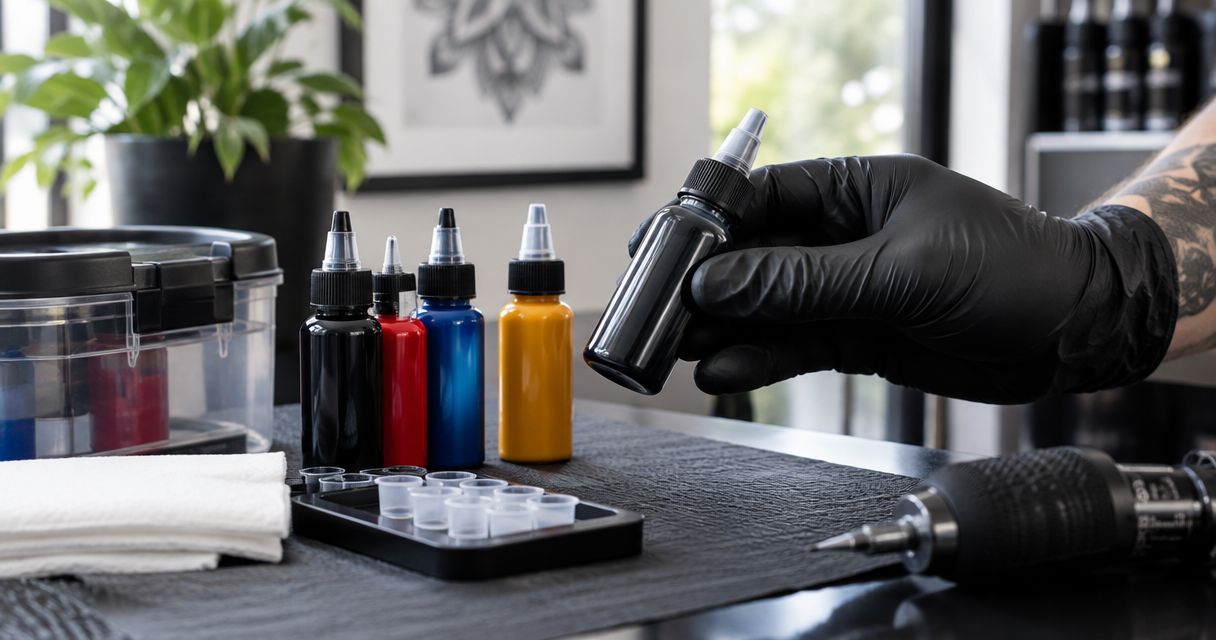
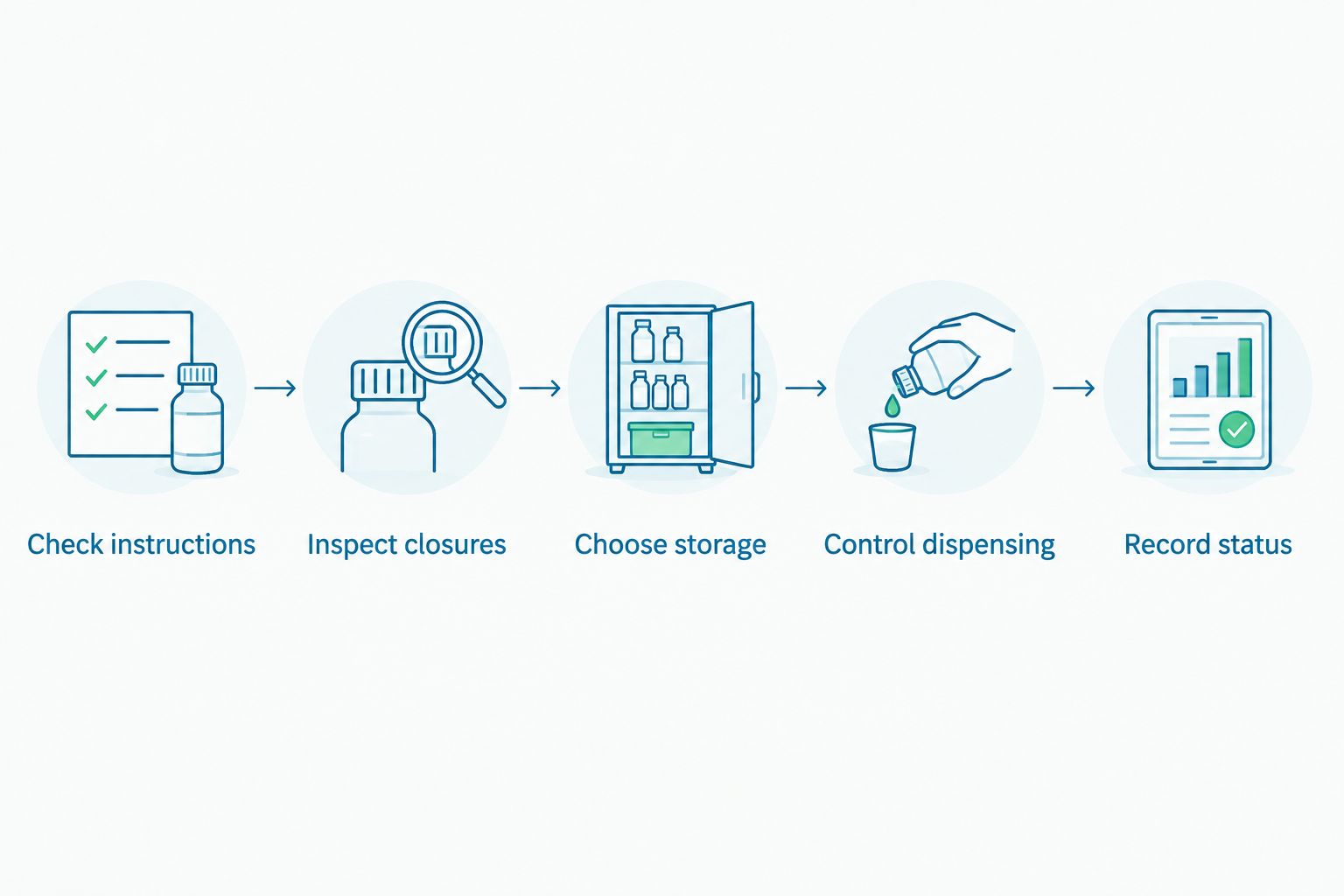
Keep the original container securely closed between dispensing events, and follow the storage directions on that specific product. Build the following sequence into receiving, shelving, and studio handoff rather than relying on staff memory.
Check instructions
Read the bottle and accompanying manufacturer information before assigning a storage location. Look for storage conditions, expiration information, mixing directions, and any instructions that apply after opening. Do not substitute a general internet temperature range for the product's actual requirements.
If the label is unreadable or instructions conflict, hold the bottle aside and ask the manufacturer for clarification. A distributor should resolve the question before supplying the affected inventory, not pass uncertainty to the studio.
Inspect closures
Check the cap, nozzle, threads, and any original tamper-evident feature without opening saleable stock unnecessarily. Look for leakage, cracks, or dried material that prevents the closure from seating correctly. A cap that appears attached is not necessarily properly closed.
Do not force a damaged closure or improvise a replacement from another bottle. Isolate the item and document the issue for the supplier. Keep questionable packaging out of the normal picking area.
Choose storage
Use a dedicated, clean storage location protected from sunlight and nearby heat sources. Keep bottles upright so closures remain accessible for inspection and labels stay readable. Follow any product-specific temperature requirements rather than assuming every room or cabinet qualifies.
Keep unopened inventory separate from the active tattoo workstation. Do not treat a sunny display shelf, vehicle, or equipment-adjacent ledge as equivalent to controlled indoor storage.
Control dispensing
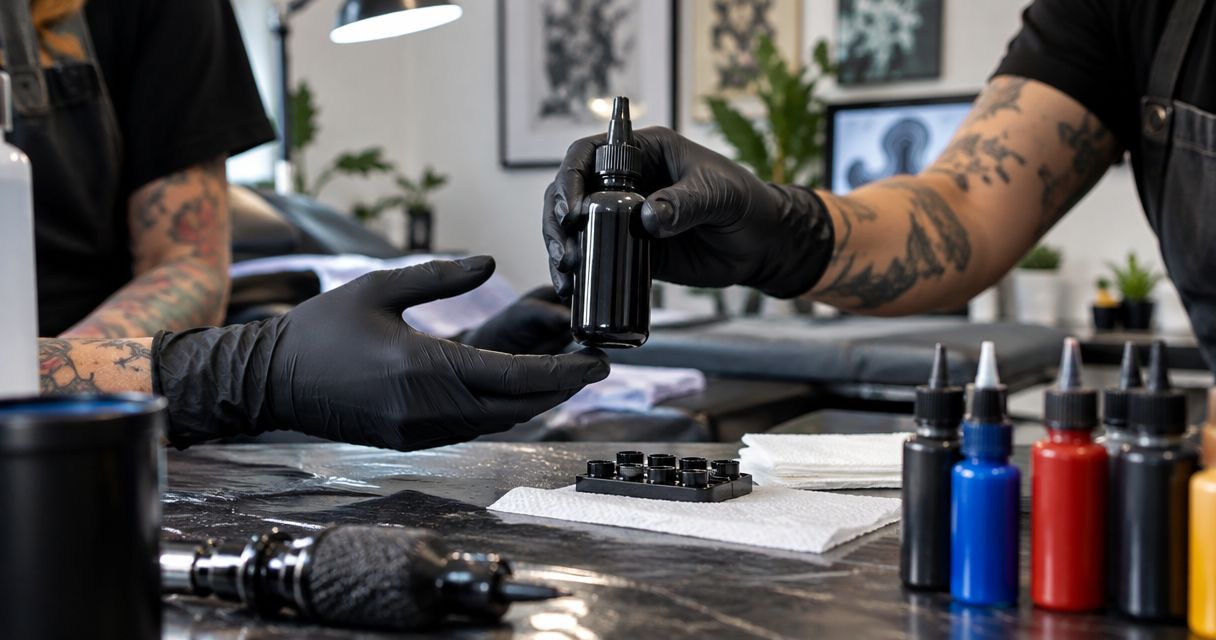
Open the bottle only when needed and close it promptly after dispensing. Handle the nozzle according to the manufacturer's instructions and your infection-control procedure; do not let it contact used ink caps, needles, or contaminated surfaces.
Pour only what the procedure requires into appropriate single-use ink caps. Never return leftover ink from a cap to the stock bottle. Keeping unused material in the original bottle does not justify transferring exposed material back into it.
Record status
Record the opening date for working bottles and retain the original lot or batch identification. Track expiration information separately: an opening date does not replace the manufacturer's expiration date or any stated after-opening limit.
For distributor inventory, record receiving exceptions and segregate returns from saleable stock. Do not put an opened return back into circulation simply because the bottle has been recapped.
Which storage setup fits your inventory?
Separate reserve inventory from working bottles and questionable stock. The best location depends on the bottle's status, not just how convenient the shelf is. Use this comparison when setting up your 2026 receiving and replenishment process.
| Setup | Best for | Advantage | Limitation |
|---|---|---|---|
| Dedicated stock cabinet | Unopened distributor and studio reserve inventory | Keeps stock organized and protected from direct light | A cabinet does not control temperature by itself |
| Designated working-bottle area | Opened bottles used during professional work | Makes closure checks and opening records easier to maintain | Requires separation from contaminated work surfaces |
| Segregated hold area | Leaking, damaged, returned, or otherwise questionable bottles | Prevents accidental picking or use | Requires a documented decision before release or disposal |
A closed cabinet beside a heat source is still a poor location. Likewise, a tidy working area does not excuse leaving nozzles exposed. Assess the actual conditions at the bottle, not the furniture's appearance.
Avoid transferring ink into smaller containers merely to make shelves look uniform. That introduces another handling step and separates the contents from original labeling unless you maintain a controlled, manufacturer-supported process. Keep the original package as your default.
Why tattoo ink dries out or changes consistency
A thicker bottle is a reason to investigate, not a reason to add liquid. These factors determine what to check before deciding whether the issue is drying, settling, packaging damage, or another change.
- Closure integrity: A loose, cracked, or obstructed closure allows exchange with the surrounding air. Check whether dried residue prevents proper seating.
- Open handling: Leaving a stock bottle open exposes its contents unnecessarily. Make prompt closure part of dispensing, not an end-of-session task.
- Heat exposure: Heat promotes evaporation when a container is open or inadequately sealed. Keep storage away from sunlight and local heat sources.
- Container changes: Decanting adds handling and can separate ink from its original identification. Do not assume another bottle offers an equivalent seal.
- Product formulation: Pigment settling and handling instructions vary by formulation. Follow the specific mixing directions before interpreting separation as drying.
- Stock age: Expiration and any stated after-opening instructions remain separate controls. Neither a full bottle nor normal-looking liquid overrides them.
You cannot identify microbial contamination by checking thickness, smell, or color alone. A normal appearance does not clear a bottle with compromised handling history. Likewise, a visible change does not tell you its cause without further investigation.
Can you save tattoo ink that has become thick or dry?
Do not reconstitute a dried-out stock bottle for tattooing. Adding water or another liquid does not establish the original formulation, restore a compromised seal, or resolve a contamination concern.
First distinguish ordinary separation from a persistent change. If the manufacturer directs you to shake or mix the bottle before use, follow that instruction with the container properly closed. Do not invent a mixing duration or use an improvised tool inside the bottle.
If the contents remain unusually thick, contain persistent clumps, or no longer dispense as expected, stop using the bottle and request manufacturer guidance. Keep its batch information and handling record available. Do not keep testing it on clients while waiting for an answer.
A mixing solution intended for a documented tattooing technique is not automatically a storage-repair product. Use diluents only for their stated purpose and according to the relevant instructions. Never treat dilution as a way to extend expired stock.
Should you refrigerate tattoo ink to stop it drying out?
Do not refrigerate tattoo ink unless the manufacturer specifically instructs you to do so. Refrigeration is not a substitute for an intact closure, and colder storage is not automatically better storage.
For a distributor, the practical requirement is to match the labeled conditions throughout storage and handling. If a shipment arrives unusually cold, hot, or leaking, segregate it and ask the supplier how to assess the exposure. Do not assume that returning it to room conditions resolves the issue.
Your 2026 receiving checklist should record the observed problem without guessing its effect on the formulation. Photograph packaging damage, retain shipment identification, and document the supplier's disposition before releasing affected stock.
How should distributors prevent storage losses?
Buy around documented demand and usable shelf life, not the desire to fill every shelf. Slow-moving colors need the same closure and traceability controls as frequently replenished black ink. Unopened stock still requires inspection and appropriate storage.
Assign clear responsibility for receiving, stock rotation, and release of held inventory. A bottle should not move from the hold area back into saleable stock because another employee did not recognize the reason it was separated.
Use the earliest applicable expiration date when rotating stock. Preserve lot identification through picking and dispatch so a studio can connect a bottle to its purchase record. Do not cover required label information with internal stickers.
For your 2026 purchasing review, ask whether order quantities match turnover and whether receiving staff can identify packaging exceptions. Review opened working stock separately from distributor reserve stock; the handling histories are not interchangeable.
When purchasing INTENZE professional tattoo ink online, check the current product details and retain the order information alongside your receiving record. Brand history supports supplier evaluation, but the condition and documentation of the actual bottle determine the next handling step.
Review professional tattoo ink
Check current product information before planning your next studio or distributor order.
What should a storage handoff include?
Give the receiving studio the product's original instructions and identification, not a generic promise that the ink was stored correctly. If an exception occurred during shipment or storage, disclose it and resolve it before the bottle enters working inventory.
For multi-location operations, use the same status terms everywhere: unopened reserve, opened working stock, and hold. Consistent terms prevent a returned bottle from being mistaken for untouched inventory. They also make replenishment decisions easier to audit.
Include storage checks in your 2026 staff induction. Ask staff to demonstrate how they inspect a closure, identify a batch, and segregate a questionable bottle. A written policy is useful only when the physical handling matches it.
FAQ
What's the best way to keep tattoo ink from drying out?
Keep tattoo ink in its original bottle with the closure fully secured and follow the manufacturer's storage directions. Protect it from sunlight and heat, and close it promptly after dispensing.
Can I add water to tattoo ink that has dried out?
Do not add water to rescue a dried-out stock bottle for tattooing. Added liquid does not restore the original formulation or resolve contamination and packaging concerns.
Is separated tattoo ink the same as dried-out ink?
Separated tattoo ink is not necessarily dried-out ink. Follow the manufacturer's mixing instructions, and stop using the bottle if persistent changes remain or its handling history is questionable.
Should tattoo ink go in the refrigerator?
Refrigerate tattoo ink only if its manufacturer specifically instructs you to do so. An intact closure and compliance with the labeled storage conditions matter more than making the bottle colder.
Can unopened tattoo ink dry out?
An unopened bottle can lose liquid if its packaging or seal is compromised. Inspect for leakage, damage, and closure problems rather than treating unopened status as proof of condition.
How long can I keep tattoo ink after opening it?
Follow the manufacturer's stated after-opening instructions and expiration information for that product. Record the opening date, but do not use a general shelf-life estimate in place of the label.
Can I pour unused ink from a cap back into the bottle?
Never return ink from a working cap to the stock bottle. Discard exposed leftovers according to your infection-control and waste procedures rather than risking the remaining contents.
Does a normal-looking bottle mean the tattoo ink is safe?
Normal appearance does not establish that tattoo ink is safe to use. Check expiration, packaging integrity, handling history, and manufacturer instructions; contamination is not always visible.
One last thing
A blocked nozzle is a closure problem, not permission to modify the ink. Do not push a needle or another improvised tool into the bottle to clear it. Set the bottle aside and follow manufacturer guidance for the affected packaging.
Make that distinction part of your purchasing feedback. Report whether the problem involved dispensing, the cap, leakage, or the contents themselves, and include the batch identification. A precise report gives the supplier a useful issue to investigate; “the ink went bad” does not.