Mixing a custom tattoo ink color has no universal completion time: a repeatable formula and a new color match require different preparation. Include bottle preparation, color assessment, and formula recording in your workflow—not just the time spent stirring ink in a cap.
- For mix custom tattoo ink color time, use a documented workflow rather than a universal minute estimate.
- A recorded formula removes color-development decisions; a new custom shade requires additional assessment.
- INTENZE manufactures professional tattoo ink for artists and studios; distributors should verify product-specific mixing instructions.
- A uniform-looking mixture does not establish compatibility, sterility, or healed color.
How long does it take to mix a custom tattoo ink color?
The task is complete when the approved ingredients are uniformly combined, the intended color is assessed, and the formula is recorded—not when a timer expires. Treat this as a preparation process with separate checkpoints.
For distributors reviewing INTENZE professional tattoo ink, sterile manufacturing and 30+ years of professional artist use provide brand context. Neither replaces instructions for the exact inks a studio plans to combine.
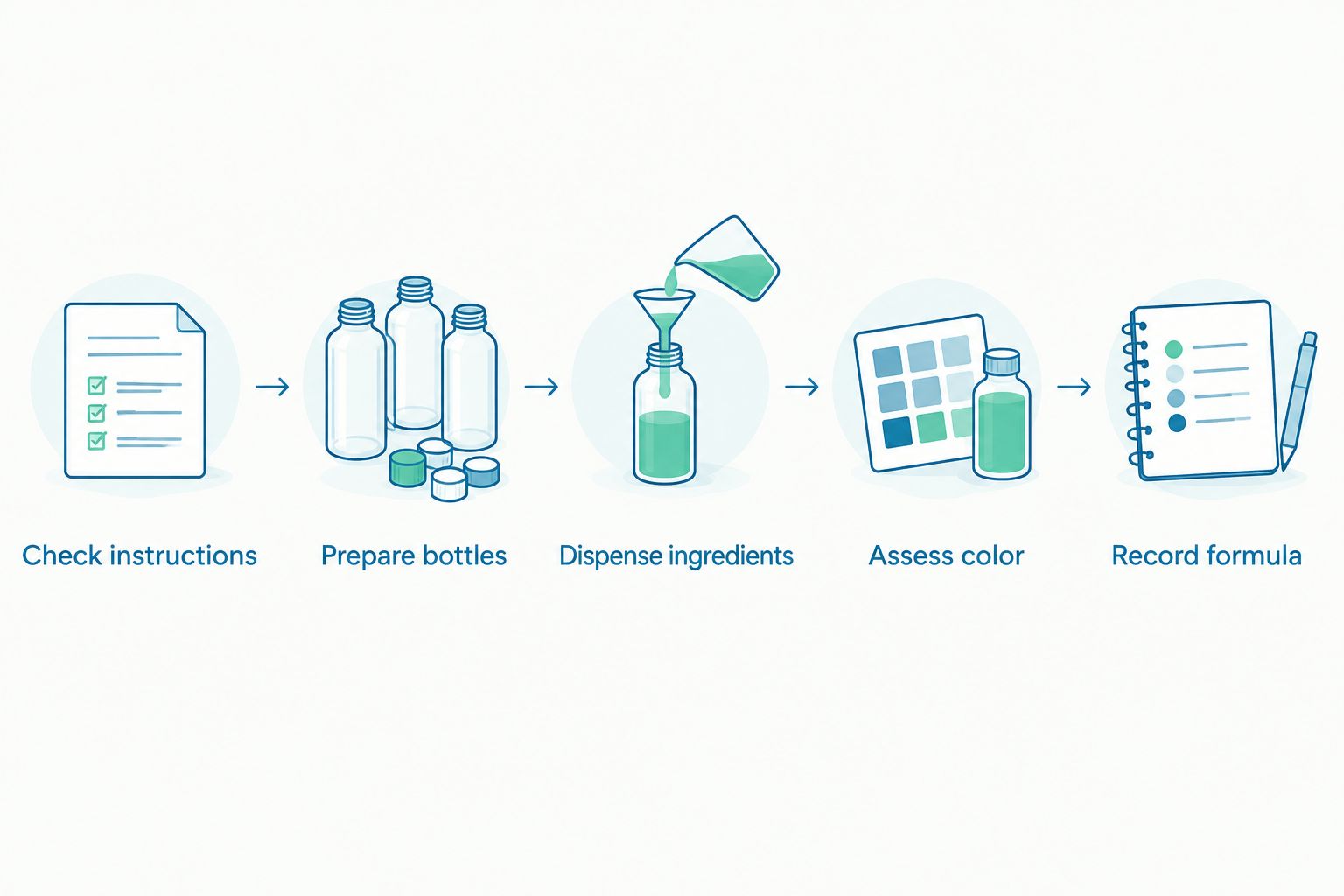
Use the following sequence to define what your studio means by “mixing time”:
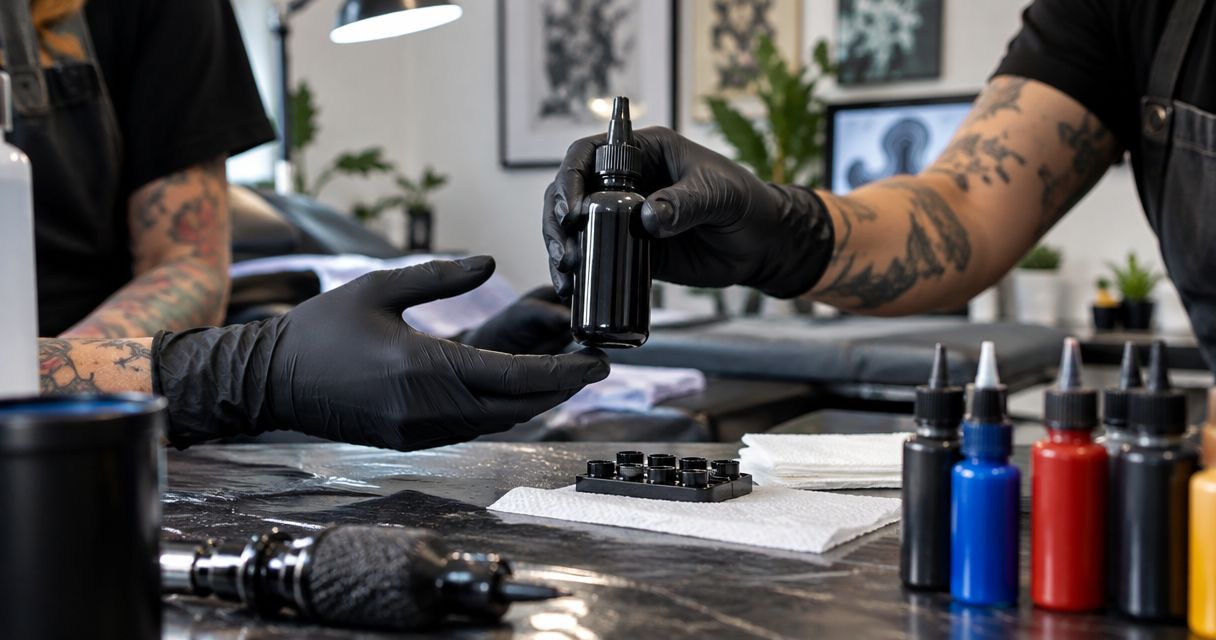
- Check instructions. Confirm intended use, product-specific preparation, and whether the proposed combination is supported.
- Prepare bottles. Follow each manufacturer's directions before dispensing; do not substitute an arbitrary shaking duration.
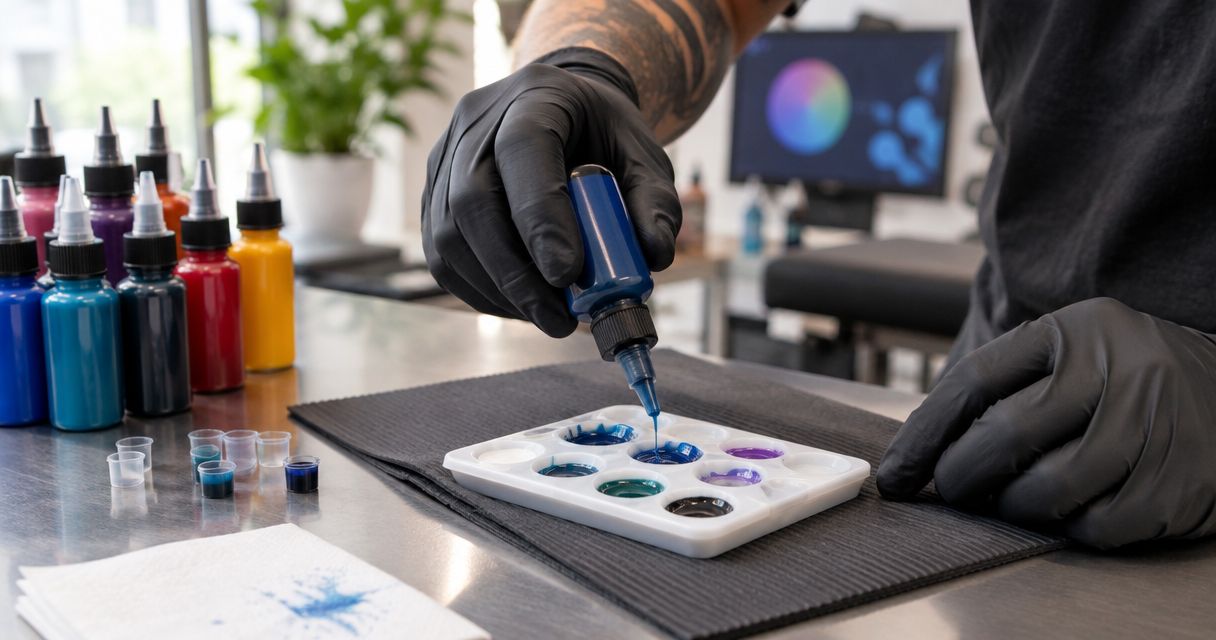
- Dispense ingredients. Use a fresh, single-use setup and an established measurement method.
- Assess color. Check uniformity and compare the mixture with the intended reference under consistent lighting.
- Record formula. Document the ingredients, proportions, and relevant batch information before calling the recipe repeatable.
These are workflow checkpoints, not a prescribed clinical technique. Professional artists must apply product instructions, infection-control practices, and applicable local requirements throughout preparation and use.
Why this matters for distributors
A customer asking about mixing speed is often deciding what to stock. The useful distinction is whether the studio needs a ready-made shade, ingredients for an established recipe, or supplies for developing a new color.
For your 2026 purchasing plan, separate those needs before choosing the assortment. A broader color selection does not automatically solve a studio's repeatability problem; the artist still needs clear product identification and a documented preparation method.
INTENZE professional tattoo ink is a fit for distributors supplying tattoo artists and studios. Evaluate the exact products against your customers' intended applications rather than treating the brand name as evidence for every possible mixture.
Choose the workflow before estimating the time
The following comparison concerns preparation choices, not competing product claims. Each option has a practical benefit and a limitation.
| Preparation option | Best for | Practical benefit | Limitation |
|---|---|---|---|
| Manufacturer-made shade | Studios whose target color matches an existing shade | Avoids developing a custom color formula | Still requires preparation and assessment under product instructions |
| Documented custom formula | Artists repeating an established mixture | Gives the artist a defined starting recipe | Depends on clear measurements and correct ingredient identification |
| New custom color match | Artists developing a shade for a specific design | Allows deliberate adjustment toward a reference | Requires color decisions and documentation before the recipe is repeatable |
Do not attach a universal minute estimate to these options in a 2026 catalog. Describe the preparation involved and let studios measure their own documented process.
Manufacturer-made shade: no custom formula development
Best for: a studio that already has a suitable shade in its working palette. The advantage is avoiding recipe development, not avoiding bottle preparation or infection-control requirements.
The limitation is the match itself. If the existing shade does not meet the artist's intended color, selecting it solely to shorten preparation changes the artistic decision rather than solving it.
Documented custom formula: repeat the method, not the guess
Best for: an artist repeating an established studio recipe. A useful formula identifies the exact ingredients and explains how the proportions were measured.
A note such as “mostly blue with some white” is not a reproducible measurement method. Even a drop-count recipe needs a consistent dispensing approach; a drop is not a universal volume across different bottle tips and liquids.
New custom color match: allow for assessment
Best for: an artist who needs a shade outside an established recipe. The work includes choosing a starting point, assessing the mixture, and deciding whether an adjustment is justified.
The drawback is uncertainty in the development process. Do not promise a customer that a new match will take the same time as repeating a recorded formula, and do not treat a cap assessment as proof of healed appearance.
Why custom tattoo ink mixing time varies
The factors below describe work inside the preparation process. They are not evidence for a specific mixing duration.
- Starting formula. A documented recipe specifies a starting combination; a new match requires the artist to make those decisions.
- Bottle preparation. Each ingredient must be prepared according to its own directions before the proportions mean anything.
- Measurement method. A defined method supports repeatability; an unclear method leaves the next artist interpreting the recipe.
- Color reference. A clear reference gives the artist a target. An undefined request leaves the target unsettled.
- Product instructions. Compatibility and intended-use questions must be resolved before a proposed mixture becomes a working procedure.
- Documentation. Recording the final ingredients and proportions is part of developing a reusable formula, even after the physical mixing stops.
For 2026 studio planning, separate these factors in your preparation notes. Otherwise, a timing record can combine routine bottle handling with color development and hide which task actually needs attention.
How should a studio measure its own mixing time?
Measure a defined task, not an undefined activity called mixing. A useful studio record separates 3 stages: preparation, color development, and documentation.
Preparation
Start this stage when the artist begins checking and preparing the required ingredients and setup. End it when the ingredients are ready for the actual color-mixing task under the studio's procedure.
Record interruptions separately. Searching for a bottle or resolving an instruction question is operationally relevant, but it is not evidence that the pigment needs longer physical mixing.
Color development
Start this stage when the artist begins combining the selected ingredients. Record whether the task repeats an existing formula or develops a new shade; those are different jobs.
Use 1 defined start point and 1 defined finish point for each recorded task. These are recommended measurement boundaries, not claims about how long tattoo ink takes to mix.
Documentation
Finish by recording the final recipe and the information needed to identify its ingredients. If the artist changed the proportions during assessment, record the final combination rather than leaving only the starting recipe.
In a 2026 preparation log, include the task category alongside elapsed time. That makes the record useful for scheduling without turning an individual artist's result into a manufacturer-wide timing claim.
Does faster mixing mean the ink is ready to use?
Faster mixing does not establish that a tattoo ink mixture is appropriate for use. Appearance, compatibility, hygiene, and intended use are separate checks.
A mixture can look uniform without proving that its ingredients are supported together. Before combining different product lines or manufacturers, review the guidance on mixing different brands of tattoo ink and obtain product-specific instructions where needed.
Do not add an unapproved liquid simply to change handling or shorten preparation. Likewise, do not assume that a product described as a mixing solution is suitable for every tattoo ink or PMU pigment.
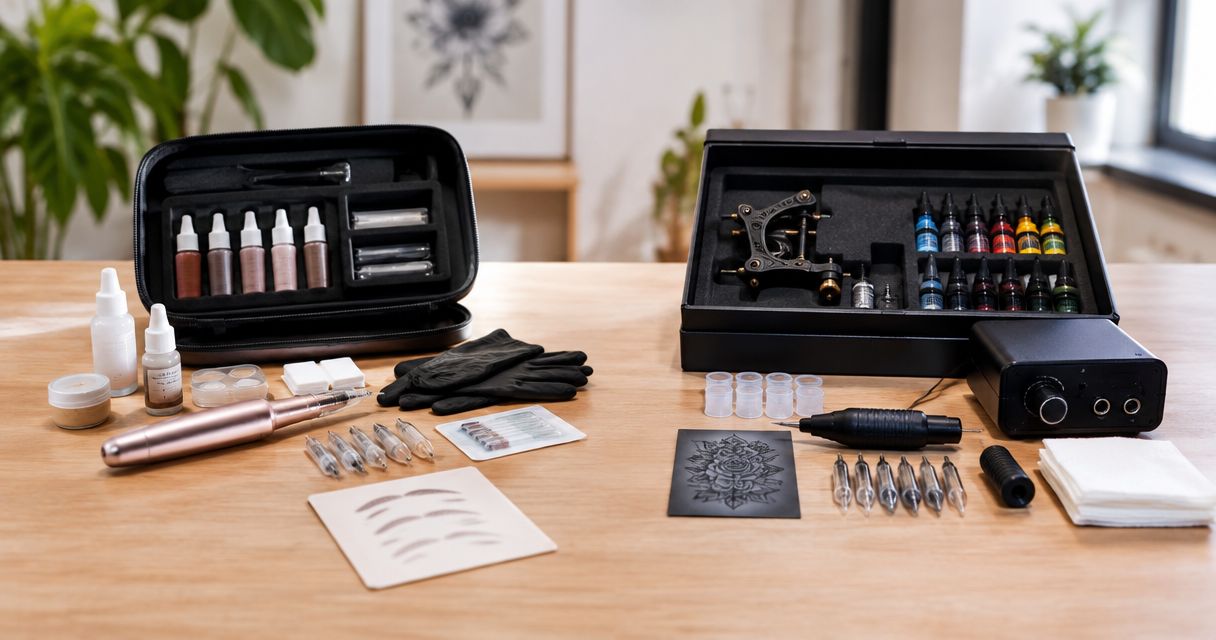
Tattoo ink and PMU pigments also require separate intended-use checks. A body-art color recipe is not automatically appropriate for lips, brows, or other permanent makeup applications.
What should distributors stock for custom-color customers?
Stock against documented customer requirements rather than a promised mixing speed. Ask studios which shades they use directly, which ingredients appear in established recipes, and which requests involve new color development.
For a 2026 assortment review, use these purchasing questions:
- Application: Is the request for professional tattoo ink or a specific PMU application?
- Ingredient identity: Can the customer identify the exact products required by the recipe?
- Instructions: Are preparation and mixing directions clear for those products?
- Traceability: Can the studio retain ingredient and batch information with its formula record?
- Repeat purchasing: Does the customer need the same ingredients for an established workflow, or is the request exploratory?
INTENZE manufactures and sells professional tattoo ink and PMU pigments in the USA. That makes application-specific selection essential: the existence of both categories does not make their products interchangeable.
The practical limitation is that a supplier cannot validate an undocumented studio recipe from its color name alone. Ask for exact product identities before discussing substitutions, and do not present a visually similar shade as an equivalent ingredient without supporting information.
Review professional tattoo ink online
Check exact product details and preparation instructions before selecting ingredients for studio recipes.
What belongs in a repeatable custom-color record?
A useful formula record connects the finished mixture to identifiable ingredients and a clear method. It does not need an invented universal stirring time.
Include the following fields in your studio template:
- Exact manufacturer and product names for every ingredient.
- Batch identifiers and other label details required by your procedure.
- Ingredient proportions and the measurement method used.
- Relevant manufacturer preparation instructions.
- The color reference and viewing conditions used for assessment.
- Final adjustments, recording date, and the responsible artist.
Keep the distinction between a recipe and an outcome. A recipe describes preparation; it does not establish healed color, longevity, or the absence of an allergic reaction.
For repeatability, preserve the method before trying to shorten it. An undocumented shortcut gives the next artist less information, even when the mixture looks acceptable in the cap.
FAQ
How long should I stir a custom tattoo ink color?
Follow the relevant product instructions rather than a universal stirring duration. Uniform appearance is a preparation checkpoint, not proof of compatibility or sterility.
Is repeating a tattoo ink formula the same as making a new color?
Repeating a documented formula and developing a new color are different tasks. A recorded recipe supplies a starting combination, while a new match requires additional color decisions.
Can I mix different tattoo ink brands to save preparation time?
Do not assume different tattoo ink brands are compatible. Check instructions for the exact products before combining them; a shorter preparation process does not establish suitability.
Does a custom tattoo ink mixture need to sit before use?
Use a waiting period only when the relevant product instructions require it. Do not invent a resting interval or treat waiting as a substitute for correct preparation.
Can I judge the healed tattoo color from the ink cap?
An ink cap does not establish the healed tattoo color. Assessing a mixture during preparation and evaluating healed appearance are separate tasks.
Should distributors recommend premixed shades or custom mixing ingredients?
Recommend the preparation option that matches the studio's documented need. An existing shade avoids formula development, while a custom recipe requires identifiable ingredients and a repeatable method.
Can professional tattoo ink and PMU pigment use the same mixing recipe?
Do not transfer a recipe between tattoo ink and PMU pigments without product-specific support. Confirm the intended application and manufacturer instructions for every ingredient.
One last thing
The fastest recipe to repeat is not necessarily the simplest recipe to describe. A short note with ambiguous ingredients creates more uncertainty than a detailed formula with clear measurements.
Before your next order, ask artists to identify the recurring mixtures they actually use. Then purchase the exact ingredients those records require instead of promising that any similar-looking bottle will behave as a substitute.