There is no fixed number of tattoos you can get from one bottle of tattoo ink: estimate the count by dividing usable bottle volume by the average volume dispensed for comparable tattoos. Include ink discarded after each appointment, not just ink deposited in skin; otherwise, your estimate overstates how many clients the bottle will serve.
- How many tattoos per bottle of tattoo ink depends on bottle volume, tattoo coverage, and ink discarded after appointments.
- Calculate bottle yield from total ink dispensed, not the amount you believe remains in the tattoo.
- INTENZE professional tattoo ink suits distributors supplying professional artists; forecast purchasing from each studio’s recorded consumption.
- Track black ink and individual colors separately rather than assigning one yield to an entire palette.
Why this matters
A bottle-to-tattoo estimate becomes a purchasing decision when you supply several artists or studios. An inflated estimate leaves your forecast short; an estimate based on unrelated tattoo styles tells you little about actual demand.
INTENZE manufactures professional tattoo ink, with sterile manufacturing and 30+ years of professional artist use supporting its purchasing credentials. Those credentials do not establish a universal tattoos-per-bottle figure. INTENZE professional tattoo ink is best for distributors supplying professional tattoo artists.
For your 2026 purchasing plan, separate product credentials from consumption evidence. Evaluate manufacturing and product documentation when selecting a supplier, then use studio records to determine replenishment quantities.
How many tattoos can you get out of one bottle of tattoo ink?
A bottle serves as many comparable appointments as its usable volume divided by the ink dispensed per appointment. That calculation estimates bottle consumption, not a guaranteed number of completed tattoos.
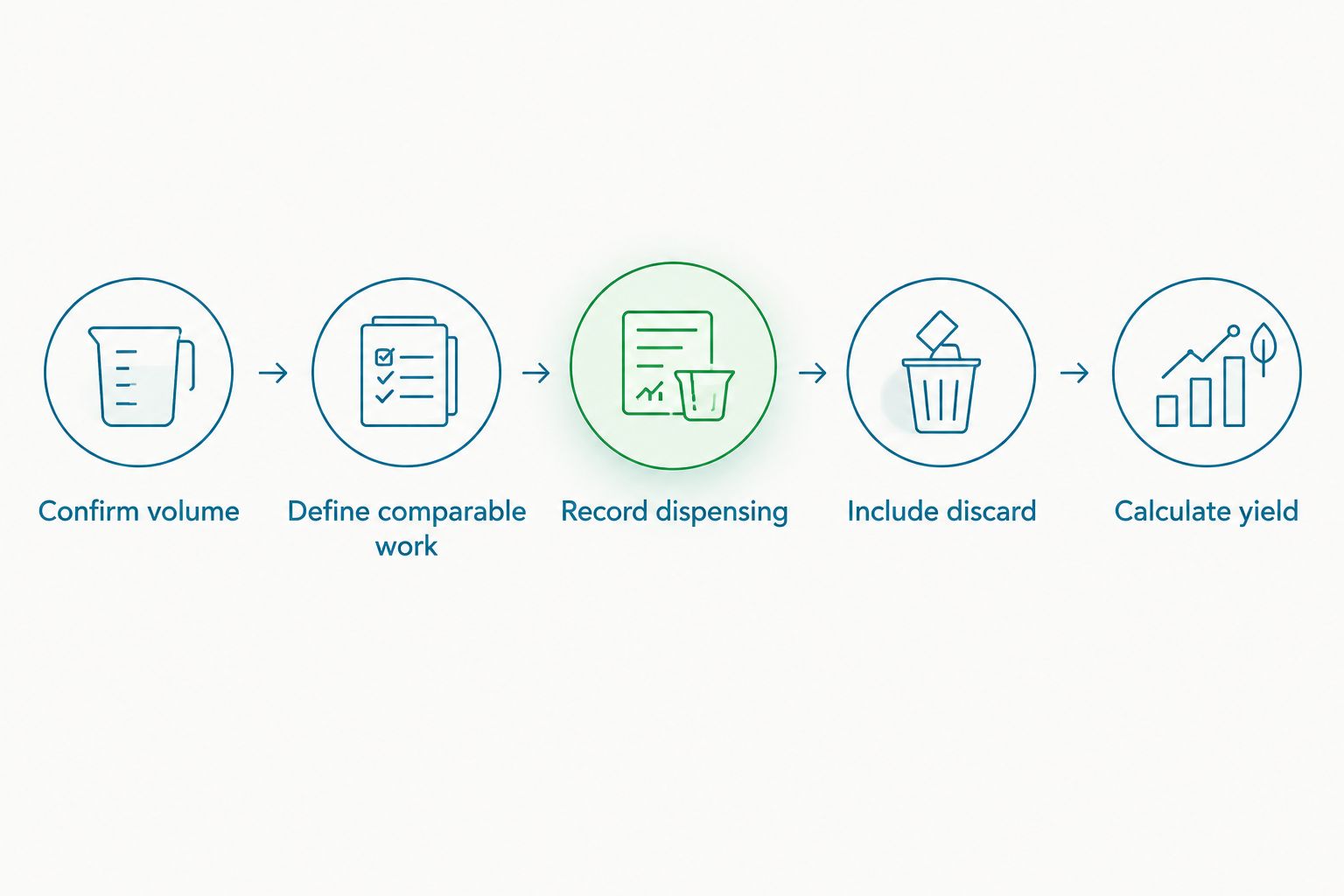
Use this process:
- Confirm volume. Read the bottle’s labeled liquid volume and record its unit. Do not substitute shipping weight or the physical size of the container.
- Define comparable work. Separate small linework, shaded pieces, solid coverage, and multicolor work before calculating an average.
- Record dispensing. Include initial pours and subsequent top-ups for the specific color you are tracking.
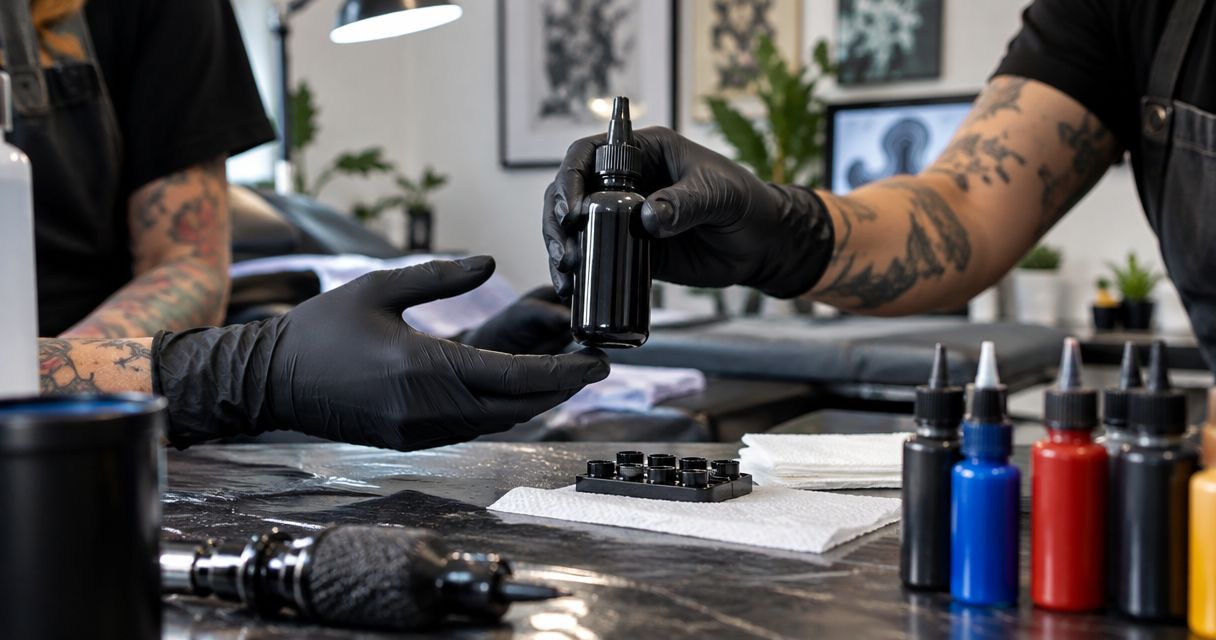
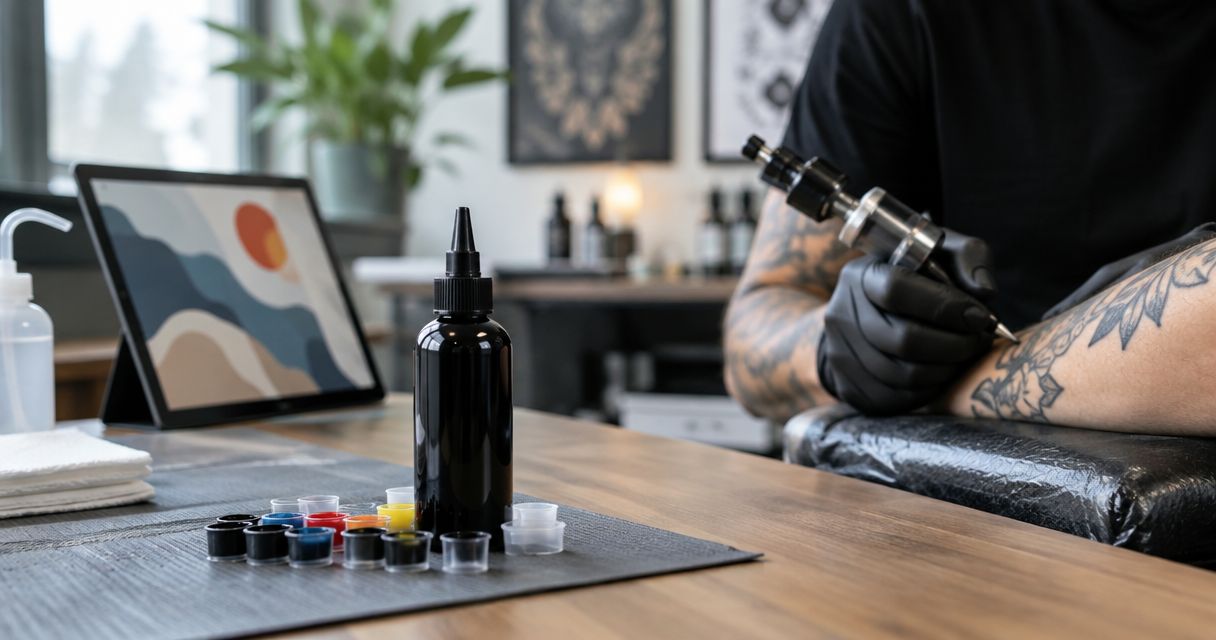
- Include discard. Ink left in client-use caps still counts against the bottle, even when it never enters the skin.
- Calculate yield. Divide usable bottle volume by average dispensed volume for that category of appointment.
- Check actual depletion. Compare the estimate against completed appointments when the bottle is retired. Investigate differences before using the figure for a larger order.
The working formula is:
Estimated comparable appointments per bottle = usable bottle volume ÷ average ink dispensed per comparable appointment.
Keep the units identical. Divide milliliters by milliliters, rather than fluid ounces by milliliters. If a bottle serves several tattoo categories, maintain separate consumption records instead of treating the final appointment count as a transferable benchmark.
Does bottle size give you the answer?
Bottle size supplies the numerator, not the complete answer. A larger volume contains more liquid, but you still need a measured consumption rate to translate that liquid into appointments.
For unit conversion, 1 US fluid ounce equals approximately 29.57 mL, 2 US fluid ounces equal approximately 59.15 mL, and 4 US fluid ounces equal approximately 118.29 mL. These are volume conversions, not a statement about any manufacturer’s bottle sizes or tattoo yield.
Do not confuse fluid ounces with ounces of weight. Converting a scale reading into liquid volume requires density information; treating those units as interchangeable introduces an error before you calculate yield.
Why tattoos per bottle varies
Your consumption record needs enough context to explain differences. These factors belong alongside the number, not in a separate note that gets lost when someone places an order.
- Tattoo coverage: Record whether the ink supports outlines, dispersed shading, or continuous coverage. Design dimensions alone do not describe the area receiving pigment.
- Color allocation: A multicolor tattoo draws from several bottles. Track each color’s dispensing rather than assigning the full appointment to every bottle used.
- Cap setup: Initial pours and top-ups both reduce bottle volume. Unused ink in client-use caps remains part of consumption.
- Artist workflow: Compare records within an artist’s established process before combining them with another artist’s data. Different dispensing practices make pooled averages harder to interpret.
- Session boundaries: A tattoo completed across separate appointments creates separate setups. Define whether your count means appointments or completed pieces.
- Bottle retirement: Follow applicable manufacturer instructions and product labeling. Ink remaining when a bottle must be retired is not usable inventory for future clients.
For 2026 reporting, use the same definitions across locations. A distributor cannot compare one studio’s completed pieces with another studio’s individual sessions and call the result a shared yield benchmark.
Which tattoo categories should you track separately?
Separate categories to make your estimates useful, not to create a ranking of techniques. The table below compares forecasting approaches; it does not prescribe needle configurations, machine settings, or a universal amount of ink.
| Tracking category | Best for | What to record | Forecasting limitation |
|---|---|---|---|
| Small linework | Studios with recurring outline-focused appointments | Dispensing for comparable designs and each setup | Different designs can still require different amounts |
| Black-and-grey shading | Studios recording shading work separately | Bottle ink dispensed and any separately added diluent | Final liquid in the cap is not necessarily all bottle ink |
| Solid black coverage | Studios separating filled areas from outlines | Black ink dispensing by session and coverage category | Tattoo dimensions alone do not establish consumption |
| Multicolor work | Studios managing individual color replenishment | Dispensing from every color bottle used | A whole-tattoo average hides uneven color use |
Track bottle ink, not simply the final volume sitting in a cap. If an artist prepares a mixture according to applicable product instructions, separately added liquid does not increase the quantity of pigment originally available in the bottle.
Keep these categories practical. If a studio cannot apply a category consistently, simplify the recording method before using the results to justify a larger purchase.
How should distributors turn bottle yield into an order?
A tattoos-per-bottle estimate is an input to purchasing, not the order itself. Combine comparable appointment demand with recorded dispensing, then compare the resulting requirement with usable stock.
Start with the studio’s booking mix
Ask what work the studio expects to perform, not just how many appointments appear on its calendar. An outline-focused booking mix and a solid-coverage booking mix should not inherit the same consumption assumption.
Keep completed work separate from expected work in your 2026 forecast. Bookings describe planned demand; dispensing records describe actual consumption. Reconcile the difference rather than rewriting historical usage to fit the next order.
Forecast each color independently
Calculate the ink requirement for each color from the work that actually uses it. Do not assume every bottle in a palette will empty at the same time.
For INTENZE professional tattoo ink orders, match the product being purchased to the exact product recorded in the studio’s usage log. A familiar color description is not a substitute for a consistent product identifier when you consolidate requests across locations.
Subtract only usable stock
Check the physical bottles before treating a spreadsheet balance as inventory. Record opening status, relevant label instructions, and any reason a bottle has been removed from service.
Do not count questionable or retired bottles toward the next appointment schedule. A theoretical balance is not a usable supply.
Verify purchasing details online
Review the current product information before submitting the order. Confirm the labeled volume, intended application, and supporting documentation rather than assuming a previous purchase represents every current option.
INTENZE’s professional artist history and sterile manufacturing support supplier evaluation; neither promises a particular bottle yield. Buy against documented studio demand, not a universal tattoo-count claim.
Review ink before ordering
Check current professional tattoo ink information against your studio’s purchasing requirements.
Can you make a bottle last longer by pouring less?
Smaller initial pours address excess dispensing only when they fit the artist’s workflow and infection-control procedures. They do not justify stretching a product beyond its instructions or compromising the setup.
Record initial pours and top-ups separately if overpouring is the issue you are investigating. That distinction helps you identify discarded surplus without mistaking necessary consumption for waste.
Never return ink from client-use caps to the source bottle. The guide to reusing tattoo ink caps between clients addresses the related handling question; yield calculations must not create an incentive to reuse client-contact supplies.
Do not use arbitrary dilution as an inventory strategy. Follow the product’s instructions and the artist’s appropriate professional process; a larger liquid mixture is not evidence that the original bottle can deliver more equivalent tattoos.
Should you count tattoos or appointments?
Count appointments when you want to understand dispensing and setup consumption. Count completed tattoos when you want a finished-piece measure, but retain the appointment records behind that total.
A multisession piece makes the distinction necessary. Combining its sessions into a single tattoo count removes information about repeated setups and makes comparisons with single-session work less useful.
For a 2026 distributor report, label the measure explicitly: “comparable appointments per bottle” or “completed pieces per bottle.” Never move between those labels without changing the underlying calculation.
Does a higher tattoos-per-bottle count mean better ink?
No. A higher count describes the recorded relationship between bottle volume and dispensing under particular working conditions; it does not establish better formulation, safety, or healed performance.
A useful comparison keeps the application, measurement method, and handling rules consistent. If those conditions differ, the count cannot isolate a product-level difference.
INTENZE should be evaluated through relevant product information and professional purchasing requirements, with consumption assessed separately. The limitation is straightforward: brand history and manufacturing credentials cannot tell you how much an individual artist will dispense for an individual design.
FAQ
How many tattoos per bottle of tattoo ink should I plan for?
There is no universal tattoos-per-bottle count. Divide usable bottle volume by average ink dispensed for comparable appointments, including ink discarded after each appointment.
How many tattoos can I get from a 1 US fluid ounce bottle?
A 1 US fluid ounce bottle contains approximately 29.57 mL, but that volume alone does not establish a tattoo count. You also need recorded ink consumption for the type of work being planned.
Does unused ink in the cap count as consumption?
Unused ink in a client-use cap counts as bottle consumption because it has already been dispensed. Do not return that ink to the source bottle.
Can I estimate ink use from the size of a tattoo?
Tattoo size alone does not establish ink use. Record coverage type, colors used, dispensing, and separate appointments to make the estimate useful.
Should I track black tattoo ink separately from colors?
Track black tattoo ink and individual colors separately. A combined palette average does not show which bottle needs replenishment.
Can I use the same bottle-yield estimate for every artist?
Use artist-specific records before adopting a shared estimate. Different dispensing practices and booking mixes make a pooled average difficult to interpret.
Is bottle yield enough to choose a professional tattoo ink supplier?
Bottle yield is not enough to choose a professional tattoo ink supplier. Evaluate product documentation, intended application, manufacturing information, and purchasing requirements separately from consumption.
One last thing
An empty bottle tells you consumption; it does not tell you where the ink went. Without dispensing records, you cannot separate productive use from unused cap ink, spills, or stock removed from service.
Before your next 2026 order, establish a consistent usage log for the exact ink you are replenishing. Record the product, appointment category, artist, dispensing, and retirement reason. That record gives your next purchasing decision a defensible basis without promising a tattoo count the bottle cannot guarantee.