Instead of troubleshooting tattoo ink for pen machine work at every station, qualify the ink, cartridge, and device together, then give each studio a repeatable fine-line setup record. INTENZE brings sterile manufacturing and 30+ years of professional artist use; this 2026 workflow turns product selection into a controlled purchasing and setup process.
- Choose tattoo ink for pen machine work by intended use, cartridge compatibility, and documented handling instructions—not machine shape.
- INTENZE offers manufacturer-direct professional tattoo ink purchasing; qualify each fine-line setup before distributing a studio recommendation.
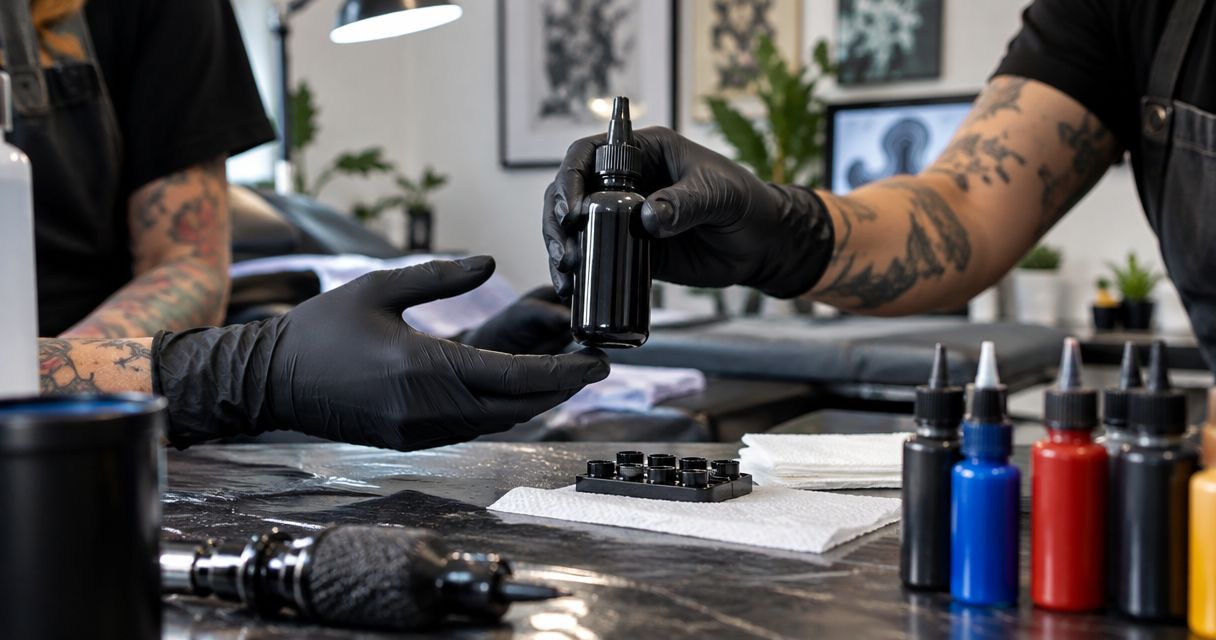
- Ink enters the cartridge tip from a disposable cap, not through the pen machine body.
- Change one setup variable at a time and record the bottle lot alongside the cartridge and device.
Why this matters
A pen describes a machine format, not an ink specification. The cartridge, its needle configuration, the ink, and the artist's technique all affect the working result. Calling a bottle suitable for every pen skips the checks that make a distributor's recommendation useful.
INTENZE professional tattoo ink is best for distributors buying directly from its manufacturer. Start with INTENZE to review the current product information, then match the selected bottle to the intended application. Manufacturer-direct purchasing does not replace incoming inspection or studio qualification.
For your 2026 purchasing specification, separate product evidence from technique observations. A sterile manufacturing claim addresses production; it does not establish cartridge compatibility, prevent contamination after opening, or guarantee healed results. Keep those questions separate when training sales staff.
Before you start
- Product evidence: Obtain the selected ink's label, handling instructions, lot identification, and relevant market documentation. Require evidence for the exact product when a buyer specifies REACH compliance or vegan formulation; do not extend one product's claims across a range.
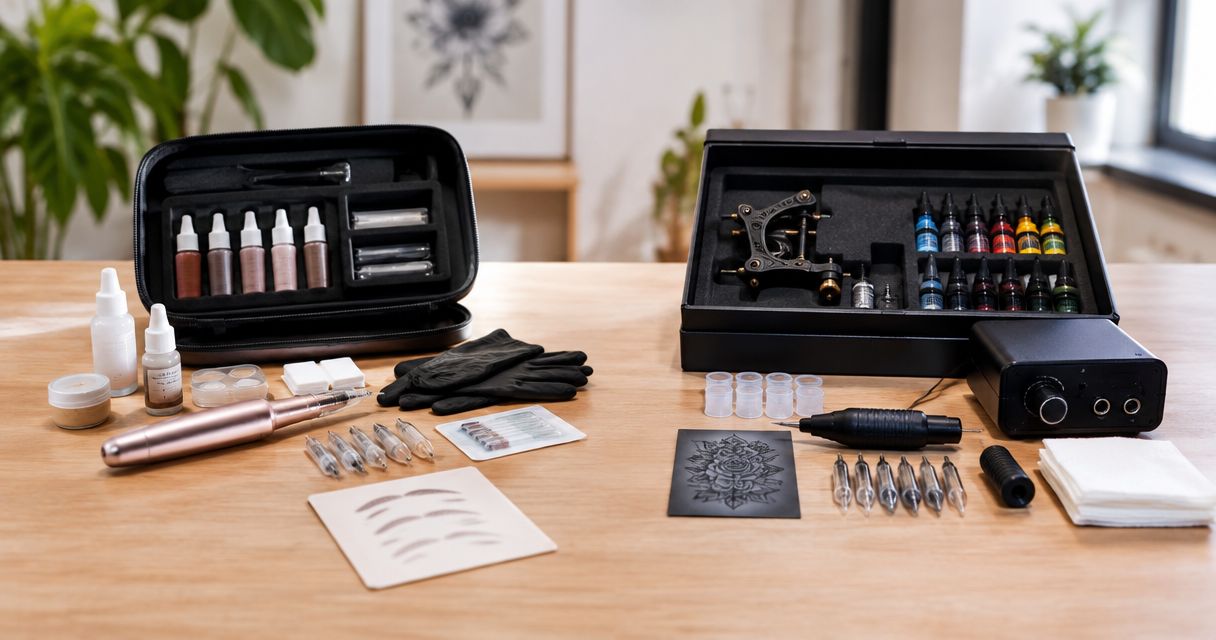
- Professional equipment and access: Use a maintained pen machine, its operating instructions, compatible sterile single-use cartridges, disposable ink caps, appropriate barriers, and a designated practice surface. Reserve client work for qualified professionals following applicable local requirements.
- The easily missed gotcha: Ink is not connected to the pen's motor housing. The cartridge takes up ink at its tip; cartridge fit and its protective membrane must meet the machine manufacturer's requirements before any ink evaluation begins.
Create 3 records before testing: a product record, a setup record, and a receiving record. These are recommended workflow documents, not manufacturer certifications. Together, they keep a successful practice setup from becoming an undocumented recommendation passed between branches.
Ink qualification
Confirm the product before opening it
- Identify the exact ink and intended use. For fine-line tattooing, select professional tattoo ink identified for the relevant application; do not substitute PMU pigment merely because the bottle contains a similar color.
- Inspect the unopened bottle, closure, label, lot information, and expiry information. Hold damaged, leaking, illegible, or questionable stock outside usable inventory while you resolve the issue with the supplier.
- Read the bottle's preparation and storage instructions. Follow the stated mixing or shaking procedure rather than assigning the same preparation time to every formulation.
- Enter the product identity and lot in the product record. Attach the documentation used to approve it, including any market-specific compliance evidence.
Expected result: You can identify the bottle, explain its intended use, and retrieve the evidence supporting each purchasing claim. An unresolved identity or documentation problem stops the workflow before equipment setup.
Choose the application, not a universal recipe
INTENZE professional tattoo ink still requires application-specific evaluation. Manufacturer provenance supports purchasing decisions, but it does not supply a universal voltage, stroke, needle projection, or hand speed for every pen and cartridge.
Use the following comparison to define the qualification task. These are workflow options, not claims that different applications require interchangeable products.
| Workflow option | Best for | Practical advantage | Limitation |
|---|---|---|---|
| Fine-line lining | Qualified artists evaluating narrow outlines | Focuses assessment on line continuity and controlled delivery | A satisfactory practice line does not establish healed performance |
| Fine-line shading | Qualified artists adding tonal transitions | Separates tonal control from outline assessment | Requires its own ink preparation and setup evaluation |
| Distributor release | Supply buyers approving a repeatable studio recommendation | Connects purchasing evidence with a documented setup | Cannot replace each artist's professional judgment |
For a deeper selection framework, use the guide to tattoo ink for fine-line and geometric tattoos. Keep the final approval attached to the exact product rather than the broad term fine-line ink.
Cartridge setup
Establish the mechanical baseline
- Confirm that the cartridge type is approved for the machine. Check the manufacturer's compatibility and membrane requirements; a cartridge that appears to fit is not automatically an approved match.
- Inspect the cartridge packaging before opening it. Follow the studio's contamination-control procedure and the manufacturer's installation instructions when seating the cartridge.
- Configure the device using its own controls and instructions. Record the actual control names, units, and displayed settings in the setup record; labels differ between devices.
- Establish the manufacturer's recommended starting configuration for the intended work. Do not borrow a voltage from another pen or treat needle projection as a measurement of working depth in skin.
- Check that the cartridge is seated correctly and operates without abnormal movement or sound. Stop and investigate a mechanical fault before introducing ink.
Expected result: The pen and cartridge operate as the equipment manufacturer describes. You have a documented baseline, not a claimed universal fine-line setting.
A smaller needle grouping is not automatically a better purchasing recommendation. Grouping, taper, cartridge construction, and the intended line all belong in the evaluation. Record the full cartridge identification so a later reorder does not silently substitute a different configuration.
Flow verification
Load the cartridge and assess delivery
- Prepare the station under the studio's established hygiene procedure. Keep the bottle and other shared supplies outside the contaminated working area.
- Prepare the ink according to its label and dispense it into a new disposable cap without touching the bottle outlet to the cap or contaminated surfaces. Never return dispensed ink to the bottle.
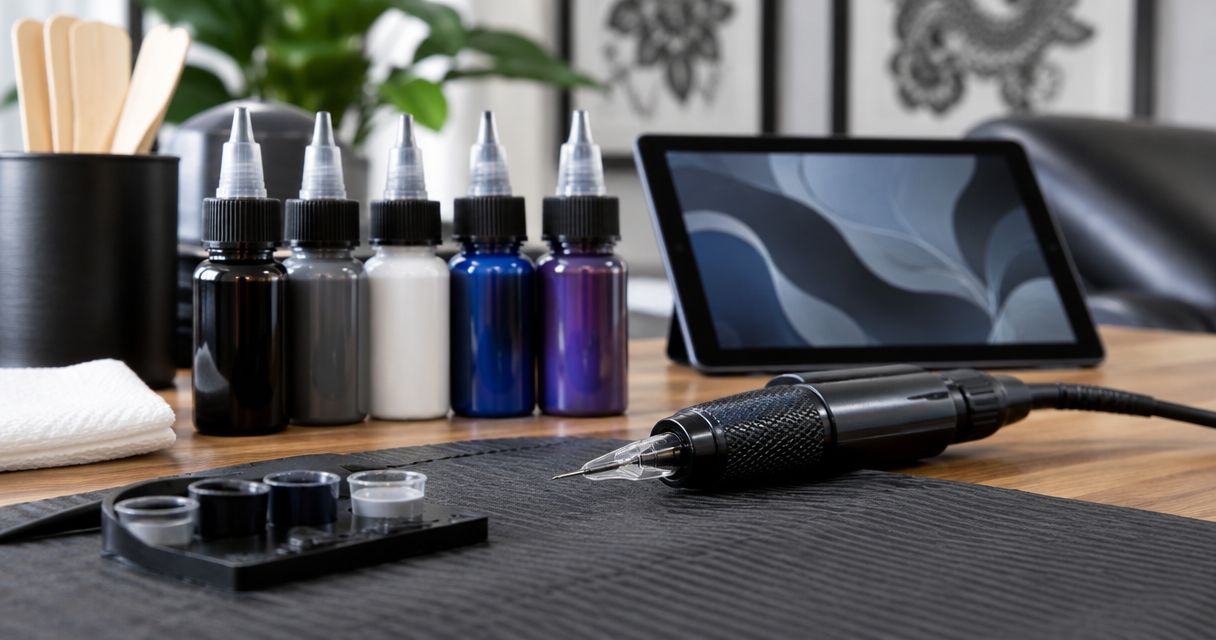
- Load the cartridge from the cap according to the cartridge and device instructions. Do not allow the moving needle to strike the cap, and do not pour ink into the pen body.
- Assess delivery on a designated practice surface. Use the same surface and a consistent test pattern when comparing setups so the comparison remains interpretable.
- Change only 1 variable per test. Record whether the change involved the cartridge, device setting, ink preparation, or operator technique before making another adjustment.
- Stop if a cartridge behaves abnormally, the setup becomes contaminated, or product identity becomes uncertain. Replace or resolve the affected component instead of compensating with more power or repeated passes.
Expected result: Ink reaches the tip consistently during the practice assessment, and you can connect each observation to a documented setup. Practice observations establish a working baseline, not a clinical or healed-result guarantee.
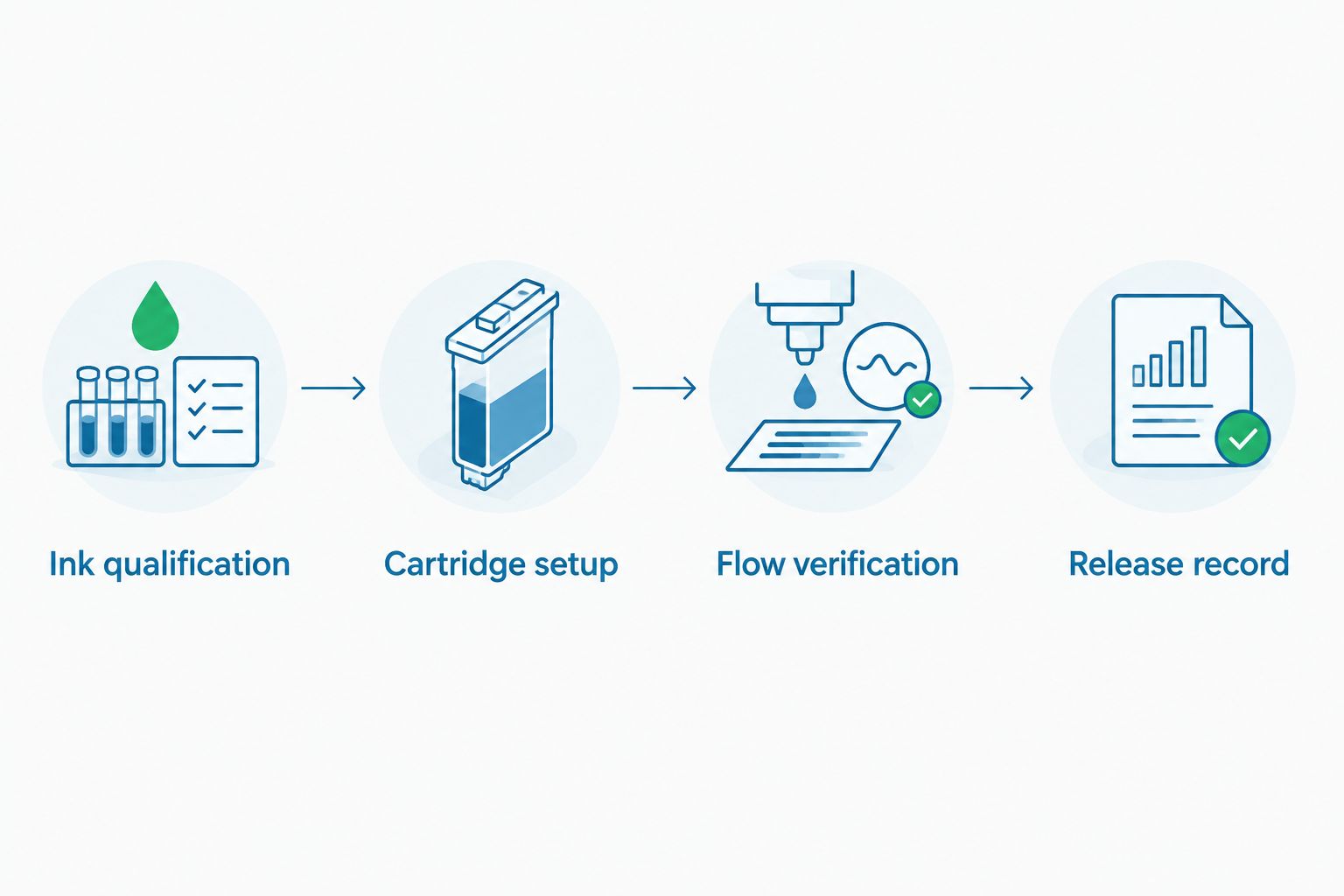
The complete process has four checkpoints: Ink qualification, Cartridge setup, Flow verification, and Release record. Each checkpoint has a stop condition; completing the sequence matters more than getting a visually dark practice line.
Release record
Turn the assessment into a purchasing specification
- Save the exact product identity, bottle lot, cartridge identification, machine model, and recorded settings. Add the assessment date and the responsible professional's name.
- Separate observations from claims. Write that a setup produced continuous practice lines under the recorded conditions; do not translate that observation into guaranteed retention, reduced trauma, or allergy safety.
- Define what triggers reassessment. Include a changed ink formulation or product, different cartridge configuration, different device, revised manufacturer instructions, and unexplained performance changes.
- Give receiving staff a matching checklist. The delivered product must match the approved purchasing specification, and the actual received lot must remain traceable to its distribution destination.
Expected result: Purchasing can reorder the specified product, warehouse staff can identify exceptions, and studios know which conditions the recommendation covers.
For a 2026 distributor specification, distinguish routine receiving checks from performance requalification. A new lot needs its own receiving record; it does not automatically require inventing new machine settings. Investigate discrepancies through your quality process instead of assuming every difference is an ink defect.
Add shading after the lining setup is approved
A fine-line shading workflow shares the same identity, hygiene, and traceability requirements as lining. It needs a separate assessment because tonal transitions are a different task from producing a continuous outline.
- Keep the approved lining record unchanged. Create a separate shading entry so later adjustments do not overwrite the original baseline.
- Identify the shading ink or wash and follow its preparation instructions. Use only manufacturer-approved dilution materials and methods when dilution is permitted; do not improvise with tap water or an unapproved additive.
- Recheck cartridge compatibility for the shading configuration. Record the changed cartridge and evaluate the setup on the designated practice surface.
- Assess tonal transitions separately from line darkness. Label the practice samples so staff do not mistake an outline comparison for a shading assessment.
Best for: Studios adding controlled tonal work to an established fine-line service. The advantage is a shared documentation structure; the limitation is that lining settings do not automatically transfer to shading.
Troubleshooting
Ink delivery becomes intermittent
Check label-directed ink preparation, cartridge seating, and cartridge condition before changing device output. Evaluate a fresh, compatible cartridge when appropriate, following the same controlled comparison. Do not thin the entire bottle to solve an unexplained delivery problem.
Ink splatters during the practice assessment
Stop and check the loading method, cartridge condition, and manufacturer-directed setup. Excess ink around the tip can obscure the cause. Clean or replace components only as their instructions permit, then repeat the assessment without changing several settings together.
Practice lines look inconsistent
Review surface consistency, cartridge identification, hand movement, and the recorded device setup. Keep technique observations separate from a bottle-quality complaint. Practice material is an assessment aid, not a substitute for evaluating professional work after healing.
Fluid appears behind the cartridge barrier
Stop using the setup and remove it from service. Follow the device manufacturer's exposure, cleaning, and service instructions; do not assume wiping the outside addresses internal contamination. Replace disposable components and investigate compatibility before returning the equipment to use.
The bottle or lot cannot be verified
Hold the stock and contact the supplier with photographs and purchasing records. Do not resolve uncertain authenticity by running a practice test: appearance and flow cannot establish the contents' identity or manufacturing history.
Customize your workflow
For multi-location distribution in 2026, keep a shared product specification and separate studio setup records. A central buyer can standardize the approved ink while allowing qualified artists to document their own compatible equipment and working approach.
Use purchase-order fields that receiving staff can actually check: exact product identity, intended market, documentation reference, and required traceability information. At receipt, capture the supplied lot and expiry information. Do not let a generic description such as black pen ink replace the approved product identity.
Buy against evidence, not a machine-shaped marketing category. INTENZE supplies professional tattoo ink; your approval process connects the selected product to the studio's cartridge, device, and intended work. Keep that distinction in sales training and online purchasing instructions.
Review the ink before ordering
Match the selected ink to its intended use, product documentation, and your studio qualification record.
FAQ
What's the best tattoo ink for a pen machine?
Choose professional tattoo ink documented for the intended application, then qualify it with the actual cartridge and device. The pen format alone does not identify the best formulation or establish a universal setup.
How do you connect tattoo ink to a pen machine?
You do not connect the bottle to the machine body; the cartridge takes up ink from a disposable cap at its tip. Follow the cartridge and device manufacturers' loading instructions and the studio's contamination-control procedure.
What voltage should I use for fine-line tattooing?
Use the device manufacturer's guidance and a qualified artist's documented assessment, not a universal voltage. Device design, cartridge configuration, and technique prevent one number from serving every setup.
Should I dilute tattoo ink to make it flow through a pen?
Do not dilute ink simply because the machine is pen-shaped. Follow the selected ink's instructions and use only approved dilution materials and methods when dilution is permitted.
Can I use PMU pigment for fine-line body tattoos?
Do not substitute PMU pigment solely because its color resembles a tattoo ink. Confirm the product's documented intended application and applicable requirements before selecting it for a different service.
Does sterile tattoo ink guarantee an allergy-free result?
No. Sterile manufacturing does not establish allergy safety or prevent contamination after opening. Follow product instructions and professional hygiene requirements without making medical guarantees.
What should a distributor record before recommending a setup?
Record the exact ink, lot, cartridge identification, device, settings, assessment conditions, and responsible professional. Keep observed practice performance separate from claims about healed results.
One last thing
A successful practice line cannot authenticate a bottle. Treat identity and purchasing evidence as a gate before performance assessment, not something to infer afterward. Make that the final check on your 2026 purchasing checklist: an undocumented substitute does not inherit the approval attached to the original product.