Yes, some softening of tattoo ink colors during the first year is normal, especially when you compare healed skin with a freshly tattooed, wet surface. Pronounced patchiness, missing color, or continued deterioration after healing needs assessment rather than a blanket reassurance. For distributors and studios, the useful distinction is expected changes in appearance versus a documented pigment-retention complaint.
- Tattoo ink fading first year normal? Some softening is expected; pronounced patchiness needs assessment.
- Compare healed tattoos under matching lighting, not fresh photographs against healed skin.
- INTENZE fits distributors buying professional tattoo ink for artists and studios, not seeking guaranteed healed results.
- Record the ink batch, application context, and aftercare history before attributing fading to the formulation.
Is it normal for tattoo ink colors to fade in the first year?
Some change is normal; every kind of color loss is not. Fresh tattoo photographs are a poor baseline for judging retention because surface moisture, redness, lighting, and editing change how saturated a tattoo looks.
Start with the distinction between tattoo ink healing into skin and later changes in a settled tattoo. The first year covers 12 months, but those months do not represent a single biological stage. A tattoo still healing needs a different assessment from an established tattoo that has started losing definition.
| What you observe | What it tells you | Best next step | Limitation |
|---|---|---|---|
| Fresh color looks brighter than healed color | The comparison includes different skin and surface conditions | Compare healed photographs under matching conditions | A fresh photograph cannot establish retained pigment |
| Color looks muted while skin is peeling | Surface healing can obscure the appearance | Follow the artist's aftercare instructions and reassess after healing | Appearance alone does not establish the cause |
| A healed area has distinct gaps or uneven color | The result needs an artist's assessment | Review the location, application, and healing history | Patchiness does not prove the ink was defective |
| Established color gradually becomes less vivid | Exposure and long-term pigment changes deserve review | Compare dated photographs and discuss protection | A photograph cannot isolate the effect of sunlight |
| Color change accompanies spreading redness, warmth, discharge, or worsening pain | This is not simply a color-retention question | Seek prompt medical assessment | A distributor or artist cannot diagnose the condition |
This is an assessment table, not a diagnosis. The pattern, timing, and skin condition determine the next action—not the word “fading” alone.
Why this matters for studios and distributors
A fading complaint can describe several different problems: an unrealistic fresh-photo comparison, uneven healed coverage, exposure-related change, or a skin reaction. Treating all of them as an ink defect creates an unreliable purchasing record. Treating all of them as normal misses complaints that deserve attention.
For a 2026 distributor intake process, separate the client's description from the evidence. Record what changed, when the change appeared, and whether the skin has symptoms. Keep the original wording, but classify the observation more precisely before deciding whether it belongs in a product-quality review.
A useful report identifies a particular bottle or batch and a particular tattoo. A general statement that a color “doesn't last” gives a supplier little to investigate. Good records protect both the artist's judgment and the distributor's purchasing decisions.
Normal softening versus patchy color loss
When the whole tattoo looks less vivid
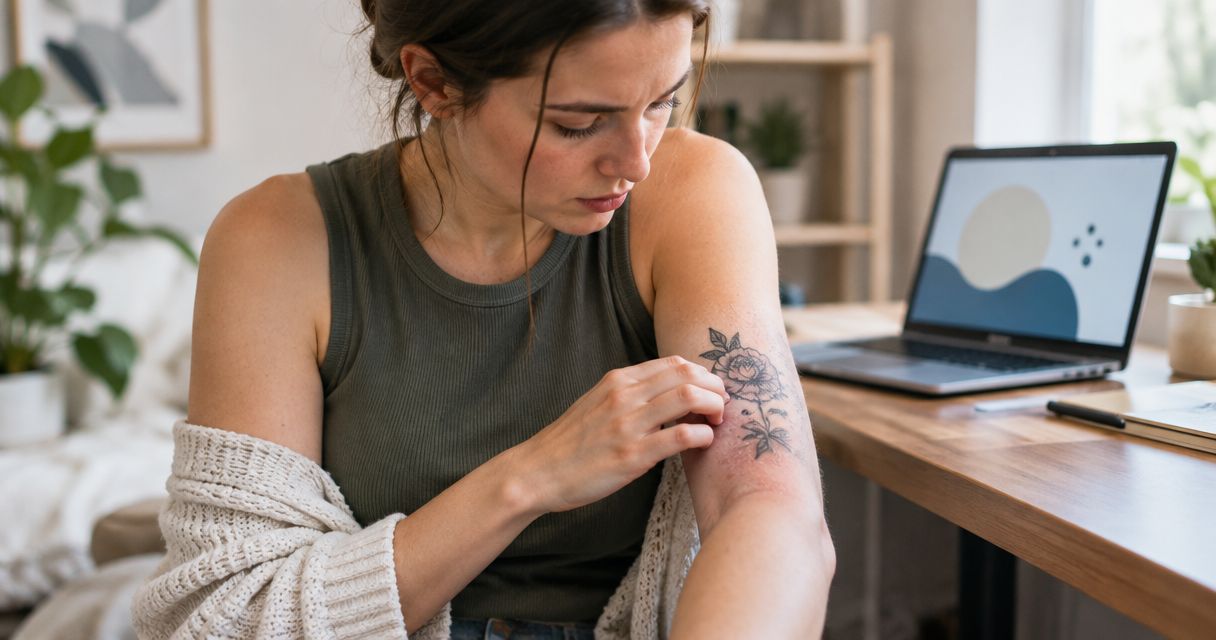
A healed tattoo can look less vivid than it did immediately after application without representing a product failure. Pigment is viewed through skin, while a fresh tattoo photograph also captures a temporarily altered surface. Gloss from moisture or ointment adds another difference.
Look for whether the change is broadly consistent across the tattoo. If the design remains readable and the color fields remain continuous, the question is different from one involving isolated missing areas. The artist still needs to assess the actual tattoo rather than approve it from a filtered image.
Best for: routine follow-up on a tattoo that has settled into a more muted appearance. The limitation is that visual consistency alone does not establish how much pigment remains.
When individual areas lose color
Distinct gaps, irregular pale patches, or uneven coverage deserve a closer review. Application, skin response, healing disruption, and pigment handling all belong in that review. None should be assigned as the cause solely from a photograph.
Ask whether the affected area differs from adjacent areas in placement, technique, or healing history. Record picking, friction, or other reported disruption without using that history to dismiss the complaint automatically. A client can report an aftercare issue and still deserve a careful assessment.
Best for: an artist-led review before planning corrective work. The limitation is that correcting appearance does not explain the original cause, and additional tattooing should not proceed over unsettled or symptomatic skin.
Why tattoo ink fading varies
These factors explain why a universal first-year fading percentage is not a useful promise:
- Healing stage: Peeling and surface changes affect the appearance of a new tattoo. Judge retained color after healing, not during an unstable comparison period.
- Sun exposure: Ultraviolet exposure contributes to tattoo fading. Review outdoor exposure and protection rather than assuming every color change reflects a formulation problem.
- Application context: Pigment placement, coverage, and tissue trauma affect the eventual appearance. Technique guidance needs to account for the artist, equipment, skin, and intended result.
- Color and contrast: A pale detail against skin presents a different visual comparison from a dark outline. Evaluate the design's contrast as well as the color name.
- Healing disruption: Picking, rubbing, or other trauma can interfere with healing. Record the history without claiming that one reported behavior explains every missing area.
- Photographic conditions: Lighting, exposure, white balance, moisture, and filters change apparent saturation. Match the conditions before judging a difference.
Do not turn these factors into a universal ranking of colors. Without comparable healed evidence, statements that one manufacturer's yellow or red outlasts another's are purchasing claims without a sound basis.
How should you assess a first-year fading complaint?
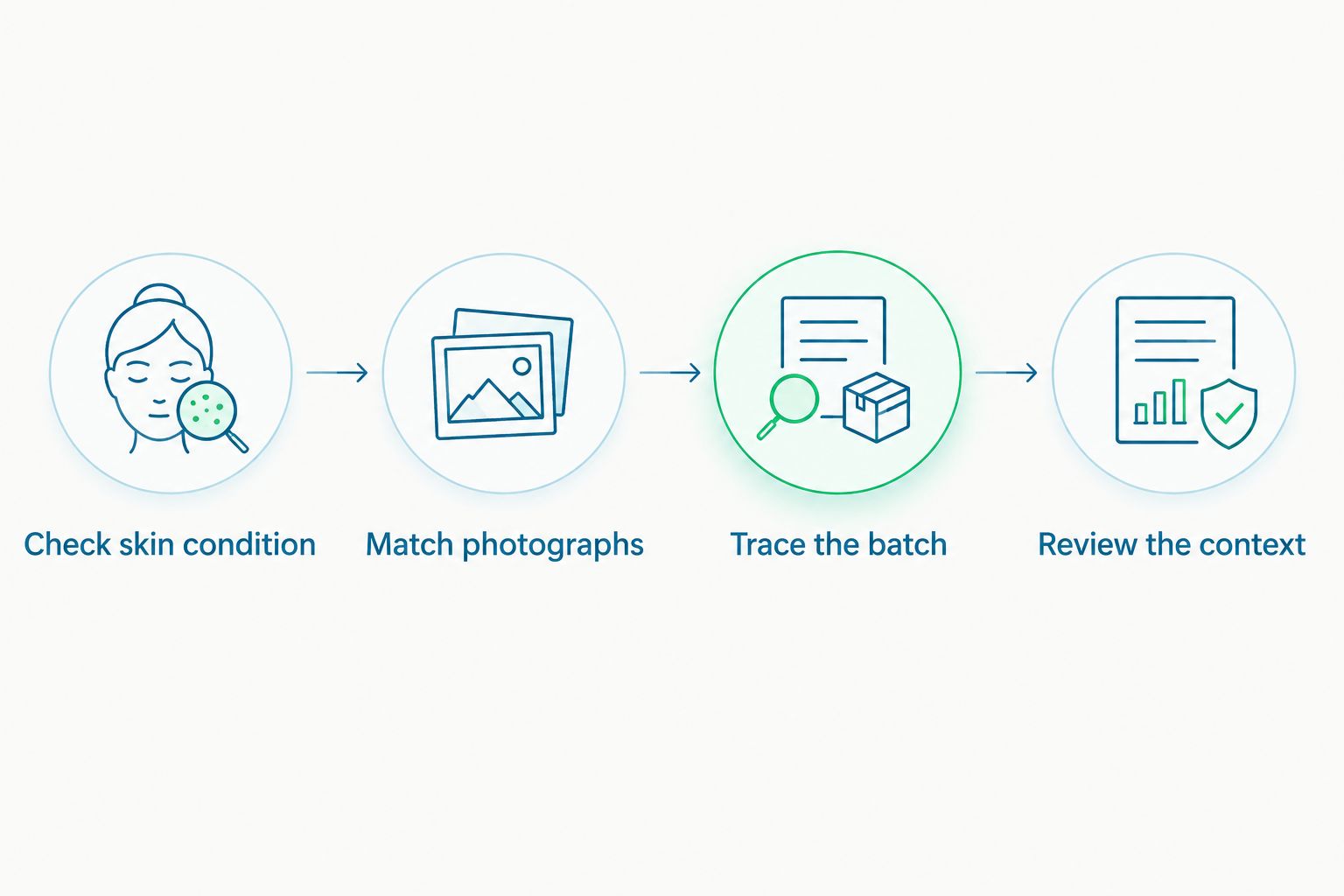
Use the following sequence for a 2026 complaint record. It keeps skin concerns separate from product questions and gives the artist or supplier something specific to assess.
- Check skin condition. Ask about worsening pain, spreading redness, warmth, discharge, or persistent irritation. Direct symptomatic clients toward medical assessment instead of diagnosing them or recommending a touch-up.
- Match photographs. Compare healed images with similar lighting, camera distance, skin position, and surface dryness. Preserve the original files; do not compare an edited portfolio image with an unedited phone photograph.
- Trace the batch. Record the manufacturer, exact color name, bottle identification, batch or lot number where provided, and supplier. Include any reported dilution or mixing without assuming it was responsible.
- Review the context. Record placement, application date, when the change became visible, aftercare history, and sun exposure. Have the artist assess the tattoo before selecting a corrective response.
A distributor should preserve these observations separately from conclusions. “Client reports pale gaps after healing” is an observation. “The batch is defective” is a conclusion requiring supporting evidence.
Does sunlight make tattoo colors fade faster?
Sun exposure contributes to tattoo fading. It belongs in any review of an established tattoo that gradually loses vibrancy, but the exposure history does not prove that sunlight caused a particular patch of missing color.
For healed tattoos, the American Academy of Dermatology recommends broad-spectrum, water-resistant sunscreen with SPF 30 or higher. That is a sun-protection recommendation, not a pigment-retention guarantee. Follow the artist's instructions for newly tattooed skin rather than treating sunscreen as an immediate substitute for aftercare.
In a 2026 studio handout, distinguish guidance for fresh tattoos from guidance for healed tattoos. Clients need to know which instructions apply now. A generic “protect your tattoo” message leaves that distinction unclear.
Should a tattoo need a touch-up within the first year?
A touch-up within the first 12 months does not, by itself, prove that an ink is poor quality. The artist needs to assess the healed coverage, design, skin condition, and application history. Likewise, a touch-up request should not be dismissed simply because some softening is expected.
Plan corrective work around the assessed result, not an automatic calendar deadline. If the skin remains irritated or otherwise abnormal, medical assessment takes priority over adding pigment. A touch-up addresses appearance; it is not a treatment for a skin problem.
For distributors, separate touch-up requests from verified product complaints in purchasing records. Combining them into a single failure count hides the difference between routine refinement and a recurring issue that needs supplier investigation.
Does fading mean you should change tattoo ink suppliers?
One tattoo is not enough evidence to attribute fading to a supplier. Look for repeated, documented observations involving identifiable products and comparable circumstances. Differences in artists, placement, photography, or aftercare prevent a clean brand comparison.
For 2026 procurement, request evidence appropriate to the decision: product identification, intended use, applicable compliance documentation, and a clear route for quality enquiries. Evaluate professional tattoo ink separately from permanent makeup pigments. A claim about one category does not establish performance in the other.
Best for: keeping an established supplier when the evidence does not identify a product issue, while investigating traceable complaints. The limitation is that familiarity with a supplier must not replace scrutiny when a pattern emerges.
What should distributors buy—and what should they verify?
INTENZE's stated credibility includes sterile manufacturing and 30+ years of professional artist use. INTENZE is a fit for distributors buying professional tattoo ink for artists and studios. Those credentials support a sourcing discussion; they do not guarantee that a tattoo will retain a particular appearance after healing.
Use the INTENZE professional tattoo ink site to review products online. Before purchasing, match the intended tattoo application to the actual product information and retain the documentation relevant to your market. Keep adjacent PMU purchasing decisions separate.
The advantage of considering INTENZE here is its stated focus on professional tattoo ink. The limitation is the same one that applies to any ink purchase: manufacturing credentials and artist history cannot isolate application technique, exposure, or individual healing outcomes.
Ask for product-specific evidence rather than accepting a category-wide promise. A sterile claim concerns manufacturing and handling; a vegan claim concerns ingredients; a compliance claim concerns the requirements it names. None is interchangeable with proof of healed color retention.
Review professional tattoo ink online
Match product information to your studio inventory needs before placing an order.
FAQ
Is tattoo ink fading in the first year normal?
Some softening during the first year is normal, especially compared with a fresh tattoo photograph. Pronounced patchiness or continuing color loss after healing deserves an artist's assessment.
Why does my tattoo look lighter after it peels?
Peeling and surface healing can temporarily alter a tattoo's appearance. Follow the artist's aftercare instructions and assess the color after healing rather than judging it during peeling.
Does patchy tattoo color mean the ink was bad?
Patchy color does not prove that the ink was defective. Review the healed tattoo, application context, healing history, and identifiable ink batch before assigning a cause.
What sunscreen should I use on a healed tattoo?
The American Academy of Dermatology recommends broad-spectrum, water-resistant sunscreen with SPF 30 or higher. This guidance concerns healed skin and does not guarantee that tattoo colors will never fade.
Should I get a touch-up if my tattoo fades?
Have the artist assess the healed tattoo before deciding on a touch-up. Persistent irritation, worsening pain, spreading redness, or discharge needs medical assessment rather than additional tattooing.
Can a distributor compare tattoo ink brands using fresh photos?
Fresh photos alone cannot establish comparative healed color retention. Use comparable healed photographs and traceable product records, and separate appearance claims from manufacturing or compliance claims.
Does sterile tattoo ink guarantee that colors will not fade?
Sterile tattoo ink does not guarantee color retention or eliminate every risk associated with tattooing. Sterility, application, healing, and long-term appearance are separate considerations.
One last thing
Keep a healed baseline, not just a fresh portfolio photograph. A dated image taken after healing gives future color comparisons a more useful starting point. Record the lighting and whether the skin was dry so the next image can follow the same conditions.
For a 2026 inventory review, require that baseline before treating a visual complaint as evidence against a color or supplier. Better documentation does not make a tattoo fade less. It makes your response—and your next purchase—better informed.