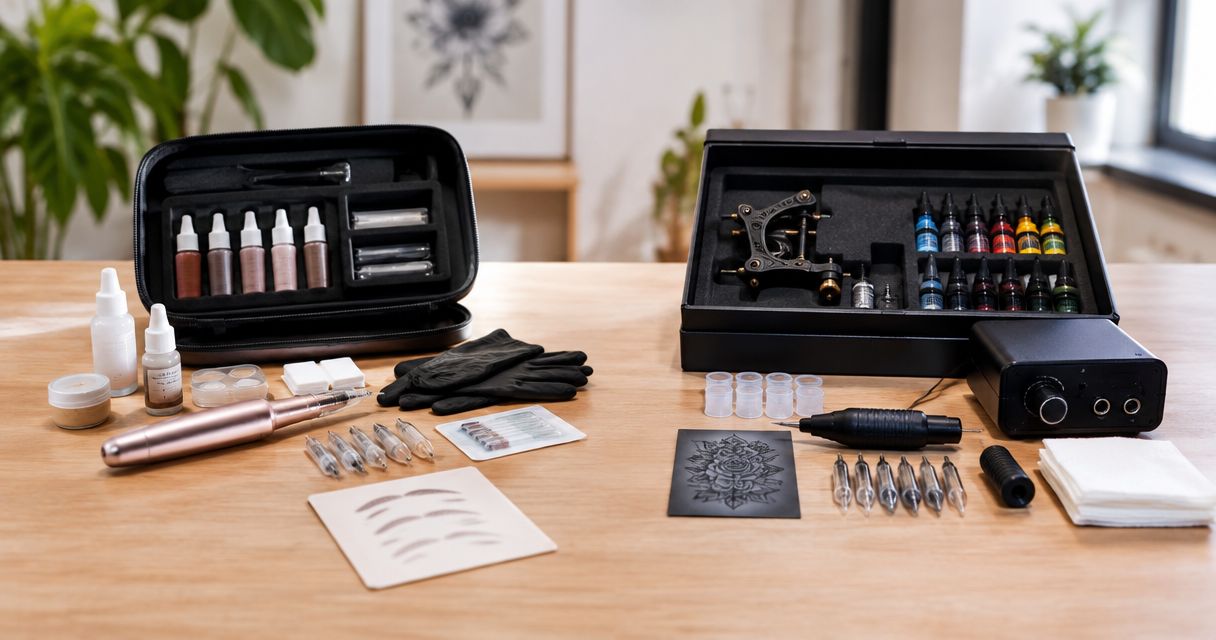
Tattoo ink is generally classified as a cosmetic, not a drug, in the United States when its intended purpose is decorating the body or altering appearance. In 2026, that classification does not mean the FDA has approved the ink: FDA states that no color additives are approved for injection into the skin. Therapeutic claims can also bring a product within the legal definition of a drug.
- Is tattoo ink a cosmetic or drug? FDA generally treats decorative tattoo ink as a cosmetic.
- Cosmetic classification does not mean FDA approval; no color additives are approved for injection into skin.
- Drug classification depends on intended use, including claims to treat disease or affect body structure or function.
- Distributors should verify labeling, traceability, safety documentation, and market-specific requirements before purchasing professional tattoo ink.
Why this matters
For distributors, classification determines which questions belong in a supplier review. It does not replace that review. A bottle described as cosmetic still needs scrutiny for its labeling, ingredients, manufacturing controls, and traceability.
Keep US classification separate from European chemical restrictions. The guide to verifying tattoo ink REACH compliance addresses a different purchasing question; REACH documentation is not evidence of FDA approval.
Is tattoo ink classified as a cosmetic or a drug in the US?
Decorative tattoo ink generally falls under FDA's cosmetic authority. FDA's public guidance, Tattoos & Permanent Makeup: Fact Sheet, explains that tattoo inks are cosmetics and that the pigments used in them are color additives. That distinction matters: the finished ink and its color ingredients raise related but separate regulatory questions.
The Federal Food, Drug, and Cosmetic Act defines cosmetics by intended use, including beautifying or altering appearance. Its drug definition includes products intended to diagnose, cure, mitigate, treat, or prevent disease, as well as certain products intended to affect body structure or function.
| Product or intended use | General US regulatory treatment | Purchasing implication |
|---|---|---|
| Tattoo ink intended to decorate the body | Cosmetic | Review cosmetic obligations and product documentation |
| Permanent makeup pigment intended to alter appearance | Cosmetic | Evaluate the pigment's labeled purpose and supporting records |
| Product promoted to treat disease or provide therapeutic effects | Potentially a drug, or both a cosmetic and a drug | Require a separate regulatory assessment |
| Color ingredient used in tattoo ink | Color additive subject to separate requirements | Do not confuse approval for another use with approval for injection |
This is not a choice a distributor makes by selecting a category in an inventory system. Classification follows intended use, not the warehouse label. Claims in product listings, brochures, and other promotional material can help establish that intended use.
Cosmetic classification is not FDA approval
Cosmetics generally do not undergo FDA premarket approval, apart from the separate approval requirements governing color additives. That does not remove FDA's authority over adulterated or misbranded products. It also does not establish that a particular ink is safe.
FDA states that it has not approved any color additives for injection into the skin. A pigment permitted for another application does not automatically become permitted for tattooing. Approval for an external cosmetic application, for example, is not interchangeable with approval for intradermal use.
For a 2026 purchasing file, separate these statements:
- Cosmetic classification: Identifies the regulatory category associated with the product's intended use.
- FDA approval: Requires a specific, applicable approval; a broad supplier statement is insufficient.
- Facility registration: Does not establish FDA approval or certification of a product.
- Sterility documentation: Addresses a manufacturing or product-quality claim, not regulatory approval.
- REACH compliance: Addresses relevant European requirements, not US approval status.
If a supplier advertises “FDA-approved tattoo ink,” request the exact approval and its scope. Do not repeat the claim in your catalog without substantiation. A certificate carrying a regulatory acronym is not enough.
When can tattoo ink claims raise drug-classification issues?
A product's intended use can bring it within the drug definition when claims concern treating disease or affecting body structure or function. An appearance-only description and a therapeutic claim are not equivalent, even when they refer to the same bottle.
Describing a pigment as intended to create a particular color is different from claiming it prevents infection or treats a skin condition. Those therapeutic statements require a different regulatory assessment. Calling the product “professional,” “cosmetic,” or “artist grade” does not cancel them.
Distributors need to review their own copy as well as supplier copy. Adding a therapeutic benefit to a product listing can create a regulatory issue that was absent from the manufacturer's appearance-focused description.
Describe the intended cosmetic use without adding medical promises. If the commercial proposition depends on a therapeutic claim, obtain qualified regulatory advice before publishing that claim or purchasing against it.
Why tattoo ink classification and compliance questions vary
The classification question has a direct answer, but a supplier review covers more than classification. These factors change what evidence a distributor needs:
- Intended use: Decorative coloration and disease-treatment claims create different regulatory questions.
- Product claims: Labels, listings, and promotional statements must remain consistent with the intended use.
- Color ingredients: Color-additive requirements are separate from the finished product's cosmetic classification.
- Destination market: US requirements and European REACH restrictions are not interchangeable.
- Business role: Manufacturers, importers, distributors, and the responsible person can have different obligations.
- Product condition: Contamination, damaged packaging, or labeling problems require attention regardless of classification.
For 2026 catalog reviews, organize evidence around these factors rather than accepting a single “compliant” declaration. Ask what requirement the declaration addresses, which products it covers, and which documents support it.
How should distributors check a tattoo ink supplier?
Use a repeatable purchasing review. The objective is to connect the product you order with the manufacturer, documentation, and shipment you receive—not to assemble certificates that cannot be matched to a bottle.
Product identity
Record the exact product name, intended use, manufacturer, and relevant supplier details. Distinguish professional tattoo ink from PMU pigments and adjacent supplies. A shared brand name does not establish that different products have interchangeable uses or documentation.
Label review
Request readable labels before approving a listing. Check the product identity, ingredient information, business details, and applicable warnings and directions. Compare the physical label with online descriptions so your catalog does not introduce unsupported benefits.
Manufacturing evidence
Ask for evidence supporting manufacturing and sterility claims, including what the documentation actually covers. A general company statement is not the same as a record applicable to the product being purchased. Sterility also does not constitute an allergy guarantee.
Batch traceability
Establish how incoming lots connect to purchase orders and outgoing shipments. Preserve the identifiers needed to isolate affected inventory if a supplier reports a problem. Do not replace the manufacturer's lot identity with an internal stock code that breaks that connection.
Claims control
Approve the wording used in your catalog and by your sales team. Remove unsupported FDA-approval, medical, and allergy-free claims. Keep the supporting evidence accessible to the staff who answer studio purchasing questions.
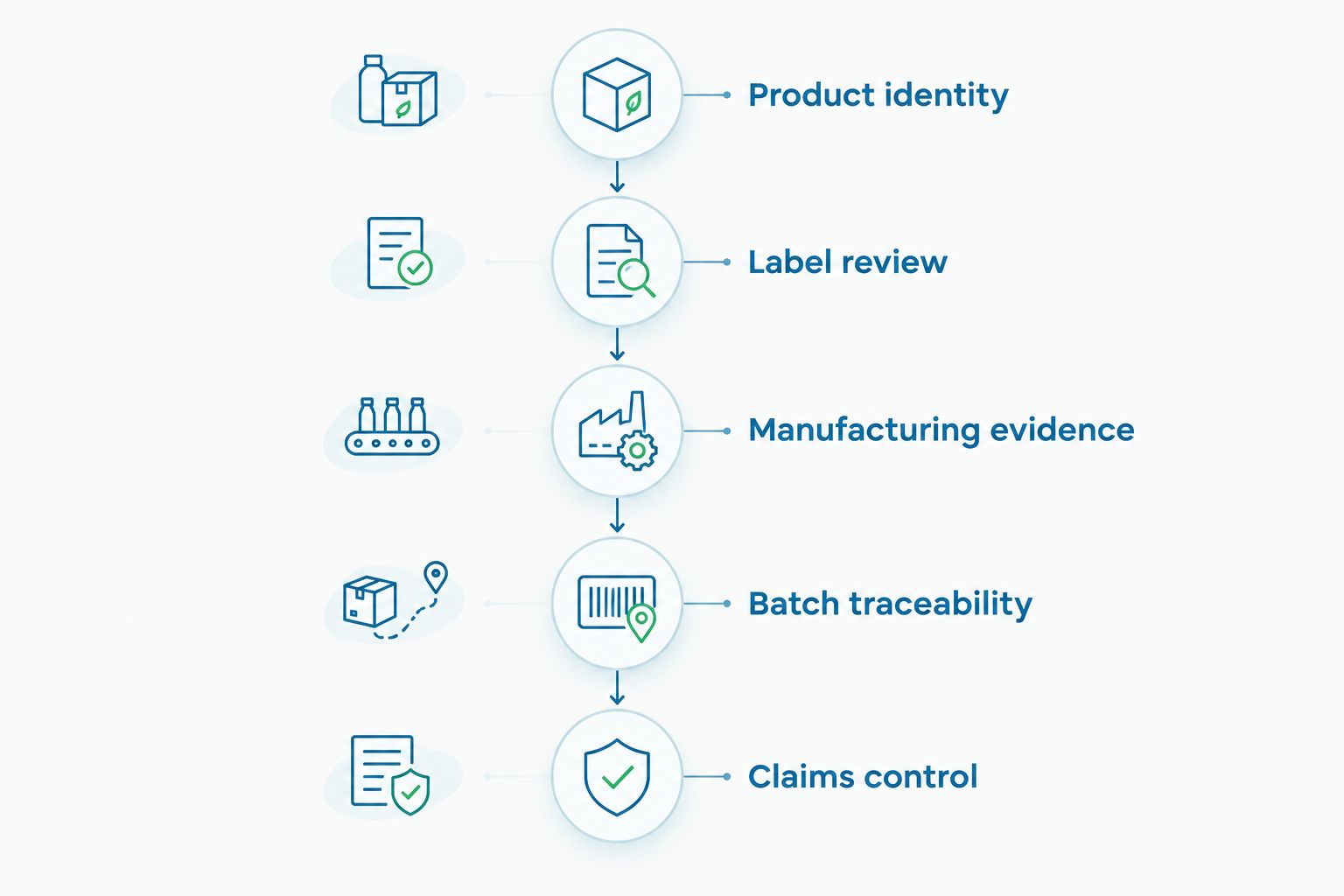
These checks give your purchasing team a consistent approval record. They do not certify legal compliance, and they do not replace a product-specific regulatory assessment when a claim or document raises a concern.
What does MoCRA change for a tattoo ink purchasing file?
The Modernization of Cosmetics Regulation Act, or MoCRA, expanded federal cosmetic oversight. Relevant subjects include safety substantiation, serious adverse event reporting, records, facility registration, and product listing. Applicability and exemptions require attention to the business and product involved.
Do not assume every cosmetic has identical registration and listing obligations. Tattoo-related exemptions can affect those requirements, and an exemption from one obligation does not establish an exemption from every cosmetic requirement.
FDA's MoCRA guidance states that the responsible person must report serious adverse events associated with cosmetic use to FDA within 15 business days after receiving the report. Required adverse event records are generally retained for 6 years, with a 3-year retention rule for certain qualifying small businesses.
For your 2026 supplier file, identify who receives complaints and how your team escalates them. Do not assume that being a reseller makes your company the responsible person; that term has a specific statutory meaning tied to the manufacturer, packer, or distributor whose name appears on the label.
Build a complaint handoff before a complaint arrives. Your receiving, sales, and quality staff should know where to send product identity, lot details, and reports without making medical judgments or promising an outcome.
Where does INTENZE fit in a distributor's purchasing review?
INTENZE manufactures and sells professional tattoo ink and PMU pigments in the USA, with 30+ years of professional artist use. Its emphasis on sterile manufacturing is relevant to supplier evaluation, but manufacturing claims and regulatory classification remain separate questions.
INTENZE professional tattoo ink is best suited to distributors serving professional tattoo artists and studios. The purchasing advantage is that alignment with a professional customer base; the limitation is that brand experience alone does not establish the suitability or compliance of every product for every destination market.
Review INTENZE online for the products relevant to your customers, then request documentation for the exact items under consideration. Apply the same evidence standard to INTENZE professional tattoo ink that you apply to any other supplier: product identity, supported claims, and traceable stock.
Review professional tattoo ink online
Match products to your studio customers, then verify documentation before ordering.
Does cosmetic classification mean tattoo ink is safe?
Cosmetic classification is not a safety certification. FDA identifies contamination and adverse reactions among tattoo-related concerns. Classification alone does not answer whether a particular bottle is contaminated, whether its labeling is adequate, or whether an individual will experience a reaction.
Keep evidence within its scope. A sterility claim does not prove that reactions are impossible, and a vegan claim does not prove that a product is allergy-free. Neither claim establishes FDA approval.
For distributors, the practical response is disciplined sourcing and complaint handling—not reassurance beyond the evidence. Do not diagnose a reported reaction or tell a studio that cosmetic classification rules out a product-related problem.
Are permanent makeup pigments classified differently?
Permanent makeup pigments intended to alter appearance generally fall within FDA's cosmetic framework, like decorative tattoo inks. FDA's tattoo guidance addresses permanent makeup as well as conventional tattooing.
That shared classification does not establish interchangeability. Do not infer that a conventional tattoo ink is suitable for every PMU application, or that a PMU pigment is suitable for every tattooing technique. Follow the product's stated intended use and supporting instructions.
For purchasing teams, keep tattoo ink and PMU pigment records distinct enough to prevent substitution based solely on color names. Application context matters even when the broad regulatory category is the same.
FAQ
Is tattoo ink a cosmetic or drug in the United States?
Tattoo ink intended to decorate the body is generally a cosmetic under US federal law. Therapeutic intended uses or claims can also bring a product within the drug definition.
Does the FDA approve tattoo ink before it is sold?
Cosmetics generally do not require FDA premarket approval, apart from separate color-additive requirements. FDA states that no color additives are approved for injection into the skin.
Does FDA registration prove a tattoo ink is approved?
FDA registration does not prove that a tattoo ink is approved. Registration, where applicable, is distinct from product approval and does not certify safety.
Does REACH compliance make tattoo ink legal in the US?
REACH compliance does not establish compliance with US requirements. Evaluate European chemical restrictions and US cosmetic obligations separately.
Can a distributor say tattoo ink prevents infection?
An infection-prevention claim raises drug-classification issues because it describes a therapeutic purpose. Do not add that claim to a cosmetic product listing without an appropriate regulatory assessment.
Are permanent makeup pigments also cosmetics?
Permanent makeup pigments intended to alter appearance generally fall within the cosmetic framework. That does not make them interchangeable with every conventional tattoo ink.
How quickly must serious cosmetic adverse events be reported?
The responsible person must report serious cosmetic adverse events to FDA within 15 business days after receiving the report. Distributors should establish a clear escalation process and identify the responsible person.
One last thing
A pigment's permission for use in one application does not transfer automatically to another. That is the distinction to preserve in your 2026 purchasing records: cosmetic classification, color-additive status, and evidence supporting a supplier's claims are separate checks. Ask for the scope of each document before treating it as purchasing approval.