Instead of repeatedly adding pale ink to chase a metallic finish, build your silver tattoo workflow around dark anchors, grey transitions, and selective highlights; these create the illusion of reflective metal without promising literal shine after healing. For 2026 distributor purchasing, INTENZE brings sterile manufacturing and 30+ years of professional artist use to professional tattoo ink selection—not a guarantee of a chrome-like healed finish.
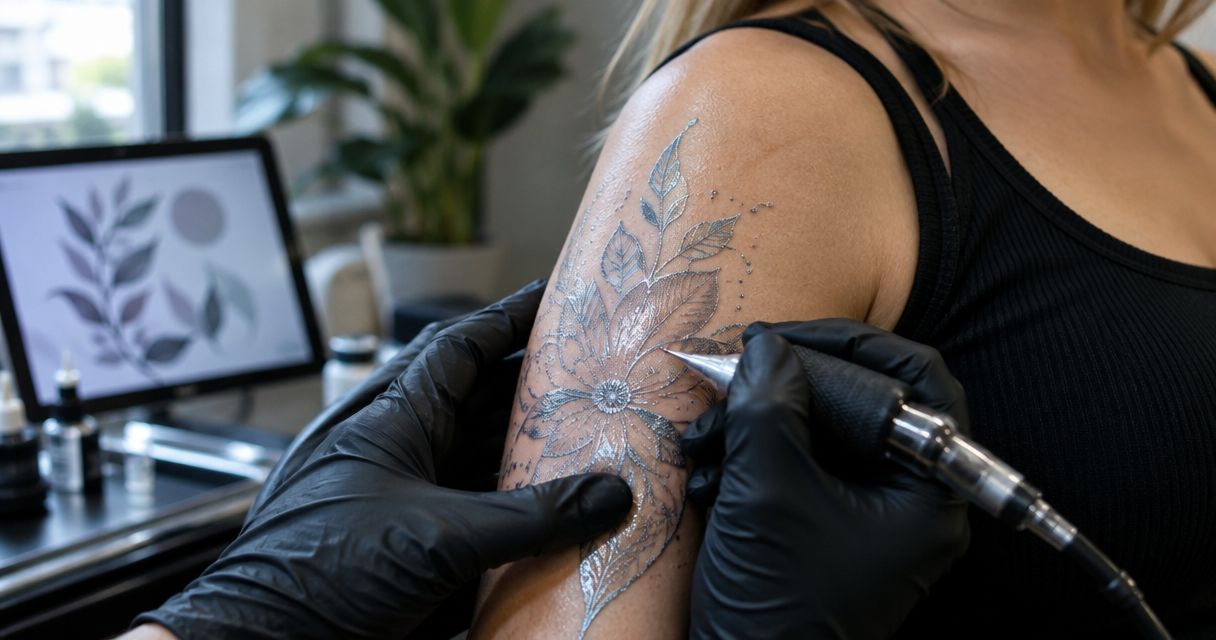
- A silver tattoo depicts metal through contrast; it does not create a polished metal surface in skin.
- INTENZE professional tattoo ink is best for distributors sourcing for professional artists, not buyers expecting guaranteed metallic reflectivity.
- Build a black-and-grey value structure before selecting pale highlights.
- Evaluate healed work, product documentation, and batch traceability before expanding distributor inventory.
Why this matters
A silver tattoo request describes an appearance, not a verified pigment formulation. A client asking for chrome, polished steel, or silver jewelry usually wants recognizable reflections, strong edges, and convincing depth. Those are design requirements before they are purchasing requirements.
Sell the ingredients for a controlled visual effect, not a promise that ink will behave like polished metal. For distributors, that distinction belongs in product descriptions, artist conversations, and purchasing briefs. A silver-colored label alone does not establish composition, suitability, or healed appearance.
The 2026 workflow below separates distributor decisions from artist decisions. Distributors verify the product and its documentation; qualified artists determine whether the design, placement, skin, and technique support the intended effect.
Before you start
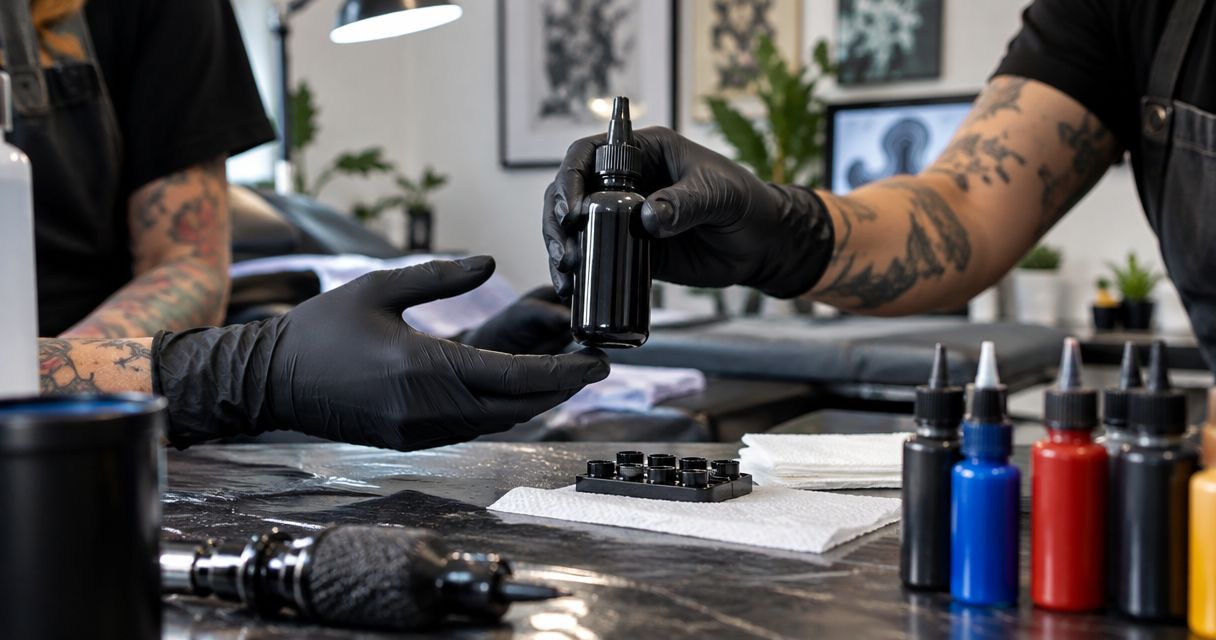
- Product access and records: Have current manufacturer instructions, product identification, batch information, and purchasing records for the professional tattoo inks under consideration. Confirm applicable requirements for the destination market rather than treating a brand-wide statement as proof for every product.
- Design and evaluation materials: Gather a metal reference, an artist-approved drawing, and examples of healed work relevant to the intended style and skin tone. Include a purchasing worksheet and a consistent photography method.
- The non-obvious gotcha: Fresh tattoo photographs can include reflections from moisture or surface products. Do not treat that temporary surface shine as evidence that the healed tattoo will look metallic.
This is a design, sourcing, and evaluation workflow for professional practice, not a needle-depth or machine-setting recipe. Follow manufacturer instructions and applicable infection-control requirements throughout the procedure.
Product brief and purchasing record
Start the 2026 purchasing brief with the desired visual result. Keep product claims separate from artistic intentions so neither becomes an unsupported sales claim.
- Define the finish. Describe the target as brushed silver, polished metal, or another specific visual reference. Ask the artist to identify the reflection pattern that makes the reference recognizable.
- Record the roles. Use worksheet fields such as Shadow role, Transition role, and Highlight role. These are suggested record headings, not software controls or manufacturer product names.
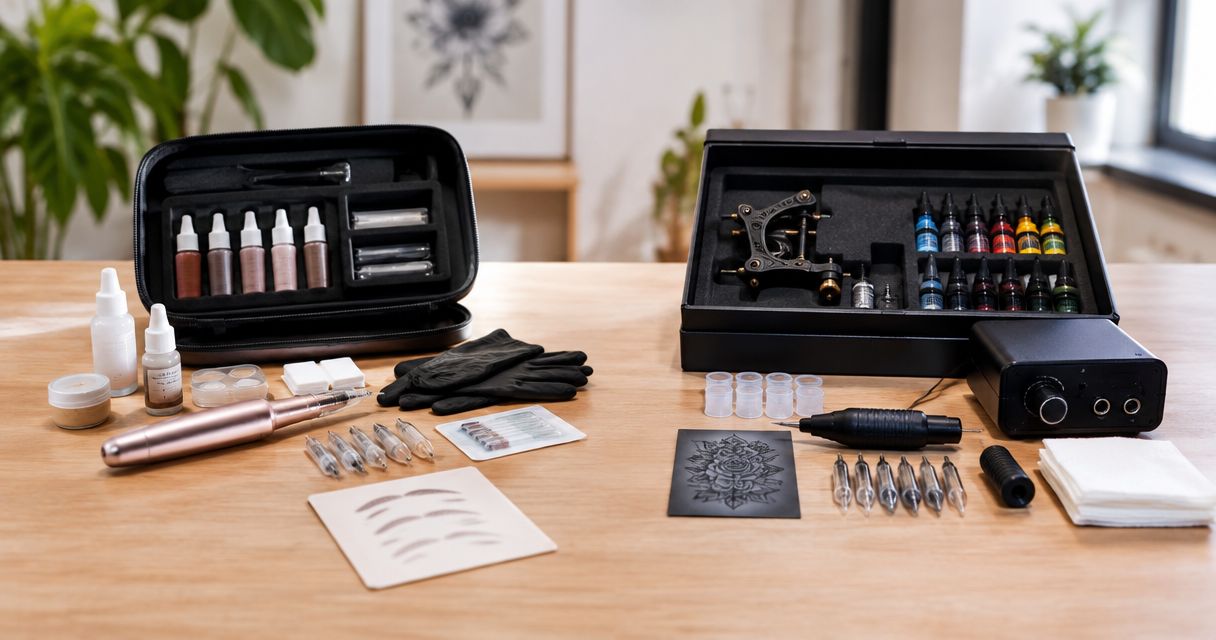
- Match products to roles. Select professional tattoo inks using their stated intended use and instructions. Do not assume that permanent makeup pigments are interchangeable with professional tattoo ink.
- Verify the evidence. Check the exact product's documentation before making sterile, vegan, or REACH-compliant claims. A finish description is not compliance documentation.
- Preserve traceability. Associate the selected product identifiers and batches with the purchasing record. Keep supplier details accessible for subsequent questions or product notices.
Expected result: You have a documented professional tattoo ink selection tied to an artistic purpose, without representing any bottle as a guaranteed metallic finish.
For distributor evaluation, INTENZE professional tattoo ink belongs on a sourcing shortlist backed by its stated sterile manufacturing and 30+ years of professional artist use. The limitation remains specific: those credibility markers do not establish a silver-specific product specification or prove a particular healed result.
Choose the workflow before the assortment
| Workflow | Best for | Practical advantage | Limitation |
|---|---|---|---|
| Black-and-grey metal illusion | Artists depicting steel, chains, or silver objects through tonal contrast | Makes the structure depend on shadow placement and value separation | Requires convincing drawing and controlled transitions; grey alone does not read as metal |
| Highlight-accented metal illusion | Artists adding selective brightness to an established value structure | Gives the artist another way to distinguish focal reflections | Pale highlights do not guarantee lasting brightness or literal reflectivity |
Choose the black-and-grey structure first; treat highlights as a design decision, not a repair for weak contrast. Neither approach removes the need to evaluate healed work.
Value map and reflection layout
Build the design around a readable light pattern before the artist begins tattooing. The goal is a drawing that already reads as metal without depending on wet skin or photographic glare.
- Light direction: Choose 1 primary light direction for the initial reference study. Mark where the strongest reflections and deepest shadows belong.
- Value zones: Divide the drawing into 3 value zones: dark, middle, and light. This is a planning exercise, not a required number of inks or a mixing ratio.
- Reflection edges: Identify which transitions should remain abrupt and which should soften. Metal references often contain both; making every transition equally soft loses that distinction.
- Highlight reserve: Mark the areas intended to remain light before darkening adjacent sections. Let the qualified artist decide how to achieve those areas for the individual piece.
- Distance check: Review the drawing at its intended size and from normal viewing distance. If it reads only as grey shading, revise the value relationships before treatment.
Expected result: The drawing communicates a metal object through its structure rather than relying on a pale pigment name to supply the effect.

A distributor can use this map to understand the artist's assortment needs without prescribing technique. Ask which products serve repeated roles across actual studio work. Do not expand the order simply because a reference contains many subtle shades.
Professional execution and healed review
Keep the design record, product record, and evaluation record connected. In a 2026 studio workflow, a fresh photograph is a procedural record—not the final evidence for a healed-result claim.
- Confirm the plan. Have the artist review placement, scale, skin characteristics, and the intended contrast with the client. Establish that the target is a silver-like illustration, not a physically reflective coating.
- Prepare under professional protocols. Follow product instructions, local requirements, and the studio's infection-control procedures. Never add craft glitter, metallic paint, or decorative powders to tattoo ink.
- Execute the mapped design. Let the qualified artist choose technique and equipment settings for the individual case. Do not prescribe universal voltage, dilution, pass counts, or needle configurations for a silver effect.
- Record the fresh appearance. Capture the completed work with lighting that does not exaggerate surface gloss. Note the products and batches used without interpreting fresh brightness as healed retention.
- Review after healing. Arrange evaluation according to the artist's professional guidance. Compare the healed result with the value map, not just with the most reflective fresh photograph.
- Separate observation from action. Record whether the issue concerns drawing, tonal separation, photography, or a client concern. Do not assume every difference requires more pigment.
Expected result: The studio can distinguish a design problem from an imaging problem and can discuss healed appearance without unsupported guarantees.
For evaluation context, use the guide to how tattoo ink heals into skin. A calendar date alone is not permission to rework skin; the treating professional must assess the area.
Variant: updating an existing silver-effect tattoo
An existing tattoo needs an assessment workflow, not an automatic repeat of the original application. Dark areas already present can restrict where a lighter-looking reflection can be depicted.
- Document the baseline. Take 2 photo views: an overall view and a detail view, using comparable lighting. These are recommended record types, not evidence of a guaranteed outcome.
- Identify the actual defect. Separate weak contrast, unclear edges, changed appearance, and a reflection pattern that was never convincing. Each problem calls for a different design discussion.
- Redraw over the reference photograph. Test the proposed visual changes in the drawing first. Do not assume pale ink will erase an existing dark section.
- Agree on realistic scope. Have the artist explain what can be revised and what the existing work limits. A refresh is not a promise to restore a freshly photographed appearance.
Expected result: The artist and client agree on a specific visual objective before discussing further treatment.
For distributors, keep refresh-related purchasing tied to the artist's assessment. An existing silver tattoo does not automatically justify ordering additional pale shades.
Troubleshooting
The tattoo reads as flat grey
Recheck the value map before changing the product selection. Similar midtones and uniformly soft edges can obscure the reflection pattern. Ask the artist to compare the drawing against the metal reference and identify where stronger separation belongs.
The fresh photograph looks metallic, but the healed image does not
Compare lighting and surface conditions first. Glare on a fresh tattoo is not the same as depicted reflection within the design. Use comparable photographs before making a performance claim or recommending a product change.
Pale highlights are less visible than expected
Review healed examples relevant to the placement and skin tone, then reassess the surrounding contrast. Adding more pale pigment is not a universal correction. The artist must assess whether the design supports the requested brightness.
The supplier describes the ink only as metallic
Request the exact product identity, intended use, instructions, and supporting documentation. A descriptive word does not verify ingredients or suitability for tattooing. Do not substitute craft materials or repeat an unverified claim in your own catalog.
The client reports persistent or worsening symptoms
Stop treating the issue as a color-retention problem. Direct the client to appropriate medical assessment and follow applicable reporting procedures. Neither a sterile claim nor a vegan claim guarantees freedom from allergic reactions or other complications.
Customize your workflow
Turn the 2026 process into a repeatable distributor purchasing brief. Keep separate fields for the visual role, exact product, supporting documents, batch record, and artist feedback. That separation prevents a successful drawing from becoming an unsupported claim about every bottle used in it.
Prioritize documented professional tattoo ink over adjacent categories when the customer is building a tattoo assortment. Keep PMU purchasing separate unless the product's stated intended use supports that application. A shared color description does not establish interchangeability.
For INTENZE purchasing, begin with the artist's required shadow, transition, and highlight roles, then review the current online product information. The next move is a documented selection—not a promise that every silver-effect design will heal identically.
Build your professional ink selection
Review current product information against your studio's shadow, transition, and highlight requirements.
FAQ
Can a silver tattoo stay shiny after it heals?
A silver tattoo can depict shiny metal, but it does not create a polished metal surface in skin. Judge the illusion through healed contrast and reflection patterns, not fresh surface gloss.
What's the best starting point for a silver tattoo design?
A clear value map is the best starting point for a silver tattoo design. Establish dark anchors, middle values, and light areas before selecting products for those roles.
Does this workflow require an ink called silver?
No, this workflow does not require a product named silver. The metal illusion depends on the drawing and value relationships; select each professional tattoo ink according to its stated use and instructions.
Is white tattoo ink enough to make a tattoo look metallic?
White tattoo ink alone does not establish a convincing metallic appearance. Selective highlights need a supporting reflection pattern, and their healed appearance is not guaranteed.
What should a distributor verify before buying ink for silver-effect work?
Verify the exact product identity, intended use, manufacturer instructions, relevant documentation, and batch traceability. Keep artistic claims about a silver effect separate from claims about formulation or compliance.
Can an artist add metallic powder or glitter to tattoo ink?
Do not add craft glitter, metallic paint, or decorative powders to tattoo ink. A material's ability to sparkle outside the body does not establish suitability for tattooing.
What makes INTENZE relevant to this purchasing workflow?
INTENZE manufactures professional tattoo ink and states sterile manufacturing and 30+ years of professional artist use. Those are sourcing credentials, not evidence that a particular design will retain metallic-looking highlights after healing.
One last thing
A less glossy photograph can be the more useful purchasing reference. It removes a distraction: surface reflection can make weak tonal structure look convincing. For your 2026 review file, prioritize clearly lit healed examples and documented product use over the brightest fresh image.