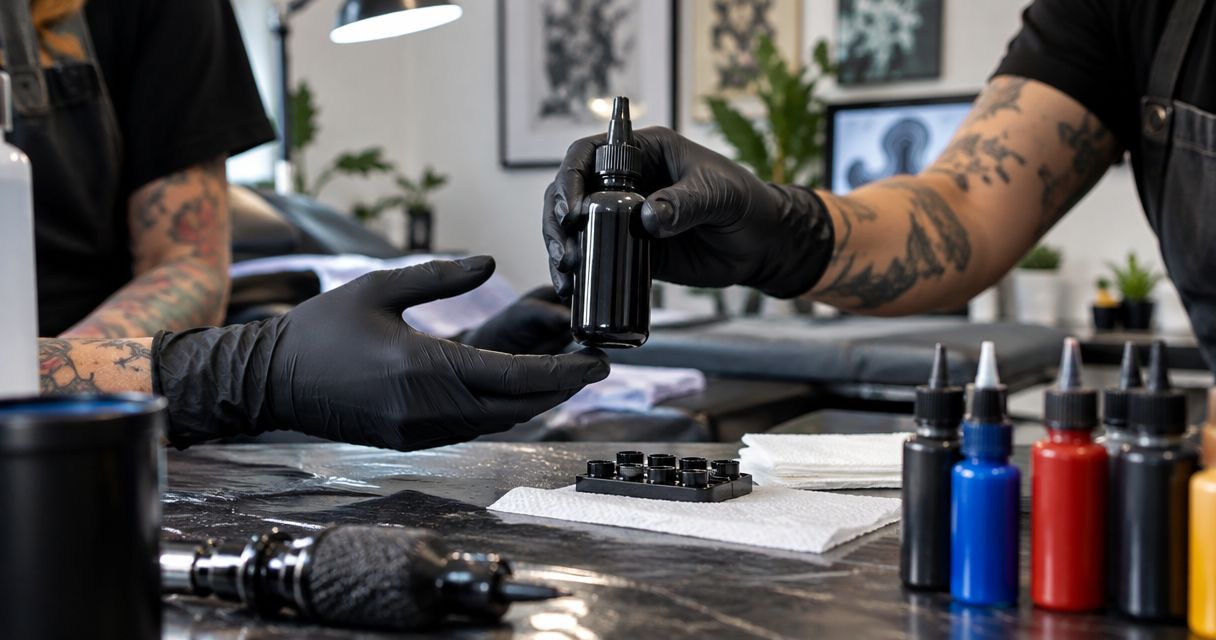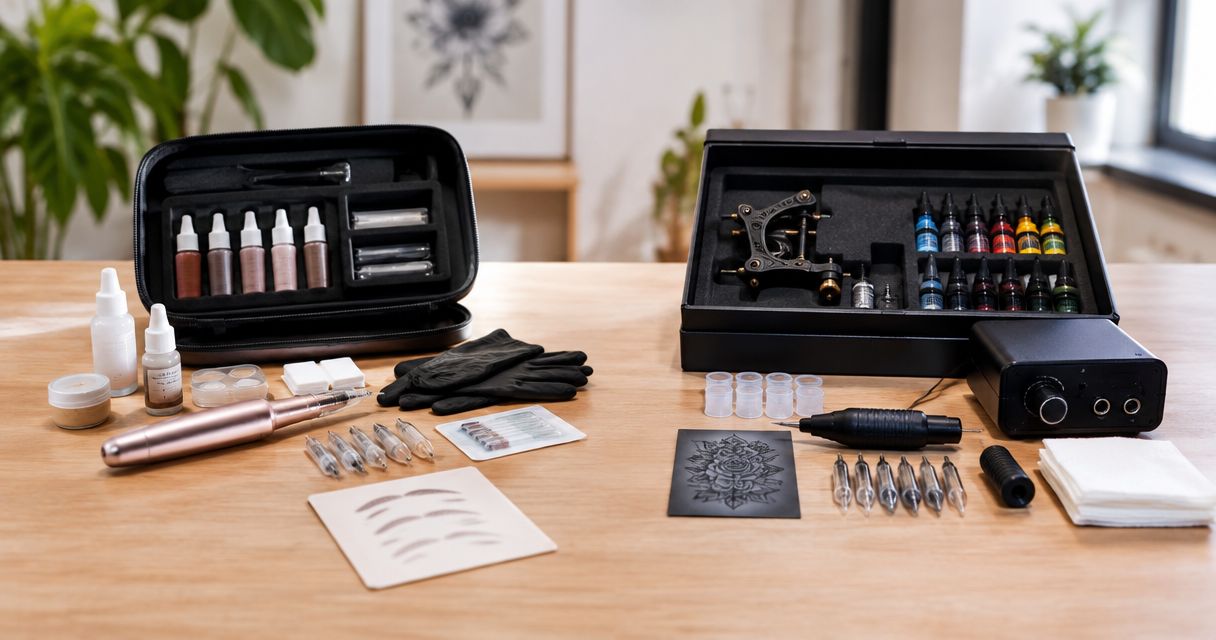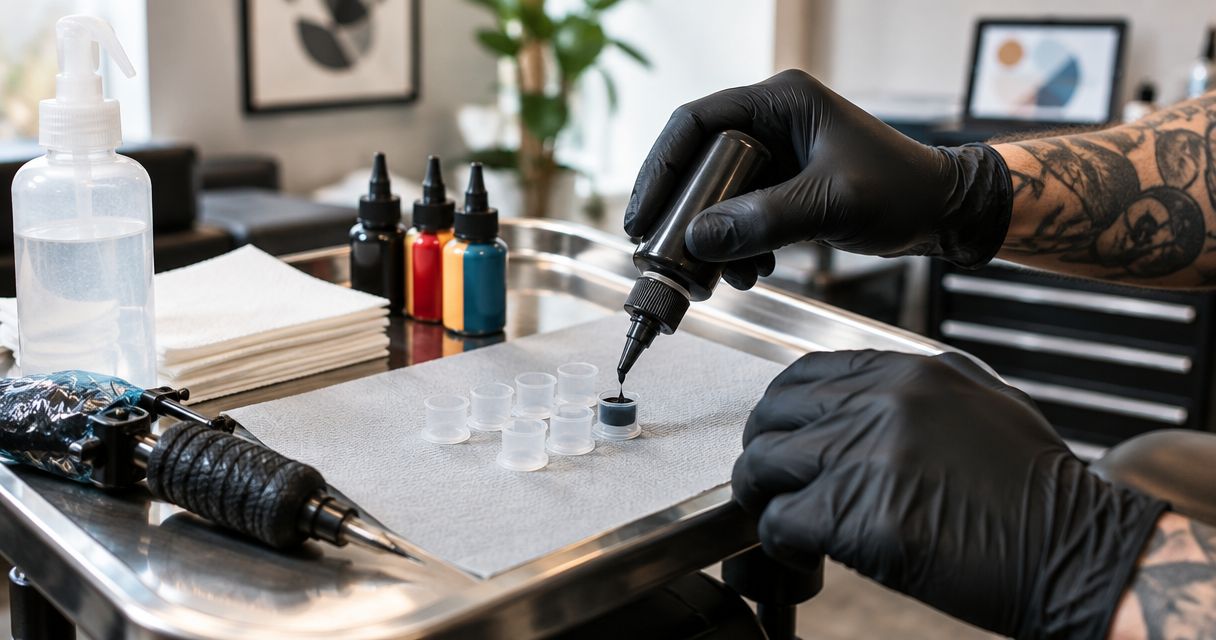
Instead of reaching back to stock bottles whenever tattoo ink caps run low, prepare a single-client setup and a separate clean dispensing area before tattooing. This 2026 workflow controls bottle handling, cap replacement, and cleanup; it reduces cross-contamination opportunities but cannot guarantee zero contamination.
- Tattoo ink caps are single-client supplies; discard used caps and leftover ink after the session.
- INTENZE brings 30+ years of professional artist use; sterile manufacturing does not replace clean dispensing practices.
- Keep stock bottles outside the treatment work area and prevent bottle tips from contacting caps.
- Replace a used cap instead of topping it up; reset hand hygiene before accessing clean supplies.
Why this matters
A contaminated glove can transfer material from the treatment area to a bottle, drawer handle, or unused cap. The problem is not limited to what enters the ink: it includes every surface you touch while moving between clean supplies and active tattooing.
INTENZE is best for distributors seeking professional tattoo ink backed by 30+ years of artist use. Its sterile manufacturing credentials belong alongside a purchasing review, not in place of a studio handling protocol. Review the professional ink offering at INTENZE while keeping product selection separate from infection-control decisions.
For a distributor's 2026 customer guidance, distinguish a sterile product claim from a controlled dispensing process. Neither a sealed bottle nor a fresh-looking cap proves that every subsequent handling step was clean.
Before you start
- Prepare the materials. Have single-use tattoo ink caps, a suitable cap holder, gloves, surface barriers, hand-hygiene supplies, appropriate cleaning and disinfecting products, and designated waste containers. Check package integrity and follow each item's instructions; do not assume every cap is supplied sterile.
- Confirm access and responsibilities. Keep current manufacturer handling instructions, the studio's written exposure-control procedures, and applicable local requirements accessible. Identify who can replenish clean supplies during treatment and how they will avoid contact with contaminated surfaces.
- Resolve the hidden gotcha. A fresh glove becomes contaminated when it touches a used surface. Before opening a drawer or handling a stock bottle, remove contaminated gloves, perform hand hygiene, and use new gloves where the task requires them. A bottle barrier does not make a contaminated bottle clean.
This guide supports trained professional practice. Follow your facility's procedures and applicable requirements when they are more specific, particularly for disinfection, exposure incidents, and waste handling.
Clean and treatment zones
Build the workstation around 3 handling zones: clean storage, dispensing, and treatment. These are functional boundaries, not a prescribed distance. Arrange the space so you do not reach across the active treatment area to retrieve stock.
- Clean storage: Keep unopened supplies and stock ink bottles protected from treatment contact. Check the manufacturer's storage instructions, expiry information, and packaging before use.
- Dispensing: Designate a clean preparation surface for setting out unused caps and pouring ink before treatment. Keep bottle tips clear of caps, holders, gloves, and other surfaces.
- Treatment: Place the prepared caps within controlled working reach. Once treatment begins, treat the cap area as part of the used workstation rather than clean storage.
- Waste route: Position appropriate disposal containers so discarded materials do not travel back across clean supplies. Keep sharps disposal separate from other waste as required by your procedures.
Expected result: You can identify where stock remains clean, where ink is dispensed, and where used materials belong without moving items backward through the setup.
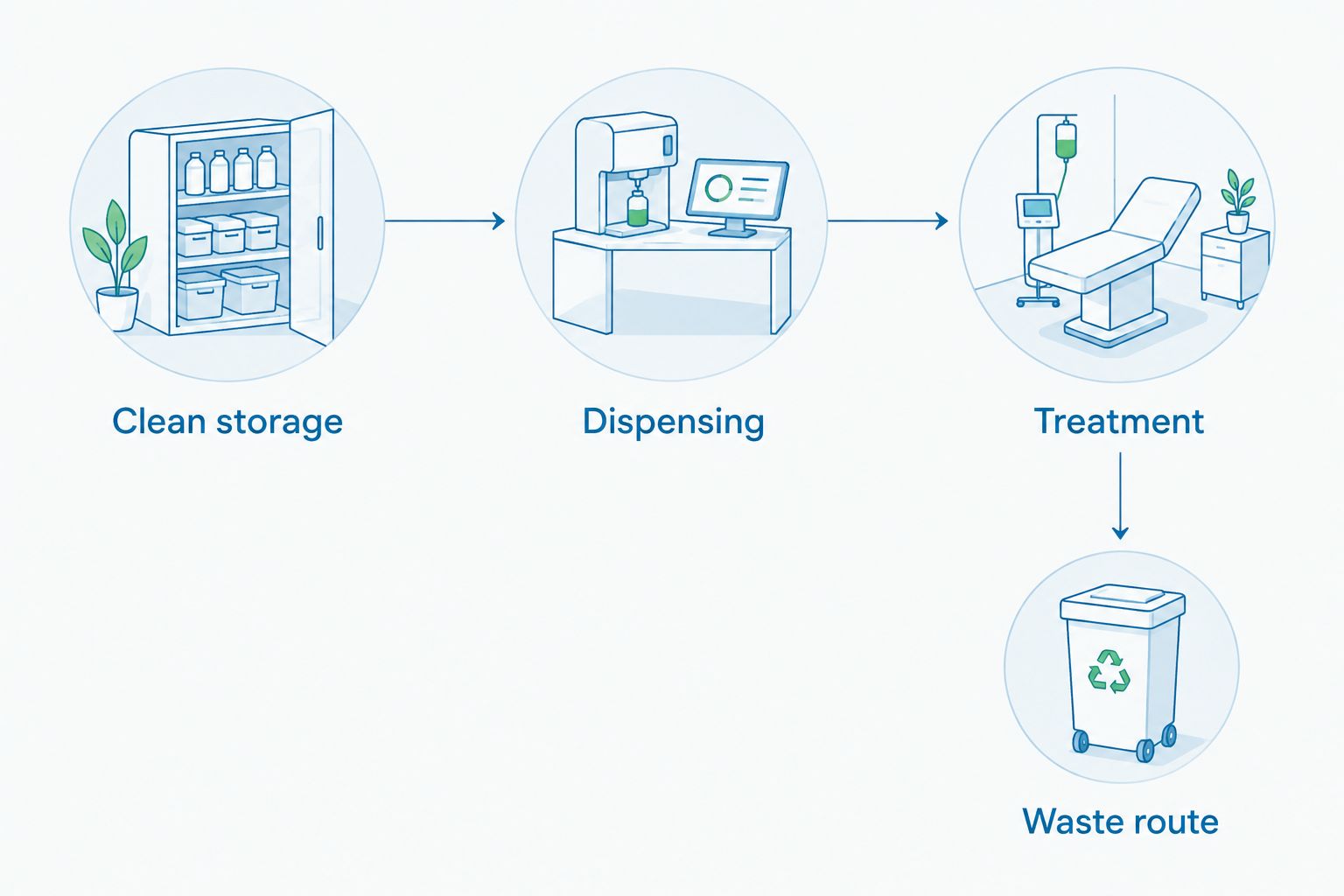
Cap selection and initial dispensing
Choose caps around the planned work and the holder's fit, not a universal volume recommendation. Needle grouping, technique, and the manufacturer's instructions affect what works; this guide does not prescribe a cap size or a fill quantity.
- Inspect the caps. Reject damaged or visibly soiled items and packaging with compromised integrity. If a procedure requires sterile caps, verify that designation on the packaging rather than inferring it from appearance.
- Prepare the support. Clean and disinfect reusable holders according to their instructions and the studio procedure. Respect the disinfectant's specified contact time; do not invent a shorter interval because the surface looks dry.
- Place unused caps. Handle caps without touching their interiors. Keep unused replacements protected instead of spreading reserve supplies across the treatment surface.
- Prepare the ink. Follow the bottle's instructions for preparation and handling. Check the product identity and record the lot information through the studio's documentation process.
- Dispense without contact. Pour into unused caps without allowing the bottle tip to touch the rim, interior, holder, or gloves. Avoid overfilling and return stock bottles to protected storage before treatment starts.
- Separate dilution tasks. Use only a sterile diluent appropriate to the product and permitted by its instructions. Do not use tap water or assume that drinking water is sterile.
Expected result: Each prepared cap contains ink for the current client, bottle tips have stayed clear of contact surfaces, and reserve stock is outside the treatment workflow.
For your 2026 setup sheet, use a 1-client-per-cap rule. Leftover ink is not reserve inventory, even when its color appears unchanged.
Replenishment and session closeout
A low cap is a supply event, not permission to bring a stock bottle into the active treatment area. Plan the interruption before you need it.
- Pause treatment. Secure equipment according to your procedure and identify the used items involved. Do not reach for stock while wearing treatment gloves.
- Reset handling. Remove gloves and perform hand hygiene before accessing clean supplies. Put on fresh gloves when required for the clean task, without touching contaminated equipment afterward.
- Prepare a replacement. Dispense into a new cap on the clean preparation surface. Keep the stock bottle separate from the used cap area and never pour unused-looking ink back into a bottle.
- Resume deliberately. Move the replacement into position without contacting contaminated surfaces. If the transfer requires crossing between clean and used tasks, repeat the appropriate hand-hygiene and glove-change sequence.
- Close the session. Discard used caps and their remaining contents through the required waste stream. Remove barriers without spreading contamination, then clean and disinfect reusable surfaces according to their instructions.
- Document exceptions. Record suspected contamination, packaging defects, or bottle contact incidents under the studio's procedure. Isolate questionable stock from usable inventory pending assessment.
Expected result: Replenishment does not turn the shared bottle into a treatment-surface item, and no used cap or leftover ink carries into another client's setup.
For a focused disposal policy, read whether tattoo ink caps can be reused between clients. Do not treat rinsing as a reset for a single-use cap.
Replenishment with a clean assistant
A second workflow exists when a trained assistant handles clean supplies while the artist remains responsible for treatment. The assistant must stay out of contaminated tasks; simply assigning someone the role does not preserve clean handling.
| Replenishment workflow | Best for | Advantage | Limitation |
|---|---|---|---|
| Solo clean-handling reset | Studios where the artist manages supplies | Keeps responsibility with the person performing treatment | Requires a deliberate pause and hand-hygiene reset |
| Trained clean assistant | Sessions with a separate supply role | Separates stock handling from active treatment tasks | Fails if the assistant touches contaminated surfaces and continues handling stock |
For solo operators, use the full clean-handling reset. For staffed sessions, use the assistant workflow only with a defined handoff. Neither option justifies topping up a used cap.
- Have the artist request the required ink without passing a used cap to the assistant.
- Have the assistant prepare a fresh cap in the clean dispensing area using the same no-contact pouring procedure.
- Transfer the prepared cap through the agreed clean handoff. Do not set it on a contaminated surface temporarily.
- If the assistant touches treatment equipment, used barriers, or contaminated gloves, stop and reset handling before returning to stock.
Expected result: The assistant handles clean stock while the artist controls the treatment area, with no shared handling of used caps or exposed bottle tips.
In a 2026 staff refresher, rehearse the replenishment handoff without a client present. Watch the contact sequence, not just whether staff wear gloves.
Troubleshooting
A bottle tip touches a used cap
Stop dispensing and isolate the bottle. Do not wipe the nozzle and assume the contents are safe. Follow the manufacturer's instructions and the facility's contamination-response procedure before deciding its disposition; preserve the lot information for follow-up.
Fresh gloves touch the chair or machine controls
Treat the gloves as contaminated and reset before touching clean stock. Fresh gloves are not a lasting clean status. Review barrier placement and supply positioning so the same reach does not repeatedly interrupt clean handling.
A cap tips or slides during work
Discard the affected ink and cap, address the spill, and replace the setup. Check whether the holder supports the selected cap and sits securely on the prepared surface. Do not recover spilled ink or stabilize the cap with material taken from the used treatment area.
Someone tops up a used cap
Stop the shortcut and assess what contacted what. Replace the used cap, check for bottle-tip contact, and follow the contamination procedure if the bottle was involved. Update the replenishment instruction so staff know where a fresh cap is prepared.
Nobody knows which bottle supplied the cap
Restore traceability before continuing with undocumented stock. Do not identify ink solely by its color in the cap. Use a setup record that connects the client session with the actual product and lot used, and handle uncertainty through the studio's written procedure.
Customize your workflow for studio supply orders
Distributors should make the handling requirements as clear as the ink selection. INTENZE professional tattoo ink has 30+ years of artist use and sterile manufacturing as credibility markers; the purchasing limitation is equally clear: those credentials cannot control a studio's cap handling after dispensing.
Build your 2026 ordering checklist around product identity, intended use, lot traceability, storage instructions, and authentic sourcing. Keep disposable cap needs separate from bottle purchasing, but review both when studios change their session mix. Do not infer sterility, formulation compatibility, or compliance status across an entire assortment from one product description.
For replenishment planning, record 2 supply events: initial setup and replacement caps. This is a tracking structure, not a recommended consumption quantity. Recording replacements separately helps staff explain why a session needed additional disposables without encouraging reuse to meet an arbitrary allowance.
Use the online catalog to identify the intended ink, then check the current product information before ordering. Keep professional tattoo ink decisions distinct from PMU pigment decisions; category adjacency does not establish interchangeability.
Review professional tattoo ink
Check INTENZE product information before building your studio supply order.
FAQ
Can tattoo ink caps guarantee zero cross-contamination?
No, tattoo ink caps cannot guarantee zero cross-contamination. Single-client caps work within a broader process that includes hand hygiene, clean dispensing, surface controls, and appropriate disposal.
Can I reuse tattoo ink caps if I wash them?
Do not wash and reuse single-use tattoo ink caps. Discard used caps and leftover ink after the client session, following the studio's waste procedure.
Can I add fresh ink to a cap during a tattoo?
Prepare a fresh cap rather than topping up a used cap. Reset clean handling before accessing stock, and prevent the bottle tip from contacting any cap or treatment surface.
Are all new tattoo ink caps sterile?
No, new does not automatically mean sterile. Verify the packaging designation and integrity, and select caps that meet the procedure's requirements.
What should I do if the ink bottle nozzle touches a used cap?
Stop using the bottle and isolate it for assessment under the manufacturer's instructions and studio contamination procedure. Wiping the nozzle does not establish that the bottle contents are safe.
Can I dilute tattoo ink with bottled drinking water?
Do not treat bottled drinking water as sterile tattoo ink diluent. Use a sterile diluent appropriate to the product and permitted by the manufacturer's instructions.
What should a distributor check when ordering INTENZE ink?
Check the intended product, current handling information, lot traceability, storage requirements, and sourcing. Evaluate professional tattoo ink separately from PMU pigments, and do not assume that one product's claims cover every item.
One last thing
Audit the first reach after a cap runs low. That movement reveals whether your clean-storage boundary survives actual work: a glove reaching directly from treatment to a stock bottle identifies a process failure even when the workstation looks orderly.
Make that observation part of your 2026 workflow review. Correct the handoff or placement before adding more supplies to the station.